Executive Overview
Modern journalism is facing a crisis of confidence. When complex, deeply personal, and socially sensitive topics—such as national identity, immigration, and cultural integration—are filtered through the traditional mechanics of broadcast media, the results are rarely enlightening. Instead, audiences are treated to polarized spectacles designed for maximum friction rather than mutual understanding.
A prime illustration of this systemic failure can be observed in high-profile political panel formats, such as Suella Braverman’s recent appearance on the BBC’s Question Time. Bathed in stark studio lights, hemmed in by rigid time constraints, and goaded by pointed, adversarial questioning, such platforms turn delicate societal discussions into theatrical combat. The structural ingredients are pre-calibrated for soundbites, polarization, and emotional exhaustion. Viewers tune out feeling more alienated, cynical, and divided than they were before.
Clearly, this adversarial model is failing democratic discourse. But what if there is another way?
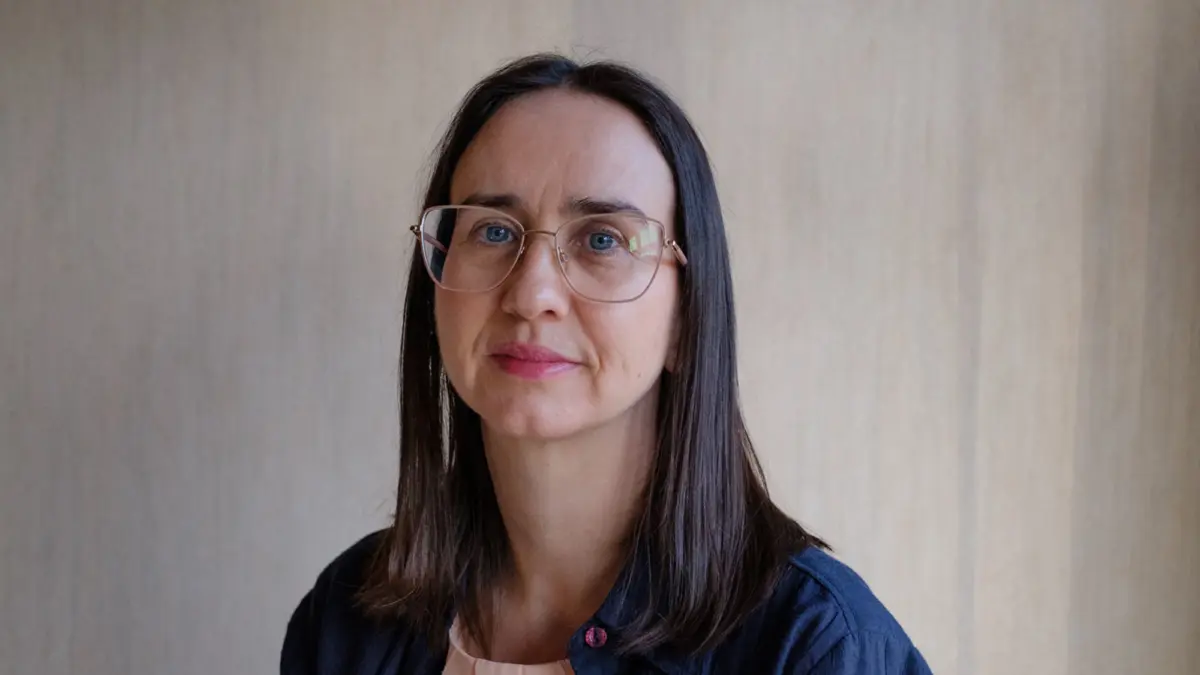
Enter the News For All project, a groundbreaking research initiative spearheaded by journalist, researcher, and community organiser Shirish Kulkarni. Operating as a news innovation research fellow at Media Cymru and the founder of Inclusive Journalism Cymru, Kulkarni—in collaboration with partners including the Welsh Government and Welsh public broadcaster S4C—has dared to ask a radically different baseline question. Rather than asking what stories the newsroom wants to tell, Kulkarni’s project asked: What conditions does a community need to make sense of its own life together?
By testing this framework in Blaenau Ffestiniog, a Welsh-speaking former slate-mining town in North Wales, over the span of a year, the initiative offers a vital blueprint for the future of journalism. This report investigates the mechanics of that experiment, analyzes the structural flaws of modern media discourse, and maps out a roadmap for how journalism can rebuild trust from the ground up.
Detailed Chronology: From Broadcast Confrontation to Grassroots Co-Inquiry
Phase 1: The Anatomy of Modern Media Failure
To understand the radical nature of the News For All project, one must first diagnose the disease it seeks to cure. The contemporary television and digital news ecosystem relies on an operational model established decades ago, which prioritizes conflict over comprehension.
A clear case study in this methodology is the recurring format of programmes like Question Time. When high-profile political figures—such as former Home Secretary Suella Braverman—take to the stage, the architectural setup pre-determines the quality of the dialogue.
- The Environment: Bright, intimidating studio lighting and a layout that physically opposes panelists against an audience create an adversarial psychological space.
- The Panel Composition: Heavily weighted toward professional politicians and partisan operatives, the panel naturally defaults to party lines.
- The Temporal Constraint: Complex socioeconomic realities, historical grievances, and nuanced demographic shifts are compressed into 90-second answering windows.
Under these conditions, nuance is impossible. The structural incentives reward rhetorical sharpness, defensive posturing, and ideological posturing. The public is positioned as an audience cheering or booing a spectator sport, rather than participants in a civic dialogue.
Phase 2: Conceptualizing News For All
Recognizing that traditional journalism was actively worsening social cohesion, Shirish Kulkarni set out to design an alternative intervention. Partnering with Media Cymru, the Welsh Government, and S4C, Kulkarni launched the News For All project to test whether journalism could be democratized at the absolute foundational level.
The core hypothesis was simple yet disruptive: instead of parachute journalism—where reporters enter a community, extract quotes that fit a pre-determined national narrative, and leave—media organizations should hand the methodological tools of inquiry over to the community itself.
The project did not begin with a news pitch, an editorial meeting, or a political agenda. It began with an open-ended question designed to foster introspection rather than reaction: “What conditions does this community need to make sense of its own life together?”
Phase 3: Fieldwork in Blaenau Ffestiniog
To test this question in the real world, the project selected Blaenau Ffestiniog, a rugged, Welsh-speaking former slate-mining town nestled in North Wales. Blaenau Ffestiniog possesses a rich, complex identity shaped by industrial heritage, economic transition, linguistic preservation, and changing demographics. It is a community familiar with both the struggles of post-industrial decline and the opportunities of modern rural regeneration.
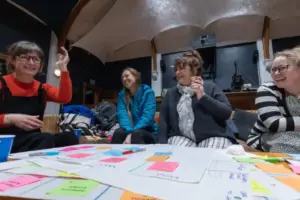
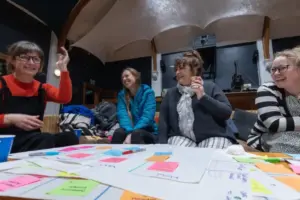
Over the course of a full year, Kulkarni and his team worked closely with 14 community co-researchers. These were not professional journalists, media consultants, or local politicians; they were local residents—teachers, shopkeepers, retirees, and artists—who represented the authentic fabric of the town.
Rather than being interviewed by reporters, these 14 residents were trained in qualitative research methodologies, active listening, and civic facilitation. They became the architects of the inquiry, engaging their neighbors in conversations about what information they actually needed to navigate their daily lives, preserve their cultural heritage, and plan for their collective future.
Phase 4: Synthesis and Paradigm Shift
The culmination of the Blaenau Ffestiniog experiment yielded data and insights that challenged the core tenets of legacy news production. The project demonstrated that when people are given the space, time, and structural safety to discuss identity and community, they do not default to toxic polarization.
Instead, they focus on structural realities: housing availability, local employment, Welsh language transmission across generations, and health services. By shifting the journalistic lens away from Westminster-driven culture wars and toward localized, human-scale problem-solving, News For All provided a working model for how media can heal, rather than exploit, societal fractures.
Supporting Context & Metrics: The Crisis of Trust and the Economics of Engagement
The urgency of Kulkarni’s work is underscored by staggering declines in public trust across global media landscapes. According to the Reuters Institute for the Study of Journalism, public trust in news remains at historic lows, with barely four in ten people trusting the news most of the time.
| Metric Category | Traditional Broadcast Model (e.g., Question Time) | Community-Led Model (News For All) |
|---|---|---|
| Primary Incentive | Ratings, advertising revenue, engagement via outrage | Social cohesion, shared understanding, civic health |
| Participant Profile | Professional politicians, partisan commentators | Local residents, grassroots co-researchers |
| Time Horizon | 90-second soundbites, 24-hour news cycle | Long-term research (12+ months) |
| Definitional Focus | National culture wars, ideological division | Localized structural needs, shared futures |
| Outcome | Polarization, emotional exhaustion, cynicism | Actionable insight, community agency, trust |
The Economic Cost of Adversarial Journalism
For decades, media executives have defended the adversarial model using the economic defense of engagement: controversy drives viewership, viewership drives advertising, and advertising sustains the industry. However, this business model suffers from severe diminishing returns.
As audiences experience "news fatigue" and actively avoid the news altogether—a trend documented extensively by media researchers—the total available market for outraged-based content shrinks. Furthermore, the collateral damage to civic health is immense. When public broadcasters and commercial networks treat immigration, identity, and social policy as football matches, they erode the social fabric required to sustain a healthy democracy.
The Linguistic and Cultural Dimensions in Wales
The involvement of S4C (the Welsh-language public broadcaster) and the Welsh Government in the News For All project highlights a critical dimension often ignored by centralized, London-centric media outlets: linguistic and cultural sovereignty.
In communities like Blaenau Ffestiniog, language is not merely a tool for communication; it is the load-bearing pillar of community identity. National media broadcasts frequently flatten these nuances, treating minority languages or regional identities as quaint folkloric anomalies rather than vibrant, modern realities. By anchoring the research in a Welsh-speaking, post-industrial town, the project proved that regional media ecosystems can pioneer innovative frameworks that centralized systems are too rigid to adopt.
Official Statements and Expert Perspectives
The implications of the News For All project extend far beyond the borders of North Wales, capturing the attention of media theorists, policy makers, and journalism reformers globally.
Shirish Kulkarni, reflecting on the philosophy underpinning the initiative, emphasizes that the crisis in journalism is fundamentally structural, not accidental:
"We keep trying to fix the output of journalism without fixing the input. If you feed toxic ingredients into the production line—tight deadlines, adversarial pairings, superficial framing—you will always get a toxic product at the end. To change the news, we have to change who gets to decide what is important."
Media Cymru, in supporting the fellowship, underscored the economic and social necessity of media innovation in devolved nations:
"Innovation in media is not just about adopting new digital tools or artificial intelligence; it is about reinventing the social contract between storytellers and the societies they serve. Projects like News For All demonstrate that economic resilience in media must be rooted in deep, authentic community engagement."
Critics of legacy media formats have similarly rallied behind the initiative’s findings. Civil society advocates argue that public service broadcasters have a democratic duty to move away from gladiator-style political debates and toward deliberative democratic formats modeled on citizens’ assemblies.
Dr. Arwel Jones, a Cardiff-based sociologist specializing in Welsh media ecosystems, noted the significance of the Blaenau Ffestiniog case study:
"When you give people the tools to investigate their own lives, they bypass the manufactured culture wars that dominate national headlines. They talk about housing, jobs, schools, and belonging. Journalism needs to catch up with what everyday people already know: that our survival depends on collaboration, not combat."
Future Outlook: Rebuilding the Journalistic Blueprint
As the News For All project transitions from its initial research phase into broader dissemination, the central challenge facing the industry is scalability. Can a model born out of a year-long, intensely localized study in a Welsh slate-mining town be adapted for major metropolitan newsrooms, national broadcasters, and digital platforms?
1. Reforming Public Service Broadcasting (PSB)
Public service broadcasters operate under statutory obligations to inform, educate, and entertain while maintaining due impartiality. However, impartiality has too often been misinterpreted as "both-sidesism"—giving equal weight to bad-faith arguments while ignoring structural realities.
Future broadcasting policy should mandate the integration of deliberative journalism formats. Instead of booking panelists solely on their partisan affiliation, producers should experiment with incorporating community co-researchers directly into editorial planning. Imagine a Question Time where the questions are curated not by producers in a London studio, but by citizen assemblies that have spent months investigating local realities.
2. Decentralizing Newsrooms
Legacy news organizations must move away from centralized, top-down newsrooms and establish permanent, embedded outposts in marginalized and rural communities. This requires a shift in resource allocation: hiring local community organizers as journalistic liaisons rather than relying on parachuting reporters who spend 48 hours in a town before filing a sweeping cultural diagnosis.
3. Redefining Metrics of Success
Media organizations must abandon page-views, click-through rates, and algorithmic outrage as the primary metrics of journalistic success. Instead, the industry should adopt metrics centered on civic health:
- Did this story help a community resolve a practical problem?
- Did it increase mutual understanding across demographic divides?
- Did it empower readers to participate in local democratic structures?
Conclusion
The experiment in Blaenau Ffestiniog proves that people do not inherently despise the news; they despise being talked down to, exploited for theatrical conflict, and misrepresented by systems that refuse to listen.
When Shirish Kulkarni asked what conditions a community needs to make sense of its own life together, he unlocked the door to a healthier future for journalism. The studio lights, the pointed questions, and the adversarial shouting matches do not represent the immutable laws of media physics. They are choices—and they are choices we can choose to change.
By embracing community-led research, relinquishing institutional control, and prioritizing listening over lecturing, journalism can reclaim its role as an essential pillar of a functioning, empathetic democracy.