Executive Overview
The 9th edition of Egypt’s prestigious El Gouna Film Festival (GFF) has officially commenced along the sun-drenched shores of the Red Sea, cementing its status as one of the Middle East and North Africa’s (MENA) premier cinematic hubs. This year’s festival delivers a formidable showcase of global and regional storytelling, bridging the gap between emerging voices and established masters. The carefully curated lineup spans across narrative features, hard-hitting documentaries, and boundary-pushing short films, featuring a heavy representation of prize-winning titles fresh from the world’s most elite circuits, including Cannes, Berlin, Venice, Sundance, and Shanghai.
Beyond red-carpet glamour and star-studded screenings, the 9th El Gouna Film Festival underscores the vital role of the region’s creative infrastructure. Several highly anticipated features returning to the festival floor trace their roots directly to CineGouna, the festival’s dedicated industry and incubation arm. By nurturing projects from their infancy through financing, co-production pitching, and post-production support, El Gouna continues to act as a vital engine for Arab cinema.
The thematic core of this year’s selection is deeply reflective of the contemporary human condition. Films navigate intimate explorations of love, generational memory, and domestic complexity, alongside raw depictions of displacement, political upheaval, and socio-economic fragility.
Detailed Chronology: 10 Defining Titles to Watch
The 2026 competition slate is packed with critical darlings and provocative premieres. Below is an in-depth look at 10 standout titles competing across the feature narrative, documentary, and short film categories.
Feature Narrative Competition
1. "Safe Exit" (2026)
- Director: Mohammed Hammad (Egypt, Libya, Tunisia, Qatar, Germany)
- Producers: Kholoud Saad, Dora Bouchoucha, Dina Farouk, Ibrahim El-Batout, and May Odeh
- Overview: Marking his sophomore feature a decade after his acclaimed debut, Egyptian filmmaker Mohammed Hammad returns following a strong premiere at the Berlinale. Set against the chaotic, layered backdrop of downtown Cairo, Safe Exit follows Samaan, a Coptic Christian security guard haunted by the trauma of his father’s murder at the hands of extremists. Samaan’s insular world is upended when he crosses paths with Fatma, an impoverished sex worker grappling with her own marginalization. Hammad delivers a delicate, piercing examination of faith, existential isolation, and the complex fault lines running through contemporary Egyptian society. (Hammad’s debut, Withered Green, famously screened at El Gouna’s inaugural edition in 2017).
2. "Only Rebels Win" (2026)
- Director: Danielle Arbid (France, Lebanon, Qatar)
- Producers: Omar El Kadi, Nadia Turincev, and Georges Schoucair
- Overview: Opening the Panorama section at this year’s Berlinale, Only Rebels Win centers on Suzanne (portrayed by legendary icon Hiam Abbass), a Lebanese woman of Palestinian origin who finds herself newly liberated to prioritize her own desires after being widowed and raising her children to adulthood. Her newfound autonomy is severely tested when she enters into a passionate relationship with Osmane, a younger, undocumented Sudanese migrant navigating the perilous underbelly of Beirut. Due to the outbreak of war in Lebanon, principal photography became impossible on location; director Danielle Arbid ingeniously utilized a local crew to capture empty Beirut backgrounds, later executing the dramatic scenes using rear projections in a Paris studio.
3. "3 Weeks After" (2026)
- Director: Miroslav Terzić (Serbia, Bulgaria, Italy, Croatia, Luxembourg)
- Producers: Snežana van Houwelingen and Branislav Trifunović
- Overview: Fresh off a major triumph winning the Europa Cinemas Label at the Karlovy Vary International Film Festival, Miroslav Terzić’s gripping drama deals with the immediate aftermath of a tragedy. Set at an isolated mountain hotel, the narrative focuses on a group of students stranded together exactly three weeks after a classmate dies by suicide. Whispers quickly transform into accusations regarding systemic bullying leading up to the fatal incident, as well as a collective complicity among peers who knew the warning signs and chose silence. Terzić deliberately expands the aperture of guilt, examining how passive bystanders enable tragedy just as much as active perpetrators.
4. "Halima" (2026)
- Director: Yassine El Idrissi (Morocco)
- Producer: Yassine El Idrissi
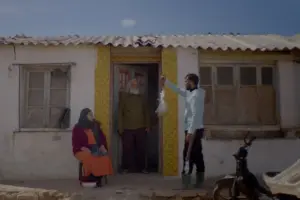
- Overview: A double-winner at the Shanghai International Film Festival—taking home Best Director and Best Actress for lead star Khadija Amari—Halima serves as Moroccan filmmaker Yassine El Idrissi’s fiction feature debut. The film oscillates gracefully between Halima’s present-day struggles on the Moroccan coast and memories of her earlier life in the Rif mountains. Faced with forced displacement from her ancestral land and desperate to survive financially, the widow plunges into the shadows of the illegal cannabis trade. Drawing from his background as a photojournalist documenting marginalized populations, El Idrissi crafts a nuanced socio-economic portrait that resists moral simplicity.
Feature Documentary Competition
5. "Citizen Osama" (2026)
- Director: Ahmed Hassouna (Palestine, France)
- Producers: Laura Nikolov and Rashid Masharawi; Co-produced by Ahmed Hassouna
- Overview: Selected as Palestine’s official submission for Best International Feature Film at the 2027 Academy Awards following its premiere at the Venice Film Festival, this harrowing documentary captures the duality of survival under fire. In northern Gaza, photojournalist Osama Al-Ashi attempts to capture the devastating reality of war through his lens while wrestling with his primary duty as a father and husband: keeping his wife and newborn son alive. Ahmed Hassouna’s lens provides an urgent, deeply personal testament to resilience, bearing witness to a catastrophe from the inside.
6. "The Return of Captain Kabonga" (2026)
- Director: Amir El-Shenawy (Egypt)
- Producer: Ahmed Abdelsalam
- Overview: Making its highly anticipated world premiere at El Gouna, The Return of Captain Kabonga turns its focus to Ismailia, a historic city along Egypt’s Suez Canal. The film tracks veteran street wrestler Ashraf “Kabonga” Mahrous as he attempts a comeback, trying to revive the elaborate, WWE-inspired independent wrestling shows he once staged with local amateurs. Director Amir El-Shenawy frames Kabonga’s theatrical ambitions against the harsher backdrop of economic reality, detailing the struggles of a working-class family attempting to stay afloat amid macroeconomic pressures. The project previously participated in CineGouna Funding in 2025, walking away with critical cash and in-kind post-production prizes.
7. "Whispers in May" (2026)
- Director: Dongnan Chen (Hong Kong, Netherlands, South Korea, Sweden)
- Producers: Jia Zhao and Kay Xu; Co-produced by Heejung Oh and Malin Hüber
- Overview: Winner of the prestigious top DOX:AWARD at CPH:DOX, Whispers in May captures a pivotal coming-of-age journey in China’s remote Liangshan Mountains. Fourteen-year-old Qihuo experiences her first period and embarks alongside her peers on a quest to acquire a traditional ceremonial skirt for her coming-of-age ritual. With her parents away laboring in urban centers, Qihuo’s journey mirrors the broader generational shifts transforming rural China. Dongnan Chen blends observational documentary techniques with delicate fictional and mythical interludes.
8. "Nuisance Bear" (2026)
- Director: Gabriela Osio Vanden and Jack Weisman (Canada, U.S., U.K.)
- Producers: Michael Code, Teddy Leifer, and Will N. Miller
- Overview: Following its triumphant Grand Jury Prize win in the U.S. Documentary Competition at Sundance, Nuisance Bear flips conventional nature documentary conventions upside down. Expanding on their Oscar-shortlisted 2021 short film of the same name, directors Gabriela Osio Vanden and Jack Weisman chronicle polar bears as they navigate their ancestral migration routes through Manitoba, Canada. By positioning the camera from the perspective of the wildlife—who increasingly intersect with swarms of tourists, armed hunters, and wildlife officers—the human town and its visitors are effectively cast as the invasive species.
Short Film Competition
9. "My Village Blamed Women for the End of Mankind" (Al Khabith) (2026)
- Director: Jad Chahine (Egypt, United Kingdom)
- Producer: Yara Goubran
- Overview: Arriving at El Gouna for its world premiere after the director’s previous work (The Call of the Brook) screened at Cannes’ La Cinef, Jad Chahine’s short delves into apocalyptic folklore. When a strange, unexplained epidemic breaks out among women in a remote fishing community, superstition quickly hardens into institutionalized fear and violence. Chahine notes that the film explores the paradox of protective instincts morphing into active harm.
10. "Disquiet" (Irtibak) (2026)
- Director: Mariam Abdelgaber (Egypt)
- Producers: Tamer Ashry, Zeina Eissa, Alia El Shahbour, and Mariam Abdelgaber
- Overview: Marking a formidable narrative short debut for director Mariam Abdelgaber—and starring critically acclaimed actors Rakeen Saad and Menha El Batraoui—Disquiet unfolds through quiet suspense. A young supermarket cashier is handed a spare key by an elderly regular, instructed to check in on the apartment if she ever vanishes. When the customer abruptly stops patronizing the store, the cashier steps across the threshold, plunging into the private, mysterious life of a virtual stranger. The film receives its world premiere on the El Gouna stage.
Supporting Context & Metrics: The Rise of CineGouna
The trajectory of the El Gouna Film Festival is inextricably linked to the maturation of its industry platform, CineGouna. Over the past nine years, the initiative has transformed from a regional networking event into an indispensable launching pad for independent cinema across the Arab world.
According to festival analytics, over 40% of Arab films featured across major international festival slates (Cannes, Berlin, Venice, and Toronto) over the past three years received early-stage development support, mentorship, or co-production funding from CineGouna. This systemic investment helps mitigate the chronic underfunding facing independent filmmakers in the MENA region, providing vital structural pipelines that turn scripts into internationally acclaimed motion pictures.
Furthermore, this year’s geographic and thematic diversity illustrates a deliberate pivot toward cross-continental co-productions. Films in the 2026 lineup feature complex financial and creative partnerships connecting Arab nations—such as Egypt, Palestine, Lebanon, Morocco, Tunisia, and Qatar—with European powerhouses including France, Germany, Italy, Sweden, and the United Kingdom. This globalization of Arab storytelling ensures that regional narratives retain their cultural specificity while commanding universal resonance on the global stage.
Official Statements and Industry Insights
Speaking on the curation philosophy behind the 9th edition, festival artistic leadership emphasized the mandate of cinema as an instrument of empathy and historical memory during periods of intense global turbulence.
"We are witnessing an unprecedented wave of resilience among filmmakers from the region and beyond," noted a senior festival programmer during the opening symposium. "Despite political obstacles, economic contractions, and logistical nightmares—such as crews forced to shoot across borders via remote projections—artists are refusing to let stories be silenced. El Gouna exists precisely to house these urgent, necessary conversations."
Industry stakeholders have also lauded the festival’s expanding footprint in South-South cooperation. Producers returning via CineGouna funding have frequently highlighted how critical early cash prizes and post-production grants are to preserving creative control.
"Without the incubation support provided at El Gouna, projects dealing with politically or socially sensitive subjects would struggle to find completion through traditional commercial channels," remarked a co-producer attached to the lineup. "It is an ecosystem built by filmmakers, for filmmakers."
Future Outlook
As the 9th edition of the El Gouna Film Festival unfolds along the Red Sea, its long-term impact on the global film economy is clear. By functioning simultaneously as an exclusive red-carpet showcase, a rigorous competition circuit, and an active incubator through CineGouna, the festival is building a sustainable framework for the future of Arab cinema.
Looking ahead toward its milestone tenth anniversary next year, El Gouna is poised to expand its co-production market, deepen its digital distribution linkages, and increase grants for emerging women directors and documentary storytellers from marginalized communities. As proven by this year’s slate—ranging from Gazan photojournalism under fire to Cairo’s gritty urban dramas and Moroccan mountain ecosystems—the stories nurtured in El Gouna are not merely regional curiosities; they are defining cinematic masterpieces shaping the global conversation of modern film.