Executive Overview
In the modern media landscape, the boundary separating political power from journalistic scrutiny has historically been regarded as a foundational pillar of democratic accountability. Across the democratic world, the fourth estate acts as an independent watchdog, challenging authority and holding power to account.
However, a landmark research report published by the influential think tank Demos reveals a striking international anomaly: the United Kingdom stands virtually alone in Europe by permitting serving politicians to step off the campaign trail and step behind the studio microphone to host national current affairs and news programmes.
Authored by Dr James Painter of the Reuters Institute for the Study of Journalism, the comprehensive study surveyed 38 media regulators across Europe through the European Platform of Regulatory Authorities (EPRA). The findings expose a profound divergence between British broadcasting norms and the regulatory frameworks of its continental neighbors.
While 35 out of the 37 surveyed European countries feature no examples of serving politicians presenting mainstream news or current affairs on national television channels—with only Iceland and Malta serving as extremely limited, short-lived exceptions—the UK has increasingly normalized the practice. Furthermore, 34 European nations either explicitly ban or substantially restrict politicians from holding broadcasting roles, viewing the overlap of partisan politics and journalistic curation as an unacceptable conflict of interest.
This report delves deep into the implications of the Demos findings, examining the regulatory mechanisms that govern British broadcasting, the historical shifts that allowed politicians to become broadcasters, and the pressing questions this phenomenon raises for UK newsrooms, public trust, and the future of democratic integrity.
Detailed Chronology: From Strict Neutrality to the Rise of the Politician-Broadcaster
To understand how the United Kingdom arrived at its current regulatory juncture, it is essential to trace the historical evolution of British broadcasting standards. For decades, the UK was globally renowned for its stringent interpretation of impartiality, anchored by statutory requirements embedded in the Broadcasting Act 1996 and overseen by the Office of Communications (Ofcom).
The Post-War Settlement and the Birth of Strict Impartiality
Following the establishment of the BBC as a public service broadcaster funded by the licence fee, and the subsequent launch of commercial Independent Television (ITV) in the 1950s, British media developed a deeply ingrained culture of political neutrality. The regulatory framework was designed to ensure that no single political perspective could dominate the airwaves, particularly during sensitive election cycles.
Under these rules, serving Members of Parliament (MPs) and peers were occasionally invited onto programmes as interviewees, panellists, or subjects of debate, but they were strictly barred from acting as hosts, moderators, or presenters of news and current affairs. The rationale was simple: a presenter exercises editorial control over the framing of stories, the selection of guests, and the tone of questioning. Handing this power to an elected official—someone with a direct partisan stake in political outcomes—was viewed as an inherent breach of fairness.
The Turning Point: The Expansion of Cable, Satellite, and Digital Channels
The monopoly of traditional public service broadcasting began to fragment in the late 1990s and 2000s with the proliferation of multi-channel digital television, cable networks, and satellite broadcasting. As the media market expanded, regulators faced the challenge of applying traditional public service broadcasting (PSB) standards to a vastly more commercialized and diverse ecosystem.
While the BBC remained strictly bound by royal charter and rigorous internal guidelines prohibiting serving politicians from presenting news or current affairs, commercial broadcasters sought greater flexibility to attract audiences. Over time, regulatory interpretations evolved, and loopholes emerged regarding what constituted "news" versus "current affairs," as well as how part-time politicians balanced their constituency duties with media commitments.
The Contemporary Era: The Launch of News Channels and Prime-Time Politicians
The watershed moment for the modern politician-broadcaster phenomenon arrived with the launch of new dedicated rolling news and opinion-led television channels in the UK, most notably GB News in 2021 and News UK’s TalkTV in 2022. Seeking to carve out distinct market shares in a crowded digital media environment, these networks adopted a US-cable-style hybrid format that combined opinion journalism with populist commentary.
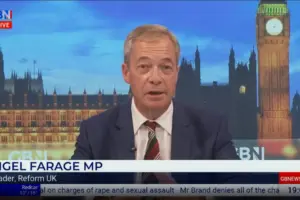
Crucially, these channels began hiring serving MPs—predominantly, though not exclusively, from the Conservative Party—to host prime-time discussion shows. Figures such as former Cabinet ministers and high-profile backbenchers transitioned seamlessly from being interviewed about government policy to interviewing their own political colleagues, rival politicians, and members of the public.
This development sparked intense public debate, culminating in formal complaints to Ofcom, parliamentary inquiries, and renewed academic scrutiny. The Demos report by Dr James Painter arrives as the most comprehensive cross-national empirical study of this trend, placing the UK’s unique broadcasting ecosystem under intense international microscope.
Supporting Context & Metrics: How the UK Compares with Europe
The core of the Demos research relies on an exhaustive survey of 37 European media regulators via the EPRA network. The empirical data collected by Dr James Painter reveals a stark contrast between the UK and the rest of the continent, underscoring just how exceptional the British regulatory approach has become.
Key Statistical Findings from the Demos Report
- 35 out of 37: In 35 of the 37 European countries surveyed, media regulators reported zero instances of a serving politician presenting a news or current affairs programme on a national television channel.
- The Rare Exceptions: Only two countries—Iceland and Malta—recorded any historical or limited exceptions to this rule. However, in both cases, the practice was extremely constrained, non-systemic, and ultimately short-lived.
- 34 out of 37: A staggering 34 European nations either explicitly ban the practice through statutory legislation or enforce stringent regulatory codes that substantially restrict serving politicians from undertaking broadcasting roles.
- The UK Outlier: The United Kingdom remains the singular major European democracy where prominent, serving legislators regularly host current affairs programmes, interview political actors, and shape daily media agendas without facing statutory bans.
Regulatory Philosophies Across Europe
The vast majority of European regulators operate under a strict separation-of-powers doctrine when it comes to media governance. Countries such as France, Germany, Sweden, and Ireland maintain robust constitutional or statutory firewalls between elected office and journalistic presentation.
In Germany, for instance, public broadcasting councils are deliberately structured to reflect a broad spectrum of social and political interests, but active politicians are explicitly prohibited from occupying executive or presenting roles within news operations to safeguard public trust. Similarly, France’s regulatory authority, Arcom, enforces rigorous guidelines concerning political pluralism, media fairness, and the separation of political mandates from broadcasting platforms.
By contrast, the UK’s regulatory framework relies heavily on "due impartiality" rather than blanket bans on specific categories of presenters. Ofcom’s Broadcasting Code requires that news and current affairs be reported with due impartiality and that alternative viewpoints are adequately represented over time. However, Ofcom has historically interpreted this code as allowing serving politicians to present programmes, provided that specific editorial safeguards—such as avoiding self-promotion or ensuring robust challenge of guests—are met. This distinction has turned the UK into a unique regulatory laboratory with profound implications for journalistic ethics.
Official Statements and Stakeholder Perspectives
The publication of the Demos report has reignited a fierce national debate among media executives, politicians, media regulators, and academic experts. The arguments surrounding politician-presenters touch on core principles of freedom of expression, audience trust, and democratic accountability.
Critics and Democratic Watchdogs
Opponents of the practice argue that allowing politicians to present current affairs fundamentally compromises the integrity of journalism. Critics point out that a politician-broadcaster enjoys a privileged platform to project their own political narrative, criticize opponents, and frame national debates without the rigorous, independent skepticism expected of professional journalists.
Dr James Painter, author of the Demos report, emphasized the international uniqueness of the British landscape during the launch of the research:
"Our survey of European regulators demonstrates quite clearly that the UK is an international outlier. While almost every other European nation draws a firm, unambiguous line between holding political office and presenting news and current affairs, the UK has permitted a blurring of these roles that has no parallel across the continent."
Media reform organizations, such as Hacked Off and the Media Reform Coalition, have consistently argued that politician-presenters undermine public trust in independent news media. They contend that viewers are entitled to expect that individuals curating current affairs programmes are bound by professional journalistic ethics rather than partisan political loyalties.
Broadcasters and Proponents of the Practice
Conversely, executives from channels that employ politician-presenters defend the practice as a vital enhancement of media pluralism and political engagement. Proponents argue that in an era of declining voter turnout and widespread disillusionment with traditional politics, having politicians directly engage with the public on television brings transparency and accessibility to political discourse.
Defenders of the model also highlight that politician-presenters are subject to existing regulatory oversight by Ofcom, which monitors broadcasts for breaches of due impartiality. They argue that audiences are intelligent enough to discern the political background of a presenter and that banning politicians from broadcasting would amount to an unnecessary restriction on freedom of expression and viewer choice.
Furthermore, supporters suggest that traditional journalistic models have long suffered from hidden biases, and that transparently partisan broadcasting provides a more honest reflection of political viewpoints than the veneer of false neutrality.
Future Outlook: What This Means for UK Newsrooms and Regulation
As the media landscape continues to evolve at a rapid pace, the Demos report serves as a timely catalyst for a broader re-evaluation of broadcasting standards in the United Kingdom. Several critical questions now face policymakers, regulators, and newsroom leaders as they look toward the future.
1. The Future of Ofcom’s Regulatory Guidance
Pressure is mounting on Ofcom to review its interpretation of the Broadcasting Code regarding politician-presenters. As public concern grows over the potential conflicts of interest inherent in MPs acting as broadcasters, regulators may face demands to establish clearer, more restrictive guidelines. While a total legislative ban akin to those found in continental Europe appears politically unlikely in the near term, heightened scrutiny of individual programmes and stricter enforcement of impartiality rules are widely anticipated.
2. Impact on Public Trust and Journalistic Integrity
For traditional UK newsrooms—particularly at public service broadcasters like the BBC and Channel 4—maintaining a clear distinction between journalism and partisan politics remains paramount. As commercial channels experiment with hybrid political-broadcasting formats, public service newsrooms must work even harder to reinforce their reputation for rigorous, independent, and impartial reporting. The risk for the broader UK media ecosystem is that the normalization of politician-presenters could erode overall public trust in television journalism, leading to increased polarization reminiscent of the US media market.
3. Ethical Codes and Parliamentary Standards
Beyond broadcasting regulation, the phenomenon of politician-broadcasters intersects with parliamentary standards and the rules governing MPs’ outside interests. Debates continue over whether serving legislators should be permitted to spend significant amounts of time on media work while drawing a taxpayer-funded salary for constituency and parliamentary duties. Future revisions to the MPs’ Code of Conduct may seek to impose tighter limits on outside employment, indirectly influencing the viability of politicians taking on regular broadcasting contracts.
4. International Standing
Finally, the Demos report forces the UK to reflect on its international reputation as a standard-bearer for broadcasting excellence. As democratic institutions face unprecedented pressures worldwide, the perception of media independence is more critical than ever. Whether the UK chooses to align more closely with European norms of strict separation or continues to chart its own permissive course will remain one of the defining media policy debates of the coming decade.
Conclusion
The findings from the Demos report by Dr James Painter provide an invaluable empirical mirror for the United Kingdom. By revealing that 35 out of 37 European nations strictly bar serving politicians from presenting news and current affairs, the study highlights the profound uniqueness of the British media model.
As UK newsrooms navigate an increasingly competitive, polarized, and digital-first environment, the tension between political advocacy and journalistic independence will only intensify. Whether the current regulatory framework can withstand these pressures—or whether the UK will eventually be forced to recalibrate its standards to match its European peers—remains one of the most critical unresolved questions in modern British media and public life.