Executive Overview
In the modern media landscape, the boundaries separating political agency from journalistic scrutiny have become increasingly porous. Nowhere is this truer—or more contentious—than in the United Kingdom. While the foundational tenets of public service broadcasting across Western democracies generally dictate a strict firewall between the governance of the state and the presentation of current affairs, the UK cuts a solitary figure on the European stage.
A landmark research report published by the prominent think tank Demos reveals that the United Kingdom stands apart from almost every other European nation in permitting serving politicians to step off the benches of parliament and directly into the broadcast studio as presenters of news and current affairs programmes. Authored by Dr. James Painter of the Reuters Institute for the Study of Journalism, the comprehensive study surveyed 37 media regulators across Europe via the European Platform of Regulatory Authorities (EPRA).
The findings are stark. In 35 of the 37 jurisdictions surveyed, there are zero contemporary examples of a serving politician anchoring a national television news or current affairs broadcast. Only Iceland and Malta emerged as exceptions, and even within those nations, the practice was marginal, heavily restricted, and exceptionally short-lived. Furthermore, 34 European countries either explicitly ban the practice through stringent statutory regulations or substantially restrict it through rigorous professional codes.
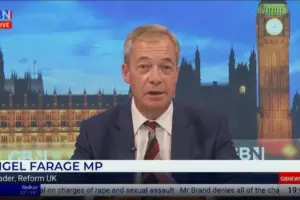
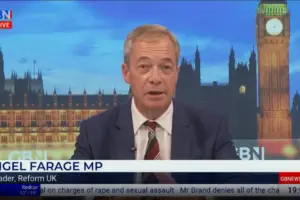
The UK, by stark comparison, has increasingly normalized this phenomenon, with prominent members of parliament from across the political spectrum regularly hosting flagship television and radio slots. This investigative report explores the mechanics of the Demos findings, traces the regulatory and cultural evolution of British broadcasting, examines the implications for public trust in journalism, and evaluates what this European outlier status means for the future of UK newsrooms.
Detailed Chronology: The Evolution of the Politician-Presenter in the UK
To understand how the United Kingdom arrived at its current regulatory juncture, it is essential to trace the historical evolution of broadcast standards, deregulation, and the changing economics of the modern media ecosystem.
The Post-War Settlement and the Birth of Impartiality (1954–1988)
For decades following the advent of commercial television in the UK via the Television Act 1954, British broadcasting operated under a deeply entrenched consensus regarding political neutrality. The BBC Charter and the statutory obligations placed upon Independent Television (ITV) companies by the Independent Television Authority (later the Independent Broadcasting Authority, or IBA) mandated "due impartiality" in all news and current affairs coverage.
During this era, the concept of a serving Member of Parliament acting as a regular broadcaster was virtually unthinkable. While retired politicians frequently offered commentary, and occasionally hosted retrospective historical or cultural series, active legislators were strictly barred from editorial control over current affairs. The rationale was simple: broadcasting was viewed as a public trust, and the airwaves were too powerful a medium to be placed directly in the hands of active partisans who held legislative or executive power.
The Deregulatory Shift and the Rise of Cable and Satellite (1990s–2000s)
The regulatory architecture began to shift with the Broadcasting Act 1990 and the subsequent Communications Act 2003, which established Ofcom as the overarching super-regulator. While Ofcom inherited the statutory duty to secure due impartiality, the media landscape was rapidly fracturing. The proliferation of digital multi-channel television, satellite broadcasting, and eventually high-speed internet streaming initiated a fragmentation of audiences.
Gradually, broadcasters sought new ways to capture viewer attention in a hyper-competitive market. Opinion-led broadcasting, long a staple of the American media model via cable news networks, began to exert an gravitational pull on UK producers. While traditional news bulletins remained tightly bound by impartiality rules, the burgeoning genre of political current affairs programming—particularly on rolling news channels and commercial radio—began testing the boundaries of what constituted "due impartiality."
The Normalization of Politician-Broadcasters (2010s–Present)
The past decade has witnessed a dramatic acceleration in politicians crossing the floor from the House of Commons and House of Lords directly into broadcasting chairs. What began as occasional guest-presenting slots or documentary commissions has evolved into regular, contracted hosting positions on major news and current affairs platforms.
High-profile figures from both the Conservative and Labour parties—including former cabinet ministers, backbench firebrands, and party leaders—have secured lucrative contracts with television and radio broadcasters. This trend intensified with the launch of new rolling news and opinion-driven television channels in the UK, which actively courted serving politicians to host prime-time analysis and interview programmes.
As these shows gained traction, the regulatory framework governing them faced unprecedented strain, culminating in the comprehensive European comparison undertaken by Demos to measure just how anomalous the UK’s approach had become.
Supporting Context & Metrics: The European Landscape
The Demos report, authored by Dr. James Painter and facilitated through the European Platform of Regulatory Authorities (EPRA), provides the first rigorous, pan-European empirical dataset comparing UK broadcasting rules with those of its continental neighbors.
The Pan-European Survey: Methodology and Scope
The research surveyed regulatory bodies across 37 European countries. These regulators operate under a diverse array of legal systems, ranging from strict constitutional protections for freedom of the press to highly centralized state-broadcasting traditions. Despite these systemic differences, a striking regulatory consensus emerged regarding the role of active politicians in newsrooms.
Key Metrics from the Demos Report
- 37 – The total number of European media regulators surveyed via the EPRA network.
- 35 – The number of countries out of the 37 where there are no examples of a serving politician presenting a news or current affairs programme on a national television channel.
- 2 – The number of outlier nations (Iceland and Malta) where limited, short-lived instances of politician-broadcasting occurred, neither of which match the systemic scale seen in the UK.
- 34 – The number of European countries that either explicitly ban the practice through statutory law or enforce substantial, prohibitive restrictions via regulatory codes.
Why Europe Bans the Practice
Across continental Europe, the prevailing legal and philosophical view is that allowing active politicians to host news and current affairs programming creates an inherent, irreconcilable conflict of interest. European regulators operating under directives such as the EU Audiovisual Media Services Directive (AVMSD) emphasize the fundamental pillars of democracy:
- Separation of Powers: The media functions as the Fourth Estate, designed to hold power to account. When a politician becomes the interviewer and the arbiter of current affairs, the line between scrutinizing power and wielding power dissolves.
- Public Trust: European media systems place a high premium on institutional trust in public service media. Allowing partisan actors direct access to editorial production is widely viewed as corrosive to public confidence in the integrity of news.
- Electoral Fairness: Continental regulators enforce strict rules around media access during election cycles to prevent incumbent politicians from leveraging broadcast platforms for political advantage. Allowing year-round presenting slots is seen as an insurmountable distortion of fair political competition.
Official Statements and Expert Analysis
The release of the Demos report has reignited a fierce debate among media ethicists, regulators, politicians, and newsroom leaders across the United Kingdom.
Dr. James Painter, author of the report from the Reuters Institute for the Study of Journalism, underscored the global uniqueness of the British media environment:
"Our comprehensive survey of 37 European regulators demonstrates beyond doubt that the UK is a major outlier. While European democracies have built robust firewalls to prevent active politicians from stepping behind the news desk, the British regulatory and media ecosystem has moved in the opposite direction, tolerating—and in some cases actively encouraging—a blurring of the lines between political office and journalistic presentation."
Representatives from Demos highlighted the democratic risks inherent in this model, pointing out that public perception of media independence is fragile. In a joint statement accompanying the research release, the think tank noted:
"When a serving lawmaker interviews policy opponents, shapes the nightly news agenda, or editorializes on current events under the banner of independent journalism, it fundamentally alters the social contract between the broadcaster and the audience. The UK public deserves absolute clarity on whether they are watching an exercise in public interest journalism or a continuation of party politics by other means."
Conversely, defenders of the UK model—including executives from commercial broadcasters and some politicians who have undertaken presenting roles—argue that the British system relies on robust self-regulation and transparency rather than outright bans. Proponents contend that:
- Audiences are sophisticated enough to recognize a politician’s political affiliation and judge their commentary accordingly.
- Ofcom’s existing broadcasting code, which mandates rigorous due impartiality and requires alternative viewpoints to be represented, provides a sufficient safeguard.
- Far from undermining democracy, featuring elected representatives directly in debate formats can enhance political engagement and bring authentic insider perspectives to complex policy discussions.
Future Outlook: Implications for UK Newsrooms and Regulation
As the dust settles on the Demos findings, media strategists and regulatory watchdogs are forced to confront critical questions about the future trajectory of British broadcasting. The debate touches upon several core pillars of the UK media industry.
The Regulatory Dilemma for Ofcom
Ofcom, the independent regulator for the UK communications industries, faces mounting pressure to review its enforcement of due impartiality rules regarding politician-presenters. While the regulator has previously investigated specific broadcasts and upheld complaints where impartiality standards were breached, critics argue that case-by-case enforcement is no longer sufficient to address a systemic structural shift.
If the UK wishes to align more closely with European norms, Ofcom may be pressed to issue significantly tighter guidance or outright restrictions on serving MPs and peers acting as news or current affairs anchors. However, any such move would likely trigger intense political pushback from broadcasters who rely on these figures for ratings and commercial differentiation.
Impact on Journalistic Integrity and Newsroom Morale
For working journalists within UK newsrooms, the presence of politician-presenters introduces complex professional challenges. Editorial teams tasked with producing rigorous, fearless investigative journalism often find themselves navigating delicate internal dynamics when the person fronting their channel is an active political stakeholder subject to the very party whips and legislative agendas their reporting seeks to interrogate.
Maintaining staff morale and upholding the reputation of British journalism as a gold standard of objective reporting becomes increasingly difficult when audiences perceive editorial double standards. Newsrooms must work harder than ever to demonstrate their independence from the political figures who occupy their broadcasting schedules.
Conclusion: A Defining Choice for British Media
The Demos report serves as a timely and rigorous mirror held up to the British media establishment. By demonstrating that 34 out of 37 European nations explicitly ban or restrict serving politicians from presenting current affairs, the research strips away the defense of inevitability.
The UK’s divergence is not a global standard, but a distinct choice—one born of deregulation, market pressures, and a uniquely permissive regulatory framework. As the media landscape continues to evolve in the digital age, UK lawmakers, regulators, and newsroom executives must decide whether this exceptionalism is a progressive innovation in political discourse or a perilous compromise of the foundational principles that keep the Fourth Estate free, fair, and fiercely independent.