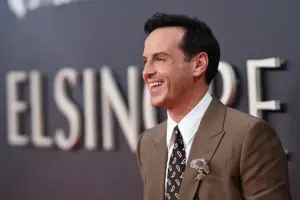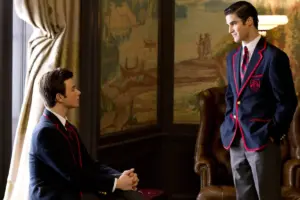
London’s historic Royal Albert Hall played host to an unexpected and emotionally charged piece of television nostalgia when Emmy and Golden Globe-winning actor and singer Darren Criss treated his one-night-only concert audience to a surprise Glee reunion. Mid-performance, Criss brought out his former co-star Chris Colfer, sending the packed auditorium into a frenzy. Together, the duo recreated their iconic rendition of Frank Loesser’s holiday classic, “Baby, It’s Cold Outside,” instantly transporting theatergoers back to the cultural phenomenon that defined a generation of television viewers.
The surprise duet served as a loving tribute to Kurt Hummel and Blaine Anderson—collectively known by the portmanteau "Klaine"—whose on-screen romance remains one of the most celebrated LGBTQ+ relationships in modern television history. While the performance was ostensibly a celebration of Criss’s solo musical career, the spontaneous appearance of Colfer struck a profound chord with fans, many of whom have spent over a decade hoping for a revival of the musical-comedy juggernaut.
This magical West End moment arrives at a fascinating crossroads for the Glee franchise. Just weeks prior to the concert, series co-creator Ryan Murphy dropped a bombshell during an interview with Entertainment Tonight, revealing that a script for a potential Glee reboot has officially been completed. Written alongside original collaborators Brad Falchuk and Ian Brennan, the script has already sparked quiet optimism among the show’s tightly knit surviving cast members.
As excitement builds around the prospect of returning to McKinley High, the impromptu London reunion underscores the enduring, cross-generational appeal of a series that reshaped the landscape of network television. This comprehensive report examines the details of the Royal Albert Hall performance, the cultural legacy of Kurt and Blaine, the concrete developments surrounding the newly drafted reboot script, and what the future may hold for the beloved musical ensemble.
Detailed Chronology: A Night to Remember at the Royal Albert Hall
The evening began as a standard stop on Darren Criss’s critically acclaimed concert tour. Known for his charismatic stage presence, formidable vocal range, and eclectic song choices, Criss had already captivated the London crowd with a mix of original music, Broadway staples, and crowd-pleasing covers. However, the energy in the legendary Victorian concert hall shifted dramatically during the latter half of the show as Criss transitioned into the holiday segment of his setlist.
Setting up the next number, Criss addressed the audience with a mischievous grin, noting that he would be attempting a vocal feat typically requiring two people. He joked about tackling both parts of a duet solo, telling the crowd, “It’s not supposed to be like that, but I’ve managed to pull off so many things.” The audience laughed, unaware that the self-deprecating remark was a theatrical feint designed to set up one of the evening’s most closely guarded secrets.
As Criss began the opening lines of “Baby, It’s Cold Outside,” the stage lighting shifted, and Chris Colfer emerged from the wings. The auditorium erupted into immediate, deafening applause and piercing cheers, drowning out the opening chords of the piano. Colfer stepped up to the microphone with characteristic deadpan wit, playfully interrupting the performance to deliver a line that immediately went viral on social media: “The only thing inappropriate about doing this song is doing it without me.”
The chemistry that made Kurt and Blaine television royalty was instantly palpable. Trading verses and harmonizing effortlessly, Criss and Colfer brought a playful, theatrical energy to the stage that mirrored their iconic dynamic on the Fox series. For the thousands of fans in attendance—many of whom had traveled internationally for the one-night-only event—seeing the duo share a stage once again felt like stepping into a time capsule.
Following the final note, the two actors embraced center stage as the Royal Albert Hall gave them a sustained, rapturous standing ovation. The moment was not merely a nostalgic nod, but a genuine display of enduring friendship forged under the intense media spotlight of a global television phenomenon during their twenties.
Supporting Context & Metrics: The Legacy of Klaine and Glee
To fully understand the weight of the Royal Albert Hall reunion, one must examine the monumental cultural footprint left by Glee and, more specifically, the characters of Kurt Hummel and Blaine Anderson.
Created by Ryan Murphy, Brad Falchuk, and Ian Brennan, Glee premiered on Fox in September 2009. It quickly evolved from a quirky, high-concept musical comedy about a misfit high school glee club into a full-blown pop culture earthquake. At its peak, the series commanded massive ratings, spawned multiple Billboard-charting albums, sold out global arena tours, and accumulated a staggering array of accolades, including Golden Globes and Emmys.
Within this ensemble, Kurt Hummel (played by Chris Colfer) served as a groundbreaking representation for young queer viewers. As an openly gay high school student navigating bullying, self-acceptance, and familial love in a conservative Ohio town, Kurt’s narrative arc was revolutionary for network television in the late 2000s. Colfer’s nuanced, vulnerable performance earned him three consecutive Golden Globe nominations and a win for Best Supporting Actor in 2011, alongside multiple Emmy nods.
When Darren Criss joined the cast in Season 2 as Blaine Anderson—the charming, polished lead singer of the rival all-boys acapella group the Dalton Academy Warblers—the dynamic of the show shifted permanently. Their initial performance of Katy Perry’s “Teenage Dream” in the landmark Season 2, Episode 10—“A Very Glee Christmas,” which also featured their first take on “Baby, It’s Cold Outside”—broke digital sales records, becoming the fastest-selling Glee single at the time.
What began as a mentor-mentee relationship quickly blossomed into a romance that became the emotional beating heart of the series. "Klaine" captured the imaginations of millions of fans worldwide, fostering a dedicated digital fandom that pioneered modern social media engagement through fan fiction, art, and online activism. Over the course of the series, Kurt and Blaine weathered breakups, long-distance struggles, and personal triumphs before ultimately getting engaged and married during the show’s sixth and final season.
The enduring popularity of this storyline explains why a simple surprise duet in London could generate international news cycles within hours. The characters are woven into the fabric of 2010s pop culture history, and seeing the actors recreate their magic over a decade later proved that the bond between the performers—and their connection to the audience—remains unbroken.
Official Statements: Ryan Murphy Breaks Silence on the Glee Reboot
While the spontaneous London reunion provided a heavy dose of emotional nostalgia, real-world developments regarding the future of the franchise have added tangible fuel to the fire. Rumors of a Glee reboot or revival have swirled across entertainment blogs and social media for years, often driven by fan demand and nostalgic cast interviews. However, those whispers turned into hard news when creator Ryan Murphy officially weighed in on the matter.
In an interview with Entertainment Tonight last month, Murphy delivered the revelation that television executives and fans had been waiting for: a reboot script exists.
"Well, funny you ask, ’cause I just finished the script an hour ago," Murphy told Entertainment Tonight, highlighting the spontaneous nature of the creative process. "So, we have a script. Brad [Falchuk], Ian [Brennan] and I, who wrote all the first two seasons, have written something. I’ve been in touch with around 10 of the original cast members. It’s very sweet, and they all had a lot of questions, but they all were very enthusiastic about the idea."
The revelation is significant not only because it confirms active development, but because it reunites the core writing trio responsible for the lightning-in-a-bottle tone of the show’s critically acclaimed first two seasons. Murphy emphasized that the creative team took a deliberate, cautious approach, wanting to ensure the material honored the legacy of the original series while reflecting where the characters—and the actors who played them—are today.
Despite the completion of the script, Murphy tempered expectations regarding an immediate production timeline, noting the delicate nature of bringing such an iconic ensemble back together.
"Nobody’s read it yet," Murphy continued, offering a candid look at the project’s current infancy. "So I don’t know, we’ll see. I vowed to myself that I wanted to write a couple of them to see what people think, particularly the cast, ’cause we were very close when we were making it."
The involvement of the original cast is both a point of excitement and a delicate emotional landscape. Glee is a show tragically touched by real-life sorrow, marked by the untimely passings of core stars Cory Monteith in 2013, Naya Rivera in 2020, and Mark Salling in 2018. Any future iteration of the series will inherently have to navigate these heavy absences with grace and reverence, a fact that Murphy and the surviving cast members are acutely aware of as they review the newly penned material.
Future Outlook: What’s Next for McKinley High?
As the entertainment industry processes the dual wave of Darren Criss and Chris Colfer’s Royal Albert Hall reunion and Ryan Murphy’s script revelation, the conversation surrounding a potential Glee revival has shifted from "if" to "how."
Reviving a landmark television series is notoriously difficult, particularly a musical comedy-drama that relied so heavily on the specific youthful exuberance of its ensemble cast. If Murphy’s script moves forward into active development—whether as a limited series, a streaming special, or a full-scale continuation—it will face the unique challenge of aging its characters into adulthood while retaining the theatrical DNA that made the original run a cultural touchstone.
The enthusiastic response from the roughly ten original cast members contacted by Murphy suggests a profound willingness to revisit the halls of McKinley High. Actors like Chris Colfer and Darren Criss have continued to build robust careers in theater, television, and film, proving their artistic versatility far beyond their Glee origins. Yet, as their London stage reunion demonstrated, neither artist nor their audience has forgotten the profound impact of their breakout roles.
Furthermore, the television landscape has evolved dramatically since Glee went off the air in 2015. The mainstream acceptance of LGBTQ+ narratives, diverse casting, and complex mental health discussions in teen dramas—milestones that Glee fought hard to normalize in a broadcast network environment—are now industry standards. A modern revival would have the opportunity to comment on how the world has changed for queer youth and arts education since McKinley High first opened its doors in 2009.
For now, fans must content themselves with the magic of viral video clips from London and the comforting knowledge that the creators and stars still hold the series close to their hearts. Whether the newly written script translates into a greenlit production or remains a cherished exercise in creative exploration, one thing is certain: the spirit of the New Directions is alive and well, proving that true pop culture phenomena never truly fade into silence.