Executive Overview
Federal law enforcement agencies in the United States and Europe are unraveling what may be one of the most significant insider corruption scandals in the history of cybercrime. Investigators pursuing the ShinyHunters hacking group—a relentless cyber extortion syndicate that recently breached high-profile targets, including the Federal Bureau of Investigation (FBI)—have identified executives at multiple prominent ransomware negotiation firms maintaining uncomfortably cozy relationships with the threat actors.
According to sources close to the unfolding federal probe, at least one U.S.-based cybersecurity executive actively assisted ShinyHunters in operating a victim-pressure extortion portal. The investigation has also revealed deep ties between prominent figures in the incident response community and the inner workings of the extortion ecosystem, raising uncomfortable questions about financial conflicts of interest, corporate governance, and the ethics of cyber ransom negotiations.
The fallout from these discoveries has triggered a high-velocity law enforcement crackdown spanning North America, Europe, and the Middle East. With arrests already executed in the Netherlands, Canada, and Jordan, and grand jury indictments multiplying by the week, the line separating white-hat cybersecurity professionals from black-hat cybercriminals is blurring alarmingly.
Detailed Chronology: From the Netherlands to Canada
The Collapse of the Old Guard and the Rise of "Rey"
To understand the current crisis, investigators have had to chart the evolution of ShinyHunters. Active since 2019, the group was initially dominated by cybercriminals operating out of France. As law enforcement systematically arrested and jailed those early members, operational control of the "ShinyHunters" brand migrated. By late 2025, intelligence services identified the new administrator as "Rey"—a teenage hacker based in Amman, Jordan.
Under Rey’s leadership, the syndicate accelerated its global extortion campaign, extracting upwards of $70 million from corporate and government victims in 2026 alone. The syndicate’s audacity peaked in late September, when hackers aligned with ShinyHunters compromised the FBI’s recruitment portal, fbijobs.gov. The attackers taunted the bureau by threatening to publish deeply sensitive personnel files, including psychological evaluations, Social Security numbers, home addresses, and specialized unit assignments.

The Raid on Pepijn van der Stap
The FBI’s response to the fbijobs.gov breach was swift and uncompromising. However, the critical breakthrough in dismantling the current iteration of ShinyHunters occurred weeks earlier on September 15, 2026.
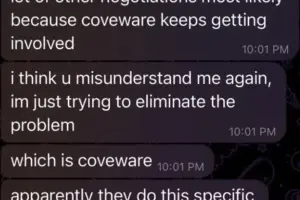
On that evening, Dutch law enforcement executed a high-stakes tactical raid, deploying flash-bang grenades to apprehend convicted hacker and prominent ShinyHunters suspect Pepijn van der Stap while he was actively logged into his digital accounts. Crucially, authorities seized Van der Stap while his Signal messaging application was active. This operational win allowed investigators to immediately review real-time chats with his frequent contacts, including ransomware negotiators stationed in Canada and the United States.
According to sources familiar with the investigation, Van der Stap’s Signal logs did more than expose financial transactions; they reportedly contained evidence pointing to an international murder-for-hire plot. Dutch media outlet RTL reported that Van der Stap allegedly issued orders for two overseas assassinations (though no evidence suggests these plots were successfully executed).
The Arrest of Edward Dubrovsky
The decrypted Signal communications opened a Pandora’s box of insider connections. On October 9, 2026, the FBI arrested Edward Dubrovsky, a 54-year-old Canadian cybersecurity executive and the author of a recently published book on managing cyber extortion. Dubrovsky was charged with threatening to disclose hacked data and interfering with interstate commerce through extortion.
Court records and investigative leaks indicate that Van der Stap’s chats showed frequent, highly detailed conversations with Dubrovsky and executives at a major U.S.-based consulting firm. Shockingly, investigators found that these executives frequently possessed advance knowledge of new ShinyHunters victims before the victim organizations even realized they had been breached. Furthermore, evidence suggests Dubrovsky knew ShinyHunters had successfully compromised FBI infrastructure but chose to withhold this critical intelligence from federal authorities until the group publicly weaponized the stolen data on social media.

Supporting Context & Metrics: The Anatomy of Extortion
"Shinywire" and the Business of Coercion
The investigation into the U.S. consulting firm connection centers on shinywire[.]com, a now-defunct extortion portal operated by ShinyHunters between May 3 and October 16, 2026. The website indexed nearly 100 organizations compromised by the syndicate, showcasing stolen data samples and establishing aggressive seven-day countdown timers. If a victimized company refused to engage or negotiate within the prescribed window, the group published the stolen caches on its Tor-based shaming blog.
Prominent victims listed on the portal included American medical technology giant Intuitive Surgical, which suffered a credential-harvesting phishing attack in March 2026. Federal investigators believe that at least one executive at a prestigious U.S. consulting firm with over 1,000 employees played a direct, active role in managing and maintaining the Shinywire infrastructure.
The "Ghostbyte" Connection and Corporate Feuds
The web of intrigue extends deeply into corporate boardrooms and historic ransomware campaigns. Prior to his arrest, Dubrovsky had filed a civil lawsuit in Ontario against Daniel Tobok, the former chief executive of Cypfer, a prominent incident response firm with global operations. The legal battle exposed a bitter falling out between former business partners who had previously built Cypfer together before Tobok’s firm was acquired by the Apros Group, led by former FBI special agent Jason Hogg.
Simultaneously, former colleagues of Daniel Tobok told investigators that years prior—dating back to at least 2018—Tobok was known within certain ransomware circles by the handle Ghostbyte. During a 2018 extortion incident involving the Russian-language Dharma ransomware affiliate program, a victim seeking payment guarantees was explicitly advised by the threat actors to contact an IT professional via the email address [email protected].
While Tobok has not responded to requests for comment, digital intelligence firm Constella Intelligence discovered that an email address frequently utilized by Tobok ([email protected]) was linked to online accounts registered under the username "ghostbyte." Furthermore, blockchain analysis of the cryptocurrency wallet associated with the Dharma representative revealed transactions totaling approximately $3.5 million at current valuations.

Official Statements and Industry Reactions
Corporate Denials and Institutional Fallout
Cypfer has vigorously distanced itself from the ongoing criminal proceedings. In a formal statement released on October 14, the company maintained that its operations do not involve facilitating ransomware payments and stressed that it had no prior knowledge of Dubrovsky’s arrest.
"CYPFER has not received any outreach from law enforcement and, to our knowledge, is not the target of any law enforcement investigation," a company spokesperson stated.
The statement also emphasized that Cypfer and CyberSteward Inc.—another entity linked in previous negotiations—operate as entirely separate legal entities with no overlapping officers or directors.
The Conflict of Interest Crisis in Incident Response
The scandal has exposed structural moral hazards within the cyber incident response and insurance ecosystems. Mark Camillo, Chief Executive of CyberAcuView—an industry consortium established by major cyber insurance carriers—has emerged as a vocal critic of the standard compensation models utilized by some negotiation firms.
Camillo points out that many ransomware negotiators charge a variable fee structured as a percentage of the final ransom payout. This compensation structure introduces a profound, perverse conflict of interest: the intermediary stands to make significantly more money if the extortion payout is larger, disincentivizing them from aggressively negotiating down the attackers’ demands.

"It has come to the industry’s attention that many of the ransomware payers charge a percentage of the final payment… This makes no sense if they are also the negotiator," Camillo warned. "There needs to be more transparency in the process as no one in the ecosystem should be profiting purely on the size of the ransomware transaction."
Criminal Prosecutions Mount
The U.S. Department of Justice (DOJ) is aggressively targeting fraudulent negotiators across the country.
- On October 7, the DOJ charged MonsterCloud CEO Zohar Pinhasi with wire fraud and conspiracy. Prosecutors allege Pinhasi charged clients millions for remediation while secretly paying hackers behind their clients’ backs.
- In July, Florida ransomware negotiator Angelo Martino was sentenced to 70 months in federal prison for collaborating with the Blackcat/ALPHV ransomware syndicate, feeding internal client negotiation strategies directly to the threat actors to maximize payouts.
Future Outlook: A Turning Point for Cyber Defense
The exposure of executives collaborating with groups like ShinyHunters marks a watershed moment for the cybersecurity industry. For years, the dirty secret of ransomware response has been the quiet, unregulated pipeline moving corporate capital into the wallets of transnational cybercrime syndicates.
As federal investigators peel back the layers of encrypted communications and corporate litigation, the fallout will likely trigger sweeping regulatory reforms. Insurance providers, corporate boards, and government regulators are expected to demand unprecedented transparency into incident response operations, separating forensic investigation from financial negotiation once and for all.
For ShinyHunters, the simultaneous arrest of key administrators like Rey, Pepijn van der Stap, and affiliated enablers represents a crippling blow. Yet, as history demonstrates, the underground adapts quickly. The real legacy of the Shinywire scandal may not simply be the dismantling of a single hacking crew, but the permanent shattering of the illusion that the multi-billion-dollar cyber extortion remediation market operates entirely above board.