Executive Overview
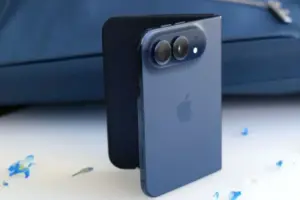
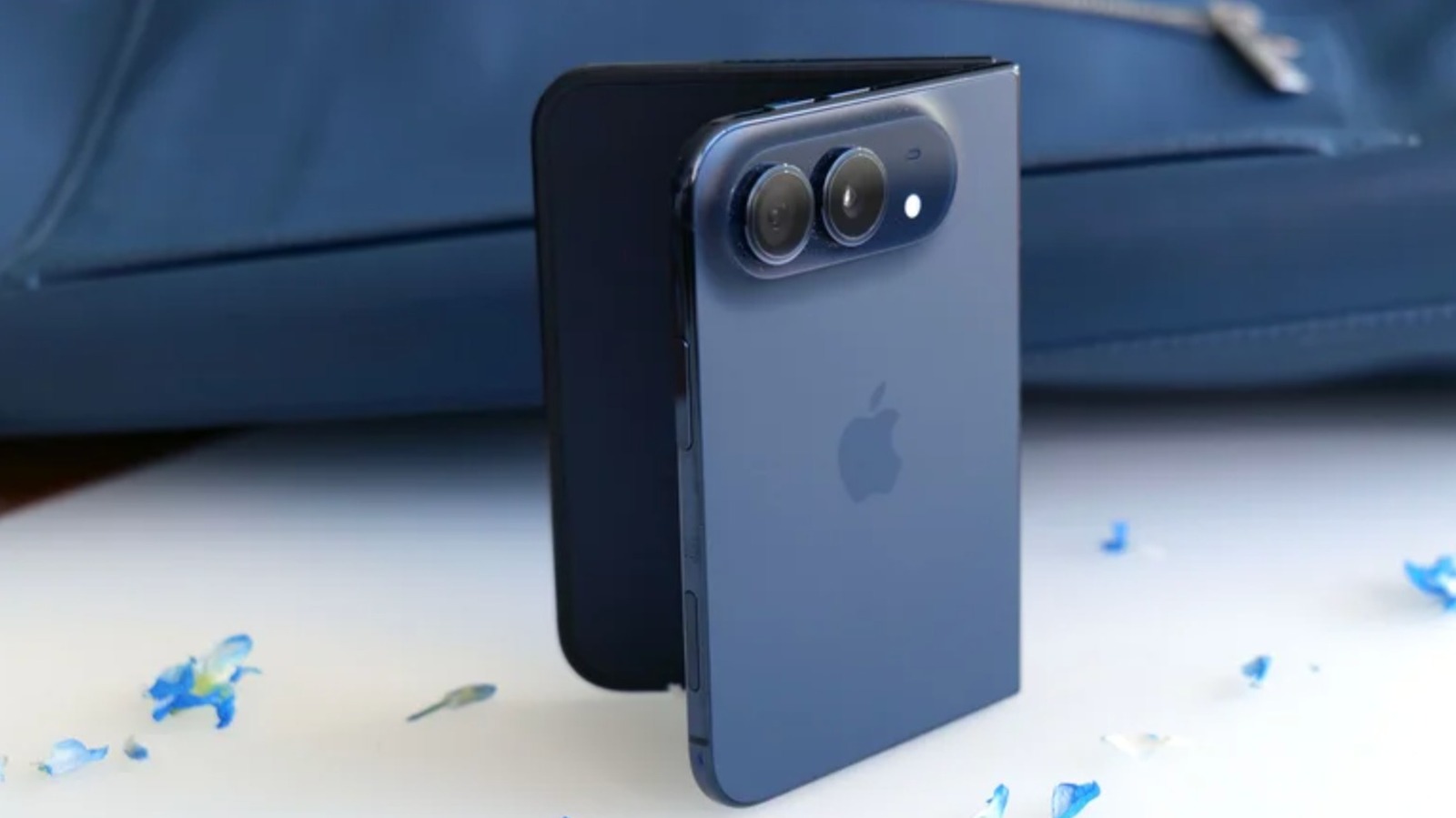
Apple’s debut foray into the foldable device market—the newly released iPhone Duo—has officially captured the tech industry’s attention. While review cycles and early consumer impressions of the $2,000 device are broadly positive, highlighting the polish typical of a Cupertino first-generation product, one specific design choice has proven divisive.
For the first time since the 2022 release of the third-generation iPhone SE, Apple reverted to Touch ID for a primary smartphone line, leaving millions of users accustomed to Face ID interacting with a biometric sensor embedded in the power button or bezel layout.
This technological regression, however, may be short-lived. According to industry leaks and insights shared by reliable Bloomberg reporter Mark Gurman on his Power On podcast, Apple is already deep into the development cycle for the iPhone Duo’s successor. Early prototypes of the second-generation foldable are reportedly attempting a complex engineering feat: packing under-display Face ID directly into the exterior screen.
This comprehensive report examines the structural limitations that forced Apple to rely on legacy Touch ID for the original iPhone Duo, the engineering hurdles associated with under-display biometric sensors in foldable form factors, and what this signals for the broader trajectory of Apple’s hardware ecosystem.
Detailed Chronology: From First-Gen Trade-Offs to Second-Gen Prototypes
The Launch of the iPhone Duo and the Return of Touch ID
When Apple announced the iPhone Duo, it immediately ignited supply chain scarcity and unprecedented demand, leading to severe pre-order queues and inventory caps across Apple Stores worldwide. Early hands-on testing by reviewers confirmed that the device is a marvel of industrial design, effectively signaling Apple’s long-anticipated entry into the foldable arena.
However, users transitioning from modern flagship handsets like the iPhone 17 or iPhone 18 Pro quickly noted a jarring interface change: the total absence of Face ID.
Since the introduction of the TrueDepth camera system on the iPhone X, Apple has aggressively phased out fingerprint authentication across its flagship smartphone tiers. Yet, on the iPhone Duo, Apple opted to reintroduce Touch ID. While reviews indicate that the Touch ID solution implemented on the Duo functions with high accuracy, it introduces friction into the user experience, often requiring a slightly longer, more deliberate pause to authenticate compared to the seamless, glance-based unlocking offered by Face ID.
Engineering the First-Generation Foldable
The decision to abandon Face ID for the initial iteration of the iPhone Duo was not made lightly. Developing a foldable device introduces an exponentially complex set of mechanical and thermal constraints that traditional slab smartphones simply do not face.
Analysts and supply chain insiders note that the iPhone Duo was engineered to be exceptionally thin—particularly when unfolded. Squeezing the bulky infrared dot projectors, flood illuminators, and camera arrays required for a traditional Face ID system into such a razor-thin chassis proved structurally unviable.
Furthermore, because the iPhone Duo is designed to be used fluidly across multiple orientations (both folded and unfolded), implementing a robust Face ID system would have required redundant sensor arrays for both the inner and outer displays. Doing so would have compromised the device’s weight distribution, added stress to the flexible display panel, and driven the retail price—already a steep $2,000—even higher.
In the interest of maintaining absolute hardware uniformity across both screens, Apple chose to standardize biometric authentication via Touch ID, effectively hitting pause on facial recognition for the foldable lineup’s debut.
The Pivot to Under-Display Face ID in Prototypes
The compromise of using Touch ID was always intended as a temporary stepping stone. According to Mark Gurman, Apple’s hardware engineering teams are already actively testing next-generation iterations of the foldable.
Prototype units of the tentative "iPhone Duo 2" have reportedly successfully integrated early iterations of under-display Face ID technology. Rather than relying on the visible cutouts, Dynamic Islands, or bulky sensor housing units that characterize current slab iPhones, these new prototypes house the necessary TrueDepth components entirely beneath the outer display panel.
This development aligns with broader hardware trajectories observed across Apple’s product roadmap. The recently launched iPhone 18 Pro and Pro Max models feature significantly shrunken Dynamic Island hardware footprints, proving that Apple is steadily mastering the art of migrating camera sensors and biometric emitters beneath active display pixels without sacrificing optical clarity or security performance. Notably, the first-generation iPhone Duo already incorporates Apple’s very first under-display camera, proving that the company is actively crossing technological thresholds in transparent display manufacturing.
Supporting Context & Metrics: The Foldable Landscape and Biometric Evolution
To fully appreciate the engineering milestone that under-display Face ID represents for the iPhone Duo 2, it is necessary to contextualize Apple’s biometric trajectory alongside broader market trends.
| Device Generation / Model | Primary Biometric Method | Authentication Location | Display Integration Status |
|---|---|---|---|
| iPhone X to iPhone 17 Pro | Face ID | Top Display Notch / Dynamic Island | Surface-mounted sensor array |
| iPhone SE (3rd Gen, 2022) | Touch ID | Home Button | Physical bezel-embedded sensor |
| iPhone Duo (1st Gen) | Touch ID | Side Power Button / Frame | Physical chassis-embedded sensor |
| iPhone Duo 2 (Prototypes) | Under-Display Face ID | Outer Display Panel | Sub-pixel embedded optical/IR array |
The Component Density Challenge
Integrating Face ID into a foldable device involves overcoming severe physical hurdles. A standard Face ID module relies on three core components:
- A flood illuminator that bathes the user’s face in infrared light.
- A dot projector that casts a grid of over 30,000 invisible infrared dots to map facial topography.
- An infrared camera that reads the resulting pattern and compares it against secure enclave data.
In a traditional slab phone, these components sit in a dedicated cutout carved out of the OLED panel. In a foldable phone, the display panel itself must bend, flex, and endure hundreds of thousands of fold cycles. Placing rigid, heat-generating infrared sensor clusters beneath a flexible folding OLED layer risks causing panel degradation, optical distortion, and localized dead pixels along the fold axis.
By restricting the initial prototype testing of under-display Face ID to the outer display of the iPhone Duo 2, Apple is mitigating these risks. The outer cover screen of a foldable device behaves much more like a traditional rigid smartphone display, making it a stable testing ground before attempting the infinitely more complex feat of embedding biometric scanners beneath a flexible inner folding screen.
Consumer Reception and Price Sensitivity
The $2,000 starting price point of the iPhone Duo places it squarely in the ultra-luxury tier of consumer electronics. At this price point, consumers hold expectations of uncompromising specifications. The inclusion of Touch ID—while functional—was viewed by early adopters as a generational trade-off.
Market research indicates that while early enthusiasts were willing to overlook the lack of Face ID to secure a working Apple foldable, mainstream consumer adoption hinges heavily on feature parity with standard flagships. Introducing under-display Face ID in the second-generation model will likely serve as the primary marketing catalyst to convince holdouts to upgrade.
Official Statements and Industry Commentary
While Apple maintains its customary silence regarding unannounced future products, industry analysts and insider reports provide a clear window into the company’s internal strategy.
In his Power On newsletter and companion podcast, Mark Gurman offered direct insights into the rationale driving Apple’s hardware decisions:
"Apple is actively working on under-display Face ID, and early iPhone Duo 2 prototypes already feature the technology built directly into the outer display. Squeezing components into the first-generation Duo was simply too challenging given how thin the display panels are, and maintaining uniformity across both screens forced their hand on Touch ID this time around."
Supply chain analysts tracking Apple’s display partners—including Samsung Display and LG Display—have similarly noted an uptick in R&D spending dedicated to transparent OLED substrate manufacturing. These advancements are designed to allow a higher percentage of infrared light to pass through active display pixels without scattering, a prerequisite for reliable under-display facial recognition.
Furthermore, industry leaks indicate that Apple is not stopping at biometric updates for the next-generation foldable. Gurman noted that Apple is also evaluating the integration of the Action Button—a staple of the iPhone 15 Pro and subsequent flagship models—into the chassis design of the eventual iPhone Duo 2, signaling a concerted effort to bring the foldable line entirely up to speed with the company’s mainline pro-tier devices.
Future Outlook: What the iPhone Duo 2 Means for Apple’s Ecosystem
The transition from Touch ID back to Face ID via under-display technology marks a critical inflection point not just for the iPhone Duo line, but for Apple’s entire mobile hardware strategy over the next decade.
1. The Death of the Dynamic Island?
If Apple successfully operationalizes under-display Face ID for the outer screen of the iPhone Duo 2, it paves the way for the eventual elimination of the Dynamic Island on standard slab iPhones (such as the iPhone 19 and iPhone 20 Pro series). The holy grail of smartphone design has long been an entirely uninterrupted slab of glass with zero cutouts. By solving the engineering challenges of under-display infrared mapping on a complex foldable chassis, Apple is effectively stress-testing technologies that will trickle down across its entire hardware portfolio.
2. Maturation of the Foldable Category
The first-generation iPhone Duo proved that Apple could successfully manufacture a durable, highly polished foldable device. However, true category maturity requires eliminating generational compromises. By addressing the biometric limitation—the single most prominent user-experience complaint leveled against the original Duo—Apple will position the iPhone Duo 2 as a mature, uncompromised productivity and entertainment powerhouse.
3. Timeline and Expectations
Industry consensus suggests that consumers should not expect the iPhone Duo 2 to arrive overnight. Given the rigorous testing cycles required for under-display sensor integration and hinge durability enhancements, a release window pointing toward late 2027 or 2028 is currently considered the most realistic timeline.
Until then, first-generation iPhone Duo owners will continue to rely on the secure, albeit retro, convenience of Touch ID—knowing full well that Apple’s engineering labs are already building the future of biometric authentication beneath the glass.