Executive Overview
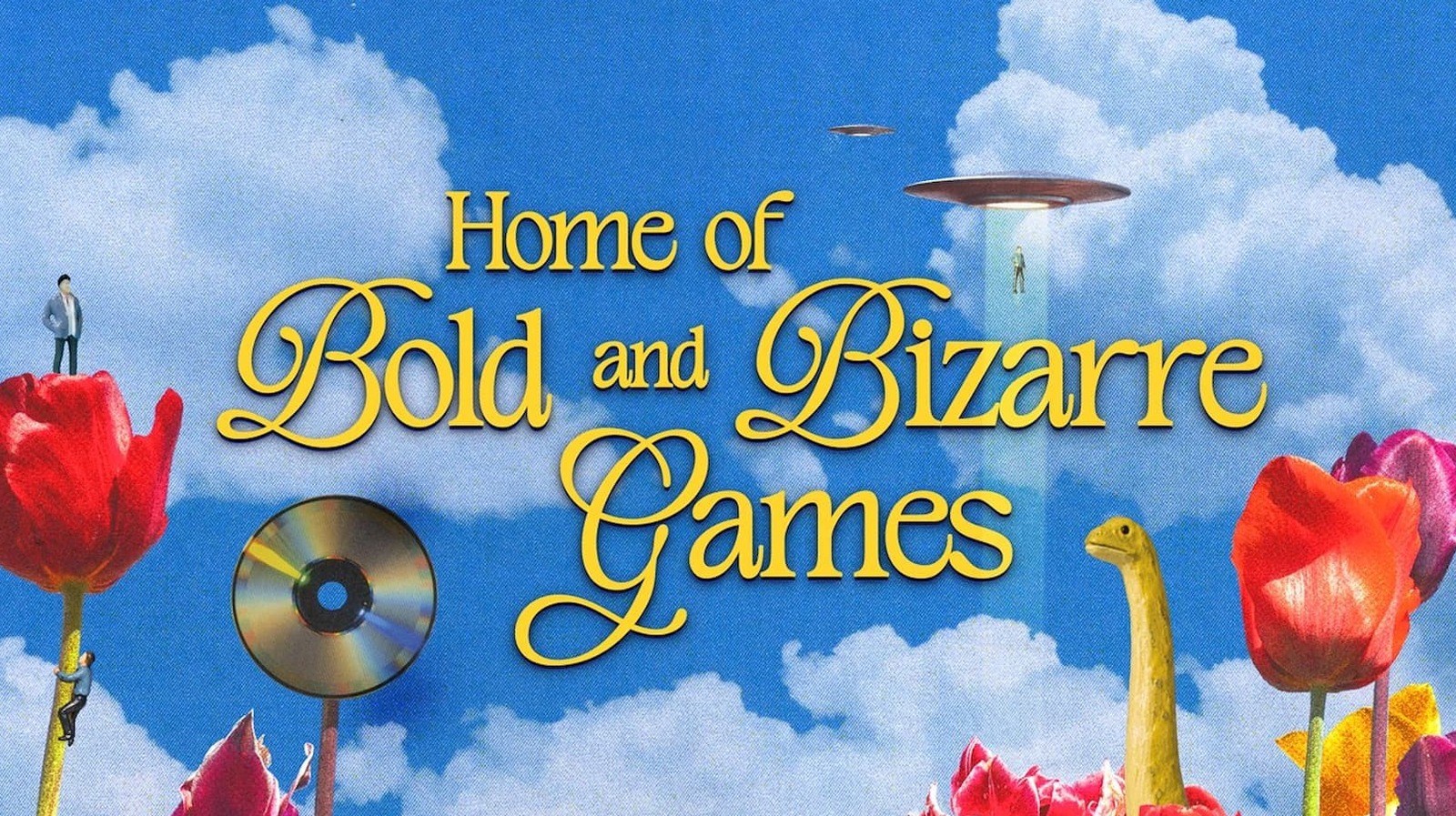
In an era dominated by algorithmic discoverability, corporate consolidation, and the creeping normalization of generative artificial intelligence in creative pipelines, the independent video game landscape can often feel both oversaturated and strangely homogenous. Enter Pantaloon, a curator-turned-publisher that has spent years building a deeply engaged community through puzzle-based newsletters and curated game keys. Now, the company is taking a massive leap forward with the launch of The Playbill—an innovative subscription service explicitly designed to champion the weird, the eccentric, and the fiercely original corners of indie game development.
Often described as an Xbox Game Pass equivalent tailored for the avant-garde, The Playbill promises an evolving collection of bold and bizarre titles. However, what truly sets this service apart in the contemporary gaming ecosystem is its uncompromising stance on creative integrity: The Playbill has instituted a strict, zero-tolerance policy against generative AI. Founder Jamin Smith and the Pantaloon team are positioning the platform not merely as a storefront or rental service, but as a sanctuary for human craft—a deliberate pushback against automated development tools in favor of authentic artistic expression.
Priced accessibly at $5 per month or $60 annually, the service blends a curated library of third-party indie gems, day-one releases of Pantaloon’s internal projects, behind-the-scenes access to abandoned prototypes, and a rotating inventory of game keys. As the gaming industry grapples with discoverability crises on major digital storefronts like Steam, The Playbill offers a refreshing alternative model: one driven by human curation, community-driven puzzles, and an unyielding defense of human creativity.
Detailed Chronology: From Curated Newsletter to Subscription Powerhouse
To understand the strategic vision behind The Playbill, it is essential to examine Pantaloon’s trajectory within the gaming industry. The enterprise did not begin as a traditional publisher backed by venture capital; rather, it evolved organically from a grassroots community initiative.
Phase One: The Newsletter and Puzzle Epoch
Pantaloon initially established its footprint by cultivating an audience of more than 50,000 dedicated newsletter subscribers. Rather than relying on traditional marketing channels or standard advertising, the platform engaged its community through intellectual stimulation. Subscribers were tasked with solving intricate puzzles delivered directly to their inboxes. Successful solvers were rewarded with free game keys, while others could purchase codes for a tightly curated selection of hand-picked indie games. This gamified approach to community building forged an intensely loyal user base that valued discovery, challenge, and direct engagement over passive consumption.
Phase Two: Transitioning into Publishing
Buoyed by the success of its community model, Pantaloon made the natural transition from curator to publisher. The company began backing projects that aligned with its distinct editorial voice—games that leaned heavily into experimental mechanics, striking visual identities, and unconventional narrative structures. As its catalog of first-party and partnered titles expanded, the limitations of traditional distribution models became apparent. Indie games, particularly those of a more eccentric nature, often struggle to break through the noise of massive platform algorithms.
Phase Three: The Birth of The Playbill
Culminating months of strategic planning and community feedback, Pantaloon officially unleashed The Playbill. Conceptualized as an evolving subscription hub, the service brings together third-party hits, internal studio releases, early playtests, and interactive alternate reality games (ARGs) under a single roof. By combining a key-based delivery system with structured subscription tiers, Pantaloon has created a sustainable ecosystem that supports indie developers financially while offering subscribers a curated, low-barrier-to-entry journey through games they might never have encountered on mainstream storefronts.
Supporting Context & Metrics: Inside the Ecosystem of The Playbill
The Playbill launches with a robust initial lineup designed to showcase the breadth and depth of experimental independent design. The ecosystem is divided into several distinct pillars, each serving a unique function for players and developers alike.
The Launch Lineup: A Tapestry of the Eccentric
At launch, subscribers gain access to a carefully curated selection of 13 diverse titles, categorized into celebrated third-party works and Pantaloon’s own internal catalog:
- Third-Party Standouts: The initial offering includes critically acclaimed and distinctive titles such as Buckshot Roulette, Silt, Ex Sanguis, and Cabin Factory. These games share a common thread of atmospheric tension, striking art direction, and mechanically distinct gameplay loops.
- Pantaloon Originals: Mirroring the day-one availability model popularized by major subscription services, all of Pantaloon’s internal games drop onto The Playbill immediately upon release. The launch lineup features Sub-Verge, Occlude, It Takes a War, Boxroom, Rolla, and the widely praised music creation simulator Offbeat.
- Timed Exclusives: Demonstrating its growing publishing clout, the service features a timed exclusive for Virtue: Prologue—a visual novella companion piece designed to set the stage for Virtue and a Sledgehammer, slated for release shortly after the platform’s launch.
The Green Room: A Peek Behind the Curtains
Beyond finished titles, The Playbill introduces The Green Room, a dedicated section granting subscribers early access to demos, playtests, and "abandoned prototypes." At launch, the Green Room features interactive test builds for highly anticipated oddities like Isle Goblin, Mr Magpie’s Harmless Card Game, and Lemonade Apocalypse. This transparent look into the development process transforms subscribers from passive players into active participants in the creative lifecycle.
Subscription Models and Structural Mechanics
The financial and operational mechanics of The Playbill have been meticulously structured to balance accessibility for players with financial viability for the publisher:
- The Primo Subscription: Available for $5 per month or $60 annually, the Primo tier unlocks the full spectrum of the service’s offerings.
- Annual vs. Monthly Perks: Annual subscribers immediately receive all 13 games in the initial lineup, alongside every new title introduced during their membership term. Monthly subscribers, by contrast, are guaranteed one bespoke partnership title per month (assigned systematically rather than chosen ad-hoc). To prevent subscription exploitation—where users might subscribe for a single month, harvest all available keys, and immediately cancel—monthly subscribers unlock access to the cumulative library after completing six consecutive months of continuous membership.
- The Key-Based Model: Uniquely, The Playbill operates on a key-based inventory system. When Pantaloon exhausts its allocation of keys for a specific title, that game cycles out of the service, making room for fresh, incoming projects on a regular rotational basis.
- Free-to-Access Elements: Demonstrating commitment to its roots, Pantaloon ensures that the newsletter’s signature puzzles, community features, ARGs, and select standalone experiences like Virtue: Prologue remain completely free to access without a paid subscription.
Official Statements: The Philosophy of Human Craft and Anti-AI Stance
The ideological core of The Playbill was articulated clearly by Pantaloon founder Jamin Smith during the service’s rollout. Smith emphasized that the platform is fundamentally a reaction against the homogenizing forces of modern digital marketplaces.
"We want the Playbill to be a celebration of more experimental and eccentric games," Smith stated in an interview with industry media. "The nature of the model reduces that barrier to entry for players to check out genres and experiences that might not be surfaced by Steam’s market-shaping algorithms."
Perhaps the most resonant and widely discussed aspect of Smith’s announcement is the platform’s absolute prohibition of generative artificial intelligence. In an industry where major publishers and indie developers alike have increasingly experimented with AI-generated assets, text, and code to cut production costs, Pantaloon has drawn a hard ethical line in the sand.
"It’s also worth stating that we won’t feature or platform any games that use genAI in any form," Smith declared. "The Playbill is a celebration of the craft of making games."
This declaration has struck a powerful chord within the independent development community. By explicitly shutting out generative tools, Pantaloon is positioning The Playbill as a bastion of authentic human labor, artistic intention, and emotional resonance. Every pixel, line of code, musical note, and written word in a Playbill game is certified as the product of human imagination and toil.
Future Outlook: Can the Subscription Model Save Indie Experimentation?
As The Playbill establishes its footing in a crowded market, its long-term viability will serve as an intriguing case study for the independent games sector. The traditional indie publishing model is fraught with peril; developers are routinely forced to gamble years of their lives on a single launch window, praying that platform algorithms will smile upon their store pages.
By pooling resources, leveraging a dedicated community, and offering a subscription model that actively encourages players to step outside their comfort zones, Pantaloon has constructed a compelling alternative economic engine. The inclusion of abandoned prototypes and early playtests in The Green Room further suggests that the platform could evolve into a thriving incubator for embryonic ideas—a place where developers feel safe to fail, experiment, and push boundaries without the paralyzing fear of immediate commercial failure.
Furthermore, the strict anti-AI stance may prove to be a significant competitive differentiator. As consumer fatigue with generative media grows, players are increasingly searching for authenticity. A curated subscription service that guarantees 100% human-crafted content could attract a fiercely loyal, quality-conscious audience that feels alienated by the broader tech industry’s rush toward automated content generation.
Ultimately, The Playbill represents more than just a new way to consume indie games; it is a manifesto for how games should be made, shared, and celebrated. If Pantaloon can successfully scale its community-driven model while maintaining its uncompromising creative standards, The Playbill may well blueprint a sustainable, deeply human future for independent game publishing.