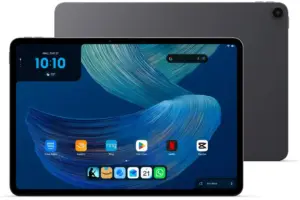
Executive Overview: A Paradigm Shift in Portable Computing
In a move that marks a definitive turning point for its hardware division, Amazon has officially retired its long-standing "Fire" tablet branding and the restrictive, proprietary FireOS that defined it. In its place, the retail giant has introduced the "Alexa Tablet" family—a comprehensive suite of devices that embrace a full-featured, open Android experience. This strategic pivot, timed perfectly for the Black Friday shopping season, signals Amazon’s acknowledgement of a shifting consumer landscape that demands better software compatibility, broader app accessibility via the Google Play Store, and hardware that competes directly with premium Android rivals.
By transitioning to a more standard Android interface, Amazon is shedding the “walled garden” reputation that haunted its previous hardware iterations. Whether for the budget-conscious student or the creative professional requiring high-end specifications, the new lineup—spanning the compact Alexa Tablet 8 to the powerhouse Alexa Tablet 12 Pro—represents the most significant hardware refresh in the company’s history.
Detailed Chronology: From FireOS to Android Freedom
The story of Amazon’s tablet journey is one of evolution. For over a decade, the Fire Tablet series served as a gateway to Amazon’s ecosystem, utilizing a heavily forked version of Android that excluded Google Mobile Services (GMS). While this served Amazon’s business model of keeping users within their digital storefront, it often frustrated users who desired the flexibility of standard Android.
The Development Phase
Behind the scenes, internal pressure had been mounting to address the stagnation in the tablet market. Data suggested that users were increasingly looking for productivity-focused devices rather than just media consumption tools. The development of the "Alexa Tablet" line began with the goal of reconciling Amazon’s voice-assistant-first approach with the versatility of the open Android ecosystem.
The Official Transition
- Early 2024: Internal discussions shift toward abandoning the Fire brand to shed negative associations regarding performance limitations.
- Q3 2024: Prototype testing for the 12 Pro begins, focusing on display technology and integration with professional-grade Android software.
- Q4 2024: The official launch coincides with Black Friday, using aggressive pricing to capture market share from competitors like Samsung and Lenovo.
Supporting Context & Metrics: The Hardware Breakdown
The new Alexa Tablet family is tiered to address distinct user segments. Each device represents a deliberate attempt to balance cost-efficiency with high-performance benchmarks.
The Alexa Tablet 8: The Value King
- Price: $149.99 (Down from $229.99)
- Form Factor: 8.7-inch display
- Specs: 4GB RAM, 64GB storage
- Target Audience: Ideal for children, commuters, and those requiring a secondary device for media consumption. The 4GB RAM threshold is a significant upgrade, ensuring that basic multitasking is fluid rather than stuttered.
The Alexa Tablet 11: The Sweet Spot
- Price: $219.99 (Down from $329.99)
- Display: 11-inch 2.5K panel
- Specs: 8GB RAM
- Target Audience: Designed for the power-user who wants a premium viewing experience without the "Pro" price tag. The jump to 8GB of RAM makes this unit a capable machine for document editing, light gaming, and intensive web browsing.
The Alexa Tablet 12 Pro: The Flagship Experience
- Price: $449.99 (Down from $549.99)
- Display: 12-inch 2.8K display with "Nanomatte" coating
- Specs: 120Hz refresh rate, 8GB RAM, 128GB storage
- Target Audience: Professionals and creators. The Nanomatte coating is a standout feature, effectively mitigating the glare issues that plague most high-gloss glass tablets. Coupled with the 120Hz refresh rate, this device feels undeniably high-end.
Official Statements and Industry Impact
While Amazon has kept the internal engineering team’s specifics under wraps, industry analysts suggest this move was a necessity. "Amazon was facing a ‘content-only’ trap," says tech analyst Marcus Thorne. "By opening the doors to the Google Play Store, they have effectively removed the barrier to entry for millions of potential customers who previously viewed Fire tablets as toys rather than tools."
The decision to retain pre-installed Amazon services like Prime Video, Kindle, and Amazon Luna suggests a "hybrid" strategy. Amazon is betting that by providing a superior hardware experience, users will stay for the convenience of the services, rather than being forced to use them through a restrictive OS.
The Competitive Landscape: Is It Right for You?
To provide an authoritative assessment, we must weigh the pros and cons of this transition.
The Case for Adoption
If you are looking for a reliable Android tablet that doesn’t sacrifice performance for a lower price tag, these devices are objectively better than their predecessors. The ability to install apps from the Google Play Store immediately makes these tablets compatible with the vast majority of professional productivity suites, including Microsoft 365, Google Workspace, and Adobe Creative Cloud.
The Case for Caution
The devices remain heavily curated by Amazon. For users deeply entrenched in the Apple ecosystem or those who prefer a "vanilla" Android experience (like that found on a Google Pixel Tablet), the presence of pre-loaded Amazon software might be perceived as bloatware. Furthermore, while the operating system is more open, users who are not already integrated into the Amazon ecosystem might find the interface occasionally nudging them toward Amazon’s storefronts and subscription services.
Future Outlook: Where Does the Alexa Tablet Go from Here?
The launch of this line is likely the first step in a broader hardware strategy. If the Alexa Tablet 12 Pro proves successful, we can expect to see higher-tier variants, potentially including keyboard attachments and stylus support, to compete directly with the iPad Pro and the Samsung Galaxy Tab S-series.
Integration with Generative AI
Looking ahead, the "Alexa" branding is not merely a name. Sources indicate that future firmware updates for these tablets will leverage on-device generative AI models. By utilizing the higher RAM capacities of the 11 and 12 Pro models, Amazon is positioning these tablets to act as local AI hubs, capable of summarizing documents, drafting emails, and providing context-aware assistance that goes beyond simple voice commands.
Conclusion: A Strategic Victory
Amazon’s decision to move toward a more open, Android-centric ecosystem is a calculated risk that will likely pay dividends. By acknowledging that the hardware must stand on its own merits—and not just as a vehicle for content—Amazon has successfully revitalized its tablet lineup. For the Black Friday shopper, this represents a rare moment where a major brand is offering genuinely competitive hardware at aggressive price points.
Whether you are looking for a compact travel companion or a high-resolution display for professional tasks, the new Alexa Tablet family offers a versatile, reliable, and significantly more capable alternative to the defunct Fire Tablet series. The future of Amazon hardware is here, and it is finally, refreshingly, open.