Executive Overview: The Dawn of an Integrated AI Ecosystem
In a significant strategic maneuver aimed at solidifying its dominance in the artificial intelligence landscape, Google announced on October 28 the launch of its "Connected Apps Platform." This new developer framework is designed to bridge the gap between third-party software and Google’s flagship AI interfaces, specifically Gemini and Google Search.
By providing a unified environment for developers to integrate their products directly into the AI-driven user experience, Google is effectively transforming its search and chatbot interfaces from passive information hubs into active, task-oriented command centers. This "build once, reach many" approach is intended to streamline the integration process, allowing developers to create highly contextual, intent-driven AI agents that can operate across Google’s most visible platforms. For the end user, this signals a future where mundane digital tasks—such as grocery shopping, playlist curation, and mental wellness management—are handled seamlessly by AI assistants acting on their behalf.
Detailed Chronology: From Experimental Features to Platform Maturity
The path to this week’s announcement has been one of calculated, iterative growth. Google has been steadily warming users up to the concept of AI-mediated interaction throughout the year.
- Early Summer 2024: Google began laying the groundwork by integrating popular services like Instacart and YouTube Music into the Gemini "AI Mode." This allowed users to issue natural language commands—such as requesting a BBQ ingredient list—that the AI would translate into actionable items within the connected third-party apps.
- Expansion Phase: Shortly thereafter, Google brought Canva into the fold, showcasing how AI could generate visual assets based on thematic prompts. This demonstrated the platform’s versatility, moving beyond simple task management into creative output.
- October 28 Announcement: The official unveiling of the Connected Apps Platform marked the transition from experimental partnerships to a formalized, scalable developer ecosystem. By introducing a cloud-hosted Model Context Protocol (MCP) server, Google has provided a standardized language for these apps to communicate with its large language models.
- The Immediate Future: With the platform now in developer preview, Google has signaled that the coming weeks will see the rollout of integrations with companies like Adobe, Experian, Localiza, and Peloton into the Google Search experience, extending the reach of these tools beyond the Gemini chatbot interface.
The Mechanics of Integration: How Developers Plug In
For the developer community, the Connected Apps Platform is not merely a feature release; it is an infrastructure play. Google has structured the platform to ensure high levels of stability and performance, which are critical when AI is handling user-specific data.
The Technical Workflow
To participate, developers must integrate with a cloud-hosted MCP server. This acts as the bridge, translating the capabilities of a third-party app into a format that Gemini or Search can understand and execute. Once connected, the application undergoes a rigorous review process by Google to ensure safety, data privacy, and functional reliability.

Monitoring and Analytics
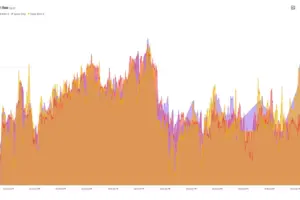
Google has provided developers with a robust suite of diagnostic tools. These tools allow teams to track traffic, monitor latency, and identify error rates in real-time. By providing this visibility, Google is fostering an environment where developers can refine their AI interactions to ensure that the user experience remains smooth, even as the complexity of the tasks increases.
Strategic Versatility
A key selling point for developers is the flexibility to choose where their app manifests. A developer might determine that their service is better suited for the conversational flow of Gemini, the rapid-response nature of Search, or perhaps both. This modularity allows for a highly tailored integration that maximizes utility based on the specific strengths of the host platform.
Supporting Context: Why "Connected Apps" Matters
The shift toward an AI-agent-led web represents a fundamental change in how we interact with the digital world. For years, the user journey has been defined by navigating separate apps or websites to complete discrete tasks. The "Connected Apps" initiative seeks to collapse this journey.
The Rise of High-Intent Users
Google’s strategy is predicated on capturing "high-intent" users. When a user tells Gemini to "find a meditation session for stress relief," they have already expressed a clear intent. By having the Calm app integrated directly into that conversation, Google removes the friction of switching context, searching, and navigating a new interface. This is a massive boon for partner companies, as it places their services directly in front of users exactly when they are most likely to convert.
The Data and Privacy Balance
While the convenience is evident, the reliance on AI agents brings valid concerns regarding data security. Users are, in essence, granting these AI models the "keys" to perform tasks on their behalf. Google has emphasized that users remain in control; they are not required to connect any service they do not want to, and the AI is designed to act as a facilitator rather than a fully autonomous agent. For critical actions—such as the final payment for an Instacart order—the AI will pause and prompt the user to manually finalize the transaction, ensuring that a "human in the loop" remains a non-negotiable safeguard.

Official Statements and Industry Impact
While Google has been relatively quiet regarding specific revenue-sharing models, the industry impact of this move is undeniable. Industry analysts suggest that by opening its platform, Google is aiming to prevent its users from migrating to specialized AI agents or competitors like OpenAI’s ChatGPT, which has also been aggressively pursuing plugin-style integrations.
By partnering with heavyweights like Adobe and Peloton, Google is signaling that its AI platform is intended for professional and lifestyle use-cases alike. The integration of mental health platforms like Calm also points to a desire to make Gemini a "wellness-conscious" assistant, differentiating it from more purely productivity-focused AI rivals.
Future Outlook: The Road Ahead
As we look toward the end of 2024 and into 2025, the "Connected Apps" ecosystem is likely to explode in diversity. We can expect to see:
- Increased Granularity: As the AI becomes more sophisticated, the "hand-off" between the AI and the third-party app will become increasingly invisible.
- Hyper-Personalization: With more apps connected, the AI will be able to synthesize information from multiple sources—for instance, checking your Peloton workout schedule to suggest a grocery shopping list for the week in Instacart.
- Search Transformation: The most radical change will be the evolution of Google Search. Instead of a list of blue links, the search results page may increasingly function as a dynamic application dashboard, where the "answer" to a query is an interactive module powered by a connected app.
A Note of Caution
Despite the excitement, a healthy degree of skepticism is required. As noted by industry observers, AI is not infallible. Even with the "human-in-the-loop" safeguards, users must remain vigilant. The danger of "hallucinations" or unexpected AI behavior means that while the platform will undoubtedly make life easier, it does not absolve the user of the responsibility to monitor the AI’s actions.
Ultimately, Google’s Connected Apps Platform represents the most significant step yet in the transition from the "search era" to the "agent era." By inviting developers to build directly into the fabric of its AI, Google is not just changing how we find information; it is changing how we get things done. For those willing to embrace the technology, the digital experience is about to become significantly more fluid, personalized, and, quite frankly, efficient. However, as with all major technological shifts, the success of this platform will depend on the balance between innovation, user trust, and the rigorous maintenance of safety standards.