Executive Overview
In the shadowy ecosystem of cybercrime, operational security—commonly referred to as opsec—is the ultimate currency. A single slip, a reused pseudonym, or an unsecured database can turn an untouchable digital extortionist into a tracked liability. Recently, this stark reality caught up with Qilin, currently recognized as the globe’s most industrious ransomware-as-a-service (RaaS) affiliate program.
Over the past three months alone, Qilin has claimed at least 365 victim organizations worldwide. Operating via a lucrative, high-yield double-extortion model, the group has cemented its place at the top of the international threat landscape. Yet, even the most sophisticated digital criminal syndicates are vulnerable to human error.
A meticulous, multi-year investigative trail—supported by threat intelligence platforms including Intel 471, Flashpoint, Spycloud, Constella Intelligence, and AI-driven de-anonymization tool IntelHawk—has pierced the veil of Qilin’s top administrator. Going by the online moniker "Haise," the mastermind behind the multi-million-dollar ransomware operation has been conclusively unmasked as Aleksey Mikhailovich Yakovtsev, a 36-year-old resident of St. Petersburg, Russia.
This report breaks down the chronological evolution of Yakovtsev from a low-level carding forum participant to a top-tier ransomware baron, detailing the digital breadcrumbs that ultimately exposed his real-world identity.
Detailed Chronology: From Novice Arbitrageur to Ransomware Kingpin
Cybercriminals frequently pivot across handles and digital personas to sever ties with past law enforcement attention or compromise events. However, strict vetting processes on elite dark-web forums often require applicants to bridge their old identities with new ones. This exact operational necessity served as the linchpoin for uncovering Qilin’s leadership.
2018–2020: The Formative Years as "Rjun"
Long before adopting the persona of a ransomware kingpin, Yakovtsev cut his teeth on various Russian cybercrime platforms. According to historical tracking by Intel 471 and Flashpoint, Yakovtsev operated under the handle "Rjun" across multiple underground forums, including Darkmarket, Verified, Zloy, Exploit, and XSS.
During this early window, Rjun’s activities leaned heavily toward traffic arbitration, digital log acquisition, and fraudulent ad campaigns. Flashpoint analysts observed that Rjun managed expansive networks of web traffic brokers, bought and sold compromised corporate access credentials, and leveraged stolen Google Ads accounts and Facebook logs to fund fraudulent advertising and gambling schemes.
During these early registrations, Rjun utilized the email address [email protected]. Threat intelligence firm Spycloud later noted that this inbox frequently relied on the weak password derivative Rjun132.
2020–2022: The Evolution of "Alexbigboss44" and Telegram Integration
As Yakovtsev’s operations expanded into more lucrative and complex illicit schemes, he introduced the Telegram username Alexbigboss44. This handle appeared concurrently across multiple underground channels in 2020, solidifying his role as a high-volume broker of illicit traffic and corporate logs.

Crucially, this Telegram account was anchored to a specific platform user ID: 118329521. Historical records show this Telegram account has maintained continuous operations, logging more than 5,000 messages since 2018.
June 2022: Infiltrating RAMP and the Birth of Qilin
Operating since September 2022, Qilin quickly established itself as a dominant force in the RaaS sector. However, laying the groundwork for a major ransomware syndication required vetting.
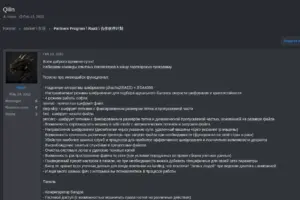
In June 2022, the user heading toward the Qilin enterprise applied for membership to RAMP—a heavily guarded, exclusive Russian cybercrime forum explicitly designed as a haven for ransomware affiliate programs. Intelligence gathered from Intel 471’s indexing of direct messages on RAMP (before the forum was seized by the FBI in January 2026) reveals that the RAMP administrator officially approved the application, explicitly addressing the applicant as both "Haise" and by his established Telegram username, Alexbigboss44.
This single administrative link definitively connected the historical carding and traffic-brokering persona of Rjun/Alexbigboss44 to the emerging ransomware administrator, Haise.
Supporting Context & Metrics: Qilin’s Operations and the De-Anonymization Vector
To understand the scale of Yakovtsev’s enterprise, one must examine Qilin’s operational model and the technical methodology used to break his anonymity.
Qilin’s Business Model and Reach
According to an extensive Q3 threat intelligence report published by cybersecurity firm NCC Group, Qilin stands as the world’s most active RaaS provider. Unlike many domestic Russian ransomware groups that strictly restrict their affiliates, Qilin actively welcomes English-speaking partners. Haise has openly bragged via Telegram about orchestrating operations alongside notorious affiliate networks such as Scattered Spider and RansomHub.
Qilin operates on a highly attractive revenue-sharing model, offering affiliates at least 80% of any extortion funds extracted from victims. Their attacks rely on "double extortion":
- Exfiltration: Sensitive proprietary corporate data is siphoned out of compromised environments.
- Encryption: Core IT infrastructure is locked using robust cryptographic routines.
- Coercion: Victims are threatened with the public leak of their private data unless massive cryptocurrency ransoms are paid.
The AI-Driven Breakthrough: IntelHawk and Stylometry
The definitive link connecting Haise, Alexbigboss44, Rjun, and finally Aleksey Yakovtsev was achieved privately by IntelHawk, an AI-driven platform specializing in the de-anonymization of threat actors through historical usernames, behavioral patterns, and stylometry (the statistical analysis of written writing styles and linguistic quirks).
IntelHawk Founder and CTO Leo Bogod noted that tracing the behavioral progression of these linked accounts revealed a clear evolution:

- 2018–2019: Novice arbitrageur and financial fraudster.
- 2020–2023: Experienced coordinator managing advanced malware deployments, botnets, and payment infrastructure.
Independent threat research group GangExposed later corroborated these findings, publishing an analysis confirming that historical data points converged perfectly on Haise’s real-world identity.
Piercing the Veil: The Gosuslugi Data Leak
The final pieces of the puzzle fell into place through historical data breaches affecting Russian digital infrastructure.
- The Email Record: Intel 471 established that Rjun used the email
[email protected]across multiple criminal forums. - The State Portal Breach: A massive late-2025 security breach of gosuslugi.ru—the official digital portal for state and municipal services in the Russian Federation—exposed over 20 million citizen profiles, including full names, dates of birth, and mobile numbers. Constella Intelligence cross-referenced the email
[email protected]within these leaked archives. - The Identity Match: The leaked gosuslugi.ru records revealed that
[email protected]belonged directly to Aleksey Mikhailovich Yakovtsev, born August 18, 1990 (making him 36 years old), residing in St. Petersburg, Russia.
Corroborating Physical Footprints
Further validation came from cross-referencing Telegram identifiers and travel logs:
- The Telegram ID
118329521(tied to Haise/Alexbigboss44) resolved via Constella Intelligence to the Russian mobile number+79602347275. - IntelHawk discovered this phone number officially belongs to Yakovtsev’s biological sister, whose email addresses (
[email protected]and[email protected]) Aleksey frequently used when registering on third-party websites. - Educational records from Russia’s federal education watchdog, Rosobrnadzor, show that Yakovtsev attended grade school in Murmansk and subsequently earned a master’s degree in computing and information systems.
- Russian domestic airline passenger manifests—exposed via travel agency data breaches—place Aleksey Yakovtsev traveling frequently between St. Petersburg and Murmansk (2013–2014), as well as frequent flights between St. Petersburg and Sochi, Russia’s premier Black Sea resort city.
Official Statements and Industry Response
Major cybersecurity stakeholders tracking the Qilin syndicate have emphasized the significance of this unmasking. While international law enforcement agencies face jurisdictional hurdles when dealing with cybercriminals operating safely inside the Russian Federation, the exposure of real-world identities heavily degrades a threat actor’s operational security.
"Operational security is a game of perfection for the criminal, but a game of accumulation for the defender. Even the most cautious administrators leave a trail across years of forum applications, shared communication handles, and database leaks," noted threat intelligence analysts tracking the Eastern European cybercrime ecosystem.
Neither Aleksey Yakovtsev nor representatives for the Qilin syndicate responded to multiple electronic mail and telephone inquiries sent for comment.
Future Outlook: The Fragility of Cybercrime Anonymity
The unmasking of Aleksey Yakovtsev as the administrator of the world’s most active ransomware syndicate serves as a stark reminder of the limits of cybercriminal anonymity. As artificial intelligence, advanced stylometry, and automated threat intelligence platforms continue to mature, the historical digital footprints left by threat actors years prior will increasingly catch up with them.
For Qilin, the exposure of "Haise" may not immediately disrupt the group’s decentralized affiliate structure, but it permanently strips away the cloak of invincibility surrounding its leadership. As international drag-nets tighten and collaborative intelligence-sharing grows across the cybersecurity industry, the cost of doing business for top-tier ransomware administrators is rising steeply—proving that in the digital age, absolute anonymity is ultimately an illusion.