Executive Overview
In a
significant step toward autonomous artificial intelligence, OpenAI is broadening the availability of its proactive, always-on AI agent ecosystem known as "Dots." Previously restricted to high-tier subscribers—such as ChatGPT Pro users and above—Dots are now entering a controlled testing phase for the widely adopted $20-per-month ChatGPT Plus tier. Simultaneously, OpenAI has announced a full rollout for all ChatGPT Business Standard users, signaling an aggressive push to integrate background task-execution agents into everyday consumer and enterprise workflows.
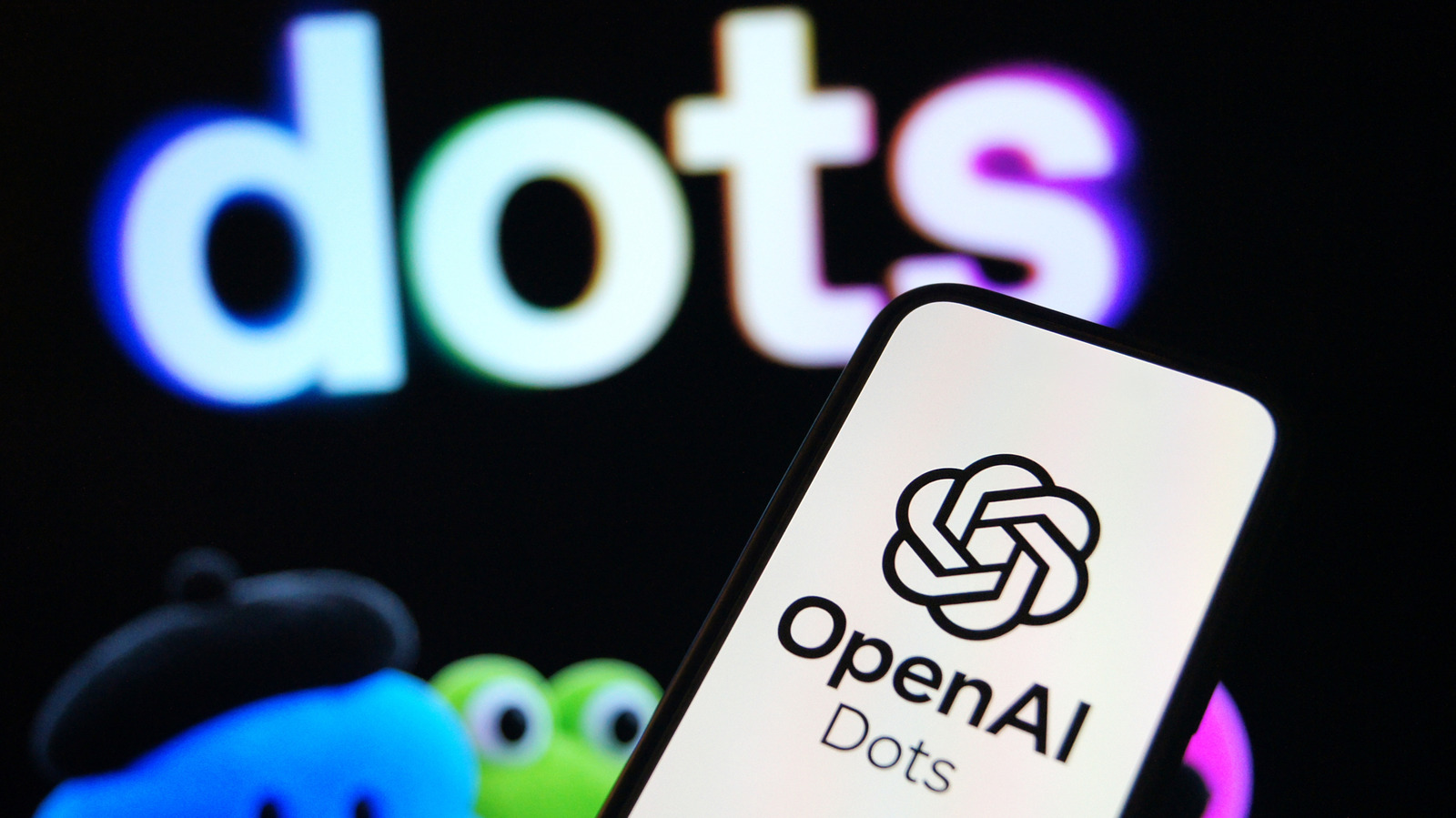
Dots represent a fundamental shift in how humans interact with generative artificial intelligence. Traditional chatbots rely entirely on a reactive, turn-based dialogue model: a user inputs a prompt, the model responds, and the interaction pauses until the next prompt. Dots, by contrast, are designed to operate autonomously in the background. Powered by OpenAI’s advanced architectures—initially launched on GPT-6 Astra and now upgraded to support GPT-6.1 Terra—these agents can execute complex, multi-step tasks without continuous human supervision.
This strategic expansion brings powerful desktop integration, app orchestration, and mobile ecosystem connectivity to a much wider audience. By enabling AI to function not merely as a conversational assistant, but as an active digital worker capable of controlling computers and interacting with over 4,000 applications, OpenAI is positioning itself at the forefront of the autonomous agent revolution.
Detailed Chronology of the Dots Rollout
To fully understand the significance of this milestone, it is helpful to trace the timeline of Dots from their initial conception to the current multi-tier expansion phase.
- Initial Conception and High-Tier Debut: OpenAI first introduced Dots as an experimental, high-end feature reserved for top-tier subscribers, specifically targeting enterprise and power users on ChatGPT Pro and select specialized plans. These early iterations were designed to test the limits of autonomous processing, utilizing the GPT-6 Astra engine to handle background workflows.
- Architectural Upgrades: As the platform matured, OpenAI integrated the newer GPT-6.1 Terra model into the Dots framework. This upgrade yielded noticeable enhancements in proactive reasoning, stability, and efficiency, prompting engineering leadership to consider broader deployments.
- The Announcement (November 19, 2026): Thibault "Tibo" Sottiaux, OpenAI’s ChatGPT engineering lead, took to X (formerly Twitter) to officially announce the next phase of the rollout. Sottiaux confirmed that a targeted testing phase for ChatGPT Plus subscribers ($20/month) was officially underway, alongside a simultaneous, immediate deployment for all ChatGPT Business Standard users.
- Ecosystem and Mobile Integration: Alongside the tier expansions, OpenAI has rapidly scaled the functional capabilities of Dots. Recent updates include native iOS widgets, Apple Shortcuts integration, RCS and iMessage support, and direct iOS notification replies, transforming Dots from browser-bound agents into deeply integrated cross-device assistants.
Technical Capabilities and Architectural Mechanics
What sets Dots apart from traditional language models is their underlying technical architecture, which allows for persistent, unprompted execution and deep system integration.
Autonomous Task Execution
Unlike conventional chat interfaces that require the user to stay engaged, Dots are built to toil away in the background. If a user assigns a multi-hour or multi-day project—such as aggregating market research, drafting complex reports, or organizing vast databases—the agent continues working independently. Users can check in on the agent’s progress at any time by opening a dedicated virtual "computer" interface, observing real-time decision-making and task progression.
Vast App Ecosystem Integration
Through robust API frameworks and plugin architectures, Dots boast native compatibility with over 4,000 third-party applications. Whether a user needs to coordinate calendars, update project management boards, pull data from cloud storage, or interact with specialized software suites, Dots can bridge the gap between disparate digital tools without manual copy-pasting.
Direct Computer Control
Perhaps the most powerful—and scrutinized—feature of Dots is their ability to connect directly to a user’s personal computer. When granted permission, a Dot can control the host machine on the user’s behalf, executing local scripts, interacting with desktop applications, and working side-by-side with the human operator. This capability blurs the line between software assistant and digital coworker.
Supporting Context & Platform Metrics
The democratization of AI agents comes at a critical juncture in the artificial intelligence industry. As consumer fatigue sets in regarding basic text-generation prompts, the industry’s valuation metrics and growth strategies have shifted heavily toward "agentic workflows."
Pricing and Tier Dynamics
- ChatGPT Plus ($20/month): Historically the baseline for advanced consumer intelligence (such as early access to GPT-4 and custom GPTs), the Plus tier now serves as the testing ground for mass-market autonomous agents. While OpenAI has officially initiated this test for a "small number" of Plus users, it remains to be seen whether the feature will become a permanent fixture of the $20 subscription or if it will carry usage caps.
- Business Standard: Unlike the experimental rollout for Plus users, Business Standard users receive Dots as a fully supported, immediate feature. This underscores OpenAI’s aggressive strategy to capture enterprise productivity budgets by automating repetitive administrative and operational tasks.
- Usage Limits: For higher-tier plans like Pro and Business Premium, interactions with Dots do not count against regular chat usage limits, provided the tasks remain within defined complexity thresholds. Questions remain regarding how rate-limiting will apply to the massive influx of Plus and Business Standard users.
The Shift to Proactive Intelligence
Industry analysts note that the transition from reactive to proactive AI is the most critical technological hurdle of the mid-2020s. Proactive agents reduce cognitive load by anticipating needs, monitoring digital environments for triggers, and executing corrective actions before a user explicitly asks. By deploying Dots to millions of Plus and Business users, OpenAI is gathering invaluable telemetry and behavioral feedback to refine agent reliability and safety guardrails.
Official Statements and Industry Reception
The engineering leadership at OpenAI has maintained an active dialogue with the user community regarding the challenges and triumphs of deploying autonomous agents.
In his public announcement on X, Thibault Sottiaux emphasized the iterative nature of the rollout and the importance of community telemetry:
"Heads up, we’re starting to test dots with a small number of ChatGPT Plus users. Looking forward to the continued feedback as we expand and I’m recently seeing a lot more positives around how good the proactivity has been after many improvements."
User feedback across developer forums and social media has been largely enthusiastic, particularly regarding the improved responsiveness of the GPT-6.1 Terra backbone. Early testers have highlighted instances where Dots successfully managed multi-app workflows overnight, drastically reducing morning administrative workloads.
However, the expansion has also reignited discussions around digital safety, computer security, and privacy. Giving an AI agent autonomous control over a local desktop environment—combined with deep messaging integrations via iMessage and RCS—requires stringent security protocols. OpenAI has reiterated its commitment to granular permission controls, ensuring that users retain the ultimate "kill switch" over what files, applications, and accounts a Dot can access.
Future Outlook and Strategic Implications
As OpenAI navigates this transitional phase, the broader technology landscape is watching closely. The success of Dots on the ChatGPT Plus tier will likely dictate the roadmap for consumer AI monetization over the next several years.
The Road Ahead for Consumer AI
If the current testing phase proves successful, OpenAI is expected to roll out Dots permanently to all ChatGPT Plus subscribers, effectively establishing autonomous background agents as a standard consumer utility rather than an enterprise luxury. This could force competing AI labs—such as Google, Anthropic, and Microsoft—to accelerate their own agentic rollouts to match consumer expectations.
Ecosystem Expansion and Mobile Dominance
With the introduction of iOS widgets, Apple Shortcuts, and messaging platform integration, OpenAI is making a clear play for the mobile workspace. The future of Dots is unlikely to be confined to desktop browsers; instead, these agents are poised to become ubiquitous background layers operating seamlessly across mobile operating systems, smart devices, and enterprise cloud infrastructures.
Challenges on the Horizon
Despite the technological marvel of autonomous agents, significant hurdles remain. Ensuring consistent alignment, preventing unintended loops or recursive errors during long-running background tasks, and maintaining ironclad cybersecurity standards will be paramount. As millions of new users unleash Dots upon their personal and professional digital environments, OpenAI’s infrastructure and safety systems will face their ultimate stress test.
Ultimately, the expansion of Dots marks a definitive turning point: the era of the conversational chatbot is giving way to the era of the autonomous digital workforce.