Executive Overview
For over two decades, the CSS :nth-child() pseudo-class has been a cornerstone of web styling, allowing developers to target elements based on their position within a parent container. However, this power has historically been static. Once written into a stylesheet, the selector’s logic—defined by the An + B formula—is set in stone, requiring manual intervention to update. In a modern web ecosystem defined by reactive components and fluid design systems, this static nature has become a point of friction.
This article explores a groundbreaking approach to CSS architecture: re-implementing the native :nth-child() logic using emerging CSS features, specifically the if() function and sibling-index(). By decoupling the selector logic from hardcoded integers and shifting it into the realm of dynamic CSS variables, we unlock the ability to manipulate complex DOM selections on the fly. While this may seem like a purely academic exercise, it represents a fundamental shift in how we conceive of CSS as a logic-driven language rather than just a declarative one.
The Limitations of Static Selectors
In traditional web development, if a designer requests a layout where every fifth element requires a specific highlight, we write:
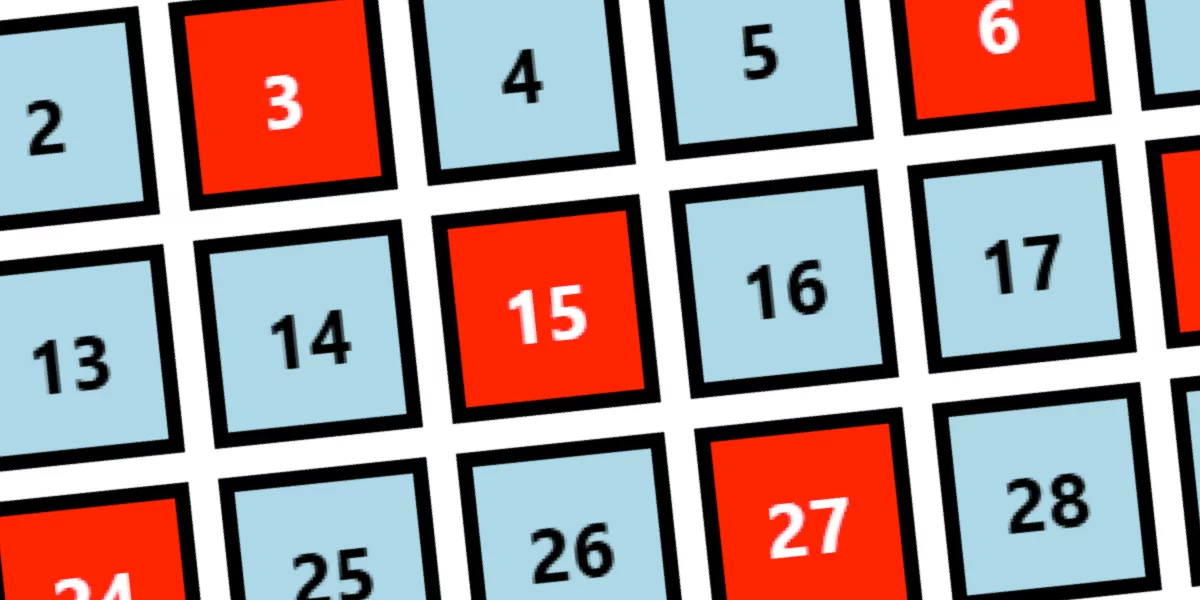
div:nth-child(5n + 8)
  background: red;
This works perfectly for static content. However, consider a dashboard application where the user can customize the "interval" of data visualization widgets. In the current paradigm, you cannot pass variables into a selector. You cannot write div:nth-child(var(--A)n + var(--B)). The browser’s CSS engine requires that selectors be known at parse time, creating a "CSS barrier" where JavaScript must intervene to inject styles or toggle classes to achieve dynamic behavior.
The experiment outlined here bypasses that barrier. By moving the logic from the selector to the property value, we can create truly reactive layouts that respond to CSS variables without a single line of JavaScript.
Detailed Chronology: From Concept to Execution
The path to dynamic selection began with the introduction of CSS Style Queries and the if() function. These tools allowed us to treat CSS as a functional language capable of evaluating conditions at runtime.
Phase 1: Targeting Single Indices
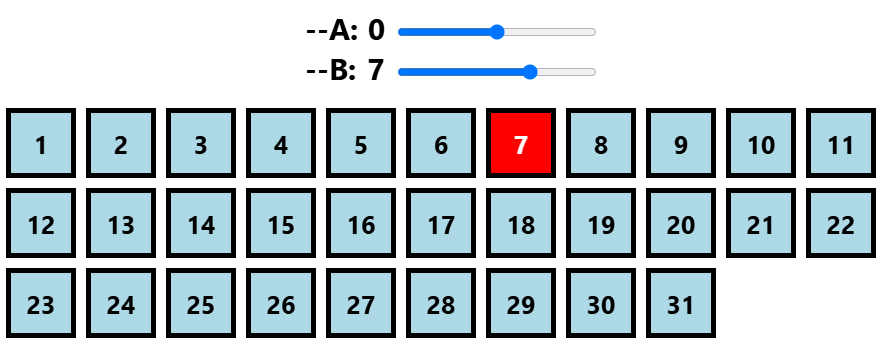
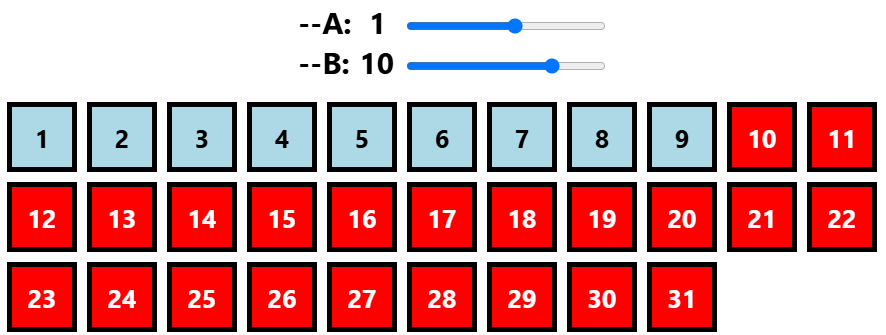
The simplest case—selecting a single element—demonstrates the core logic. Instead of relying on :nth-child(5), we utilize the sibling-index() property. This property provides the current index of an element within its parent, which we can compare against a custom CSS variable.
.container
  --B: 5;


.container div
  background: if(style(sibling-index() = var(--B)): red; else: lightblue);
The if() function acts as a gatekeeper. By checking the style() context, we evaluate whether the current element’s index matches the variable --B. If true, the red background is applied. This eliminates the need to rewrite the CSS rule whenever the target index changes.
Phase 2: Mastering Linear Expressions
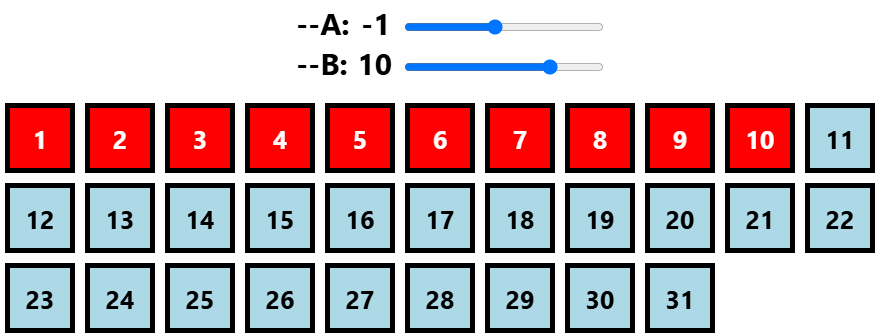
Expanding this to the generic An + B formula required a deeper dive into mathematical operations within CSS. The primary challenge is that CSS is not inherently a calculator; it is a stylesheet language. However, with the mod() function, we can determine divisibility.
For a selector like :nth-child(3n), we look for cases where the remainder of index / A is zero.
.container div
  background: if(style(mod(sibling-index(), var(--A)) = 0): red);
This approach is mathematically sound but required a refinement for negative numbers or zero-values. By combining multiple conditions with the and keyword, we ensure that our custom implementation mimics the native browser behavior, even for edge cases.
Supporting Context & Metrics: The Power of if()
The if() syntax is arguably the most significant addition to the CSS specification in years. Its power lies in its ability to handle conditional styling without the "cascading" overhead that usually accompanies class-based toggling.
Why This Matters for Performance
In traditional CSS, to select the 7th child, the browser traverses the DOM tree to match the selector. If you have hundreds of elements and multiple complex :nth-child() rules, the style calculation can become a bottleneck. By using a single rule that applies to all div elements and relying on the browser’s optimized property calculation, we reduce the complexity of selector matching.
Comparative Analysis
| Method | Flexibility | Performance | Complexity |
|---|---|---|---|
Standard :nth-child() |
Low (Static) | High | Low |
| JS Class Toggling | High | Low (JS overhead) | Medium |
Dynamic if() logic |
Very High | Medium/High | High |
The "High" complexity of the dynamic method is offset by the immense benefit of encapsulation. Everything stays within the CSS, reducing the need for "layout thrashing" often caused by JavaScript modifying the DOM structure to facilitate styling.
Official Perspective on CSS Evolution
The W3C’s move toward functional CSS—including calc(), mod(), sign(), and if()—signals a transition. CSS is no longer merely a "skin" for HTML; it is becoming a layout engine capable of complex logic.
Experts in the CSS community argue that while these techniques (like the dynamic nth-child implementation) are advanced, they are not intended to replace native selectors. Instead, they serve as a polyfill for the future. By mastering these techniques, developers can build design systems that are significantly more resilient to changes in data structures. If a component’s internal index changes, the styles adapt automatically because they are bound to the index itself, not to a hardcoded string.
Future Outlook: The Road Ahead
The logical next step for this research is the implementation of :nth-last-child(). This introduces the variable of sibling-count(), which allows developers to calculate positions from the bottom of the list up.
The Challenge of :nth-last-child()
Implementing nth-last-child() requires calculating the "distance from the end." If an element’s index is i and the total count is n, the target position is n - i + 1.
Integrating sibling-count() with our existing if() logic will allow for "responsive list ordering," where styles can shift based on the total number of items in a list. For instance, if a list grows beyond ten items, the logic can automatically change the highlighting pattern to accommodate for the increased density, all without a single server-side re-render.
Final Thoughts
This exercise in re-implementing native selectors serves a dual purpose. First, it solves the immediate problem of dynamic CSS variables. Second, and perhaps more importantly, it encourages developers to stop viewing CSS as a collection of static instructions.
As we look toward the future of the web, the lines between logic, data, and presentation will continue to blur. By mastering the if() function, sibling-index(), and the broader suite of CSS mathematical functions, you are not just writing styles—you are engineering the next generation of adaptive, intelligent user interfaces. The tools are here; the only limit is the complexity of the logic you choose to implement.