Executive Overview: A Radical Departure from Modern Complexity
In an era defined by "feature creep"—where every wearable, smartphone, and household appliance attempts to be a comprehensive ecosystem of health tracking, social media integration, and constant notification management—the Pebble Index 01 arrives as a startling, refreshing outlier. Priced at a modest $75, this wearable is not a smartwatch, nor is it a complex biometric sensor. It is, quite simply, a dedicated voice-memo device for your finger.
When Pebble, a brand once synonymous with the pioneering spirit of the early smartwatch revolution, announced the Index 01, it was met with skepticism. Critics questioned the utility of a hardware device that seemingly offers less functionality than the smartphone already sitting in the user’s pocket. However, after weeks of intensive real-world testing, it has become clear that the Index 01 is not a failure of ambition, but a triumph of focus. By stripping away screens, haptic feedback loops, and battery-draining sensors, Pebble has created a tool that solves the most fundamental problem of modern digital life: the friction of capturing a fleeting thought.
The Index 01 operates on a philosophy of "frictionless capture." It is a ring equipped with a microphone, a button, and a status light. It does not ping you with emails, it does not track your sleep stages, and it does not require daily charging. Instead, it allows for the immediate, distraction-free recording of notes, to-do lists, and temporal markers. In a world of infinite digital noise, the Index 01 offers the luxury of silence and the efficiency of intent.
Detailed Chronology: From Ridicule to Utility
The public journey of the Index 01 began with a wave of skepticism. When the product was first unveiled, the tech community—accustomed to the rapid iteration of feature-heavy wearables—struggled to place the Index 01 in the current market landscape. Why wear a ring that does nothing but record voice?
The Sizing and Onboarding Process
The user experience begins long before the device arrives on your finger. Because the ring is a static, solid piece of hardware—lacking the adjustability of a standard watch band—Pebble requires users to navigate a sizing process. This involves either purchasing a dedicated $10 sizing kit or utilizing a 3D-printing file provided by the company to ensure a perfect fit.
Once the ring arrives, the onboarding is surprisingly swift. Pairing the device via the Pebble app is a seamless transition into a proprietary ecosystem. While the experience is undeniably more robust on Android, iPhone users still find a high degree of utility. The ring communicates via Bluetooth, but the magic lies in how it hands off that data to the phone’s processing power.
The "Road Trip" Test
To truly stress-test the device, I employed the Index 01 during a cross-country road trip. My goal was twofold: to track transit times and to capture logistical notes without ever reaching for a screen.

The results were transformative. For years, I had searched for a way to log departure times, rest-stop durations, and arrival windows without disrupting the flow of driving. Smartphone stopwatches are notoriously poor at this; they require manual resets, offer no historical log, and, most dangerously, pull the user’s attention away from the road.
With the Index 01, the process was simplified to a thumb-press. I could record my departure, note the duration of a lunch break, and even capture random thoughts that occurred while navigating traffic. Because the audio is processed locally and transcribed to the app, I could review my "travel log" at the end of the day. The Index 01 didn’t just log the data; it provided a chronological narrative of my trip that was impossible to achieve with standard apps.
Supporting Context & Metrics: The Case for Analog Simplicity
The genius of the Index 01 lies in its technical constraints. In the world of hardware design, constraints often breed better user experiences.
The Power of Two-Year Battery Life
Perhaps the most impressive metric associated with the Index 01 is its power consumption. By eschewing an OLED screen and a heart rate monitor, the device avoids the "charge anxiety" that plagues every other wearable on the market. Pebble estimates a two-year lifespan for the disposable battery. This effectively moves the Index 01 out of the category of "gadget that needs charging" and into the category of "jewelry that happens to be useful."
Data Privacy and Local Processing
In a climate where "smart" devices are often criticized for their constant cloud connectivity and data mining, the Index 01 takes a surprisingly conservative approach. The audio is processed on the device and its paired handset, minimizing the need for constant cloud uploads. This focus on privacy, combined with the ability to replay the original audio if the transcription software misinterprets a word—like turning "pencil sharpener" into "pencil sharp pepper"—adds a layer of reliability that many AI-driven note apps currently lack.
Use Cases: Beyond the To-Do List
The utility of the Index 01 extends into the granular details of daily health and productivity:
- Medication Tracking: By logging the exact time a medication is taken, users can prevent accidental double-dosing—a common issue for those managing complex supplement or prescription regimens.
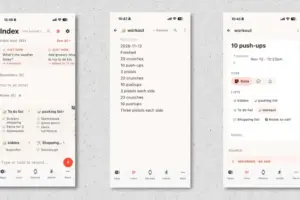
- Micro-Workout Logging: As tested in hotel rooms, the ring serves as an excellent gym partner. By verbalizing "10 pushups" or "20 crunches" mid-set, the user maintains momentum without needing to touch a phone screen with sweaty hands.
- The "Brain Dump": By externalizing thoughts as they occur, the user reduces cognitive load. The ring acts as a cognitive offloading device, allowing the brain to move on from a task rather than spending energy trying to remember it.
Official Statements and Industry Reception
While Pebble has remained relatively quiet regarding the "Index" product line’s long-term roadmap, the market response has shifted from derision to a quiet appreciation of its niche utility. Industry analysts have noted that the Index 01 represents a "pivot to utility" for the brand.

By focusing on a single, high-value function, Pebble has successfully carved out a space where it is not competing with the Apple Watch or the Oura Ring. It is competing with the blank notebook and the "notes" app on your smartphone. In that arena, the Index 01 holds a significant advantage: the speed of thought.
The company’s design philosophy, as expressed through the product’s hardware, emphasizes that the best technology is that which disappears into the user’s workflow. "We aren’t trying to change your life," the design suggests. "We are just trying to make it slightly more organized."
Future Outlook: The Evolution of "Ambient Computing"
The Index 01 is not the final word in wearable tech, but it is a successful experiment in what researchers call "ambient computing." This is the idea that technology should be available when needed and invisible when not.
Potential Market Expansion
If the Index 01 continues to find success, we can expect to see an expansion of the ecosystem. Potential future iterations could include:
- Integration with broader smart-home protocols: Imagine a double-click on the ring triggering a voice-command to a smart home hub to turn off the lights or set a thermostat.
- Enhanced Haptic Feedback: While the current model relies on a light to signal recording, future versions could incorporate subtle haptic vibrations, allowing for "eyes-free" confirmation that a note has been received.
- Refined Transcription Engines: As AI language models improve, the "pencil sharp pepper" errors will inevitably disappear, making the text logs even more reliable for professional use.
The Verdict: A Necessary Tool
The Pebble Index 01 is a reminder that innovation isn’t always about adding more sensors or more pixels. Sometimes, the most significant technological advancements come from stripping a device down to its bare essentials.
For the professional, the traveler, or the person simply tired of being tethered to a smartphone, the Index 01 offers a path to reclaim a bit of focus. It is a $75 experiment that pays for itself in saved time and reduced mental clutter. In a market obsessed with the "next big thing," Pebble has done something arguably more difficult: they have created a "small thing" that works exactly as intended, every single time. It is a humble, necessary addition to the modern toolkit, and it is unequivocally a success.