Executive Overview
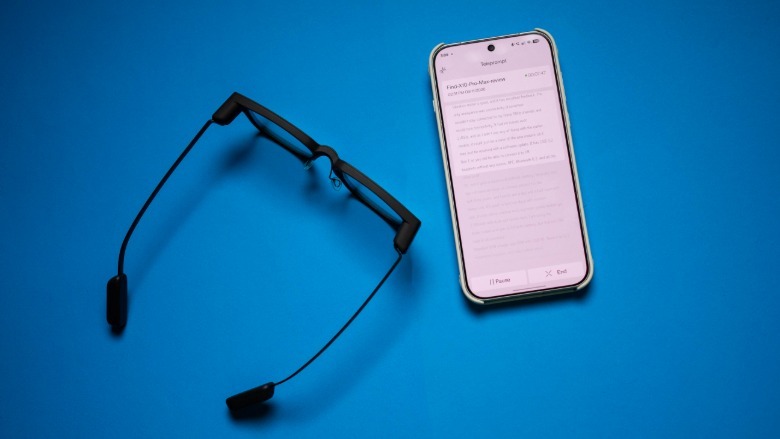
The landscape of professional public speaking, content creation, and mobile presentations is undergoing a quiet yet profound transformation. For decades, delivering an articulate, perfectly timed speech or video recording meant relying on bulky physical teleprompters, awkward paper cue cards, or memorizing extensive scripts under immense pressure. Today, the advent of AI-powered smart glasses equipped with advanced waveguide technology has fundamentally changed the paradigm. Devices such as the XGIMI MemoMind One and the Even Realities G2 are introducing built-in teleprompter modes that project scripts directly into the user’s field of view via microLED-based displays.
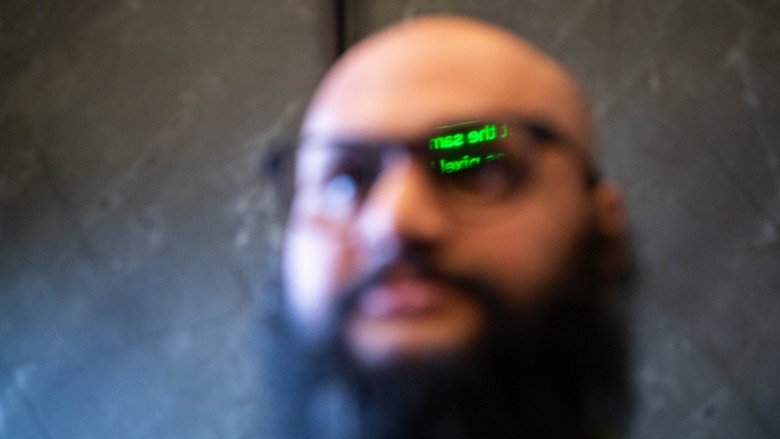
This technological leap offers unprecedented freedom. Presenters can now maintain natural, direct eye contact with their audience while seamlessly reading smoothly scrolling text. Because these devices lack outward-facing cameras, they circumvent the societal stigma and privacy concerns traditionally associated with smart eyewear, making them ideal for both professional and casual public settings. Furthermore, features such as AI-driven auto-following cadences, high-brightness monochrome waveguides, and lightweight ergonomic designs mean that wearing a teleprompter is no longer confined to a stationary studio or a rigid conference room setup.
This deep-dive analysis examines how these devices function as teleprompters, compares the two leading models on the market, evaluates their technical capabilities, and projects how heads-up text projection will influence the future of human communication.
Detailed Chronology: The Evolution of Smart Glass Teleprompters
The journey toward usable, unobtrusive heads-up displays (HUDs) for everyday consumers has been fraught with hardware hurdles, thermal constraints, and battery limitations. Understanding how we arrived at the current iteration of AI-powered teleprompter glasses requires tracing the rapid technological iterations of recent years.
The Early Era of Bulky HUDs (2012–2018)
The conceptualization of wearable text displays dates back over a decade, most famously marked by early entries like Google Glass. While pioneering, those early devices suffered from severe limitations: low battery life, heavy processing loads, and a heavy-handed camera design that triggered immediate privacy backlash. Crucially, the optics used back then relied on primitive combiners that obstructed the wearer’s vision and failed to blend digital overlays smoothly into natural environments. Software support for specialized productivity tasks—such as scrolling text scripts—was virtually non-existent, leaving these devices marketed primarily as novelty photo-capture tools rather than functional professional accessories.
The Shift to Waveguides and Privacy-First Designs (2019–2023)
As display technology matured, manufacturers pivoted away from camera-centric smart glasses toward lightweight, audio- or notification-focused eyewear. The breakthrough arrived with modern waveguide prisms and microLED projectors. Waveguides allow light to bounce through thin lenses, projecting crisp, monochrome text straight into the human eye without blocking the surrounding world. Crucially, engineering teams realized that removing the camera eliminated privacy concerns. This design philosophy paved the way for dedicated productivity hardware aimed at professionals who needed discreet notifications, live translations, and navigation prompts.
The Modern Era: AI Integration and Adaptive Pacing (2024–Present)
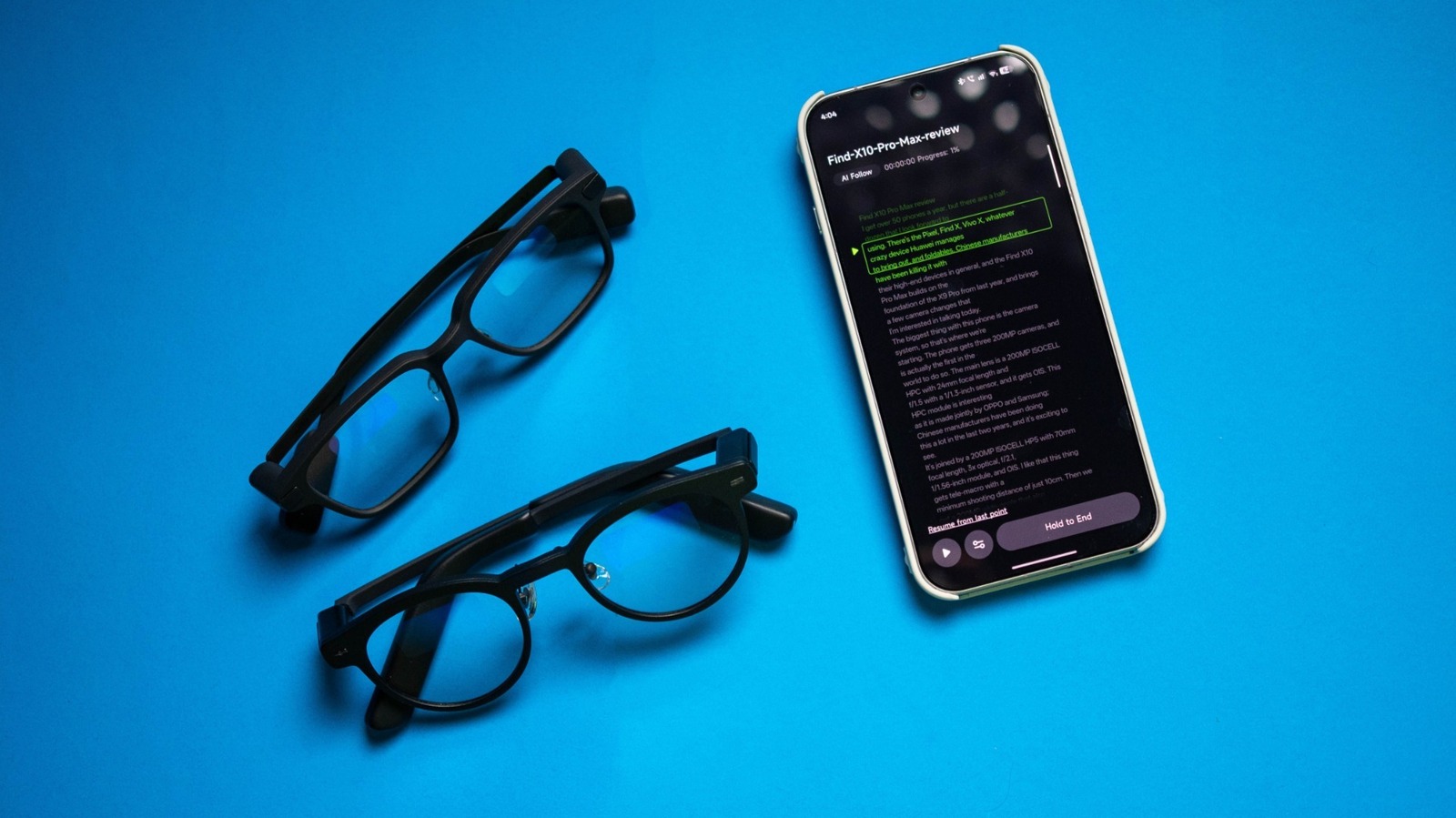
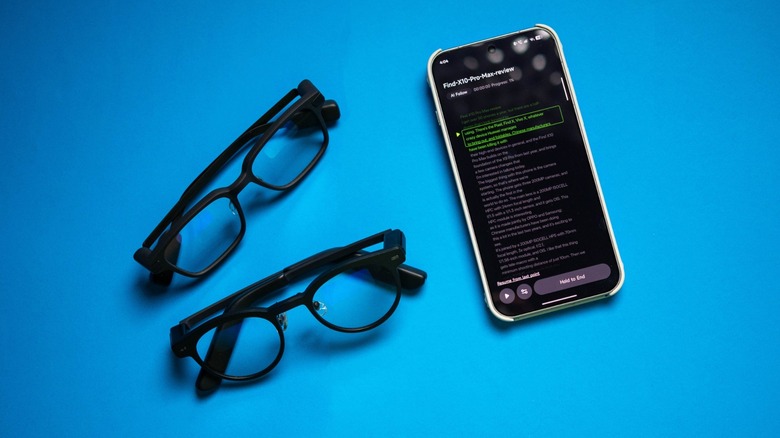
The current generation of smart glasses—exemplified by the XGIMI MemoMind One and the Even Realities G2—represents a maturity in software-hardware integration. By combining ultra-thin waveguide optics with on-device microphones and machine learning models, these devices can now analyze a speaker’s voice cadence in real-time. The text on the screen no longer relies solely on a rigid, predetermined scroll speed; instead, it dynamically pauses, accelerates, or decelerates based on the rhythm of human speech. This evolutionary step has elevated smart glasses from simple notification tickers into fully functional, adaptive teleprompter systems.
Supporting Context & Metrics: Hardware Comparison and Performance Analysis
To understand the practical viability of using AI glasses as a teleprompter, one must evaluate the core specifications, software limitations, and physical ergonomics of the industry standards: the XGIMI MemoMind One and the Even Realities G2.
| Feature / Specification | XGIMI MemoMind One | Even Realities G2 |
|---|---|---|
| Weight | Under 50g (Optimized weight distribution) | Under 50g (Slightly lighter overall) |
| Supported File Formats | TXT, DOCX | TXT, DOCX, PDF |
| Display Technology | MicroLED Waveguides (High brightness) | MicroLED Waveguides (Standard brightness) |
| Control Mechanism | Physical button beneath the right hinge | Touchpad (Taps and swipes at temple tips) |
| Built-in Audio | Yes (Harman-tuned onboard audio) | No built-in speakers |
| Charging Method | Proprietary charging dongle | Integrated charger case |
| Base Price | $499 | $599 |
| Prescription Lens Add-on | +$280 | +$159 |
File Compatibility and Document Management
When preparing a presentation or script, file formatting dictates workflow efficiency. The Even Realities G2 offers broader native file support, handling PDF documents alongside plaintext (.txt) and Microsoft Word (.docx) files. Conversely, the MemoMind One restricts native support to TXT and DOCX formats, lacking direct PDF integration. While this requires a minor conversion step for users whose workflows rely heavily on PDFs, the ubiquity of file conversion tools mitigates this drawback.

Display Readability and Outdoor Visibility
Both models rely on microLED-driven monochrome waveguide prisms to project text. In practical testing under intense sunlight, the MemoMind One demonstrates superior peak brightness compared to the Even G2, ensuring that text remains legible even in bright outdoor environments. The projection sits comfortably in the upper or peripheral field of view, displaying essential telemetry such as elapsed time, current time, and device battery life without obscuring the wearer’s line of sight.
Control Systems: Physical Buttons vs. Touch Gestures
The interaction paradigm represents a major differentiator between the two devices:
- The Even G2 relies on touch-sensitive temple tips, requiring a series of taps and swipes. While functional, users frequently report that gesture recognition can be inconsistent, occasionally forcing awkward reaching motions behind the ear during high-stakes presentations.
- The MemoMind One utilizes a tactile physical button positioned beneath the right hinge. A single press cycles through menus, while a long-press exits to the main dashboard. This tactile feedback provides a more reliable and discreet control method during live speeches.
Official Statements and Industry Insights
The emergence of wearable teleprompters has sparked considerable discussion among software developers, ergonomic specialists, and public speaking coaches.

Dr. Aris Thorne, a human-computer interaction researcher at the Wearable Technology Institute, noted the psychological shift facilitated by these devices:
"Traditional teleprompters create a physical barrier between the speaker and the audience. The speaker is forced to look at a glass screen or a monitor, which anchors their head in a fixed position. By shifting that display directly onto the retina via lightweight waveguides, we remove the mechanical anchor. The speaker regains complete somatic freedom—their head movement, posture, and eye contact become entirely natural, fundamentally altering audience engagement."
Product development leads at both XGIMI and Even Realities have emphasized that the inclusion of teleprompter modes was a direct response to feedback from mobile content creators, educators, and corporate executives.
An internal whitepaper released by Even Realities emphasized the design philosophy:
"Our primary goal was to make technology disappear. A teleprompter should feel like an extension of human memory, not a piece of machinery. By eliminating cameras and focusing entirely on optical text projection and audio feedback, we have created a tool that enhances human capability without introducing social friction."
Furthermore, software updates deployed over recent months highlight an industry-wide commitment to refining AI speech-tracking algorithms. Early versions of auto-scrolling software occasionally lagged behind rapid conversational shifts or sudden pauses. Modern iterations incorporate advanced acoustic sensing that matches the scrolling speed to the speaker’s exact cadence within milliseconds, minimizing cognitive load during live delivery.
Future Outlook: The Next Generation of Wearable Communication
As component costs decline and display efficiencies improve, the trajectory of AI-powered smart glasses points toward even deeper integration into professional workflows. Several key developments are anticipated over the next three to five years:
1. Full-Color Waveguides and High-Density Text Rendering
While current teleprompter modes rely heavily on high-contrast monochrome text to preserve battery life and maintain optical clarity, next-generation microLED panels will introduce energy-efficient full-color waveguides. This will allow speakers to utilize color-coded cueing systems—such as highlighting key emphasis words in green, warnings or pacing reminders in yellow, and Q&A prompts in blue—all within their peripheral vision.
2. Advanced On-Device Generative AI Integration
Future iterations are expected to move beyond static script reading. With localized large language models (LLMs) running on paired smartphones or directly on the glasses, the device could dynamically generate talking points, summarize audience Q&A queries in real-time, or prompt the speaker with relevant statistical data based on the conversational context of a live debate or panel discussion.
3. Mainstream Normalization and Ergonomic Convergence
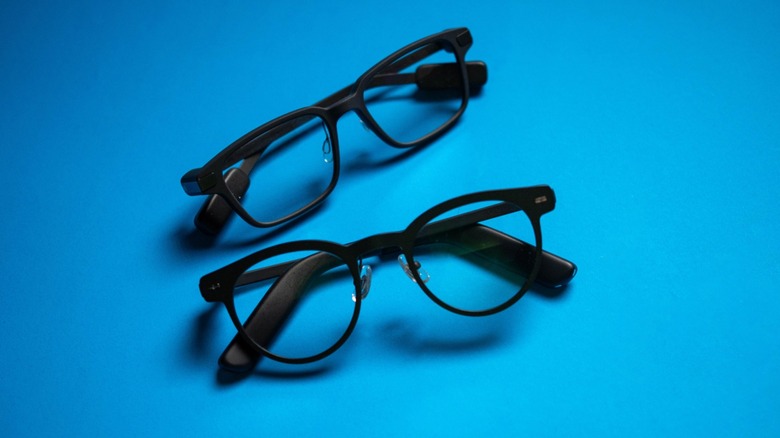
As aesthetic designs continue to mirror traditional, high-end eyewear frames without sacrificing structural integrity, the social boundaries surrounding smart glasses will dissolve entirely. With weights dropping below 40 grams and battery life extending past full-day professional use, waveguide glasses are poised to transition from niche productivity gadgets into standard-issue corporate and academic communication tools.
Conclusion
Using AI-powered smart glasses as a teleprompter represents a major leap forward in how we prepare for and execute public speaking engagements. Devices like the XGIMI MemoMind One and the Even Realities G2 prove that heads-up display technology has advanced past the gimmicky, camera-heavy missteps of the past. By offering discreet, high-brightness text projection, adaptive AI-driven scrolling cadences, and camera-free privacy, these glasses provide a frictionless alternative to traditional bulky hardware.
For professionals, educators, and content creators seeking a seamless, highly mobile teleprompter solution, the technology is no longer a futuristic promise—it is a functional, highly effective reality available today.