Executive Overview: A Calculated Market Entry
As the retail landscape shifts into the frantic peak of Black Friday, the smartphone market finds itself at a curious crossroads. Flagship devices have steadily climbed toward the $1,000 threshold, leaving a void for high-performance hardware that doesn’t demand a premium-tier investment. Entering this fray with aggressive timing, Google has slashed the price of the unlocked Google Pixel 10 to $599—a 25% reduction from its $799 MSRP.
This move is not merely a holiday discount; it is a strategic repositioning. By bringing the Pixel 10 to a sub-$600 price point, Google is directly challenging mid-range offerings from competitors while simultaneously lowering the barrier to entry for its ecosystem. For the average consumer, the iPhone switcher, or the budget-conscious professional, this deal represents perhaps the most compelling value proposition of the 2024 holiday season. However, beneath the attractive pricing lies a device of distinct trade-offs—one that demands a nuanced understanding of its capabilities before the "Buy Now" button is clicked.
Detailed Chronology: From Launch to Price Correction
The trajectory of the Pixel 10 has been marked by a focus on refinement over revolution. Upon its initial release, the device was positioned as a premium, compact flagship—a direct response to the market’s demand for smaller Android phones that don’t compromise on build quality.
The launch period saw critical praise for its "business as usual" approach: a 6.3-inch form factor that prioritizes ergonomics and a clean, software-first experience. Yet, as the calendar turned toward the fourth quarter, the competitive pressure from other OEMs forced a price correction. The current $599 price point matches the lowest recorded valuation for the model, signaling that Google is prioritizing market share and user base expansion as the year concludes. This "Flash Sale" dynamic at Amazon is intended to clear inventory while capturing the high-intent traffic characteristic of the Black Friday shopping window.
Supporting Context & Metrics: Decoding the Hardware
To understand whether the Pixel 10 is the right choice for your specific workflow, one must look beyond the price tag and into the silicon and optics.
The Tensor G5: Performance vs. Efficiency
At the heart of the device sits the Tensor G5 processor paired with 12GB of RAM. While benchmarks consistently show that the G5 is not designed to compete with the raw throughput of top-tier gaming chipsets, it excels in AI-driven task management. For the average user, this means a snappy, responsive interface and seamless integration with Google’s suite of smart features. However, power users—specifically those who engage in intensive 3D mobile gaming—will likely find the thermal management and frame-rate stability lacking compared to devices optimized for performance.
Optics and The "Super Res" Promise
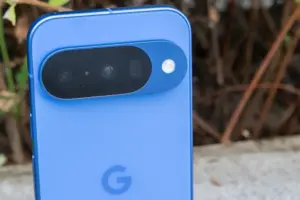
The camera system remains a focal point of the Pixel brand. The triple-camera array, highlighted by a 5x telephoto lens and 20x Super Res Zoom, provides versatility that is rare at the $599 price point. Despite the hardware downgrades in the main and ultrawide sensors compared to the "Pro" variants, Google’s computational photography remains industry-leading. For those who prioritize social media-ready snaps, portraiture, and everyday photography, the Pixel 10 remains an elite tool. Conversely, professional videographers will find the limitations in sensor size and processing overhead to be a bottleneck.
Display and Build Quality
The hardware specs are undeniably premium. The 6.3-inch Actua OLED panel hits a remarkable 3,000 nits of peak brightness, ensuring readability in direct sunlight. With a 120Hz refresh rate and the structural integrity of Corning Gorilla Glass Victus 2, the device feels substantial. The inclusion of Qi2 Pixelsnap magnetic wireless charging adds a layer of modern convenience that feels right at home in 2024.
Official Statements and Industry Reception
While Google has maintained a standard corporate stance regarding its pricing strategy—emphasizing "providing value to our users"—industry analysts view the $599 price point as a defensive maneuver.
The consensus among tech reviewers is that the Pixel 10 is an "identity" phone. It is not trying to be the best at everything; it is trying to be the best for everyone. By streamlining the design and focusing on software stability and AI integration, Google is betting that the average consumer values a "clean" Android experience over raw specs. Industry reception has been largely positive, provided the buyer understands that this is a refined smartphone, not a performance beast.
The Verdict: Who Should Buy?
The Ideal Candidate
- The iPhone Switcher: If you are tired of the walled garden and want a transition that prioritizes ease of use and a clean UI, the Pixel 10 is the most "iPhone-like" Android device in terms of software-hardware synergy.
- The Budget-Conscious Professional: You want a phone that feels expensive and takes great photos, but you aren’t willing to pay the "flagship tax."
- The Compact Phone Enthusiast: In an era of massive "Max" and "Ultra" devices, the 6.3-inch form factor is a breath of fresh air.
The "Skip" List
- The Power User: If your day involves heavy mobile gaming, 4K video editing, or high-octane multitasking, the Tensor G5 will leave you wanting.
- The Charging Impatient: The Pixel 10’s charging speeds remain conservative. If you are accustomed to the rapid-fire charging found on Chinese flagship imports, this will feel like a regression.
- The Current Pixel Owner: If you already own a Pixel 8 or 9, the marginal gains in the 10 do not justify a purchase, even at the discounted price.
Future Outlook: The Longevity of the Pixel Ecosystem
As we look toward the future, the primary concern for prospective buyers is software longevity. Google has made strides in its commitment to long-term updates, though the reality of "buggy software updates" remains a recurring critique in the user community. While the hardware is built to last—supported by IP68 water and dust resistance—the software experience is a dynamic variable.
By purchasing at $599, you are essentially "buying into" Google’s vision of AI-assisted mobile computing. For the next 12 to 24 months, this device will remain a highly capable daily driver. However, the market is moving quickly; by the time the Pixel 11 arrives, the current compromises—specifically regarding charging speed and raw processing power—will likely be even more pronounced.
Final Recommendation: If your current device is aging, the battery is failing, or you simply want the best "smart" features that Android has to offer for under $600, this Amazon deal is a rare opportunity to secure a high-end experience at a mid-range price. Act quickly; at this price point, stock is rarely guaranteed to last through the weekend.