
Executive Overview
For years, the consumer technology industry has operated on a tacit understanding: smartwatches and fitness trackers are inherently disposable commodities. Designed with sleek, impenetrable casings and integrated, glued-in power cells, these devices invariably face a terminal decline. No matter how resilient the software ecosystem or how robust the chassis, lithium-ion degradation ensures that after a few years of daily charging cycles, battery capacity shrinks until the device becomes effectively unusable. Consumers are routinely funneled into a perpetual upgrade cycle, replacing otherwise functional hardware simply because the power source has exhausted its lifespan.
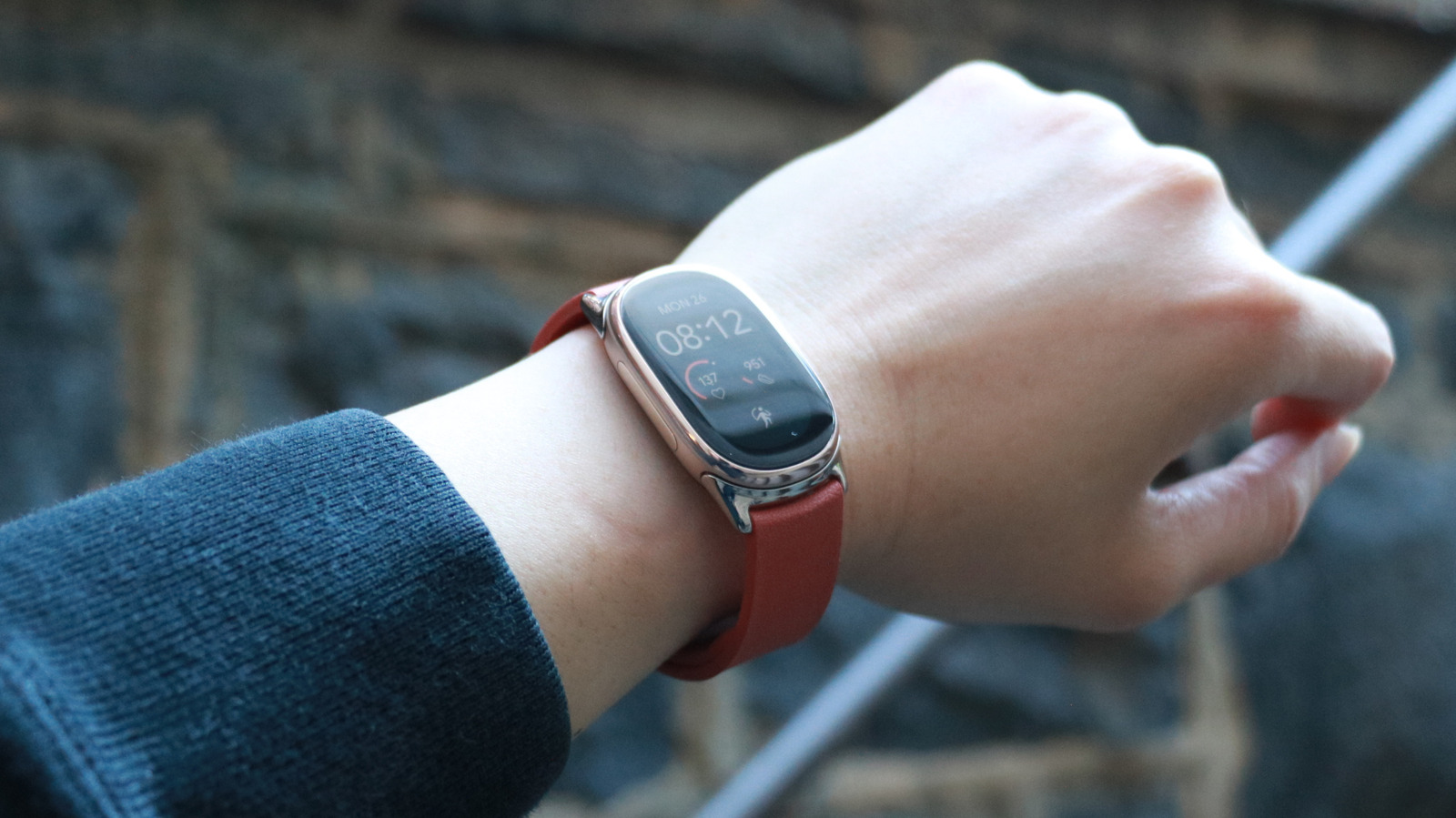
Google’s recent introduction of the Fitbit Edge—the spiritual and structural successor to the popular Charge series—initially signaled a radical shift away from this planned obsolescence. Alongside its release, Google confirmed a feature that immediately captured the attention of tech enthusiasts and right-to-repair advocates alike: the Fitbit Edge features a user-replaceable battery. In theory, this engineering choice decouples the physical longevity of the tracker from the chemical lifespan of its power cell. As long as software support persists and compatible batteries remain available, an Edge could theoretically operate indefinitely.
However, a closer look at the actual implementation reveals a much more nuanced reality. The battery in the Fitbit Edge is technically replaceable, but the process is far from the drop-in simplicity consumers associate with traditional consumer electronics. Partnering with repairability champion iFixit, Google has made a manual and official replacement parts available, transforming what could have been a seamless consumer experience into a delicate, high-stakes micro-surgery.
This deep dive explores the mechanics of the Fitbit Edge’s repair process, the partnership with iFixit, the inherent technical hurdles that keep most wearables sealed, the lack of official mail-in alternatives, and what this pivotal release means for the broader future of sustainable consumer technology.
Detailed Chronology: The Journey to the Fitbit Edge and Its Repairable Power Cell
To understand the significance of the Fitbit Edge, one must first look at the recent history of Google’s wearable strategy. Following Google’s acquisition of Fitbit, a wave of anxiety rippled through the fitness-tracking community. Enthusiasts and loyalists openly worried that tech giant Google would quietly phase out the Fitbit brand, consolidating all wearable research and development into the flagship Google Pixel Watch line. For fans of lightweight, long-lasting fitness bands—devices that prioritize weeks of battery life and continuous biometric tracking over power-hungry app ecosystems—the prospect of Fitbit’s demise was deeply concerning.
Google systematically dismantled those fears with the unveiling of the Fitbit Edge. Positioned as the clear evolution of the venerable Charge lineup, the Edge stripped away certain complex smartwatch features like Google Pay and electrodermal activity (EDA) stress scans, doubling down instead on core fitness tracking, sleek ergonomics, and, crucially, hardware longevity.
Yet, the inclusion of a user-replaceable battery did not happen in a vacuum. It represents the collision of two opposing forces: mounting regulatory pressure globally—particularly within the European Union—mandating right-to-repair frameworks, and Google’s own internal sustainability goals. Designing a wearable with a replaceable battery required a fundamental rethink of internal architecture. Traditional fitness trackers are ultrasonically welded or heavily glued shut to achieve waterproof ratings. To make the Edge serviceable, engineers had to devise a fastening and sealing system that could be opened by a consumer without completely destroying the chassis.
Google selected iFixit as its primary partner for this initiative. Rather than establishing a traditional, centralized mail-in depot where users pay a flat fee for factory refurbishment, Google opted to decentralize the repair process. The company authorized iFixit to publish a comprehensive, step-by-step PDF service manual and supply the necessary proprietary components. This move shifted the burden of execution entirely onto the end user, setting the stage for one of the most unique—and polarizing—repair experiments in modern consumer electronics.
Supporting Context & Metrics: Decoding the iFixit Repair Process
For an average consumer accustomed to replacing AA batteries in a TV remote or sliding open the back of an older smartphone, the reality of servicing the Fitbit Edge can come as a sharp shock. The process is remarkably delicate, demanding specialized equipment, meticulous patience, and an environment largely free of environmental hazards.
The Specialized Toolchain and One-Time Components
According to the official iFixit documentation, servicing the Fitbit Edge requires more than just a standard precision screwdriver. Users must acquire a dedicated service kit that includes not only a fresh, authentic replacement battery but also specialized structural fasteners.
A notable detail highlighted in the service documentation is that the replacement screws provided for the surrounding internal equipment are designed for single-use applications. Once torqued down, their structural integrity or thread-locking mechanisms are spent, meaning users cannot reuse them during subsequent repairs. This engineering constraint speaks volumes about the microscopic tolerances involved in packing advanced biometric sensors, Bluetooth radios, and power management integrated circuits into a housing small enough to wear comfortably on a human wrist.
Navigating Physical and Environmental Hazards
Once a user successfully overcomes the initial challenge of prying open the Edge’s meticulously sealed case, the margin for error narrows to fractions of a millimeter.
- The O-Ring Seal: Inside the device lies a microscopic O-ring gasket responsible for maintaining the tracker’s water resistance. If this gasket is pinched, misaligned, or contaminated with dust during reassembly, the device’s IP rating is instantly compromised, exposing sensitive electronics to sweat, rain, or accidental submersion.
- Micro-Connectors and ESD: The interior of the Edge is a dense landscape of ribbon cables, tiny zero-insertion-force (ZIF) connectors, and exposed circuitry. Servicing the device requires precision tweezers and an acute awareness of electrostatic discharge (ESD). iFixit strongly advises the use of grounded anti-static mats and explicitly warns against wearing clothing prone to generating static electricity—such as fleece—which can instantly fry the tracker’s motherboard with an invisible, high-voltage spark.
- The Scale of Operation: Even for seasoned electronics hobbyists or individuals experienced in custom PC building, the sheer scale of the Fitbit Edge is humbling. The screws, latches, and wiring harnesses are microscopic. A shaky hand or a momentary lapse in concentration can easily shear a delicate connector, turning a battery swap into a catastrophic hardware failure.
Official Statements & Industry Perspectives
The release of the Fitbit Edge and its DIY battery repair ecosystem has sparked a vigorous debate across the tech industry. It forces a critical question: Can consumer-level micro-repair successfully scale to the mass market, or is it destined to remain a niche pursuit for tech hobbyists?
Google’s Official Stance and Liability Management
Google’s approach to the Edge’s lifecycle reveals a careful balancing act between supporting sustainability initiatives and managing corporate liability. Currently, Google does not offer an official, paid mail-in battery replacement service for the Edge. If a device suffers from a battery defect within the standard warranty window, Google will typically handle the issue—often by shipping out an entirely new replacement unit rather than cracking open the defective one. Outside of warranty, however, the official company policy leaves the task entirely in the hands of the consumer.
At the same time, Google has issued clear cautionary guidance regarding unauthorized, third-party components. Official product documentation warns that utilizing "a non-qualified battery and improper disposal may present a risk of fire, explosion, leakage, and/or other hazards."
While industry critics often view such statements as corporate maneuvering designed to discourage third-party competition and protect internal supply chains, there is a stark underlying engineering truth to the warning. Lithium-ion pouch cells are chemically volatile. If punctured, over-voltaged, or poorly manufactured, they can experience thermal runaway, resulting in rapid combustion or toxic leaks. Google’s insistence on using official, quality-assured replacement parts—coupled with safety protocols like storing spent cells in fireproof containers—underscores the genuine risks inherent in handling dense chemical energy storage at a micro scale.
The Wearables Industry Dilemma
Why haven’t other major smartwatch and fitness tracker manufacturers embraced user-replaceable batteries? The answer lies in a combination of consumer expectations, design philosophy, and economic incentives.
- Waterproofing and Aesthetics: Modern consumers demand ultra-thin, seamless designs with high water-resistance ratings for swimming, showering, and diving. Implementing a user-accessible battery compartment requires mechanical doors, rubber gaskets, latches, or threaded caps that inherently increase physical dimensions and introduce multiple potential points of water ingress.
- Economic Friction: Manufacturers rely heavily on the hardware replacement cycle for recurring revenue. If a device can be indefinitely sustained via a $15 battery swap every three years, upgrade rates for new generations of hardware could plummet.
- Consumer Error Liability: Tech companies are intensely risk-averse. Designing a device that invites users to poke around delicate internal circuits with metal tweezers creates an overwhelming customer support burden. When a user accidentally destroys their device during a botched DIY repair and blames the manufacturer, it creates brand friction that companies prefer to avoid entirely.
Future Outlook: What the Fitbit Edge Means for Sustainable Tech
The Fitbit Edge occupies a fascinating and lonely space in contemporary consumer electronics. It is neither a ringing endorsement of effortless right-to-repair nor a cynical exercise in planned obsolescence; rather, it is a brave, deeply complex halfway house.
As regulatory bodies in the European Union and various global markets continue to push aggressive right-to-repair legislation, hardware manufacturers will be forced to re-evaluate how their products age. The Fitbit Edge serves as an invaluable test case for the industry. It proves that physical modularity and serviceability can be designed into form factors traditionally deemed too small or sealed for repair.
However, the true success of the Fitbit Edge will not be measured by the mere existence of an iFixit manual or the availability of replacement screws. It will be measured by empirical adoption rates: How many everyday consumers will actually attempt this repair once their battery degrades two or three years from now?
If the process proves too intimidating, complex, or risky for the median user, the replaceable battery risks becoming a performative checkbox—a nod to sustainability that satisfies regulators without fundamentally changing consumer behavior. Conversely, if a thriving subculture of repair enthusiasts masters the technique, or if third-party repair shops figure out how to offer the service economically, the Edge could pioneer a new paradigm for wearable longevity.
Ultimately, the Fitbit Edge challenges us to rethink our relationship with our gadgets. It reminds us that our devices are physical objects composed of finite, precious earth materials that deserve a longer lease on life. Even if cracking open a fitness band requires the steady hands of a surgeon and an intense afternoon of concentration, the mere option to repair rather than replace represents a vital, hard-fought step forward for the consumer technology landscape.