Executive Overview
The modern wellness landscape has undergone a seismic shift, driven by artificial intelligence and machine learning. Gone are the days of tedious manual data entry, painstakingly weighing portions on digital scales, and searching through fragmented nutritional databases for obscure food items. Today, the promise of modern health tech is deceptively simple: snap a picture of your plate, and let advanced computer vision and large language models calculate your exact caloric intake, macro split, and nutritional values in seconds.
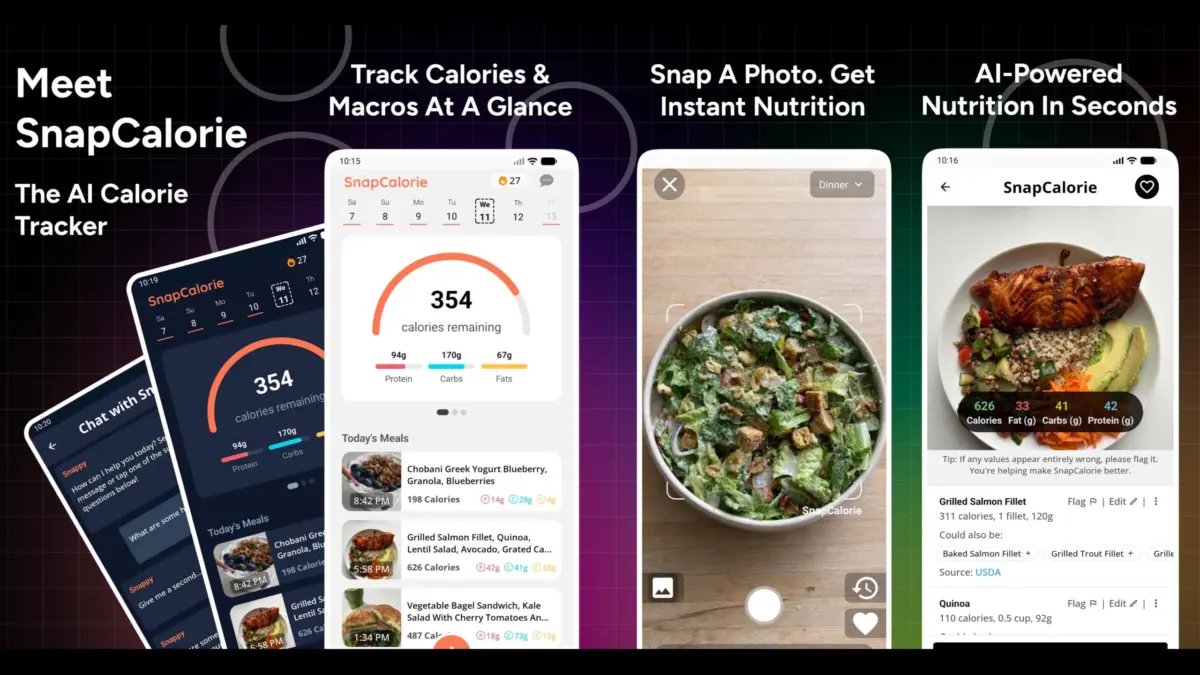
For individuals seeking to reverse a sedentary lifestyle without the friction of traditional tracking methods, AI calorie-tracking applications represent the holy grail of fitness technology. To evaluate the current state of this technology, a rigorous, real-world comparative analysis was conducted over a 72-hour period using two of the most prominent contenders available on the Google Play Store and Apple App Store: BitePal and SnapCalorie.
While both platforms share the foundational objective of automating dietary tracking through visual AI, their execution, user experience, and underlying technological robustness differ wildly. This investigation explores how each app handles diverse culinary landscapes, complex blended beverages, multicultural dishes, and algorithmic accuracy, ultimately revealing a stark divide between gamified novelty and enterprise-grade utility.
Detailed Chronology: A 72-Hour Real-World Test
To test the limits of both platforms, a strict methodology was established: for three consecutive days, every meal, snack, and beverage consumed was logged simultaneously through both BitePal and SnapCalorie. The goal was to simulate the routine of a self-described "home cat"—an individual entirely new to formal dieting regimens who requires an application to do the heavy lifting of nutritional planning, activity factoring, and automated logging.
Day 1: Setup, Baseline Calibration, and First Impressions
The onboarding processes for both BitePal and SnapCalorie are structurally similar. Users are prompted to input baseline anthropometric data—such as age, height, and current weight—alongside lifestyle metrics, target weight goals, and desired weekly weight-loss or weight-gain paces. Utilizing internal nutritional databases, both applications formulate custom daily caloric goals and recommended macronutrient splits (proteins, fats, and carbohydrates).
Furthermore, both platforms integrate seamlessly with Google Health data. This integration allows the apps to automatically factor in active caloric burn, step counts, and recorded workouts, eliminating the need for manual exercise logging.
However, subtle discrepancies emerged during the initial setup phase. Despite feeding identical metrics and pace objectives into both applications, BitePal and SnapCalorie generated conflicting timelines for achieving the target weight. SnapCalorie projected a significantly more aggressive, yet physiologically viable, timeline, reaching the target date several weeks earlier than BitePal’s estimate.
From a user interface perspective, Day 1 highlighted stark philosophical differences:
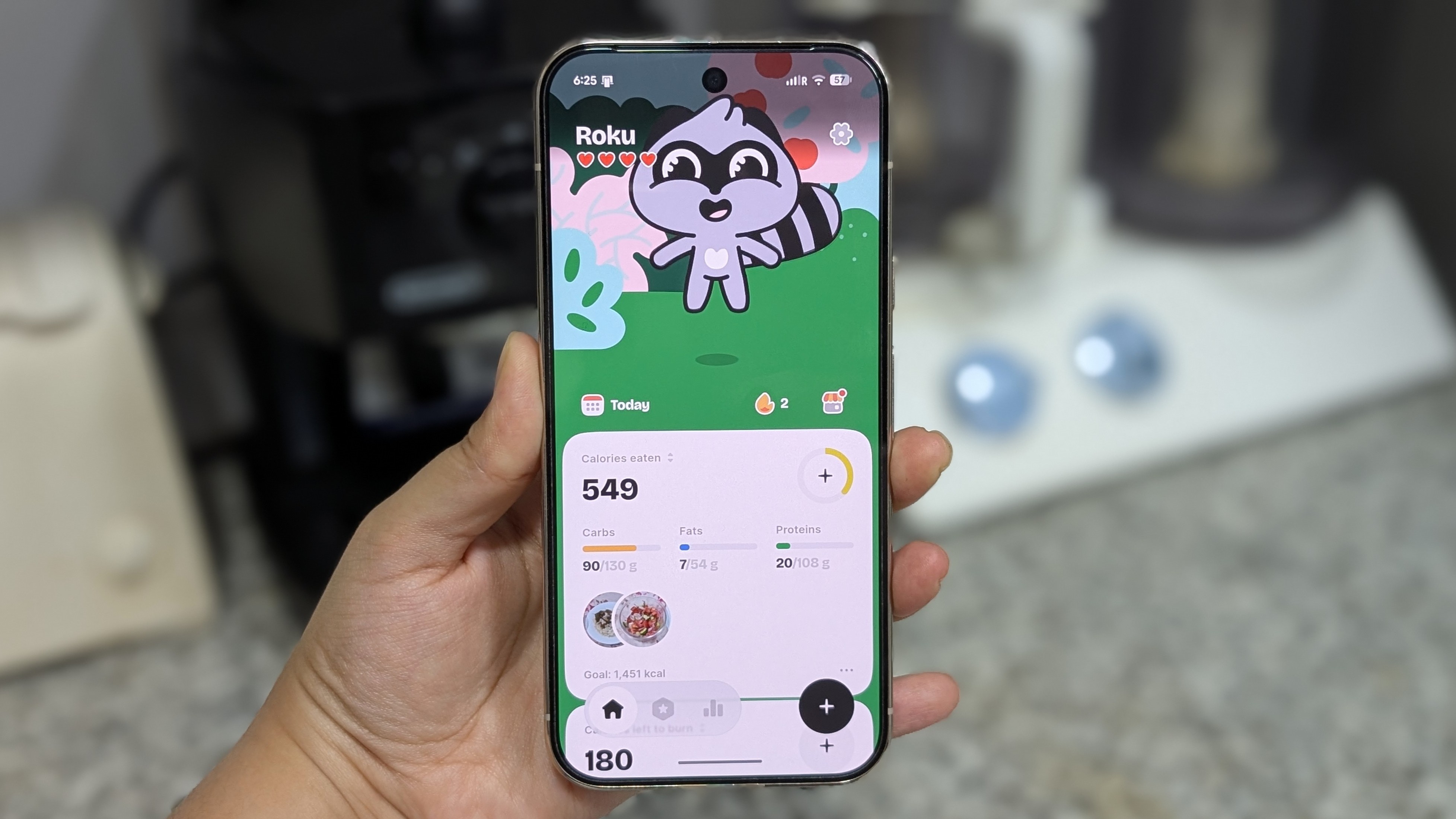
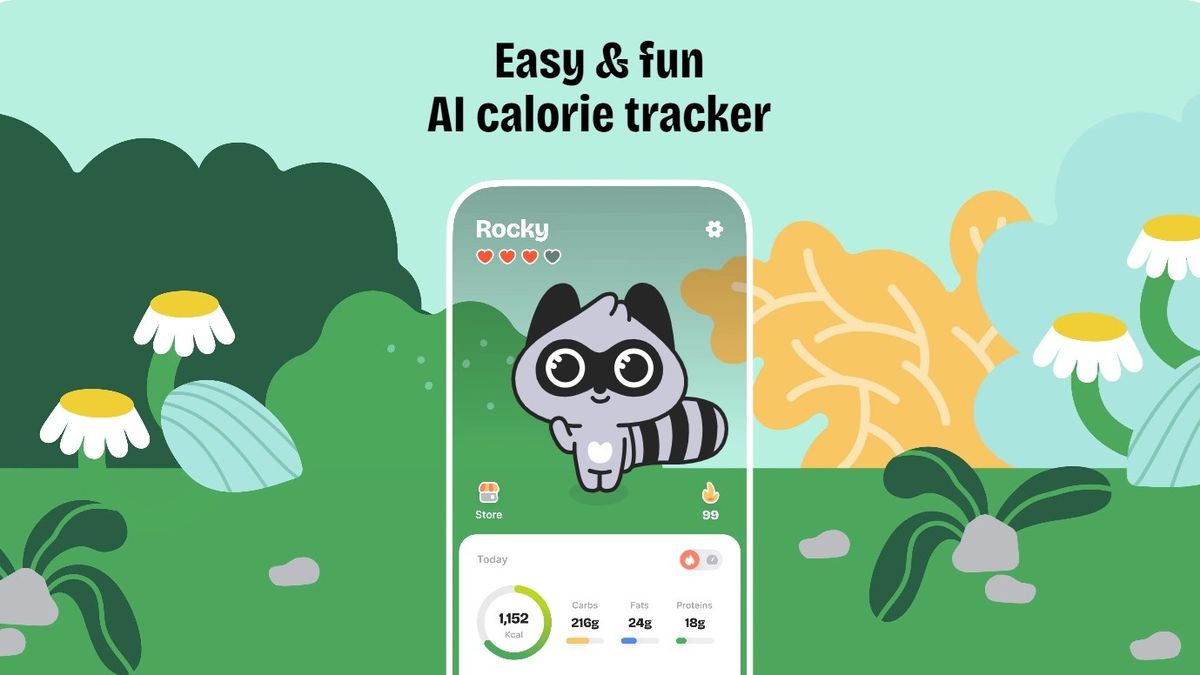
- BitePal embraces a hyper-gamified, vibrant aesthetic. Upon launching, users are introduced to a virtual pet raccoon that can be customized and named. The pet’s health and vitality fluctuate in direct response to the user’s adherence to their daily nutritional and fitness goals.
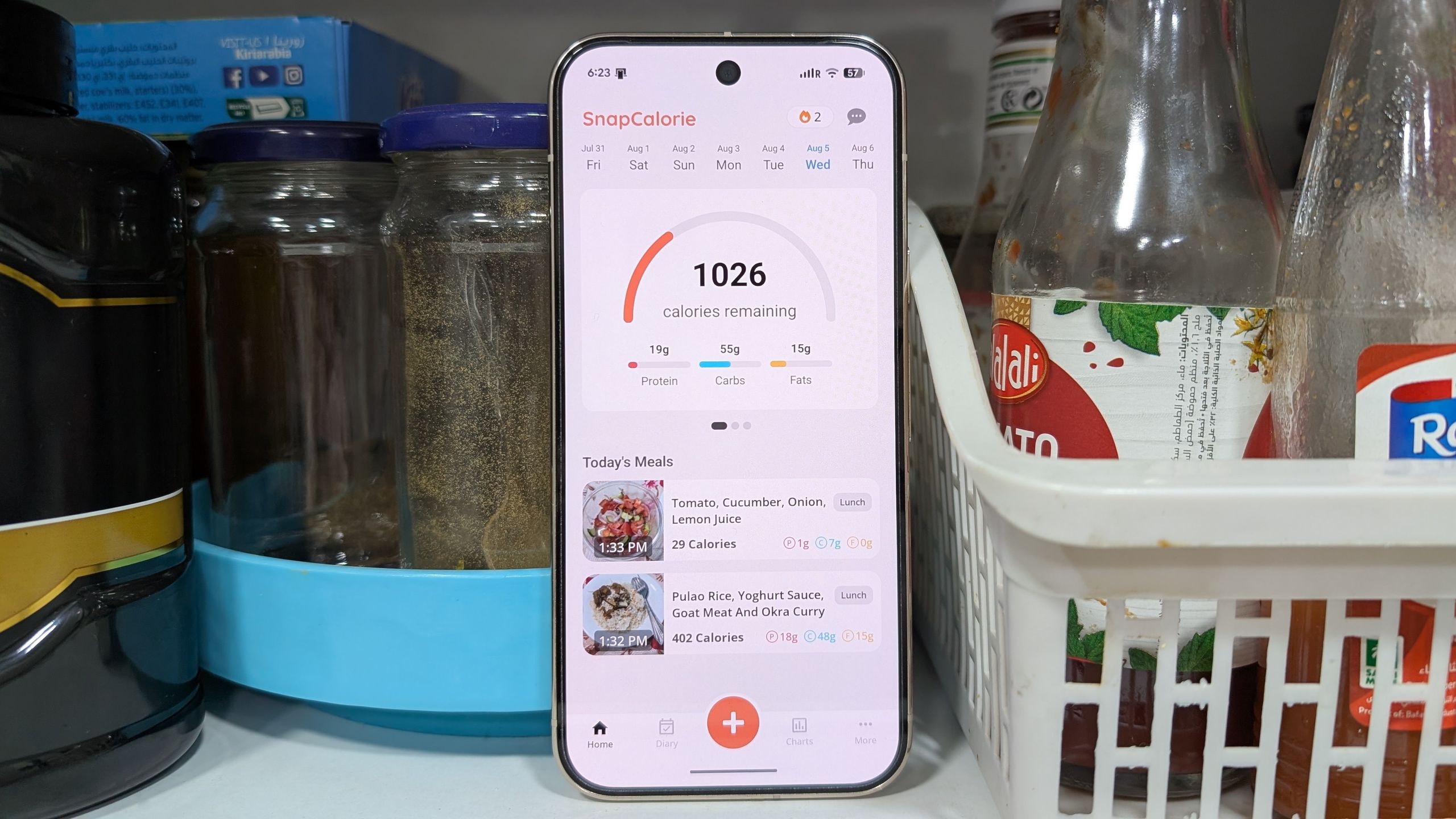
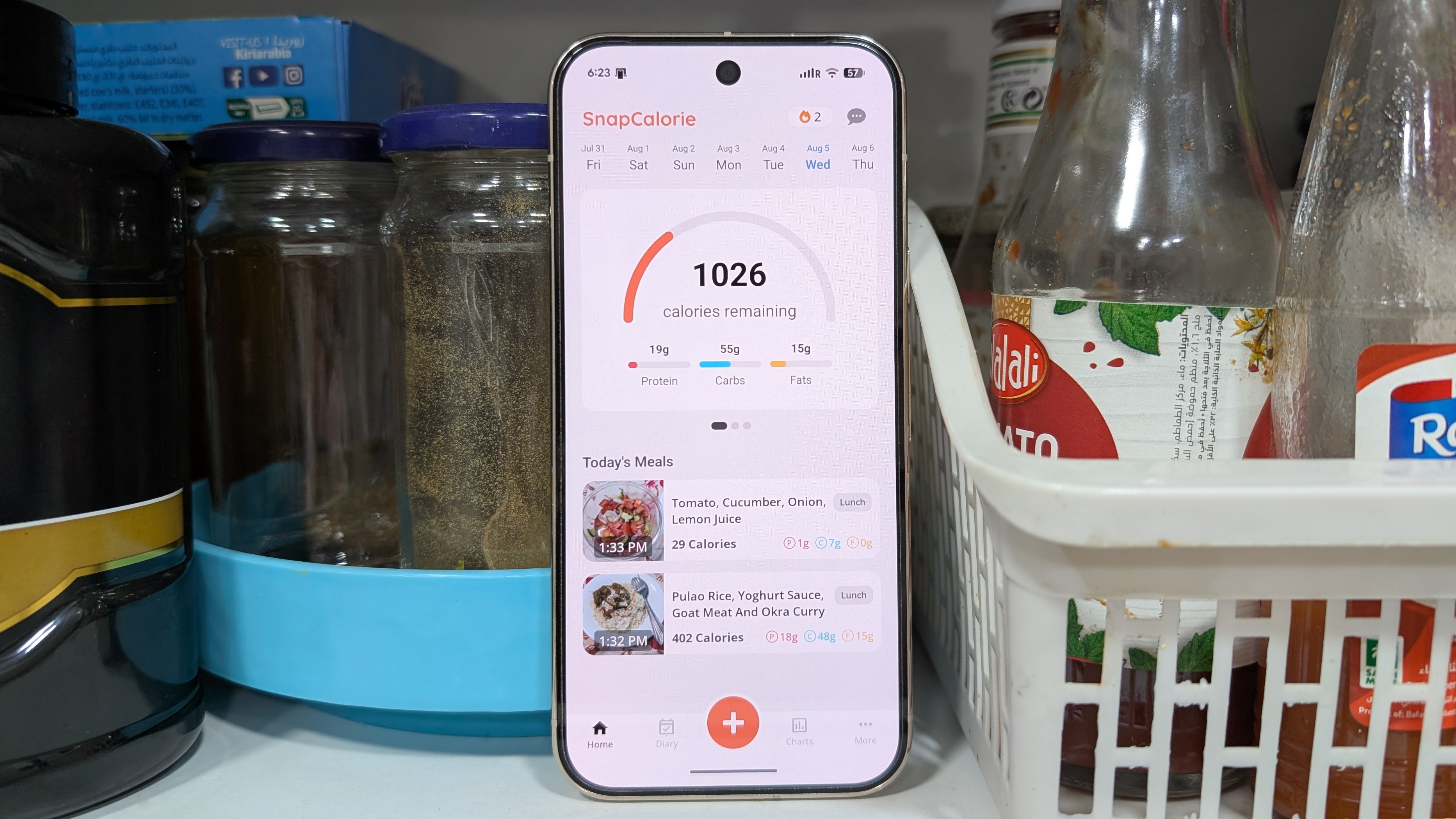
- SnapCalorie adopts a utilitarian, clinical, and straightforward approach. Its interface lacks frivolous distractions, prioritizing data density, quick-access tools, and frictionless navigation.
Day 2: Putting the AI to the Test with Multicultural Cuisine
The true stress test for any visual AI calorie tracker is its ability to recognize non-Western, regional, or complex homemade dishes. Standardized databases handle a Big Mac or an apple with ease; however, modern culinary diversity presents a complex challenge for computer vision models.
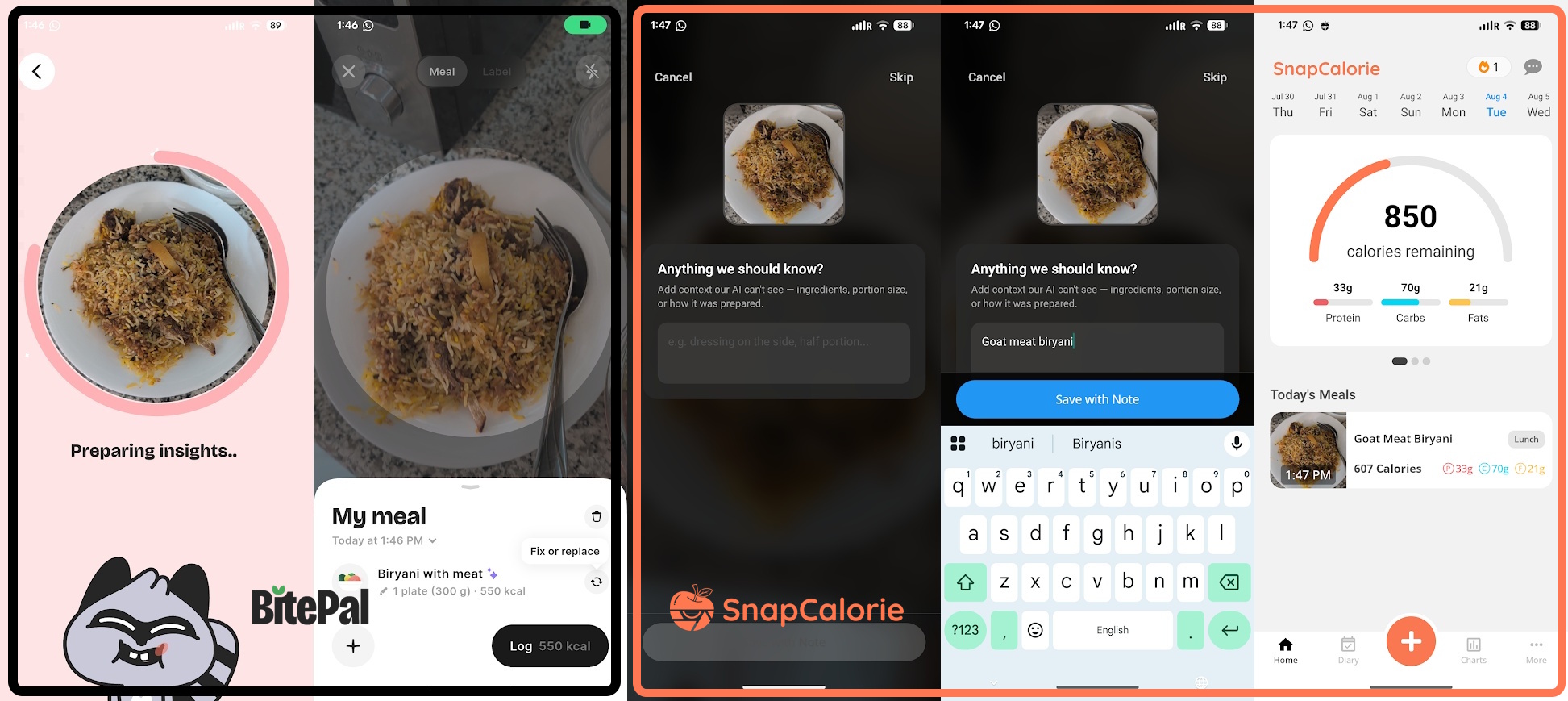
On Day 2, complex home-cooked meals were introduced into the logging workflow, specifically a traditional pot of goat meat biryani, alongside localized and lesser-known beverage brands such as Kinza Cola.
- SnapCalorie demonstrated an extraordinary capacity for contextual recognition. By combining a preliminary visual scan with a mandatory short text description provided by the user, SnapCalorie successfully identified the specialized spices, meat type, and portion density of the biryani, cross-referencing it with a remarkably deep global food library. It similarly identified the obscure soft drink brand, logging its exact nutritional profile.
- BitePal, conversely, struggled significantly. The application’s computer vision failed to isolate the complex composition of the biryani, forcing the user to select generic, highly inaccurate approximations from its limited database. When attempting to log the foreign soda, BitePal completely missed the mark, leaving the user with no choice but to substitute it with a fundamentally different beverage like Sprite.
This failure exposed a critical flaw: while users can manually override AI errors, excessive manual correction undermines the entire value proposition of an automated, AI-first dietary application.
Day 3: Beverage Complexities and the Screenshot Workflow
The final day of testing focused on edge cases, specifically omitted logs recovered via digital artifacts. Having forgotten to immediately photograph an iced coffee ordered from a specialized local cafe, a screenshot of the digital order receipt was fed into both applications to test image-to-text and database retrieval capabilities.
- SnapCalorie excelled effortlessly. It parsed the screenshot, identified the specific cafe, pulled the exact proprietary recipe (including milk fat percentages and syrup volume) directly from internet metadata, and accurately logged the beverage into the daily food diary.
- BitePal faltered completely. The application failed to detect that the beverage contained milk, returning a generic iced coffee metric that bore no resemblance to the ordered item. Even after attempting to edit the item name, BitePal’s underlying intelligence framework lacked the sophisticated web-scraping and reasoning capabilities required to correct the discrepancy autonomously.
Supporting Context & Metrics
To better understand the market positioning and structural differences between BitePal and SnapCalorie, it is essential to examine their feature parity, monetization models, and analytical scope.
| Feature Category | BitePal | SnapCalorie |
|---|---|---|
| UI/UX Philosophy | Gamified, vibrant, interactive (Virtual Pet Raccoon) | Utilitarian, data-driven, clinical |
| Free Tier Access | Highly restricted (capped scans, limited meal logging) | Unlimited basic food logging, barcode scanning, and recipe creation |
| AI Recognition Engine | Surface-level visual identification; struggles with niche items | Deep-context visual + text-assisted identification with extensive web parsing |
| Ecosystem Integration | Google Health & Apple Health compatible | Google Health & Apple Health compatible |
| Target Audience | Families, children, gamification enthusiasts | Data-conscious fitness enthusiasts, macro trackers |
The Freemium Wall vs. Unlimited Utility
One of the most consequential differentiators for everyday users is the pricing and access model. BitePal gates a significant portion of its core functionality behind a paywall. Free users quickly encounter strict limitations on daily photo scans, nutritional advice features, and even interactions with the gamified pet system.
SnapCalorie adopts a more consumer-friendly stance on its free tier, granting users unlimited access to essential food-logging utilities, manual recipe creation, and barcode scanning. This ensures that casual users can test the platform thoroughly before committing financially.
Official Perspectives and Target Demographics
Industry analysts note that the proliferation of AI in health tech represents a double-edged sword. While lower-friction tracking dramatically improves initial user retention—getting people to log food who otherwise would have abandoned traditional apps like MyFitnessPal within days—the propagation of inaccurate macro calculations can derail physiological goals.
The Verdict on BitePal: A Child-Friendly Wellness Tool
Despite its shortcomings in advanced AI recognition, BitePal occupies a unique, highly specialized niche. Its colorful interface, coupled with the virtual pet mechanic, makes it an exceptional tool for younger demographics or families looking to instill healthy nutritional habits in children.
Parents can successfully pair the app with wearable technology—such as the Fitbit Ace LTE or other children’s smartwatches—via Google Health to monitor activity alongside dietary intake. Teaching children about fiber, micronutrients, and hydration through a gamified virtual companion is an innovative pedagogical approach. However, parents must be prepared to absorb subscription costs and assist younger users when the AI misidentifies complex meals.
The Verdict on SnapCalorie: The Serious Contender
For adult users genuinely committed to transforming their health, shedding sedentary habits, and achieving specific body-composition goals, SnapCalorie emerges as the clear victor of this 72-hour trial. Its superior global food library, ability to process complex text-and-image prompts, and robust free-tier feature set make it an indispensable daily driver.
Future Outlook
The trajectory of AI-driven nutrition points toward a future where manual food logging will become entirely obsolete. As multi-modal large language models become faster, more lightweight, and capable of running locally on mobile hardware or querying vast global restaurant and home-cooking databases in milliseconds, the margin for error observed in apps like BitePal will narrow.
In the near term, developers will need to focus heavily on regional culinary diversity. As globalized populations consume increasingly hybrid diets, apps that rely on homogenous, Western-centric nutritional datasets will face high churn rates.
For now, users embarking on a post-sedentary fitness journey would do well to align their tool selection with their lifestyle objectives: choose SnapCalorie for uncompromising accuracy, deep database reach, and frictionless professional tracking; or opt for BitePal if gamification and family-oriented nutritional engagement are your primary drivers.