
Executive Overview
In the modern landscape of commerce, the debate between brand-building and performance marketing has long dominated corporate boardrooms. Traditionalists argue for the long-term value of emotional resonance and brand equity, while growth hackers demand immediate, measurable returns on ad spend. However, a new paradigm is emerging—one where purpose and performance are not mutually exclusive, but rather mutually reinforcing.
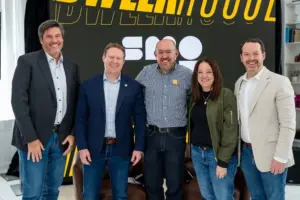
In a recent episode of Adspeak by ADWEEK, host Audrey Kemp sat down with two distinctly different marketing leaders to explore this dynamic: R. Ethan Braden, Vice President and Chief Marketing and Communications Officer at Texas A&M University, and Tyler Merrick, Founder and CEO of Joyride. Together, they unpacked how organizations operating at opposite ends of the economic spectrum—a 150-year-old higher education institution and an up-and-coming challenger candy brand—can harness authentic storytelling, bold decision-making, and deep cultural relevance to drive unprecedented growth.
This deep-dive analysis examines how Texas A&M modernized its storied legacy without compromising its foundational values, and how Joyride disrupted the highly competitive confectionery space to become the top-selling candy at Target. Through these case studies, marketers can glean actionable insights into balancing institutional integrity with agile, culturally attuned growth strategies.
Detailed Chronology of Brand Transformation
1. Modernizing a Century-and-a-Half-Old Legacy: The Texas A&M Journey
When R. Ethan Braden stepped into his role at Texas A&M University, he faced a formidable challenge: how to modernize a 150-year-old brand deeply rooted in tradition without alienating its fiercely loyal stakeholder base. Higher education marketing is notoriously risk-averse, often trapped by insider mythology that resonates deeply with alumni but falls flat on a national stage.
Braden and his team began by conducting rigorous audience research to understand how outsiders perceived the institution. The data revealed a narrow, albeit positive, association: outsiders primarily viewed Texas A&M through the lens of collegiate athletics, football culture, and agriculture. While these elements are core components of the university’s identity, they failed to capture the institution’s comprehensive academic and societal impact.
To bridge this gap, Braden’s team executed a strategic pivot. Rather than abandoning the university’s heritage, they translated its distinctive culture into a broader, universally understandable message centered on the idea of being the "best university in the world." By shifting the narrative from insular folklore to outward-facing excellence, Texas A&M unlocked massive national resonance. A subsequent flagship campaign shattered expectations, generating 80 million YouTube views—with an astounding 88% of those views originating from outside the state of Texas.
2. Disruption in the Confectionery Aisle: The Rise of Joyride
At the other end of the spectrum, Tyler Merrick set out to tackle an entrenched industry dominated by legacy conglomerates with massive distribution networks. Joyride entered the market with a clear thesis: consumers—particularly younger generations—are actively seeking healthier alternatives to traditional sugary snacks, but they refuse to compromise on taste.
Merrick recognized that building a challenger brand required more than just formulating a better product with clean ingredients and significantly less sugar. It required a synchronized approach combining product differentiation, cultural timing, and authentic creator partnerships. By collaborating with digital creators who possessed genuine affinity for the brand—such as creator Ryan Trahan—Joyride bypassed traditional, high-friction advertising channels.
This strategy transformed Joyride from a niche better-for-you alternative into a cultural force. By aligning product-market fit with contemporary creator culture, the brand secured prime retail real estate and ultimately claimed the title of the number-one-selling candy at Target.
Supporting Context & Metrics: The Anatomy of Modern Growth
Achieving breakout success requires navigating complex strategic frameworks. Both Braden and Merrick shared specific metrics and operational philosophies that underpin their respective campaigns.
The Power of "In Character" Guardrails
For legacy institutions, change is frequently met with internal resistance. Braden addressed this hurdle by establishing a behavioral framework built around Texas A&M’s core RELLIS values: Respect, Excellence, Leadership, Loyalty, Integrity, and Selfless Service.
Rather than evaluating creative concepts through the restrictive lens of whether an idea is traditionally "on-brand," Braden’s marketing team asks a more nuanced question: Is it "in character"?
- This subtle shift in terminology provides creative teams with the license to take bold, modern risks.
- Simultaneously, it reassures legacy stakeholders—such as major donors and long-standing alumni—that institutional evolution strengthens, rather than dilutes, the core identity over time.
Low-Fi Content vs. Big-Budget Production
In the digital age, polished, high-budget commercial spots often suffer from declining credibility among consumers who have developed banner blindness to traditional advertising. Joyride leaned heavily into this consumer behavior by prioritizing grassroots, DIY-style content over expensive production values.
Maintaining an active community of 2.1 million engaged Instagram followers, Joyride built trust through transparent, self-shot content. By pulling back the curtain to share product iterations, operational hurdles, and authentic behind-the-scenes moments, the brand fosters a sense of community rather than a consumer-advertiser dynamic. For challenger brands operating with limited capital, high-frequency, highly relatable content consistently outperforms expensive, infrequent production.
The Cost of Inaction: Pulling Underperforming Creative
One of the boldest operational lessons from the conversation centered on the willingness to abandon sinking ships. Braden shared the decisive moment when his team chose to pull an underperforming ad campaign rather than continuing to pour resources into optimizing creative that simply wasn’t resonating.
By temporarily going dark, the marketing department cleared the slate for a high-impact relaunch. They debuted a bold, values-driven commercial during a high-stakes athletic matchup (Texas A&M versus Notre Dame). While initial internal projections targeted one million YouTube views, the refreshed campaign shattered benchmarks by reaching 6.5 million views within a matter of weeks. The move underscored a vital marketing truth: decisive, courageous pruning of failing assets is often the prerequisite for true breakthrough performance.
Official Insights & Perspectives
The dialogue between Braden and Merrick highlights several universal truths applicable to marketers across all sectors:
- On Purpose and Performance: Purpose-driven marketing is most effective when it is inextricably linked to authentic brand positioning. Without a strong creative conviction and a deep understanding of audience expectations, purpose risks being dismissed as superficial corporate virtue signaling.
- On Channel Strategy: Expanding a purpose-driven brand requires cultural adaptability. Merrick noted that Joyride tested its clean-ingredient positioning across diverse retail channels—ranging from high-end grocers like H-E-B to convenience store chains like 7-Eleven. By tailoring product offerings and localized flavors to match the distinct culture of each channel, the brand successfully attracted demographics (such as parents returning to convenience stores after years) that traditional better-for-you brands fail to reach.
Future Outlook: Building Brands That Matter and Perform
As the marketing industry looks toward the future, the dichotomy between brand equity and performance metrics is rapidly dissolving. Consumers increasingly demand that the brands they support stand for something meaningful, while business leaders demand tangible top-line growth.
The experiences of Texas A&M University and Joyride offer a blueprint for navigating this complex environment. Whether managing a 150-year-old institutional legacy or scaling a modern challenger brand, the path forward relies on three fundamental pillars:
- Uncompromising Authenticity: Translating insider culture or product benefits into universally understood, culturally relevant narratives.
- Courageous Creative Decision-Making: Utilizing clear values-based guardrails to take bold creative risks, while maintaining the agility to pull and pivot away from underperforming strategies immediately.
- Ecosystem-Wide Adaptability: Ensuring that purpose-driven positioning is communicated through formats and channels that genuinely resonate with the target audience—whether through low-fi creator partnerships or high-impact, culturally timed broadcasts.
Ultimately, brands that master the intersection of authentic purpose and measurable performance will not only capture attention in a noisy marketplace—they will secure enduring, generational relevance.