Executive Overview
When consumers invest in a modern television, they rarely view it as a short-term purchase. Historically, a television was a durable appliance evaluated primarily by the longevity of its hardware components—its panel, backlight, and internal power supply. Once unpacked and mounted, a television was expected to function reliably for a decade or more, with the only real threat to its lifespan being physical component failure.
However, the proliferation of the "smart" TV has fundamentally altered this consumer paradigm. Modern televisions are no longer passive displays; they are complex computing devices running proprietary operating systems, heavy application suites, and constant network connections. They demand regular software patches, firmware optimizations, and critical security updates to remain functional, fast, and safe from modern digital threats.
Despite this paradigm shift, the consumer electronics industry lacks a universal, standardized policy regarding software lifecycle support for televisions. While the smartphone industry has gradually coalesced around multi-year support windows—with giants like Google and Apple pledging up to seven years of updates—the smart TV landscape remains fragmented, opaque, and wildly inconsistent.
Navigating this ecosystem can be a frustrating exercise for buyers. Software support timelines vary drastically by manufacturer, specific model tiers, and even geographic region. Some brands offer explicit, long-term guarantees backed by corporate policy, while others offer vague assurances or rely entirely on third-party operating systems. This investigative report breaks down the software support policies of the world’s leading smart TV manufacturers, analyzing how long your next television investment can genuinely be expected to stay up to date.
Detailed Chronology: How Major Brands Handle Software Support
Understanding how long a smart TV will remain supported requires looking directly at individual manufacturer policies. The industry has seen a slight shift toward longer support cycles in recent years, but the baseline remains unevenly distributed among the market leaders.
Samsung: The Seven-Year Standard-Bearer
Samsung currently leads the charge among major traditional TV manufacturers in terms of explicit, long-term software commitments. In 2024, the South Korean tech giant announced a sweeping policy change: select TV models from 2024 onward—as well as select high-end 2023 models—will receive seven years of software updates for its Linux-based Tizen operating system.
For consumers, this is a monumental shift. If you purchase a qualifying Samsung TV released in 2024, you can reasonably expect continuous firmware optimizations, app compatibility, and security patches through at least 2031. However, there is an important caveat: while older models will receive periodic security and maintenance firmware updates, they do not receive major, cross-generational upgrades to newer versions of the Tizen OS. Thus, while your apps will continue to run smoothly, the user interface and feature set will generally remain tethered to the software generation in which the TV was manufactured.
LG: The webOS Re:New Program
LG approaches software longevity through its structured webOS Re:New program, introduced in early 2024. This initiative guarantees four years of webOS updates for TV models dating back to 2022.
The mechanism behind LG’s rollout involves a staggered release schedule. Updates are typically delivered with a one-year delay compared to the software running on the absolute newest hardware. For example, a major webOS iteration that debuts alongside a 2026 TV lineup will systematically roll out to eligible 2025 TV models the following year. This ensures that users do not experience immediate obsolescence, granting aging panels access to modern interface updates, enhanced streaming app features, and updated security protocols.
Sony: Model-Specific End-of-Life Tracking
Sony takes a decidedly different route, eschewing blanket corporate guarantees in favor of a granular, model-by-model support lifecycle. Sony does not promise a fixed number of years for its entire lineup; instead, support windows are determined independently for each specific television series.
For instance, looking at Sony’s documentation reveals distinct expiration timelines. A premium model from the 2025 lineup, such as the Bravia K-65XR80M2 OLED, carries an official end-of-life support date listed as April 2029. Conversely, another 2025 sibling model, the Bravia 2 II K-65S25VM2, is slated to receive security patches through June 2030.
Compounding this variable approach is Sony’s operating system strategy. Unlike Samsung and LG, Sony has fully embraced the broader ecosystem, utilizing Google TV (and Android TV on legacy units) for all models manufactured after 2021. This means that while Sony dictates the hardware-level firmware lifecycle, underlying app functionality is heavily influenced by Google’s broader ecosystem roadmaps.
TCL: Vague Commitments and Third-Party Dependencies
Budget and mid-tier powerhouse TCL offers remarkably little transparency regarding a fixed period of software support. Reviewing official documentation yields sparse guarantees. TCL’s overarching Software Security page vaguely states that the company "typically" provides security updates for a minimum of two years following "the first shipment of a certain device model"—though this documentation does not explicitly or exclusively guarantee hardware-specific TV support timelines.
Compounding this ambiguity is TCL’s hardware fragmentation. Depending on the specific price point and regional market, TCL televisions run on a shifting array of platforms, including Google TV, older Android TV iterations, and Roku TV. Consequently, the actual software lifespan of a TCL television is frequently dictated by the underlying operating system provider rather than TCL itself.
Supporting Context & Metrics: Regional Discrepancies and Alternative Ecosystems
Software longevity is further complicated when analyzing regional market dynamics and alternative operating systems used by brands that cater to budget-conscious consumers.
The Hisense European vs. US Divide
Hisense provides a fascinating study in regional corporate policy. In Europe, a significant portion of Hisense televisions run on the company’s proprietary VIDAA operating system. In a massive push for consumer confidence, Hisense pledged up to eight years of support for VIDAA-powered models starting with its 2025 lineup.
However, consumers in the United States face a different reality. US-market Hisense TVs rarely ship with the VIDAA OS; instead, they are heavily loaded with third-party operating systems like Android TV, Fire TV, Google TV, or Roku TV. For American buyers, long-term software support is entirely stripped out of Hisense’s hands and placed squarely onto the shoulders of whichever tech giant supplies the underlying operating system.
Roku TVs: Proprietary Hardware Meets Platform Focus
Roku spent years establishing dominance as a standalone streaming hardware and software licensor before eventually launching its own branded line of televisions (such as the Select, Plus, and Pro series).
Roku does not publish explicit, fixed end-of-life support windows for its branded televisions. Because the company’s entire business model revolves around its software ecosystem, it frequently pushes out system-wide updates that benefit both legacy streaming boxes and modern smart TVs alike. While official metrics are scarce—largely because Roku TVs are relatively new to the hardware manufacturing space—historical precedent with its streaming sticks suggests that Roku maintains devices for a respectable multi-year window, with anecdotal reports indicating functional lifespans stretching upwards of a decade for core app streaming.
Budget Titans: Vizio and Insignia
In the ultra-affordable sector, brands like Vizio and Insignia operate under vastly different support frameworks:
- Vizio: Utilizing its proprietary Vizio OS, the brand hosts an expansive app catalog and routinely deploys automatic firmware background updates. However, Vizio steadfastly declines to commit to a fixed or guaranteed support window for its panels, leaving consumers without formal assurances.
- Insignia: Because Insignia-branded televisions rely on Amazon’s Fire OS, their software lifecycle is directly tethered to Amazon’s corporate device support commitments. According to Amazon’s official Fire TV Software Security Updates documentation, the company guarantees security support for a minimum of four years from the date the device was last available for purchase on retail sites.
Official Statements and Industry Insights
Industry analysts and consumer advocacy groups have increasingly turned their attention toward the planned obsolescence risks inherent in modern smart TVs. As televisions absorb the characteristics of tablets and smartphones, consumer expectations are shifting.
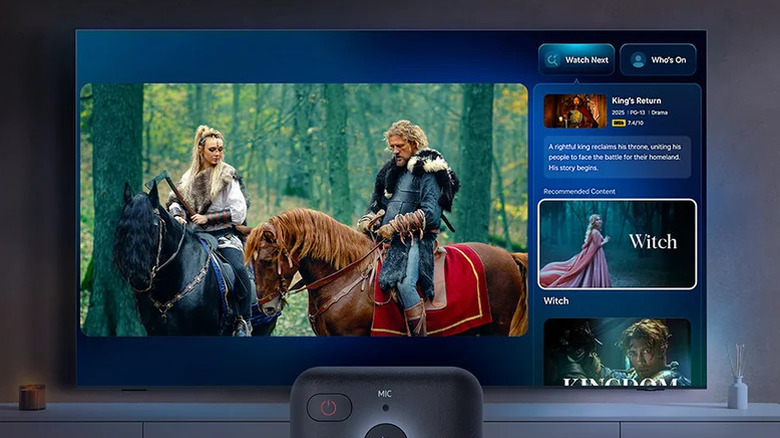
"A television purchase used to be a set-it-and-forget-it transaction," notes consumer technology analyst Marcus Vance. "Today, buying a smart TV without knowing its software update policy is essentially buying a smartphone with an unknown expiration date. When support stops, streaming apps deprecate, security vulnerabilities go unpatched, and the TV is effectively forced into retirement—even if the actual 4K display panel is in pristine condition."
Major manufacturers are slowly responding to this pressure. Samsung’s seven-year commitment and LG’s webOS Re:New program represent direct concessions to consumer demands for transparency and longevity. By aligning television lifecycles closer to those of premium mobile devices, these market leaders are setting a new precedent that budget brands will eventually be forced to reckon with—or risk losing consumer trust entirely.
Future Outlook: How to Future-Proof Your Smart TV Investment
As the smart TV market continues to mature, the gap between hardware durability and software lifespan will remain a critical point of friction for consumers. While brands like Samsung and LG are stepping up with multi-year guarantees, the broader industry remains plagued by opaque policies, regional inconsistencies, and unpredictable third-party dependencies.
Fortunately, a lack of direct manufacturer support does not spell immediate doom for an aging television. If your smart TV’s built-in operating system loses app updates or security patches, you do not need to discard a perfectly good display panel.
Investing in an inexpensive standalone streaming device—such as an Amazon Fire Stick, Roku streaming player, Google TV Chromecast alternative, or Apple TV—remains the most cost-effective and reliable method to bypass a smart TV’s software expiration date. By routing all processing power, interface navigation, and app updates through an external dongle or box, consumers can effectively freeze their television in time as a "dumb" monitor, extending its functional living room lifespan for years beyond its manufacturer-supported expiration date.
Ultimately, checking the manufacturer’s software policy before purchasing a new television is no longer a niche consumer habit—it is a critical step in making a smart, long-term investment for your home entertainment system.