Executive Overview
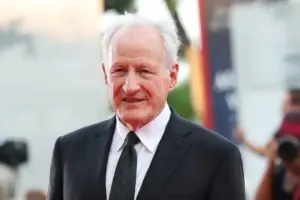
Renowned filmmaker Michael Mann, the visionary auteur celebrated for defining modern cinematic crime and action through masterpieces such as Heat, Collateral, and Thief, is currently recovering following a firearm mishap at a Los Angeles shooting facility. According to confirmation from the Los Angeles Police Department and representatives for the director, the 83-year-old filmmaker suffered a superficial leg wound on Saturday afternoon when a weapon accidentally discharged while he was attempting to holster it.
The incident, which took place at approximately 4:00 p.m. at The Range L.A., drew immediate emergency response protocols. First responders arrived at the scene to find the veteran director alert, communicative, and stable. Representatives for Mann quickly stepped forward to mitigate public concern, characterizing the injury as minor and confirming that he was promptly treated and released from medical care.
Despite the alarming nature of the headline, the accident has not derailed the filmmaker’s famously rigorous professional schedule. Mann is presently deep in pre-production on Heat 2, a high-profile, dual-timeline prequel and sequel to his seminal 1995 Los Angeles crime epic. This comprehensive report examines the details surrounding the shooting incident, reviews Mann’s towering cinematic legacy, and explores the current operational status of his upcoming blockbuster projects.
Detailed Chronology of the Incident
Saturday Afternoon at The Range L.A.
The events unfolded on a routine weekend afternoon at The Range L.A., a prominent indoor shooting facility located within the Los Angeles metropolitan area. According to law enforcement reports and initial witness accounts broken by media outlet TMZ, Michael Mann was utilizing the firing range facilities to practice firearm handling—a routine and often necessary activity for a director whose filmography is deeply entrenched in tactical realism, law enforcement protocols, and firearms accuracy.
At approximately 4:00 p.m., the operational dynamic shifted from standard practice to an emergency scenario. While attempting to safely secure his firearm back into its holster, a mechanical error or a lapse in manual clearance resulted in an accidental discharge. The bullet struck the director in the leg, causing an immediate wound. Range personnel and safety officers on site immediately enacted emergency protocols, securing the area, rendering first aid, and placing an emergency call to local dispatchers.
Emergency Response and Hospitalization
Within minutes of the 911 call, Los Angeles Police Department units and emergency medical services arrived at the facility. First responders assessed the wound, noting that while any gunshot injury carries inherent medical risks, the trauma appeared localized and non-life-threatening.
Mann was transported to a nearby medical center for evaluation and treatment. Upon arrival, medical personnel cleaned and dressed the superficial wound, running standard diagnostic checks to ensure there was no significant structural or vascular damage. Throughout the hospital visit, the director remained in stable condition, displaying the composure typical of a career filmmaker accustomed to managing high-pressure environments. Medical staff cleared him for discharge on the same evening, allowing him to return home to recuperate under the care of his family and medical advisors.
Official Statements and Public Response
The Director’s Representatives Issue Clarification
As news of the hospitalization began to circulate rapidly across social media and entertainment industry trades, publicists for Michael Mann moved swiftly to control the narrative and alleviate anxieties regarding the director’s health.
In an official statement released late Saturday evening, Mann’s representatives stated:
"On Saturday, at a gun range, a weapon accidentally discharged while holstered resulting in a superficial injury to film director Michael Mann. He was treated and is being released."
The concise statement was designed to counter sensationalized rumors, emphasizing the accidental nature of the mishap and the minor severity of the injury. Industry colleagues, actors from his extensive stable of collaborators, and fans flooded digital platforms with well-wishes, expressing relief that the legendary director emerged from the incident unscathed.
Supporting Context & Metrics: A Legendary Career Built on Firearms Authenticity
The Pursuit of Tactical Realism
To understand why Michael Mann’s presence at a shooting range is part of his standard creative process, one must look at his unparalleled dedication to authenticity. For decades, Mann has been universally recognized as a pioneer of tactical realism in modern cinema. Unlike directors who treat firearms as mere cinematic props, Mann insists that his actors undergo rigorous, real-world firearms training with former special forces operatives, tactical instructors, and weapons experts.
This commitment to tactile authenticity is perhaps best immortalized in the famous bank robbery shootout sequence in 1995’s Heat. Widely studied by tactical instructors, military personnel, and law enforcement agencies around the world, the scene is celebrated for its precise adherence to real-world combat reloading, muzzle discipline, and acoustic realism—sound designer Andy Nelson famously used live-fire recordings on set rather than standard post-production audio effects.
Mann’s personal familiarity with weapons handling is a direct extension of this philosophy. Throughout his career, he has spent countless hours at shooting ranges researching ballistics, recoil management, and holster mechanics to ensure that his cinematic visions mirror the sobering realities of kinetic engagements.
Filmography Milestones and Box Office Impact
Michael Mann’s career spans over five decades of groundbreaking television and feature film production. Born in Chicago in 1943, Mann initially made his mark in television before transitioning to feature films with his 1981 directorial debut, Thief, starring James Caan. The neo-noir heist thriller established Mann’s signature visual style: neon-drenched nightscapes, meticulously choreographed action sequences, and an intense focus on professional obsession.
Over the ensuing decades, Mann built an extraordinary filmography that includes:
- Manhunter (1986): The first cinematic adaptation to feature the character Hannibal Lecter (then spelled Lecktor), praised for its psychological depth and sterile, avant-garde aesthetic.
- The Last of the Mohicans (1992): A sweeping, visceral historical epic that won an Academy Award for Best Sound and grossed over $75 million domestically against a $40 million budget.
- Heat (1995): A monumental critical and commercial success, grossing $187 million worldwide and forever pairing screen icons Al Pacino and Robert De Niro.
- The Insider (1999): A tense corporate thriller starring Al Pacino and Russell Crowe that earned seven Academy Award nominations, including Best Picture and Best Director.
- Collateral (2004): A gritty, digital-shot neo-noir thriller featuring Tom Cruise as a chilling silver-haired contract killer, grossing over $220 million globally.
- Ferrari (2023): His most recent directorial effort, a biographical sports drama starring Adam Driver as Enzo Ferrari and Penélope Cruz as Laura Ferrari, exploring the perilous intersection of high-speed racing and personal grief.
Future Outlook: The Anticipated Production of Heat 2
Breathing New Life into a Masterpiece
Despite his advanced age, Michael Mann shows no signs of slowing down. His immediate professional focus remains locked on Heat 2, a massively ambitious cinematic endeavor adapted from the 2022 bestselling novel co-written by Mann and Meg Gardiner.
The project functions simultaneously as a prequel and a sequel, exploring the formative years of LAPD Lieutenant Vincent Hanna (originally played by Al Pacino) and career criminal Neil McCauley (originally played by Robert De Niro) before the events of the 1995 film, while also charting the aftermath of the original movie’s tragic climax.
Speaking during a masterclass at the Lumière Festival in France, Mann reflected on the enduring vitality of his creations:
"The characters of ‘Heat’ are so alive to me. An idea occurred to me, based on the rapport between two lethal adversaries, Pacino’s Hanna and De Niro’s McCauley, about how to do both before the events of ‘Heat’ and after."
Casting Rumors and Technological Frontiers
The development of Heat 2 has generated unprecedented levels of anticipation within the global film community. Industry reports indicate that Mann is assembling a powerhouse ensemble cast to step into the iconic roles originally inhabited by Pacino, De Niro, and Val Kilmer. Names actively circling the production include A-list stars such as Leonardo DiCaprio, Christian Bale, and Adam Driver, who previously collaborated with Mann on Ferrari.
Furthermore, Mann has been a vocal proponent of exploring cutting-edge cinematic technology, including discussions surrounding digital de-aging techniques and artificial intelligence integration, to seamlessly bridge the chronological gaps required by the dual-timeline narrative.
Production Timelines Unaffected
Industry analysts and studio insiders have confirmed that the accidental shooting incident at The Range L.A. will cause no measurable disruption to the production timeline of Heat 2. Because Mann sustained only a superficial flesh wound and was cleared by medical professionals within hours, pre-production planning, script revisions, and casting negotiations are continuing unabated.
As Michael Mann recuperates at home, the film community breathes a collective sigh of relief. The mishap, while startling, serves as a minor footnote in the ongoing legacy of a director whose uncompromising commitment to realism has defined the gold standard of American cinema. With Heat 2 looming on the horizon, Mann remains as driven, active, and formidable as ever.