Executive Overview: A Season of Strategic Realignment
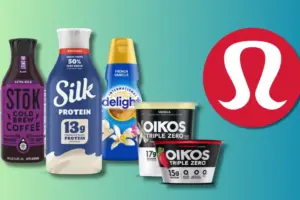
The global marketing landscape is currently undergoing a significant period of recalibration. As we move toward the close of the year, major multinational corporations are systematically restructuring their executive suites to navigate an increasingly complex consumer environment. The two-week period ending November 20, 2026, has been particularly transformative, marked by high-profile appointments at industry titans such as Danone USA and Lululemon.
These moves are not merely personnel changes; they represent a fundamental pivot in corporate strategy. Brands are moving away from traditional siloed marketing models toward integrated, growth-oriented leadership structures. Whether it is the pursuit of regional market dominance or the modernization of a global brand identity, the latest round of executive movements underscores a universal industry mandate: the need for agility, deep consumer insight, and a unified vision that bridges the gap between brand storytelling and bottom-line performance.
Detailed Chronology: Key Movements and Strategic Mandates
Danone USA: A Global Veteran Takes the Helm
In a strategic maneuver aimed at accelerating its U.S. growth trajectory, Danone USA has appointed Patricia Oliva as its new Chief Marketing Officer. Oliva’s transition to this role is viewed as a calculated move by the parent organization to inject seasoned, international expertise into its largest market.
Oliva is no stranger to the Danone ecosystem; her career has spanned three continents, providing her with a unique perspective on the intersection of cultural nuances and global brand consistency. Her mandate is clear: she will partner directly with the newly appointed U.S. President, Francois Lacombe, to steer the company through a challenging economic landscape. The synergy between a growth-focused president and a marketing veteran with deep institutional knowledge is expected to optimize Danone’s portfolio performance in the highly competitive North American dairy and plant-based sectors.
Lululemon: Refining the Brand DNA
Parallel to the shifts at Danone, Lululemon has officially named Ben Hallam as its Chief Brand Officer. This appointment is the cornerstone of the company’s new leadership architecture, which was unveiled earlier this autumn.
As Lululemon navigates the transition from a niche athletic apparel player to a global lifestyle titan, the role of the Chief Brand Officer has become pivotal. Hallam is tasked with maintaining the brand’s core identity—centered on community and premium wellness—while scaling its international operations. His appointment signals a transition toward a more structured brand management model that seeks to harmonize product innovation with emotive, values-driven marketing.
Supporting Context & Metrics: The "Why" Behind the Moves
To understand these shifts, one must look at the broader macroeconomic pressures facing marketing executives today. In 2026, the CMO role is more scrutinized than at any point in the last decade. Industry metrics suggest that the average tenure of a CMO has remained precariously low, forcing companies to move faster in identifying leaders who can demonstrate immediate ROI.
The Shift Toward Growth-Driven Marketing
Modern marketing leadership is no longer solely about brand awareness. The "growth-marketing" paradigm, which dominated the early 2020s, has now matured into a holistic approach where marketing is inextricably linked to product development and supply chain efficiency.
- Integrated Leadership: Brands are increasingly pairing CMOs with newly appointed Presidents or CEOs to ensure that marketing budgets are aligned with overall corporate financial goals.
- The Global-Local Balance: As seen with Patricia Oliva’s appointment, companies are valuing leaders who can navigate the tension between standardized global brand messaging and the need for localized relevance in diverse markets.
- Operational Efficiency: The new structure at Lululemon reflects a broader trend toward streamlined hierarchies. By simplifying leadership layers, companies hope to reduce "decision latency"—the time it takes to move from identifying a consumer trend to launching an integrated campaign.
Official Statements and Industry Analysis
Insights on the Danone Transition
Market analysts suggest that the pairing of Lacombe and Oliva is designed to stabilize the brand’s footprint in the U.S. Danone has faced significant headwinds in the dairy category due to shifting consumer dietary preferences. By promoting from within and leveraging a leader with a proven international track record, Danone is signaling a commitment to stability and operational excellence.

"The goal is to ensure that our marketing efforts are not just creative, but fundamentally additive to the U.S. business’s growth strategy," noted an internal source familiar with the transition. "Oliva brings the grit of a global operator and the nuance of a brand visionary."
Insights on Lululemon’s New Structure
Lululemon’s recent press releases emphasize a "commitment to the future of the brand." The appointment of Ben Hallam is viewed by industry observers as a move to professionalize the brand’s marketing output without diluting its grassroots appeal. As the company faces stiffer competition from established fashion houses and emerging activewear brands, the need for a cohesive brand narrative has never been more critical.
Future Outlook: What Lies Ahead for 2027
As we look toward the horizon of 2027, several key themes will likely dominate the executive search landscape:
1. The Rise of the "Techno-CMO"
Marketing leaders of the future will be expected to possess a fluency in AI-driven analytics, data privacy compliance, and predictive consumer modeling. The next generation of hires will not just be creative directors; they will be data architects who can map the customer journey with surgical precision.
2. Purpose-Driven Sustainability
Consumers are increasingly demanding that brands not only sell products but embody values. Leaders like those recently appointed at Danone and Lululemon will be under immense pressure to prove that their sustainability initiatives are substantive rather than performative. The CMO of 2027 will effectively be the "Chief Purpose Officer," balancing profit with social responsibility.
3. Consolidation of Leadership
We anticipate a continued trend of organizational flattening. Companies are increasingly wary of bloated executive teams. The future will belong to lean, multifunctional teams where marketing, sales, and data science operate as a single unit.
4. Navigating Economic Volatility
With global economic conditions remaining unpredictable, marketing leadership will be evaluated on its ability to drive growth in both inflationary and recessionary environments. The "cautious optimism" currently reflected in the retail and CPG sectors suggests that while companies are hiring, they are being hyper-selective about the talent they bring on board.
Conclusion: A New Era of Leadership
The movements at Danone USA and Lululemon are symptomatic of a broader industry evolution. We are witnessing the end of the "siloed CMO" era and the birth of the "enterprise leader." These professionals are expected to be masters of brand equity, stewards of corporate culture, and engines of financial growth.
For industry professionals, the lesson of the past two weeks is clear: the market is rewarding those who can pivot quickly, integrate effectively, and maintain a sharp focus on the bottom line. As these new leaders settle into their roles, the industry will be watching closely to see if their strategies yield the long-term, sustainable growth that their shareholders—and consumers—demand. The coming months will be a crucible for these executives, testing whether their visions for the future can withstand the realities of an unforgiving and rapidly changing global marketplace.