Executive Overview: The Post-AI Brand Identity
In an era where generative AI has democratized creative production, the traditional "marketing advantage" is rapidly evaporating. When every brand has access to the same large language models and predictive analytics tools, the technology itself ceases to be a differentiator and instead becomes a baseline utility—or what industry insiders now call "table stakes."
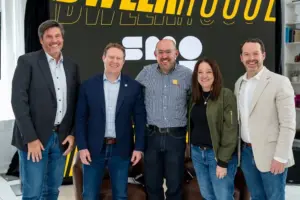
Live from the Marketing Vanguard stage at Brandweek 2026, Jenny Rooney, a veteran chronicler of the marketing landscape, sat down with Cheryl Guerin, Executive Vice President of Global Brand Strategy and Innovation at Mastercard. Their conversation serves as a manifesto for the modern CMO: how to leverage the immense power of automation without sacrificing the human soul of a brand. For Mastercard, the solution lies not in letting AI dictate the creative process, but in using it to surgically remove the "noise" of routine labor, thereby creating the bandwidth for the high-level, human-centric strategic thinking that defines global market leadership.
The Technological Pivot: Beyond Mere Efficiency
For many organizations, the integration of AI is framed purely as a cost-saving measure or a speed-to-market hack. Guerin argues that this is a myopic view that threatens to commoditize brand identity. At Mastercard, the implementation of AI has been intentional and focused on internal enablement.
The 75% Rule
Mastercard has successfully deployed a proprietary brand assistant capable of handling roughly 75% of the routine inquiries that once bogged down the marketing team. Previously, human brand stewards were forced to spend hours manually answering repetitive questions regarding brand guidelines, compliance, and asset usage.
"The win isn’t just efficiency," Guerin noted during the session. "The win is the liberation of our best minds." By offloading the operational burden to an AI, Mastercard’s senior leadership is now able to redirect their focus toward the "harder questions"—complex challenges surrounding consumer trust, brand equity, and the long-term future of the financial services sector. In this framework, AI serves as the janitor of the marketing department, clearing the floor so the architects can build.
Detailed Chronology: The Resilience of "Priceless"
The conversation inevitably turned to the most enduring asset in the financial sector: the "Priceless" platform. Launched in 1997, the campaign has navigated nearly three decades of seismic cultural and technological shifts. Guerin, who has spent 26 years within the Mastercard ecosystem, provided a masterclass in brand longevity.
The Evolution of a Human Truth
When "Priceless" debuted, it was a radical departure from the industry’s preoccupation with the material benefits of credit cards. It shifted the narrative from "buying power" to "experiential value." Guerin points out that this was not merely a marketing tactic but a psychological pivot.
As the world moved from analog to digital, and from physical retail to e-commerce, the "Priceless" framework proved remarkably elastic. In the current 2026 landscape, with Gen Z now representing a dominant economic force, Guerin observes that the platform is more relevant than ever. "Gen Z’s hunger for genuine belonging and in-person connection is a direct mirror of the underlying truth of our campaign," she explained. By focusing on the value of the experience rather than the cost of the transaction, Mastercard has insulated itself against the shifting sands of generational preference.
Supporting Context: The Structural Shift in Agency Relations
One of the most pressing questions facing modern leadership is the future of the agency-client relationship. With the rise of internal "brand studios" and the ubiquity of generative tools, the traditional agency model is under pressure.
The Premium vs. Commodity Split
Mastercard’s long-standing partnership with the agency McCann remains a cornerstone of its success. However, Guerin is candid about the changing nature of this collaboration. She advocates for a clear, bifurcated strategy:
- The Agency Premium: High-level, transformative creative thinking, brand-defining storytelling, and major cultural bets remain the domain of the agency partner. This is where the "premium" investment is justified.
- Internal Muscle: For the daily cadence of B2B marketing, high-volume content production, and full-funnel execution, Mastercard has significantly beefed up its internal capabilities.
This division of labor allows the brand to maintain the speed and agility required for modern digital environments while protecting the "Big Idea" from the dilution that often occurs when agencies are forced to focus on the minutiae of daily content production.
Official Insights: The "Passions" Strategy
Perhaps the most distinctive aspect of Mastercard’s current strategy is its commitment to "Passions Experts." Rather than relying on generalist marketers to oversee diverse verticals like music, sports, esports, and motorsports, Mastercard embeds specialists within these communities.
The Value of Cultural Fluency
Guerin describes these individuals as "cultural connectors." Their expertise is not in marketing; it is in the nuances of their specific domains. This allows Mastercard to:
- Identify Emerging Talent: By deeply participating in communities, the brand can identify up-and-coming talent long before they become global household names, allowing for more authentic and cost-effective partnerships.
- Achieve Cultural Relevance: It enables the brand to balance high-profile stars like Lady Gaga with niche, hyper-engaged communities.
- Efficiency through Expertise: Because these experts know their communities inside and out, they avoid the "spray and pray" method of sponsorship, achieving high engagement without needing to be the biggest spender in every room.
Future Outlook: The Human Edge
As we look toward the remainder of the 2020s, the message from the Mastercard camp is clear: technology is a leveler, not a leader.
The Verdict on Agility
Guerin’s final piece of advice for marketing leaders is perhaps the most counterintuitive: "Real agility is knowing when to say no." In a world where AI allows for the rapid creation of thousands of variants, the temptation to "do everything" is overwhelming. However, Mastercard’s continued success suggests that the future belongs to those who use the efficiency of AI to double down on the human elements that algorithms cannot replicate.
True brand differentiation in 2026 and beyond will not be found in the sophistication of the prompt or the speed of the rendering. It will be found in the depth of the insight, the strength of the community, and the courage to remain human in an automated world. Mastercard, through its focus on "Priceless" experiences and specialized human expertise, remains a blueprint for how legacy brands can survive and thrive in the era of artificial intelligence.
This report is part of a special series recorded live at Brandweek 2026, presented in partnership with Tatari. For more insights on the future of the brand, watch the full video session above.