Executive Overview
In a landmark moment for American journalism, the constitutional tension between executive authority and the free press has reached a boiling point. Following a preliminary injunction issued by U.S. District Judge Timothy Kelly, which effectively halted a White House-led effort to bar CNN, MS NOW, and Politico from the White House press corps, the media landscape has been irrevocably altered. This legal victory, while temporary, serves as a focal point for a broader, existential debate regarding the role of the press in a democracy.
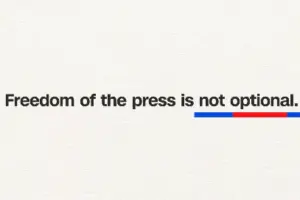
Responding to the ongoing administration push to restrict access to select news outlets, CNN has launched a high-profile promotional campaign titled "Freedom of the press is not optional." By grounding its defense in the historical precedents set by American icons—from Thomas Jefferson to Ronald Reagan—CNN is signaling that this is not merely a dispute over credentials, but a definitive stand for the First Amendment. As the network braces for a protracted legal battle, CEO Mark Thompson has assumed a combative, visible posture, declaring that the network is prepared to litigate the matter to its conclusion, regardless of the financial or temporal costs.
Detailed Chronology of the Conflict
The current confrontation did not emerge in a vacuum; it is the culmination of a long-standing friction between the Trump administration and mainstream media institutions.
The Escalation
The tensions reached a fever pitch earlier this month when the White House moved to revoke the press credentials of several prominent journalists, citing what the administration termed "uncooperative" behavior and "biased" reporting. For outlets like CNN, MS NOW, and Politico, this was interpreted as an unconstitutional attempt to punish news organizations that provided critical coverage of the administration.
The Judicial Intervention
On Tuesday night, the situation shifted from political theater to a constitutional crisis when Judge Timothy Kelly granted a preliminary injunction. The ruling suggested that the White House’s actions likely violated the First Amendment’s guarantee of free speech and the due process rights of the news organizations. By preventing the government from enforcing the ban while the case proceeds, Judge Kelly has provided a critical, albeit interim, reprieve for the reporters involved.
The Immediate Aftermath
Within hours of the ruling, CNN’s internal machinery mobilized. CEO Mark Thompson issued an internal memorandum to the global staff, framing the legal victory as a victory for the democratic process. By Wednesday morning, the network began airing a 60-second spot that juxtaposed the faces of its modern-day reporters with the voices of history, creating a narrative continuity between the Founding Fathers’ vision and the modern news cycle.
Supporting Context: Historical Precedents and Legal Stakes
To understand the gravity of this standoff, one must look at the legal framework surrounding White House press access.
The First Amendment Shield
The First Amendment is not an abstract concept; it is the bedrock upon which the relationship between the government and the governed is built. The courts have long held that while the White House is not a public forum in the traditional sense, the revocation of press credentials requires a standard of due process. By targeting specific outlets, the administration has moved into a "gray zone" of administrative power that the judiciary is now tasked with defining.
The Legacy of the Presidency
The CNN promotional spot—featuring quotes from Thomas Jefferson, Calvin Coolidge, Ronald Reagan, George W. Bush, and Barack Obama—is a calculated effort to strip the current administration of its "originalist" defense. By citing Republican icons like Reagan and Bush, the network is framing its defense not as a partisan struggle, but as a defense of a bipartisan tradition of media scrutiny.
- Thomas Jefferson: Known for his insistence that a press free from government control is essential for a functioning republic.
- Ronald Reagan: Often celebrated by conservatives for his engagement with the press, his inclusion highlights the divergence of current policy from traditional GOP values regarding institutional accountability.
Official Statements and Internal Communications
The response from CNN’s leadership has been characterized by a blend of institutional resolve and individual advocacy.
Mark Thompson’s Mandate
In his memo to staff, CEO Mark Thompson was unequivocal. He stated: "We will be patient, and no matter how long it takes, we will continue to protect our liberties." This language is designed to boost internal morale while signaling to the administration that the network has deep pockets and a high tolerance for litigation.
The "News Central" Appearance
Thompson’s appearance on CNN News Central with anchor Kate Bolduan served as the public face of this resolve. His quote—"No matter how many court cases, investigations, court appearances and all the expense that that entails, we will fight this one to the end"—was widely shared across social media platforms, including X (formerly Twitter), where it became a rallying cry for journalists and free speech advocates. The message is clear: the administration has picked a fight with an institution that views the courtroom as its ultimate defensive perimeter.
Future Outlook: A Prolonged Legal War
The legal battle is far from over. As the administration prepares its appeal, the case is likely to head toward higher courts, potentially reaching the Supreme Court depending on the lower court outcomes.
The Financial and Operational Burden
Litigation is a costly endeavor. However, CNN’s willingness to absorb these costs underscores the strategic importance of the issue. If the administration were to succeed in setting a precedent that the White House could unilaterally revoke access based on political grievances, the entire structure of the American press corps would be fundamentally compromised.
The Media Landscape
Beyond CNN, other outlets are watching closely. The outcome of this case will set a new, rigid standard for executive behavior. If the courts rule in favor of the media, it will solidify the "press pass" as a protected right rather than a government-granted privilege. If the government prevails, we may see a shift toward a more insular and controlled press environment, where access is granted only to those who adhere to the administration’s preferred narrative.
The Role of Public Sentiment
Public perception remains a critical variable. While the administration’s base has often been critical of "mainstream" media, the issue of First Amendment rights carries a unique weight in the American consciousness. By launching its promotional campaign, CNN is actively shaping the public narrative, moving the discussion away from "CNN vs. The President" and toward "The Press vs. Censorship."
Conclusion
The events of the past week represent a pivotal juncture in the history of the Fourth Estate. As the legal wheels turn, the dialogue between the White House and the press has ceased to be a matter of routine briefings and has instead become a high-stakes constitutional inquiry.
CNN’s strategy is clear: hold the line in the courts, frame the narrative in the public square, and rely on the weight of history to validate their role as a watchdog. As the case moves forward, the nation waits to see whether the judiciary will reaffirm the necessity of an adversarial press, or if the administration’s push to restrict access will succeed in redefining the boundaries of journalistic freedom in the 21st century. For now, the lights remain on in the White House briefing room, and the cameras continue to roll—a testament, at least for the moment, to the enduring, albeit fragile, nature of a free press.