Executive Overview
Since its inception, Nothing has carved out a unique niche in the hyper-competitive consumer electronics landscape. By prioritizing a distinctive "transparent" aesthetic and a stripped-back, user-centric software philosophy, the company—led by OnePlus co-founder Carl Pei—has successfully challenged established industry giants. While the brand has firmly cemented its reputation through its smartphone lineup and high-fidelity audio peripherals, recent industry intelligence suggests that Nothing is now poised to enter the most challenging frontier of personal technology: the smart eyewear market.
Emerging reports, spearheaded by industry insider Roland Quandt, indicate that Nothing is actively developing two distinct iterations of smart glasses. This strategic pivot represents a potential departure from the company’s mobile-centric roots, moving toward an ambient computing future where the phone becomes a hub rather than the primary interface. As the company looks to redefine how we interact with artificial intelligence, these proposed wearables could become the centerpiece of a new "Nothing Ecosystem" by as early as 2027.
A Detailed Chronology of the Development
The discourse surrounding "Nothing Glasses" is not entirely new, but it has gained significant traction in recent months. To understand where the company is headed, we must look at the timeline of its hardware ambitions.
Early Inception (Early 2024)
Earlier this year, internal rumblings suggested that CEO Carl Pei had begun mobilizing resources to explore the integration of AI into wearable form factors. Initial reports were vague, focusing primarily on a device that would serve as an extension of the Nothing Phone. The early consensus was that these glasses would likely act as "dumb terminals"—relying entirely on the processing power and cloud connectivity of a tethered smartphone—rather than attempting to house a complex chipset within the frames themselves.
The Latest Revelations (Late 2024)
The narrative shifted significantly with recent disclosures on the social platform Bluesky. According to Roland Quandt, the company’s vision has expanded into a two-tiered product strategy:
- The Audio-Centric Model: A base version focusing on high-fidelity sound, cellular connectivity for calls, and, most notably, auto-tinting photochromic lenses.
- The Advanced AI Model: A feature-heavy iteration equipped with integrated cameras, advanced real-time translation capabilities, and native support for Large Language Models (LLMs) like ChatGPT.
This bifurcated approach suggests that Nothing is attempting to cater to both the "minimalist" user, who wants basic connectivity, and the "power user," who demands a multimodal AI experience.
Supporting Context: The Industry Landscape
Nothing does not exist in a vacuum. To evaluate the feasibility of their alleged glasses, we must examine the broader wearable market, which is currently undergoing a painful but necessary evolution.
The "Meta" Precedent
The most significant hurdle for any company attempting to release camera-equipped glasses is the precedent set by Meta. The Ray-Ban Meta smart glasses have been largely successful, yet they have sparked intense public discourse regarding surveillance and privacy. The "indicator light" controversy—where users were criticized for recording without consent—has created a climate of skepticism. If Nothing intends to ship a camera-equipped wearable, they will need to implement, at minimum, industry-leading privacy indicators and perhaps a design language that signals to the public when the device is active.
The Rise of Ambient Computing
We are witnessing a transition from "screen-time" to "ambient computing." The goal is to move the digital experience off the smartphone screen and into the user’s peripheral vision. With companies like Google, Apple, and various startups pushing AR/AI hardware, Nothing’s entry seems well-timed. However, the technical barriers remain high:
- Battery Density: Powering AI processing, camera sensors, and wireless radios in a frame that weighs less than 50 grams is a monumental engineering feat.
- Thermal Management: Components must stay cool against the user’s face.
- Weight Distribution: A heavy front-end makes for a poor user experience, requiring creative battery placement in the temples.
Nothing’s Design Philosophy: The "Transparent" Edge
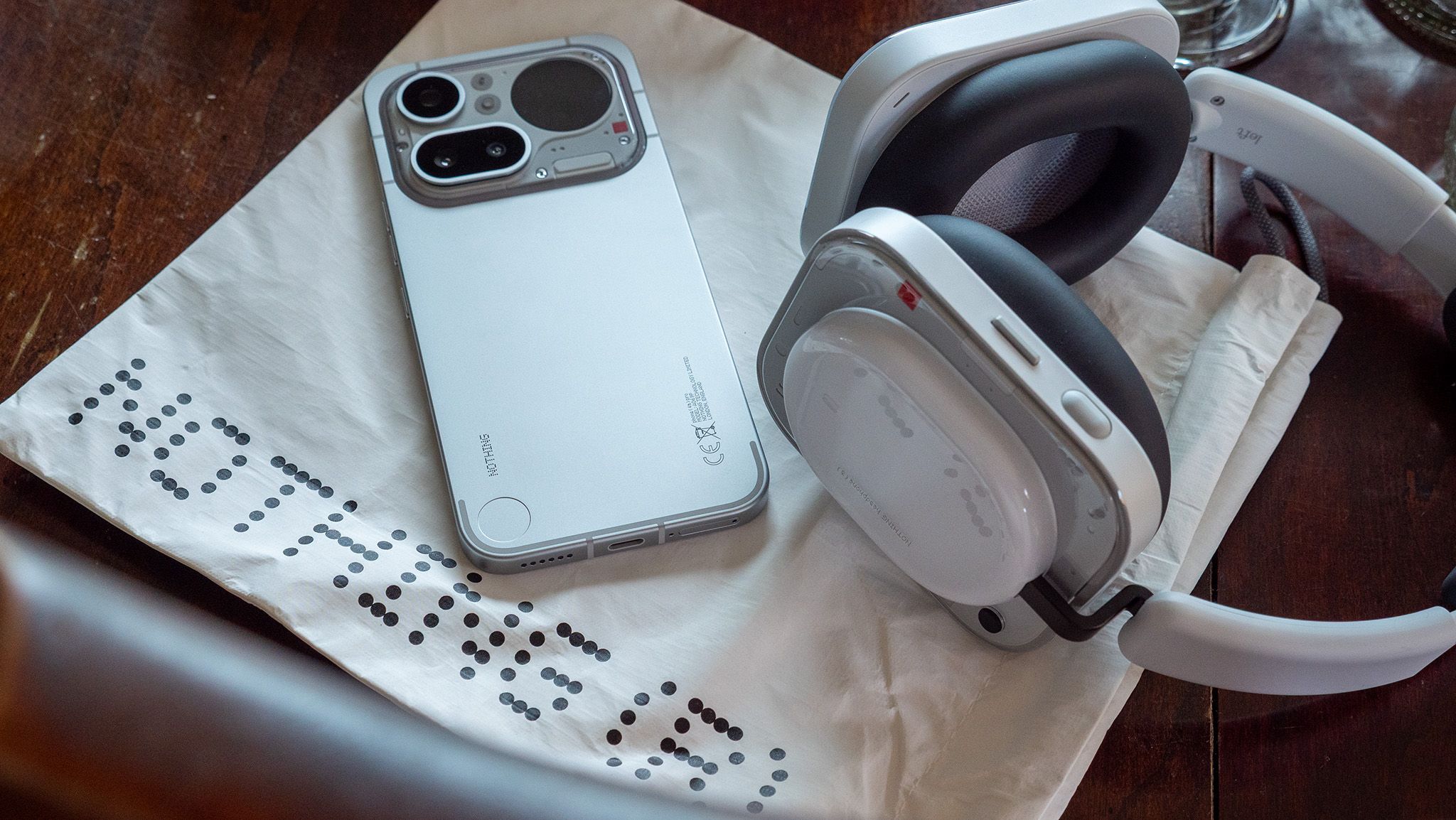
One of Nothing’s greatest assets is its brand identity. The company’s signature "Glyph" interface and transparent aesthetic have been polarizing but undeniable in their ability to capture consumer attention.
If Nothing applies its current design language to eyewear, we might see something truly unique. Imagine frames that reveal the internal circuitry, perhaps utilizing the company’s signature monochrome palette. Unlike the generic, black-plastic aesthetic favored by many tech companies, a "Nothing-designed" pair of glasses could be a fashion statement first and a tech device second. This is the exact strategy that allowed the Nothing Phone (1) to cut through the noise of a saturated market.
Future Outlook: The Road to 2027
While 2027 is a distant horizon in the fast-moving world of tech, it provides a realistic window for the company to refine its AI software stack. The success of these glasses will not be measured by hardware specifications alone; it will be measured by the software experience.
The Role of the AI Assistant
Nothing’s integration with ChatGPT has already signaled its commitment to a post-app world. The smart glasses will likely serve as the hardware vessel for this vision. Users should expect a device that can describe their surroundings, read street signs in foreign languages, and provide real-time, voice-activated assistance.
Critical Challenges
- Manufacturing Scalability: Scaling production for eyewear—which requires precise fit and comfort—is vastly different from manufacturing smartphones.
- Market Readiness: Will the general public be ready for face-worn cameras by 2027?
- Battery Life: Unless there is a breakthrough in solid-state battery technology, users may find themselves charging their glasses as frequently as their earbuds.
The Verdict: A High-Stakes Gamble
Nothing’s potential entry into the smart glasses market is a calculated risk. It is a transition from being a "hardware company" to an "ecosystem company." If they can deliver a device that is lightweight, stylish, and genuinely helpful—without becoming a privacy liability—they could very well define the next decade of personal computing.
However, the company faces a steep climb. It must prove that its glasses are not just another gimmick, but a fundamental improvement to the human-computer interaction loop. As we await further official confirmation, the rumors surrounding these devices paint a picture of a company that is confident in its aesthetic, daring in its ambitions, and fully prepared to challenge the status quo once again.
Author’s Note: As of the time of this publication, Nothing has not provided an official comment regarding these reports. As always, early-stage product rumors should be viewed with a measure of caution, as development roadmaps in the tech industry are subject to frequent shifts based on supply chain realities and prototype testing.