Executive Overview
As the global push for residential renewable energy accelerates, solar panels frequently dominate the conversation. Sleek, silent, and increasingly efficient photovoltaic arrays have transformed suburban rooftops into miniature power plants. Yet, nestled quietly in the shadow of this solar boom lies an alternative that has captured the imagination of off-grid enthusiasts, homesteaders, and eco-conscious homeowners alike: residential wind power.
Among the various consumer-grade solutions, the 1-kilowatt (kW) wind turbine is often marketed as an accessible entry point to harnessing kinetic energy from the air. But do these compact turbines actually deliver on their promises? The answer, according to energy experts, engineers, and real-world deployment data, is a heavily qualified "yes."
While a 1kW wind turbine can successfully generate electricity, its viability is bound tightly to geography, physics, and strict municipal regulations. Unlike solar panels, which can perform reasonably well across a wide variety of urban and suburban environments, small wind turbines are intensely sensitive to their surrounding topography. They require sustained, laminar (non-turbulent) airflow, substantial vertical clearance, and wide-open spaces—prerequisites that immediately disqualify the vast majority of traditional suburban backyards.
Furthermore, prospective buyers must navigate a maze of capacity realities, significant installation hurdles, steep initial capital expenditures, and complex zoning laws. This comprehensive investigation explores the inner workings of 1kW residential wind turbines, examining their actual output, placement demands, economic viability compared to solar power, and what it truly takes to integrate wind energy into a modern home.
Detailed Chronology and Evolution of Small-Scale Wind
To understand where residential wind power stands today, it is necessary to look at how small-scale wind technology has evolved alongside modern energy demands.
The Early Days of Micro-Generation
Long before grid-tied electricity reached remote rural areas, micro-wind turbines served as lifelines. Throughout the mid-20th century, companies produced small, battery-charging wind generators (often referred to as "light plants") to power rural farmhouses, water pumps, and radio equipment. These systems were rugged, simple, and entirely detached from any centralized utility grid.
The Renewable Renaissance and Technological Shift
With the modern environmental movement taking shape in the late 1970s and 1980s, interest in alternative energy surged during global oil crises. However, the technology of the era was plagued by high maintenance costs, mechanical unreliability, and a lack of sophisticated power-conversion electronics.
As the 21st century dawned, the renewable energy narrative was swiftly captured by the rapid cost declines of photovoltaic (PV) solar panels. Solar technology benefited from massive economies of scale driven by global manufacturing investments. In contrast, small-scale wind turbine manufacturing remained a niche industry, largely servicing sailboats, remote telecom towers, and specialized remote cabins.
The Modern Consumer Micro-Turbine Era
Over the past decade, engineering advancements have introduced lightweight, composite-blade micro-turbines designed for high portability and ease of installation—such as compact units meant for RV camping and maritime use. Simultaneously, manufacturers began packaging 1kW to 3kW tower systems targeted at residential consumers looking to supplement their grid electricity.
Despite these modern engineering refinements, the fundamental physics of wind capture remain unchanged. While blade aerodynamics have improved and noise levels have dropped, a turbine cannot produce energy from wind that isn’t there. Today, the small wind industry finds itself at a crossroads: forced to market its products honestly against the overwhelming dominance and lower cost-per-watt of residential solar installations.
Supporting Context & Metrics: Decoding the 1kW Turbine
When evaluating a wind turbine, consumers are often misled by nomenclature. A "1 kW turbine" does not mean the device continuously pumps out 1,000 watts of power every hour of the day.
Peak Power vs. Actual Yield
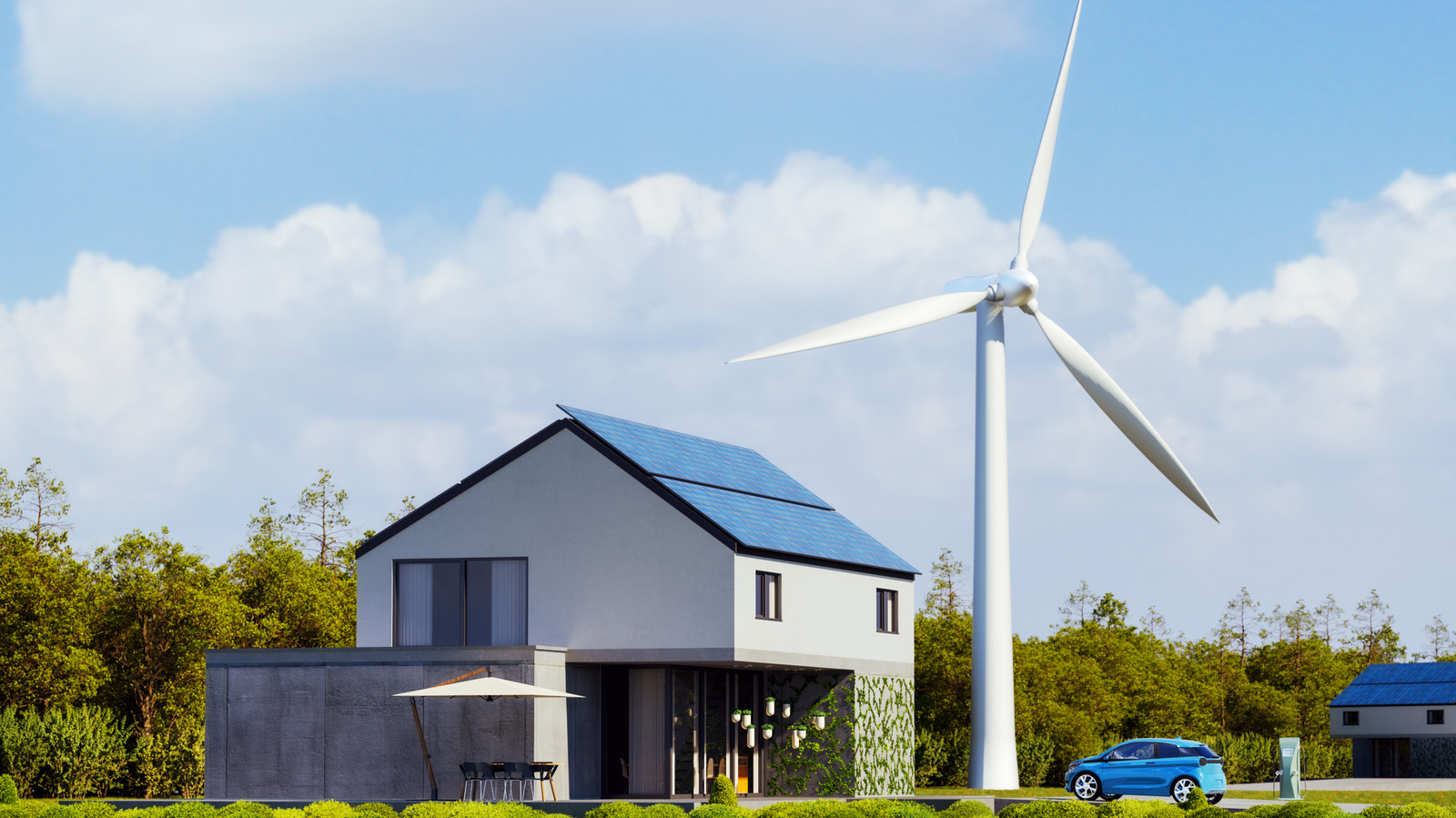
The 1kW rating signifies the peak power capacity of the turbine—the maximum electrical output the generator can produce under optimal, highly specific laboratory or field conditions (such as sustained high winds). Relying on this peak metric to calculate utility savings is a recipe for disappointment.
Instead, energy analysts look at annual or monthly energy production measured in kilowatt-hours (kWh). According to data from the U.S. Department of Energy (DOE) and independent energy experts, a properly sited 1kW wind turbine can feasibly produce roughly:
- Monthly Energy Yield: Approximately 200 kWh (under ideal wind conditions).
- Annual Energy Yield: Approximately 2,400 kWh per year.
Putting the Numbers in Perspective
To understand what 2,400 kWh per year means for a typical modern home, it must be compared against average consumption statistics:
- The average U.S. household consumes approximately 10,500 kWh of electricity annually (translating to roughly 850 kWh per month).
- Therefore, a perfectly operating 1kW turbine covers less than a quarter (around 22%) of a typical American household’s total energy consumption.
- To power a standard whole-house configuration entirely through wind, homeowners must step up significantly in scale, generally requiring systems in the 5 kW to 15 kW range.
Thus, a 1kW system is best understood not as a primary power source, but as a supplementary generation tool designed for highly efficient, low-consumption properties, such as tiny homes, cabins, or outbuildings.
Placement Demographics: Why Geography and Topography Rule
If solar power is democratic—functioning on almost any unshaded roof—wind power is distinctly autocratic. It bows exclusively to the laws of fluid dynamics.
[Obstacle: Tree/Building] ---> (Wind Flow) ---> [Turbulence Zone] ---> (Turbine Damage & Low Output)

[Open Airspace: 30+ feet above obstacles] ---> (Laminar Flow) ---> [Optimal Turbine Performance]
The Crucial Role of Consistent Wind Speeds
For a wind turbine to make financial and operational sense, a location must feature high, consistent average wind speeds throughout the year. As a general rule of thumb highlighted by energy agencies, a site should boast annual average wind speeds of at least 14 mph (6.3 m/s). If an area experiences sluggish, sporadic, or gentle breezes, a wind turbine will sit dormant for the vast majority of its operational lifespan.
The Obstacle and Turbulence Problem
In suburban and urban environments, wind rarely flows smoothly. It encounters countless obstacles: mature trees, neighboring two-story houses, retaining walls, hills, and detached sheds.
These barriers do two things:
- They block the wind, robbing the air stream of its kinetic energy.
- They create turbulence, churning the smooth (laminar) air into chaotic, swirling crosscurrents.
Turbulence is the enemy of wind turbines. It drastically reduces energy output because the blades cannot efficiently capture erratic wind vectors. Worse, turbulence places severe, uneven mechanical stress on the turbine’s rotor hub, bearings, and structural tower, accelerating wear and tear and risking catastrophic mechanical failure.
The Department of Energy’s 30-Foot Rule
To combat these environmental challenges, the U.S. Department of Energy’s small wind guidelines outline strict placement recommendations. The guidance dictates that the bottom of the turbine rotor must be at least 30 feet above any obstacle (such as a tree or building) located within a 300-foot horizontal radius of the tower.
In a standard suburban neighborhood, complying with this rule is virtually impossible:
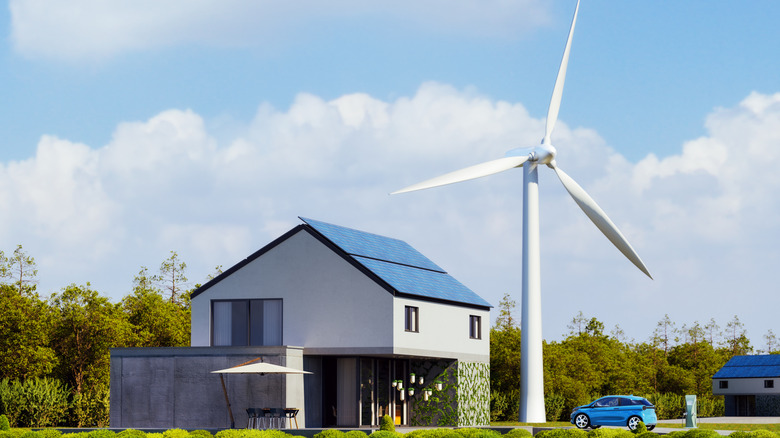
- Zoning Restrictions: Most municipal zoning boards limit residential structures to a maximum height of 35 feet. To clear local trees and rooftops, a residential wind tower often needs to soar 60, 80, or 100 feet into the air—deeply violating local height limits and drawing swift pushback from neighbors.
- The Rooftop Mounting Illusion: Mounting a small turbine directly onto a residential roof might seem like a clever workaround to height restrictions. In practice, however, it is heavily discouraged. Wind flowing over a roof accelerates, but it also creates severe vibration and low-frequency humming. These structural vibrations transfer directly into the home’s framing, turning your living space into a noisy, vibrating drum throughout the night.
Economic Realities: Wind vs. Solar
When prospective renewable energy investors weigh their options, cost is often the deciding factor. Unfortunately for proponents of small-scale residential wind, the financial math rarely favors micro-turbines in built-up areas.
Capital Expenditure (CapEx) Comparison
- Residential Wind Turbines: Purchasing, permitting, and professionally installing a complete residential wind turbine system typically ranges from $20,000 to $50,000, depending on tower height, foundation work, and electrical balance-of-system equipment.
- Photovoltaic Solar Arrays: By comparison, installing a solar panel system designed to offset a comparable amount of energy generally costs between $2,500 and $3,500 before applying federal, state, or local tax incentives and rebates.
Balance of System Requirements
The electrical architecture required for a wind turbine also adds complexity and cost:
- Grid-Connected Systems: These require a specialized grid-tied inverter that synchronizes the variable frequency and voltage of the turbine with the utility grid, allowing the homeowner to offset grid consumption when the wind blows.
- Off-Grid Systems: These require robust battery banks (such as lithium-ion or advanced deep-cycle lead-acid setups) paired with sophisticated charge controllers to safely store intermittent energy bursts without overcharging the storage medium.
For the vast majority of suburban and urban homeowners, investing capital into home insulation upgrades, smart thermostats, and roof- or ground-mounted solar arrays yields a far more reliable, predictable, and cost-effective return on investment.
Future Outlook: Where Does Small Wind Go From Here?
Despite the steep hurdles facing traditional 1kW residential turbines, innovation in wind technology has not stalled. Engineers and aerospace designers continue to rethink how we capture wind at a micro-scale.
Novel Aerodynamic Approaches
Companies are experimenting with radically new designs to bypass traditional bladed turbine limitations. For example, bladeless oscillating devices, vertical-axis wind turbines (VAWTs) designed to capture omnidirectional urban crosswinds, and track-based continuous wind-harvesting systems (such as those showcased by emerging tech firms at major exhibitions like CES) are attempting to redefine the sector.
These next-generation technologies aim to mitigate the noise, safety, and aesthetic concerns that have historically plagued residential wind power. Furthermore, as urban planning evolves, architects are exploring integrated building designs that channel wind through dedicated architectural venturi funnels built into skyscrapers and multi-family housing complexes.
The Ideal Use Case
Ultimately, the future of the 1kW wind turbine is not found in the typical suburban cul-de-sac. Its true home remains in wide-open, rural landscapes where verified, steady wind resources sweep across expansive plots of land, entirely free from the baffling effects of trees and neighboring structures.
For those living in these specific geographical niches—or operating remote agricultural outposts, weather monitoring stations, and off-grid cabins—a well-sited small wind turbine remains a valuable, complementary asset. It serves as a brilliant mechanical partner to solar arrays, generating power during stormy winter days or overcast nights when photovoltaic panels fall silent.
For the urban or suburban dweller, however, the verdict remains clear: admire wind power from afar, check your local wind maps and zoning laws meticulously before spending your hard-earned money, and look to the sun for your daily residential energy needs.