Executive Overview
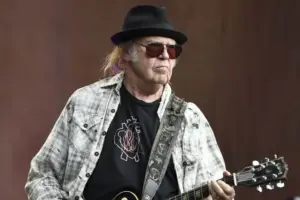
Rock legend Neil Young has reignited his high-stakes legal feud with Donald J. Trump, filing a sweeping $10 million copyright infringement lawsuit against the Trump 47 Committee Inc. Filed in the U.S. District Court for the Eastern District of Virginia, the lawsuit centers on the unauthorized and persistent use of Young’s iconic 1989 protest anthem, "Rockin’ in the Free World."
According to legal documents reviewed by industry publications, the track has been repeatedly blasted as walkup music at various political rallies—most notably during a high-profile gathering in Youngstown, Ohio—designed to mobilize voters for upcoming midterm elections.
For followers of the intersection between American pop culture and partisan politics, the phrase “we have all been here before” captures a profound sense of legal deja vu. This is Young’s second major intellectual property lawsuit against Donald Trump and his associated campaign apparatuses over the exact same song. A prior lawsuit, filed in 2020 against the Donald J. Trump for President Inc. campaign vehicle, ended in a private settlement. That agreement explicitly barred the campaign from utilizing Young’s catalog without express, authorized licensing.
By playing the track again, the newly filed complaint argues, the Trump 47 Committee has not only breached federal copyright law but has flagrantly violated the terms of the previous legal settlement.
The lawsuit seeks maximum statutory and actual damages totaling $10 million, alongside a permanent injunction barring the committee from deploying Young’s music at any future public or political gatherings. Furthermore, the complaint highlights the profound reputational harm Young has allegedly suffered. Given the artist’s deeply entrenched, vociferous opposition to Trump’s platform, the unauthorized needle-drops risk misleading the public into believing the politically outspoken rocker endorses the former president’s agenda.
Detailed Chronology of a Copyright Battle
The Roots of a Protest Anthem (1989)
To understand the gravity of the legal dispute, one must examine the song at the center of the storm. Released in 1989 on his twentieth studio album, Freedom, "Rockin’ in the Free World" was crafted as a blistering critique of American socioeconomic disparities during the George H.W. Bush administration.
Far from being a patriotic celebration of liberty, the track’s lyrics construct a stark, unvarnished portrait of urban decay, poverty, drug addiction, and governmental neglect. Lines addressing a mother discarding her infant, veterans sleeping on concrete, and garbage piling up in the shadows of corporate wealth frame a biting satire. The soaring, anthemic chorus delivers what legal scholars describe as “savage irony”—celebrating a “free world” that remains fundamentally inaccessible to the marginalized and forgotten populations chronicled in the verses.
Throughout his multi-decade career, Young has fiercely guarded the integrity of his catalog, refusing to license his songs for corporate advertising or partisan campaigns that misrepresent their underlying ethos.
The 2020 Legal Confrontation
The friction between Young and Trump’s political machine first boiled over into the federal court system during the 2020 presidential election cycle. At various campaign stops—most notably a sprawling, controversial rally in Tulsa, Oklahoma—organizers utilized both "Rockin’ in the Free World" and Young’s track "Devil’s Sidewalk" to pump up crowds.
Prompted by what his legal team characterized as blatant misappropriation, Young filed a copyright infringement lawsuit against Donald J. Trump for President Inc. in the U.S. District Court for the Southern District of New York.
At the time, the legal action made headlines across the globe, setting a precedent for artists attempting to draw a hard line against the political hijacking of their intellectual property. Notably, the 2020 litigation was resolved with surprising swiftness. The campaign entity offered no substantive defense, quickly settling the matter out of court. While the exact financial terms of that settlement remain confidential, the core agreement was clear and binding: the campaign acknowledged Young’s ownership rights, agreed to cease all unauthorized usage, and promised never again to deploy "Rockin’ in the Free World" without explicit permission and a secured license from the artist.
The 2024 Resurgence and the Trump 47 Committee Suit
Despite the explicit terms of the 2020 settlement, the legal truce has officially collapsed. As campaign rallies ramped up for the midterm elections, observant fans and journalists noted the familiar, distorted guitar riffs of "Rockin’ in the Free World" echoing across sports arenas and outdoor fairgrounds.
The current lawsuit targets the Trump 47 Committee Inc., a joint fundraising and political action committee operating as part of the broader Trump campaign apparatus. The filing pinpoints specific instances of infringement, highlighting an October 12 rally in Youngstown, Ohio, where the song was broadcast to thousands of attendees.
According to the newly unsealed complaint, Donald Trump and his campaign leadership were fully aware that a commercial and public performance license was legally required to broadcast the copyrighted work. Furthermore, the suit emphasizes that Young had made his position unequivocally clear: he would never, under any circumstances, grant the required license to the Trump campaign. Consequently, the ongoing playback is characterized not as an innocent administrative oversight, but as a willful, knowing violation of federal intellectual property statutes and a direct breach of prior legal agreements.
Supporting Context & Metrics
The Economics of Political Campaign Music Licensing
Navigating the legal labyrinth of music licensing during political campaigns is notoriously complex, governed by a patchwork of federal copyright laws, statutory frameworks, and public performance rights organizations (PROs) such as ASCAP (American Society of Composers, Authors and Publishers) and BMI (Broadcast Music, Inc.).
Typically, venues hosting political rallies purchase blanket licenses from PROs, which theoretically grant them the right to play recorded music within their physical boundaries. However, legal experts consistently point out that political campaigns cannot merely rely on venue blanket licenses when utilizing music as an integral, curated component of a partisan political event.
When a song is explicitly used as walkup or walkoff music for a candidate—serving to brand, energize, and frame the political entrance—courts and copyright holders often view it as a synchronized public performance or an implied endorsement. This nuance strips away the protective umbrella of standard venue blanket licensing, placing the legal and financial burden squarely on the shoulders of the campaign committee to secure direct synchronization or grand rights permissions from the songwriter and publisher.
The $10 Million Figure: Breaking Down the Damages
The demand for $10 million in damages is a strategic figure designed to command attention and deter future violations. Under the United States Copyright Act (Title 17 of the United States Code), copyright holders can pursue actual damages—reflecting the fair market value of the licensing fee—alongside the profits attributable to the infringement, or statutory damages for willful violations, which can reach up to $150,000 per work infringed.
In Young’s case, his legal representatives are factoring in multiple layers of financial and reputational harm:
- Market Value Suppression: The commanding commercial and cultural value of one of classic rock’s most enduring anthems.
- Willful Disregard: The aggravating factor that the defendant was a repeat offender, having settled a nearly identical copyright suit just four years prior.
- Brand Dilution and Reputational Damage: The intangible yet devastating impact on Young’s artistic brand. For decades, the singer-songwriter has cultivated a persona rooted in progressive environmentalism, social justice, and fierce independence. The implication that he tacitly supports a conservative political platform damages his standing among his core demographic of listeners, translating directly into potential economic losses across merchandise, streaming revenues, and ticket sales.
Official Statements and Industry Fallout
Neil Young’s Unwavering Stance
Neil Young’s public antipathy toward Donald Trump is well-documented, stretching back to the very launch of Trump’s 2015 presidential campaign, when "Rockin’ in the Free World" was first played at Trump Tower in New York City. At the time, Young released a swift public statement clarifying that while he was out of the country, his song had been used without his authorization, adding dryly that he supported Bernie Sanders’ presidential bid instead.
In the years following, Young doubled down on his opposition, frequently utilizing his personal archive website, Neil Young Archives, to publish scathing essays criticizing the Trump administration’s environmental policies, handling of the COVID-19 pandemic, and rhetoric surrounding civil rights.
By taking the extraordinary step of filing a multi-million-dollar federal lawsuit, Young has positioned himself as an industry bellwether, demonstrating that legacy artists are increasingly willing to use the full weight of the judicial system to police the political weaponization of their art.
The Broader Trend: Musicians vs. Politicians
Young is far from alone in his crusade. Over the past decade, a growing coalition of mainstream artists—including The Rolling Stones, Queen, Adele, Rihanna, Tom Petty’s estate, Pharrell Williams, and the estate of Prince—have publicly demanded that political campaigns cease using their music.
In many instances, artists issue cease-and-desist letters that prompt campaigns to quietly swap out the offending tracks. However, the legal threshold for enforcing these demands often hinges on whether the venue holds the appropriate blanket performance license, creating a recurring gray area that campaign strategists have historically exploited to generate media buzz or rally their base.
Legal scholars note that Young’s current lawsuit represents an escalation in this ongoing cultural battle. By leveraging a prior settlement agreement, Young’s legal team is attempting to transform a standard copyright dispute into a breach-of-contract matter with severe punitive implications, raising the stakes for any political committee that treats copyright warnings as mere background noise.
Future Outlook: Legal Precedents and Political Implications
As this high-profile case winds its way through the U.S. District Court for the Eastern District of Virginia, legal analysts are closely monitoring how the judiciary will weigh the interplay between public venue licensing, political speech, and copyright enforcement.
Key Legal Questions Facing the Court
- The Breach of Prior Settlement: Will the court treat the repeat offense as a flagrant violation of the 2020 out-of-court settlement? If proven, this could severely limit the Trump 47 Committee’s ability to mount a standard defense, potentially paving the way for a summary judgment in Young’s favor.
- Willfulness and Statutory Penalties: Given that the campaign was explicitly notified of the infringement years prior, the plaintiff’s burden of proving “willful” infringement is significantly lowered, opening the door for substantial statutory damages well beyond standard licensing fees.
- First Amendment vs. Intellectual Property: While political campaigns frequently argue that the playback of music at a public rally constitutes fair use or protected political expression under the First Amendment, established federal precedent has consistently favored copyright holders when music is used for commercial or promotional political branding without authorization.
Broader Industry Ramifications
Regardless of whether the case ultimately goes to trial or results in another multi-million-dollar confidential settlement, the lawsuit has already sent shockwaves through the political consulting and event-planning industries. Campaign managers across the ideological spectrum are being forced to audit their curated playlists, implementing stricter vetting protocols to ensure that every track pumped through rally speakers is backed by ironclad, direct-licensing agreements.
For Neil Young, the lawsuit is about much more than a financial payout; it is a defense of artistic integrity. As "Rockin’ in the Free World" continues to echo across the American political landscape, Young’s legal challenge serves as an uncompromising reminder that even the most powerful political figures in the world cannot bend a legendary protest anthem to their will without facing a reckoning in a court of law.