Executive Overview
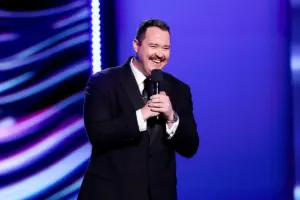
In the high-stakes arena of late-night television, few platforms carry the cultural weight, scrutiny, and unpredictability of Saturday Night Live (SNL). For comedians, stepping onto the legendary stage at Studio 8H is both a career-defining honor and a tightrope walk across a modern sociopolitical chasm. Comedian Shane Gillis experienced this firsthand following his guest-hosting appearance earlier this season, which featured an opening monologue targeting women’s gym attire that instantly ignited a firestorm across digital media platforms.
Appearing on the Nov. 13 episode of The Joe Rogan Experience, Gillis reflected on the unexpected backlash surrounding his routine, expressing genuine surprise at the public outcry. The controversy centered on a specific segment of his set in which he made observational jokes regarding modern athletic wear, utilizing provocative language that quickly drew the ire of online commentators, fellow entertainers, and even subsequent SNL hosts.
This comprehensive report examines the genesis of the controversy, Gillis’s defense and post-monologue reflections, the structural mechanics of SNL monologue approvals, and the broader cultural implications of policing comedy in an era dominated by hyper-vigilant social media curation and shifting societal norms.
Detailed Chronology: From Studio 8H to the Digital Backlash
The Performance: October 10
During his season hosting stint on Saturday Night Live, Shane Gillis took to the stage for his traditional opening monologue. Known for his self-deprecating humor and blue-collar, unpolished persona, Gillis attempted to weave observations about contemporary fitness culture into his set.
"I haven’t been to the gym in so long, I didn’t know women just dress like whores now?" Gillis told the live studio audience, sparking immediate ripples of nervous laughter. "Look, I’m sorry, there’s no other way to describe it. Have you seen it? I’ve seen it. The shorts. Have you seen the shorts? Those neon, they’re like artificial bait-colored. And the wrinkles go around the cheeks and all combined at the butthole. And don’t look, you’re not allowed to look. For real, don’t look because they are filming. I’m in the background of like 10 TikToks right now."
While the live audience reaction was relatively standard for a late-night comedy routine, the digital ecosystem processed the material through an entirely different lens. Within hours of the broadcast, clips of the monologue were extracted, sliced, and distributed across TikTok, X (formerly Twitter), and Instagram, where they were met with immediate condemnation. Critics argued that the routine crossed the line from observational humor into misogyny, body shaming, and the policing of women’s autonomy in public spaces.
The Backlash and Cultural Ripple Effects
The online criticism quickly graduated from anonymous social media users to industry peers. Actor and creator Dan Levy publicly slammed the monologue, calling out the persistent double standards and retrograde tropes often recycled in mainstream stand-up comedy. The controversy even managed to penetrate the hallowed halls of SNL itself weeks later, when subsequent host Inde Navarrette used her own opening monologue to obliquely address and critique the rhetoric Gillis had popularized on the very same stage.
The Joe Rogan Experience Clarification: November 13
Seeking to clear the air, Gillis appeared on Joe Rogan’s widely consumed podcast nearly a month after the broadcast. Speaking candidly to Rogan, Gillis confessed that he was wholly unprepared for the level of fury directed his way.
"The funniest part was, I was going in going — they were like, ‘What’s going on with the monologue?’ And I was like, ‘It’s not great, but I don’t say anything bad,’" Gillis recounted.
He emphasized that, in his own mind, the core of the set was self-deprecation rather than an attack on women. "The whole time, I was like, ‘Fellas, I’m giving you a solid C minus of a monologue, but I promise there’s no controversy. I’m calling myself fat for fucking 10 minutes. That’s it.’"
When pressed about why the joke struck such a raw nerve, Gillis pointed toward the volatile ecosystem of modern public discourse. He suggested that the reaction "obviously had a lot to do with the climate," while making a definitive attempt to distance himself from the premise of his own joke: "For the record, [I] don’t have a problem with it."
Behind the Scenes: The Mechanics of SNL Monologue Approvals
One of the more revealing elements of Gillis’s conversation with Joe Rogan was his candid breakdown of how Saturday Night Live handles the creative development of guest-host monologues. Given the show’s history of courting controversy—and Gillis’s own turbulent history with the program, having been famously dismissed from the cast in 2019 before making a triumphant return as a host—many viewers naturally assumed that network executives and producers thoroughly scrubbed every line of dialogue prior to air.
According to Gillis, this assumption fundamentally misunderstands the traditional workflow of stand-up comedians working within the SNL framework.
"Not to defend SNL, they don’t approve it. I mean, they could shut it down," Gillis explained to Rogan. "They could, but you don’t write your set and give it to them. Unless you’re not a comedian. I’m sure non-comics, they write the set for them. They have writers that write the monologue for them."
This distinction highlights the precarious autonomy granted to veteran stand-up headliners who host the show. Unlike actors, musicians, or athletes who rely heavily on the SNL writing staff to construct a safe, palatable opening speech, touring stand-ups generally bring their own material—honed on the road in comedy clubs—directly to Studio 8H.
While producers retain ultimate veto power to protect the broadcast network from legal or severe PR liabilities, the day-to-day curation of a stand-up’s monologue operates on a trust system. Producers assume the comic understands the boundaries of network television, while the comic assumes their seasoned judgment will keep them safely within the bounds of acceptable broadcast discourse. In Gillis’s case, that calculation clearly misjudged the shifting sensibilities of the modern television-watching audience.
Supporting Context & Metrics: The Economics of Comedy and Outrage
To fully appreciate the Shane Gillis gym attire controversy, one must examine the broader metrics governing the contemporary entertainment landscape. Comedy in the 2020s exists at the intersection of algorithm-driven virality and hyper-polarized cultural sensitivities.
1. The Micro-Targeting of Stand-Up Clips
In the pre-streaming era, stand-up comedy was largely ephemeral. A joke told on a late-night show lived in the memories of viewers or on late-night syndication reruns. Today, monologues are instantly atomized into 30-second vertical video clips optimized for algorithmic feeds. This frictionless distribution strips jokes of their narrative context, delivery pacing, and overall set themes (such as Gillis’s emphasis on self-deprecation). A joke about gym shorts, delivered as part of a broader exploration of male insecurity and aging, becomes a standalone thesis statement on misogyny when viewed out of context on a smartphone screen.
2. The Cultural Geography of the Gym
Gillis’s premise tapped into a genuine, highly debated cultural phenomenon: the intersection of social media, fitness, and fashion. In recent years, public discourse has frequently circled around gym etiquette, the rise of "fitness influencers," workout attire trends, and the ethical gray areas of filming content in shared public gyms. By touching on a topic that already triggers intense daily online debate regarding privacy, body image, and modesty, Gillis walked directly into an existing cultural minefield.
3. The Re-Entry Paradox
It is also impossible to analyze Gillis’s situation without acknowledging his unique institutional history with Saturday Night Live. Having been hired and fired by the show within a matter of days in 2019 due to past offensive remarks unearthed from his podcast, Gillis’s eventual return as a host in 2024 was framed by media analysts as a monumental cultural reconciliation. Because his relationship with the show is already freighted with historical baggage regarding acceptable speech, any edgy material he performs on that stage is naturally subjected to a heightened level of analytical scrutiny that a typical host might easily evade.
Official Statements and Industry Reactions
The fallout from the monologue extended far beyond casual social media commentary, prompting formal and informal responses from various corners of the entertainment industry:
- Shane Gillis (via The Joe Rogan Experience): Maintained that his intentions were entirely benign, expressing genuine bewilderment that a routine focusing primarily on his own physical shortcomings was interpreted as an aggressive attack on women. He reiterated his belief that network oversight respects the creative autonomy of working stand-up comedians.
- Dan Levy: Emerged as one of the most prominent industry critics of the bit, utilizing his platform to question why outdated, derogatory tropes targeting women continue to find a welcoming platform on mainstream broadcast television.
- Inde Navarrette: Utilized her own SNL hosting platform to creatively push back against the rhetoric established during Gillis’s appearance, demonstrating how contemporary comedians and actors within the SNL ecosystem actively negotiate ideological boundaries on the live broadcast.
Future Outlook: What This Means for Late-Night Television and Stand-Up
As broadcast networks continue to grapple with the realities of the digital age, the Shane Gillis controversy serves as a valuable case study in the evolving relationship between live sketch comedy, stand-up traditions, and public accountability.
The Erosion of the Late-Night Safe Harbor
For decades, late-night television operated as a distinct cultural space where edgy, provocative, or mildly transgressive humor was permitted a certain degree of institutional shelter. Today, that shelter has effectively evaporated. Every live broadcast is simultaneously monitored, recorded, evaluated, and litigated by millions of concurrent digital viewers. For producers and comedians alike, the margin for error has narrowed drastically.
The Changing Calculus of Guest Hosts
Moving forward, networks like NBC and shows like Saturday Night Live will likely face intensified internal debates regarding how much creative latitude to grant touring stand-up comedians. While raw, unfiltered voices are precisely what draw younger demographics away from traditional streaming algorithms and back to live television, those same unfiltered voices carry inherent volatility that can instantly alienate vital segments of the viewing audience.
For Shane Gillis, the controversy is unlikely to hinder a thriving career built upon a fiercely loyal, anti-establishment fanbase that actively rejects mainstream sensitivity. However, the episode underscores a permanent reality of modern superstardom: when you perform on the biggest stage in television, the spotlight illuminates every single word, magnifying off-the-cuff observations into national cultural debates.