Executive Overview
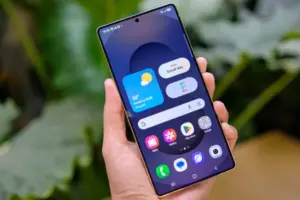
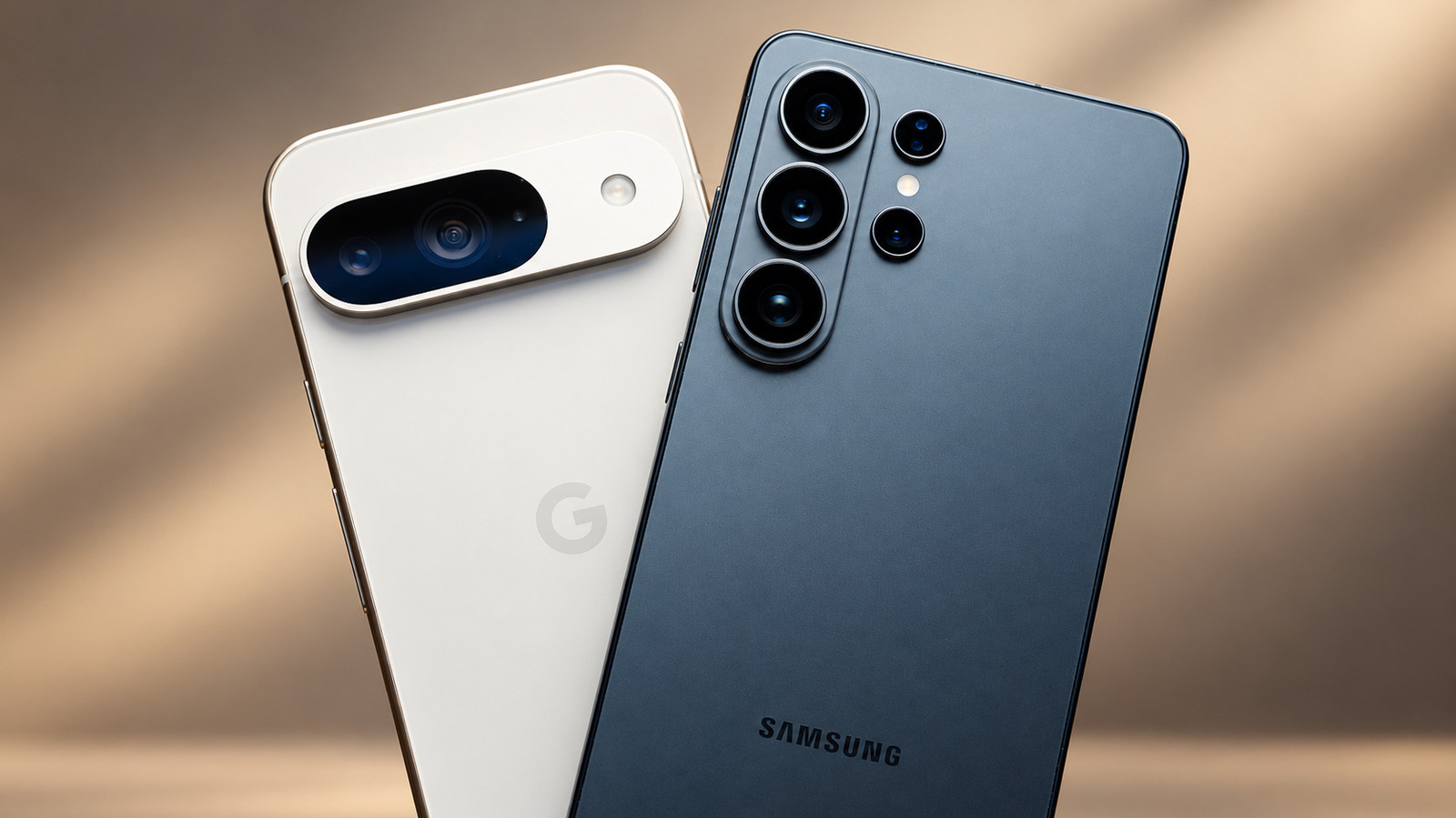
For years, the Android ecosystem has operated on a dynamic two-horse race, defined by two distinct philosophies of mobile computing. On one side stands Google with its Pixel lineup, championing a vision of clean software, cutting-edge computational photography, and an unobstructed, intuitive user experience. On the other stands Samsung, the undisputed titan of Android hardware, offering sprawling choice, unbridled customization, robust multitasking suites, and specialized productivity tools like the S Pen.
Deciding whether to cross the floor from a Google Pixel to a Samsung Galaxy—or vice versa—is no longer a simple matter of comparing specifications on a spec sheet. It has become a nuanced exercise in personal preference, software philosophy, and ecosystem integration.
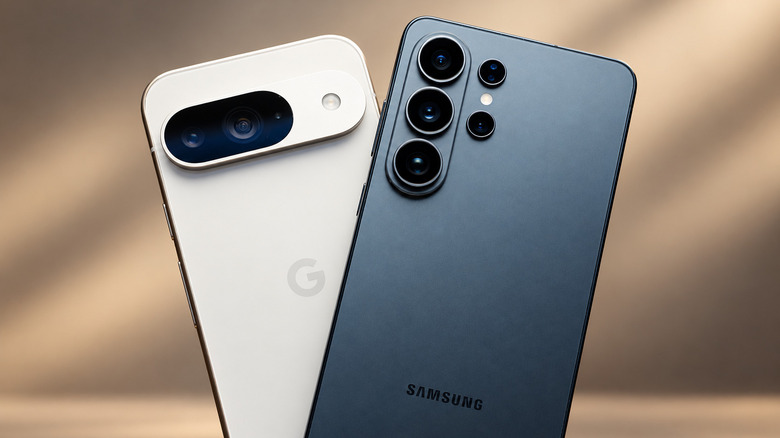
Recent generations have highlighted this philosophical divide. In comparative reviews, the Google Pixel 11 outscored the baseline Samsung Galaxy S26 by a significant margin (92/100 compared to 80/100), largely thanks to its superior telephoto capabilities, cleaner interface, and integrated magnetic accessories. Yet, when moving up the tier list to the heavyweights—the Pixel 11 Pro and the Galaxy S26 Ultra—the playing field levels dramatically, with both devices earning identical 90/100 scores.
Transitioning from Pixel to Galaxy introduces users to a broader portfolio of hardware form factors, including foldables and stylus-equipped flagships, alongside deeper device-level customization. However, it also demands an adjustment period away from Google’s streamlined UI toward Samsung’s feature-packed, albeit busier, One UI software layer. For consumers standing at this technological crossroads, the choice ultimately hinges on what matters more: Samsung’s hardware versatility and ecosystem muscle, or Google’s software elegance and photographic pedigree.
Detailed Chronology: The Evolution of the Rivalry
To understand the current friction points between Samsung Galaxy and Google Pixel devices, one must look at how both lineups have matured over recent product cycles.
The Hardware Expansion vs. Software Refinement
Historically, Samsung’s hardware cadence has dictated the rhythm of the Android market. By releasing its core Galaxy S flagships in the early winter months, Samsung traditionally establishes the technological benchmark for the year. Google, conversely, drops its flagship Pixel iterations in the late summer or early fall. This staggered release schedule has created a distinct market rhythm: Samsung devices often see early aggressive discounting and promotional price cuts by the time Google’s new Pixels hit store shelves.
Over the past two generations—culminating in the Galaxy S26 and Pixel 11 families—both manufacturers have doubled down on their core strengths. Samsung expanded its portfolio reach, offering a massive array of devices spanning the budget-conscious Galaxy A-series (such as the A37 and A57), the mainstream S-series flagships, and the innovative Z-series foldables (Z Flip8 and Z Fold8).
Google, meanwhile, has kept its US storefront more tightly curated. While Samsung lists upwards of 15 distinct current models on its US storefront, Google maintains a more streamlined portfolio, focusing heavily on its core flagships, "a-series" value propositions (like the Pixel 10a), and folding variants (like the Pixel Pro Fold series).
The Real-World Migration Experience
Switching operating systems—even within the same broader Android ecosystem—involves friction. When users utilize tools like Samsung’s Smart Switch, contacts, photos, and basic text messages transition relatively smoothly. However, the migration of private app data, deep system shortcuts, and individual game progress frequently requires manual intervention.
Recent early adopters who transitioned from devices like the Pixel 10 Pro XL to the Galaxy S26 Ultra have reported a mixed bag of experiences. On one hand, the migration brings undeniable hardware upgrades: faster processing speeds, improved battery endurance, the tactile utility of the integrated S Pen, and faster wired charging standards. On the other hand, users frequently note an adjustment period marked by Samsung’s aggressive push toward its proprietary ecosystem alternatives—such as Samsung Notes, Bixby, and Samsung Internet—which often overlap or compete directly with the Google applications users spent years mastering on their Pixels.
Supporting Context & Metrics
Navigating the choice between Samsung and Google requires looking past the marketing slogans and examining hard metrics, pricing strategies, and feature parity.
Hardware Comparisons and Specifications
A granular look at the current generation reveals distinct engineering trade-offs between the two ecosystems:
| Feature / Metric | Google Pixel 11 / Pro | Samsung Galaxy S26 / Ultra |
|---|---|---|
| Review Scores (Base) | 92 / 100 | 80 / 100 |
| Review Scores (Pro/Ultra) | 90 / 100 | 90 / 100 |
| Optical Telephoto (Base) | 5x Optical Telephoto | 3x Optical Telephoto |
| Magnetic Accessories | Built-in Magnets (Pixelsnap) | Requires Compatible Case |
| Wired Charging (Base) | Standard USB-PD | Up to 45W (on select mid-tiers like A37) / 25W (Base S26) |
| Software Support Lifecycle | Up to 7 Years | 6 to 7 Years (Model Dependent) |
Pricing Structures and Market Positioning
Pricing strategies have shifted notably in recent cycles. Samsung adjusted the base price of the flagship Galaxy S26 in the US market, moving from $899 up to $999. This positions it $100 higher than the baseline Pixel 11, which starts at $899.
In the mid-range and budget segments, the landscape is similarly competitive. The Pixel 10a commands a $599 retail price, stacking up directly against Samsung’s Galaxy A37 (priced around $490) and the Galaxy A57 (priced at $600). While Samsung’s mid-range A37 undercuts the Pixel 10a on price and introduces faster 45W wired charging alongside a larger 6.7-inch display, it lacks advanced niceties like wireless charging and native desktop software extension suites.
Ecosystem Nuances and Exclusive Features
The feature gap between the two manufacturers extends into software-driven conveniences:
- Call Screening & AI: Google’s native Call Screen remains a gold standard for spam filtration and automated conversation handling, deeply integrated into the Pixel data fabric. Samsung counters with its own proprietary call-screening and live-translation tools on compatible devices, but longtime Pixel users often miss the seamless, context-aware execution of Google’s suite.
- Customization Depth: While both operating systems allow for aesthetic personalization, Samsung’s Good Lock suite offers granular control over system interfaces, Quick Settings panes, and lock screen behavior. Paired with Modes and Routines, Galaxy devices can automate complex system behaviors based on time, location, or user activity far more aggressively than stock Android.
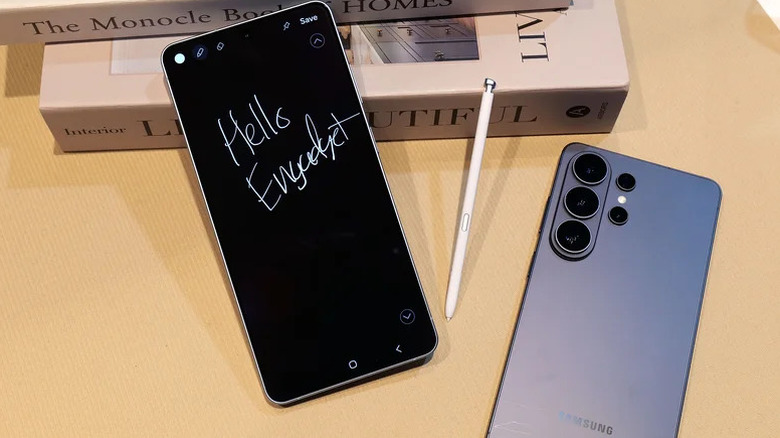
- Productivity & Security: For power users, the Galaxy S-series Ultra models maintain an unassailable lead thanks to the siloed, integrated S Pen. Furthermore, Samsung has introduced hardware-level security features like Privacy Display on the S26 Ultra, shielding screens from wandering eyes in public spaces—a feature that has no direct hardware equivalent in the Pixel lineup.
Official Statements and Industry Insights
Tech industry analysts and software reviewers have frequently commented on the psychological and functional barriers that define the Android migration path.
According to mobile computing analysts, Google’s strategy relies heavily on "software emotion"—the intangible feeling of speed, responsiveness, and aesthetic cohesion delivered by clean Android. By controlling both the silicon (via the Tensor architecture) and the software, Google creates a tightly integrated experience that mirrors the philosophy of Apple’s iOS, prioritizing ease of use and computational photography above all else.
Samsung, conversely, approaches the market from a position of absolute industrial dominance and consumer choice. Industry insiders note that Samsung’s massive supply chain scale allows it to experiment with cutting-edge form factors—such as foldable displays, ultra-thin bezels, and specialized stylus integration—years before competitors can reliably manufacture them at scale.
In review consensus breakdowns, critics emphasize that while Samsung provides the tools to build virtually any mobile experience a user could want, Google provides an out-of-the-box experience that "just works" with minimal friction. As one lead reviewer noted regarding the transition: "Switching to Samsung gives you the keys to a high-performance sports car with a dashboard full of custom gauges and alternative controls; staying with Pixel gives you a finely tuned electric vehicle where everything is exactly where your muscle memory expects it to be."
Future Outlook: Where Are the Ecosystems Headed?
As mobile computing increasingly intersects with artificial intelligence, cross-device continuity, and ambient computing, the battle lines between Samsung and Google are shifting.
The Convergence of Artificial Intelligence
Both manufacturers are heavily invested in on-device AI processing, yet their deployment strategies differ. Samsung’s Galaxy AI suite—featuring tools like Photo Assist for object removal and Note Assist for real-time document summarization—aims to provide immediate, tangible utility across productivity tasks. Google’s Gemini integration focuses deeply on contextual awareness, predictive assistance, and deep-level integration with Google Workspace.
The future will likely test whether consumers prefer Samsung’s modular, feature-rich approach to AI assistance or Google’s holistic, deeply ingrained system intelligence.
Hardware Innovation vs. Software Longevity
Looking ahead, both ecosystems have committed to extraordinary device longevity, offering up to seven years of software and security updates. This unprecedented level of support means consumers are keeping their phones longer, raising the stakes for initial purchase decisions.
For the prospective buyer, the calculus is clear. If your priority is hardware versatility, physical form-factor choice, desktop productivity extensions like DeX, and absolute peak charging or stylus performance, Samsung’s Galaxy ecosystem remains the premier destination. However, if your digital life is anchored by Google’s software philosophy—characterized by cleaner interfaces, superior out-of-the-box telephoto photography, frictionless call screening, and an uncluttered user experience—remaining within the Pixel family is the path of least resistance and greatest day-to-day satisfaction.