Executive Overview
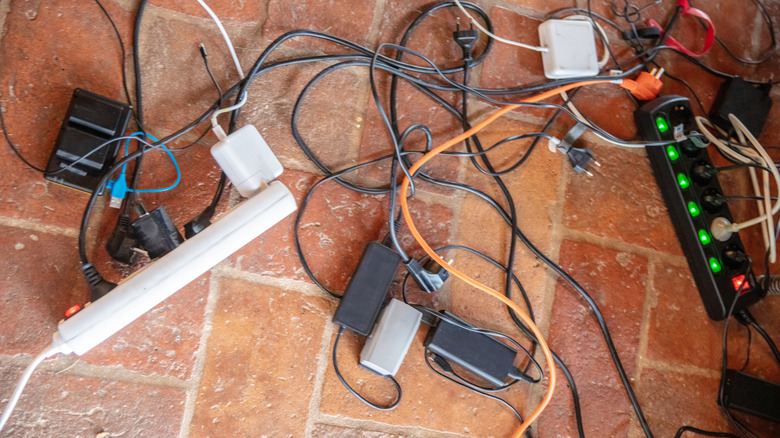
In the modern digital ecosystem, the proliferation of work-from-home technology, high-performance gaming rigs, and smart home automation devices has triggered an unprecedented demand for electrical outlets. Home offices, entertainment centers, and creative studios often morph into tangled landscapes of cords, adapters, and chargers. Faced with a shortage of wall sockets, a deceptively simple and common shortcut is to connect one power strip into another—a practice formally known in the electrical industry as "daisy-chaining."
While this method appears to solve an immediate spatial dilemma by instantly multiplying available ports, it introduces severe, often overlooked safety hazards. Electrical safety organizations, fire marshals, and electrical engineers universally condemn daisy-chaining. The practice does not expand a home’s electrical capacity; instead, it funnels the cumulative electrical load of multiple devices through a single primary circuit, leading to dangerous levels of resistive heating, melted wire insulation, tripped breakers, and catastrophic structural fires.
This comprehensive investigation explores the engineering principles behind power strip overloads, the myths of electrical capacity, the specific dangers associated with high-wattage appliances, and the regulatory standards established to protect households from preventable electrical catastrophes.
Detailed Chronology and Technical Evolution of Power Distribution
To understand why daisy-chaining remains a persistent hazard, one must examine the evolution of residential power distribution and the design limitations of modern surge protectors and power strips.
The Rise of the Multi-Plug Device
When consumer electronics first proliferated in the mid-to-late 20th century, households typically featured a limited array of powered devices per room: a lamp, a television, a radio. Wall outlets—often limited to two receptacles per faceplate—were more than adequate. By the late 1990s and early 2000s, the personal computer revolution changed this dynamic overnight. Desktops, monitors, printers, external hard drives, and speakers suddenly demanded dedicated ports.
Manufacturers responded by producing power strips and surge protectors. These devices were engineered as localized distribution hubs, designed to divide the current from a single wall outlet among several low-draw electronics. However, consumers quickly treated these strips as infinite power multipliers rather than finite distribution tools.
The Mechanics of Daisy-Chaining
Daisy-chaining occurs when a user plugs Power Strip A into a wall outlet, Power Strip B into Power Strip A, and occasionally Power Strip C into Power Strip B.
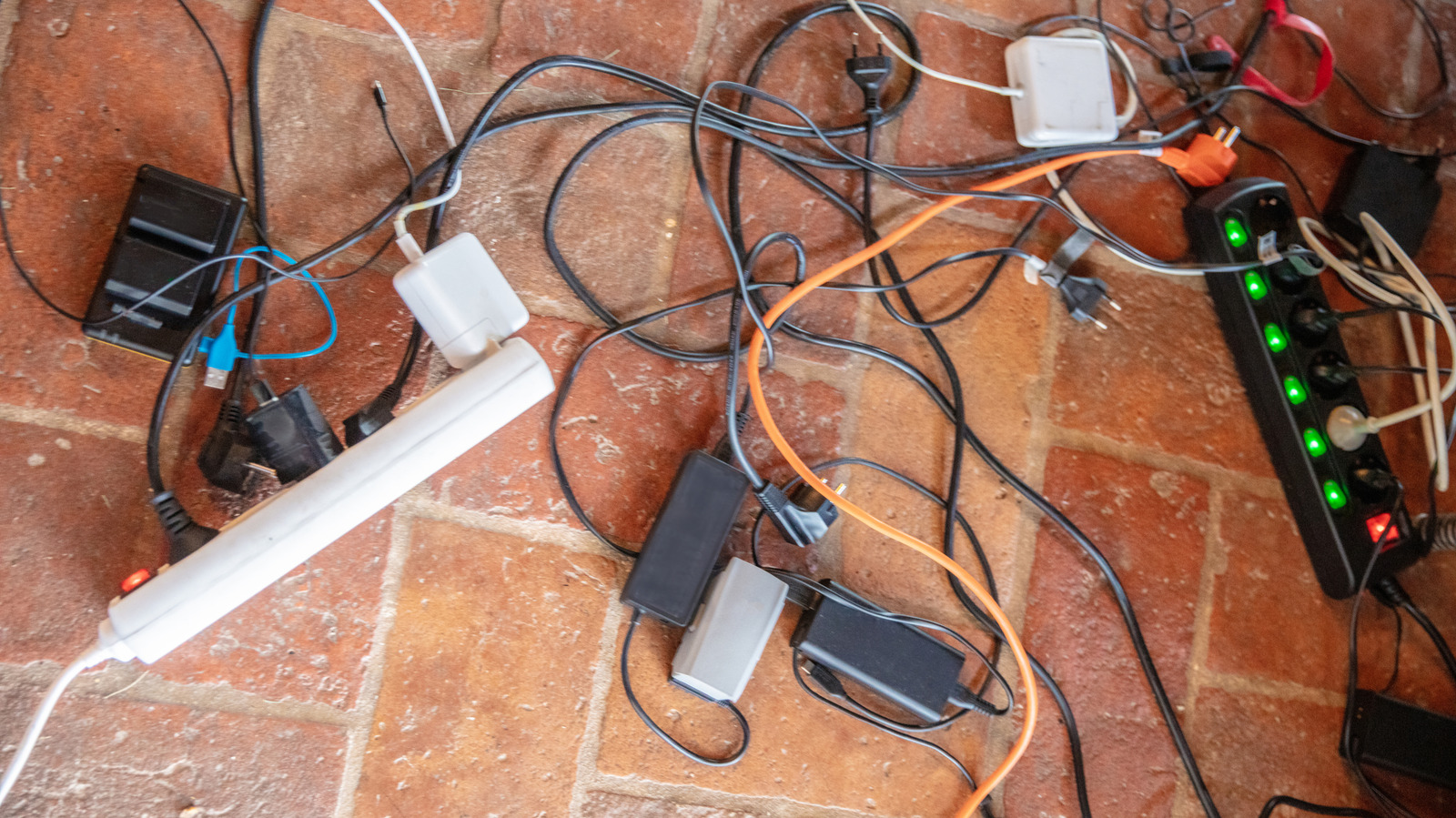
From an electrical perspective, this creates a dangerous bottleneck. Every device connected to the downstream strips must draw its current through the internal copper bus bars, wiring, and plug prongs of the very first strip in the chain.
- The Capacity Illusion: Adding a second power strip does not increase the amperage capacity delivered by the wall circuit. If the wall outlet supplies a maximum of 15 amps (standard for most residential 120V circuits in North America), that limit remains fixed regardless of how many plastic strips are linked together.
- The Cumulative Draw: If Power Strip B powers a space heater drawing 12.5 amps, and Power Strip A simultaneously powers a computer workstation drawing 5 amps, the first power strip is now handling 17.5 amps—well beyond its typical 15-amp maximum rating.
- Resistive Heating: As electrical current passes through a conductor, it encounters natural resistance. When a conductor is forced to carry more current than its cross-sectional area is designed to handle, the excess energy is converted into heat. This phenomenon, known as Joule heating or resistive heating, causes the internal components of the overloaded power strip to rise rapidly in temperature.
[Wall Outlet]
     │ (15A Max)
     ▼
[Power Strip A] ◄── [Local Devices: 5 Amps]
     │ (Carrying 17.5A Total) ──► OVERHEAT RISK!
     ▼
[Power Strip B] ◄── [High-Draw Device: 12.5 Amps]
Over time, this continuous thermal stress degrades the thermoplastic housing of the power strip, melts the rubber or PVC insulation surrounding internal wires, and compromises soldered connections. Once bare copper wires are exposed inside a degrading plastic casing, an arc fault or short circuit can instantly ignite dust, paper, or carpet fiber nearby.
Supporting Context, Metrics, and Safety Standards
Electrical safety authorities, including the National Fire Protection Association (NFPA) and the Consumer Product Safety Commission (CPSC), maintain strict guidelines regarding the use of temporary power distribution taps.
Statistical Overview of Electrical Fires
According to safety data compiled by fire prevention agencies, electrical failure and malfunction remain among the leading causes of residential fires in industrialized nations. A significant percentage of these incidents originate not from primary home wiring, but from the misuse of secondary consumer hardware, including extension cords, unrated power strips, and daisy-chained networks.
- Amperage Ratings: Most standard residential power strips are rated for a maximum of 15 amps or 1,875 watts at 125 volts. Exceeding these thresholds triggers internal circuit breakers (if the strip is equipped with them) or silently cooks the internal wiring if safety features fail or are absent.
- Surge Protectors vs. Standard Strips: A common misconception is that surge protectors—devices containing Metal Oxide Varistors (MOVs) designed to absorb high-voltage transients from lightning or grid fluctuations—possess greater electrical capacity. Surge protectors protect sensitive electronics from voltage spikes, but they do not alter the fundamental current-carrying capacity of the circuit. Daisy-chaining surge protectors presents the exact same thermal hazard as daisy-chaining basic power strips.
What Should Never Be Plugged Into a Power Strip?
Beyond the dangers of linking strips together, hazards frequently arise from plugging high-wattage appliances into devices engineered solely for low-draw electronics.
- Space Heaters: A typical portable space heater operates at 1,500 watts, drawing approximately 12.5 amps continuously. This consumes nearly the entire capacity of a standard 15-amp circuit. Plugging a space heater into a power strip—especially one shared with other devices—virtually guarantees an overload.
- Kitchen Appliances: Microwaves, coffee makers, toasters, and refrigerators demand substantial surges of current upon startup and continuous high wattage during operation. The NFPA explicitly mandates that major kitchen appliances be plugged directly into dedicated wall outlets.
- Hair Styling Tools: Hair dryers, curling irons, and straighteners generate intense heat through high electrical resistance, often drawing between 1,200 and 1,800 watts. Running these through multi-plug adapters or strips creates immediate thermal vulnerabilities.
Official Statements and Industry Guidance
Regulatory bodies and electrical engineering associations emphasize education and adherence to strict operational codes to mitigate preventable tragedies.
The National Fire Protection Association (NFPA) states in its foundational fire codes (such as NFPA 1):
"Temporary wiring, including extension cords and power strips, shall not be used as a substitute for permanent wiring. Power strips shall be grounded, equipped with overcurrent protection, and plugged directly into an approved wall outlet. Daisy-chaining, or plugging power strips into extension cords or other power strips, is strictly prohibited due to cumulative thermal overload risks."
Electrical safety engineers echo these warnings, stressing that consumer convenience frequently overrides product design specifications.
"Consumers look at a power strip as an extension of the wall, assuming it possesses infinite elasticity," explains a senior electrical safety inspector. "In reality, a power strip is a precision-engineered circuit component with strict physical boundaries. When you chain them together, you are essentially building an unrated, unmonitored extension cord system behind your desk or entertainment center, completely blind to the heat building up inside the plastic housing."
Future Outlook: Smart Homes, Load Management, and Safer Alternatives
As residential energy consumption continues to evolve, the approach to power distribution is shifting toward smarter, safer, and more resilient alternatives.
Smart Power Management and IoT Monitoring
The next generation of home office and entertainment power distribution is embracing Internet of Things (IoT) technology. Modern smart power strips feature individual port monitoring, automated thermal shutoffs, and smartphone alerts that notify users when a specific port is drawing excessive current or approaching thermal thresholds. These devices aim to take the guesswork out of electrical safety by providing real-time telemetry directly to the user.
Best Practices for Power Management
When a single power strip is no longer sufficient for a modern workstation or gaming setup, consumers must adopt safe architectural solutions rather than taking dangerous shortcuts:
- Audit Your Power Needs: Calculate the total wattage of all devices intended for a single location. Ensure the cumulative draw does not exceed 80% of the power strip’s maximum rating (leaving a vital safety margin).
- Utilize Additional Wall Outlets: If multiple high-draw devices are required in one room, distribute them across separate wall circuits (which often run on different breakers in the home’s electrical panel) rather than consolidating them into one area.
- Avoid Extension Cords for Permanent Setups: If distance is an issue, do not bridge the gap with standard extension cords. Extension cords are designed for temporary use and suffer from identical resistive heating vulnerabilities. Instead, consult a licensed electrician to install additional permanent wall receptacles.
- Inspect Equipment Regularly: Routinely check power strips for discoloration, warped plastic casings, scorch marks, or loose plug connections. Any compromised hardware must be discarded immediately, regardless of its age or cost.
By abandoning the hazardous practice of daisy-chaining and respecting the physical limitations of electrical distribution hardware, homeowners can successfully power their modern digital lives without compromising their physical safety.