High above the Earth, NASA’s orbiting astronauts aboard the International Space Station rely on additive manufacturing to fabricate critical components and custom tooling on demand, bypassing months of logistical wait times and exorbitant transport costs. Down on Earth, a parallel technological revolution is quietly unfolding in garages, basements, and hobbyist workshops.
Far from being mere novelties or gadgets restricted to industrial engineering labs, desktop 3D printers have matured into accessible, reliable, and cost-effective household appliances. With entry-level Fused Deposition Modeling (FDM) systems starting at roughly $170—and standard rolls of filament hovering around $20 per kilogram—the barrier to entry has plummeted.
For passionate hobbyists trapped in endless cycles of buying overpriced proprietary accessories, fragile replacement parts, and niche components, a 3D printer is no longer a luxury toy. It is a powerful financial asset. By leveraging open-source Computer-Aided Design (CAD) repositories and local maker spaces, enthusiasts across diverse fields are discovering that the hardware frequently pays for itself within months. This investigative report explores five expensive hobbies where integrating additive manufacturing yields a measurable return on investment, while outlining the practical considerations, material sciences, and limitations every prospective buyer should weigh before taking the plunge.
Detailed Chronology: The Evolution of Consumer Additive Manufacturing
To understand how desktop 3D printing reached its current economic tipping point, it is necessary to examine the technological trajectory that dismantled industrial monopolies and democratized manufacturing.
The Patent Expiration and the Open-Source Explosion
For decades following its invention in the late 1980s by Chuck Hull (stereolithography) and Scott Crump (Fused Deposition Modeling), 3D printing was locked behind restrictive corporate patents. Industrial machines cost tens, sometimes hundreds, of thousands of dollars, placing them strictly out of reach for individuals and small businesses.
However, a pivotal shift occurred around 2009 when key FDM patents expired. This legal milestone catalyzed the birth of the RepRap project (Replicating Rapid Prototyping), an open-source initiative aimed at creating a self-replicating machine that could print most of its own components. Hobbyists, software developers, and engineers collaborated globally, sharing schematics, firmware, and slicing algorithms online.
The Rise of Consumer-Grade Hardware
Throughout the 2010s, early commercial pioneers like MakerBot and Ultimaker proved that a market existed for pre-assembled desktop machines, though early iterations remained plagued by reliability issues, high price tags, and steep learning curves.
By the early 2020s, manufacturing maturation in Shenzhen, China, and fierce market competition fundamentally altered the landscape. Companies like Creality, Prusa Research, Bambu Lab, and Anycubic transformed the user experience. Machines evolved from finicky, bed-slinging experimental kits into plug-and-play appliances equipped with auto-bed leveling, high-speed CoreXY kinematics, and AI-assisted failure detection. Today, consumers can purchase an exceptionally precise printer for less than the cost of a mid-range smartphone, democratizing the production of functional parts.
Supporting Context & Metrics: The Economics of Filament and Fabrication
To evaluate whether a 3D printer makes financial sense for a specific hobbyist, one must analyze the raw economics of desktop manufacturing: hardware amortization, material consumption, and time investment.
The Basic Math of FDM Printing
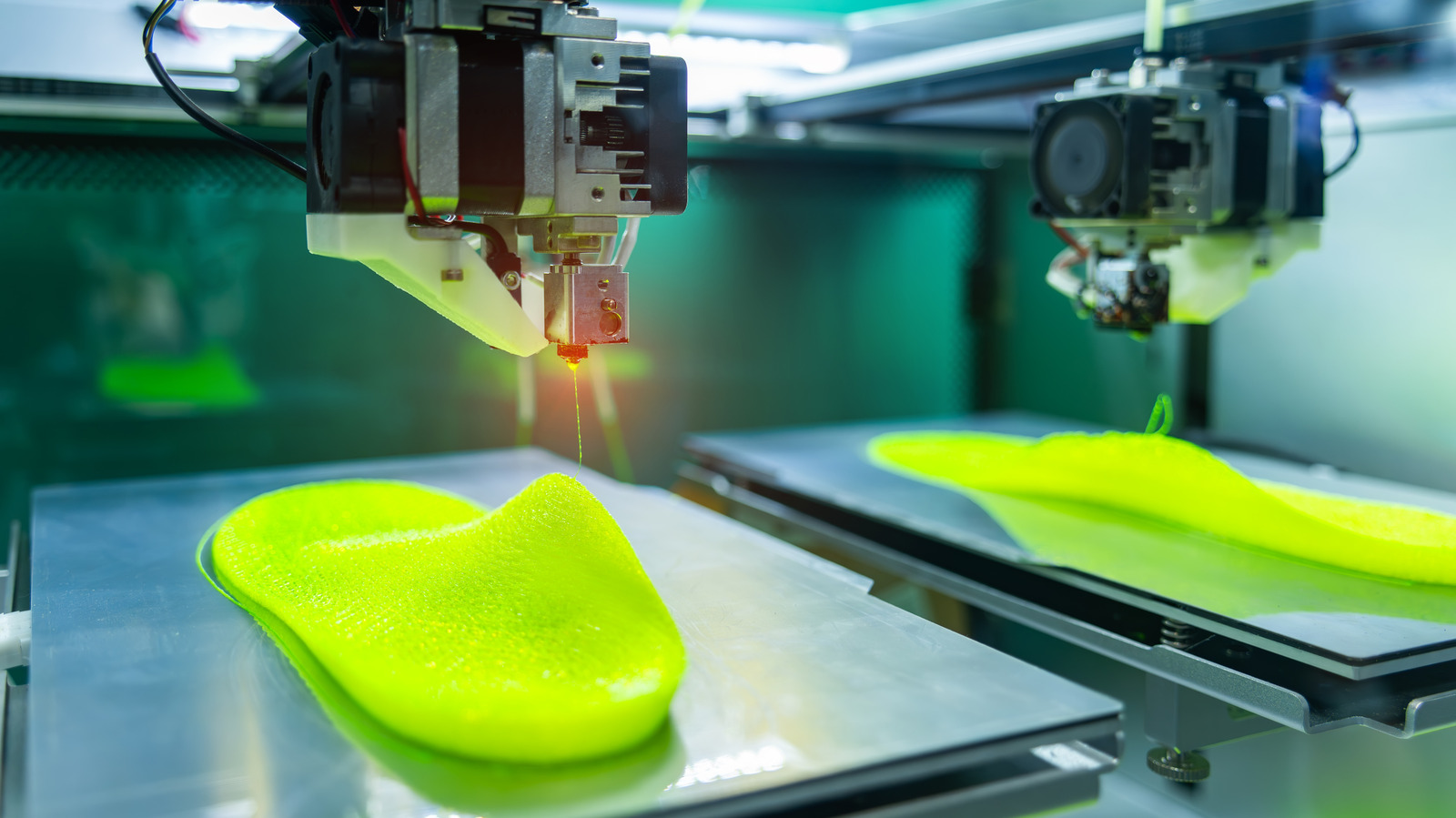
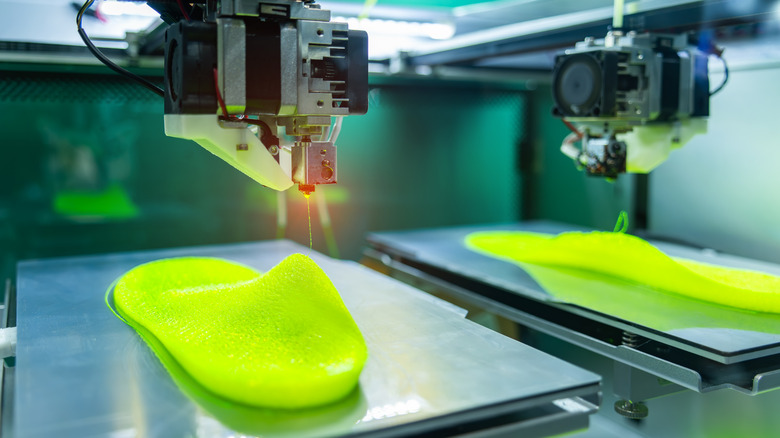
Most consumer-grade desktop printers utilize Fused Deposition Modeling (FDM). In this process, thermoplastic filament—most commonly Polylactic Acid (PLA), Polyethylene Terephthalate Glycol-modified (PETG), or Acrylonitrile Butadiene Styrene (ABS)—is spooled into a heated extruder, melted down, and deposited layer-by-layer onto a build plate.
Hardware Cost: Entry-level units (such as the Creality Ender series) start around $170. Professional-grade consumer enclosed printers or multi-color systems can range from $500 to over $1,200.
Material Cost: A standard 1-kilogram (2.2 lbs) spool of quality PLA or PETG filament generally costs between $18 and $25.
Yield Analysis: Consider a specialized component, bracket, or container that retails online or via original equipment manufacturers (OEMs) for $15. If that same part requires 30 grams of filament to print, the raw material cost is roughly $0.60 to $0.75. Factoring in electrical consumption and nominal wear-and-tear, the actual production cost remains under a dollar.
[Retail OEM Part: $15.00] vs. [3D Printed Part (30g Filament): ~$0.75]
Net Savings per Part: $14.25
If a hobbyist prints just 15 to 20 specialized replacement parts or accessories over the lifespan of a $170 machine, the hardware has entirely amortized its initial purchase price.
Understanding Polymer Selection
Not all plastics behave equally. Choosing the correct material is vital to ensuring that printed parts withstand real-world operational stresses:
PLA (Polylactic Acid): Biodegradable, derived from renewable sources like corn starch. Excellent for indoor decorative items, miniatures, and low-stress housings, but softens under direct sun or temperatures exceeding 60°C (140°F).
PETG: Offers superior chemical resistance, layer adhesion, and UV stability compared to PLA. Highly flexible and durable, making it the preferred choice for mechanical brackets, drone parts, and outdoor garden accessories.
ABS / ASA: Highly impact-resistant and structurally robust. ASA features exceptional UV resistance, making it ideal for automotive and exterior applications, though printing these materials requires an enclosed, well-ventilated printer due to noxious fumes.
Resin (SLA/DLP): Utilizing ultraviolet light to cure liquid photopolymer resin, these machines achieve microscopic layer resolutions. While completely unsuited for heavy structural components due to brittleness, they dominate the miniature gaming and jewelry industries.
The 5 Expensive Hobbies Where 3D Printers Save Money
1. Drone and Remote-Controlled (RC) Vehicle Maintenance
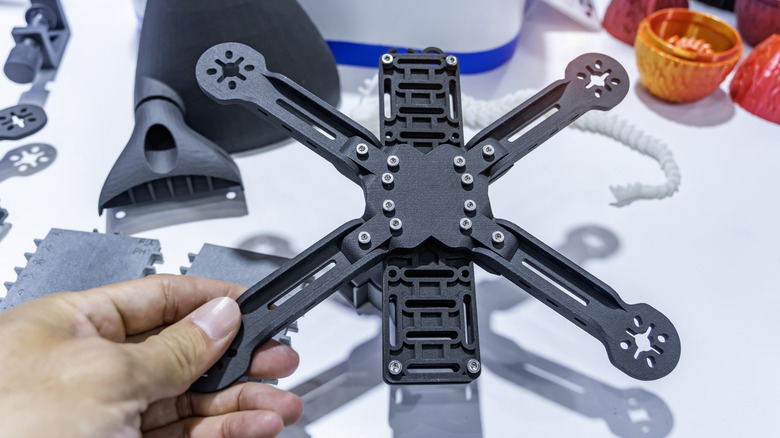
Piloting FPV (First Person View) racing drones, aerial photography quads, and high-speed RC cars is an exhilarating pastime—and an exceptionally expensive one. Minor piloting errors frequently result in catastrophic high-speed crashes, snapping carbon fiber arms, shattering plastic canopies, and destroying camera mounts.
The OEM Problem: Drone manufacturers capitalize on replacement parts, often charging $10 to $25 for a tiny injection-molded plastic camera mount, antenna protector, or arm guard, plus shipping fees.
The Additive Solution: Online repositories like Printables and Thingiverse feature dedicated sections populated by thousands of community-tested drone components. While critical structural members and rotating elements (such as propellers) demand rigorous testing or industrial-grade carbon fiber/nylon composites, protective accessories and non-load-bearing chassis parts are ideal for home printing.
Financial Impact: Printing an array of TPU (Thermoplastic Polyurethane) crash guards, battery straps, and mounting brackets drops per-unit replacement costs from $15 to less than $1. For active pilots who experience monthly hardware damage, the printer often pays for itself within a single racing season.
2. Gardening, Horticulture, and Automotive Garage Work
Whether maintaining a complex urban garden or restoring a vintage vehicle in the garage, DIY enthusiasts continuously encounter a frustrating bottleneck: specialized clips, unique fasteners, custom brackets, and obsolete parts that are either sold exclusively in bulk quantities or are entirely discontinued.
The OEM Problem: Dealership parts counters routinely mark up simple plastic interior clips, dashboard knobs, and wiring harnesses. Meanwhile, specialized horticultural tools, custom-sized self-watering planters, and heavy-duty seedling trays carry a steep retail premium at garden centers.
The Additive Solution: The home workshop is an ideal environment for functional utility prints. In the garage, makers can fabricate custom tool organizers, multi-axis bench vises, hard-to-find car interior bezels, and specialized wrench adapters using heat-resistant PETG or ABS. In the garden, custom soil dibbers, heavy-duty plant tags, modular trellises, drip-irrigation manifolds, and ergonomic watering can nozzles can be printed on demand.
Financial Impact: Eliminating emergency trips to the hardware store for single specialized fasteners or replacing broken garage organization systems saves both direct retail costs and invaluable hours of project downtime.
3. Smart Home Customization and Home Automation
The smart home market is characterized by rapid ecosystem shifts, proprietary mounting standards, and expensive wall-mounted hardware. Transforming a residence into a seamlessly automated environment often involves purchasing hundreds of dollars in mounting brackets, recessed enclosures, and structural adapters.
The OEM Problem: Apple-ecosystem wall-mounted touch displays, specialized tablet frames, and structured network cabling enclosures routinely cost between $100 and $300. Furthermore, integrating Near Field Communication (NFC) tags or smart buttons usually results in a stark, utilitarian aesthetic.
The Additive Solution: Additive manufacturing empowers homeowners to design bespoke enclosures that blend seamlessly with interior architecture. Rather than buying a pre-made $299 smart display wall mount, a user can print an exact chassis for a budget tablet or a Home Assistant touch screen display. Moreover, simple NFC stickers placed throughout the home can be housed inside elegantly designed, custom-labeled mechanical button presses or desktop pedestals.
Financial Impact: By printing structural housings, cable management raceways, and custom bezels, smart home enthusiasts avoid luxury markup prices, creating a cohesive, professional-grade home automation network at material costs under $5 per room.
4. Photography and Videography Rigging
Professional and amateur content creators invest heavily in camera bodies, lenses, lighting arrays, and audio equipment. However, the hidden cost of production lies in the ecosystem of rigging accessories: lens caps, cable clamps, battery plates, quick-release mounts, and cold-shoe adapters.
The OEM Problem: Major camera brands frequently charge $20 to $50 for a molded plastic lens cap or a proprietary cable strain-relief clamp—items that cost pennies to manufacture via injection molding.
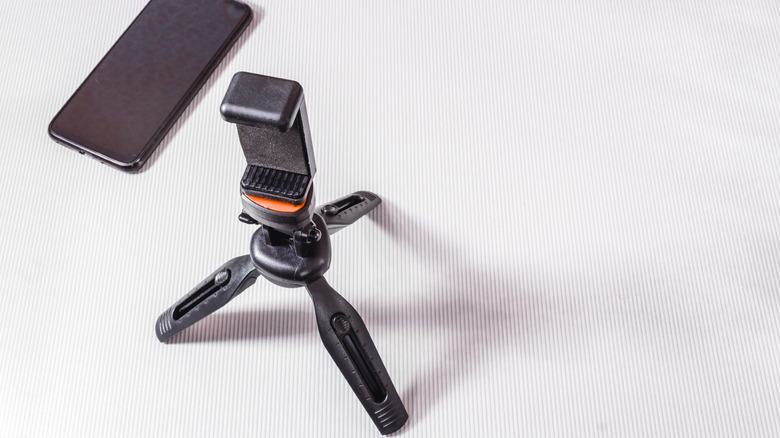
The Additive Solution: Photography is uniquely suited for parametric design, where CAD models can be mathematically adjusted to fit any lens thread diameter or specific camera cage profile. Creators can print universal lens caps, V-lock battery plates, custom microphone shock mounts, follow-focus gears, and modular tabletop tripods.
Financial Impact: Losing a lens cap on a remote shoot no longer triggers a $35 replacement fee. Printing a custom replacement on site takes roughly 45 minutes and costs less than fifty cents in filament.
5. Tabletop Gaming, Miniature Wargaming, and Model Railroads
Tabletop roleplaying games like Dungeons & Dragons, miniature war-games like Warhammer 40,000, and scale model railroading require immense investments in terrain, scenery, buildings, and miniatures to construct immersive worlds.
The OEM Problem: Retail tabletop miniature boxes and branded terrain sets carry extraordinary markups. Purchasing official rulebook miniatures, modular dungeon tiles, and painted scale locomotives can easily drain thousands of dollars from a hobbyist’s bank account.
The Additive Solution: This hobby bridges the gap between FDM and resin (SLA) printing. While FDM printers excel at churning out expansive terrain pieces, multi-story buildings, and model railroad tracks efficiently and cheaply, resin printers achieve the sub-micron layer resolution required to render intricate fantasy miniatures, historical military units, and detailed locomotives with astonishing fidelity. Platforms like MyMiniFactory and specialized Patreon creators provide access to millions of digital files for a modest monthly subscription.
Financial Impact: For an active gaming group, printing a comprehensive set of modular dungeon tiles and character miniatures slashes campaign-building costs by up to 90%, transforming an exclusive, cash-heavy hobby into an accessible creative outlet.
Official Industry Statements & Expert Insights
Industry analysts and manufacturing experts emphasize that while consumer 3D printing offers immense economic utility, it requires a mindset shift from passive consumerism to active problem-solving.
"The transition we are witnessing is not merely about replacing broken plastic clips; it is about decentralizing manufacturing and empowering the end-user," notes Dr. Elena Vance, senior additive manufacturing researcher at the Institute for Advanced Production Technologies.
"When a consumer acquires an FDM printer, they are essentially buying a localized fabrication node. The true economic return isn’t calculated solely by comparing the price of a store-bought bracket to a spool of filament—it’s measured in the elimination of supply chain friction, shipping delays, and planned obsolescence."
Hardware manufacturers echo this sentiment, emphasizing that modern ease-of-use innovations have eliminated the technical barriers that once confined the hobby to computer programmers and industrial engineers.
"Five years ago, you needed a degree in troubleshooting just to keep a printer calibrated," explains Marcus Thorne, consumer product lead at an open-source hardware collective. "Today, with auto-calibration, magnetic spring-steel build plates, and cloud-slicing software, anyone with an internet connection can download a verified design, press print, and pull a functional engineering component off the bed an hour later. The technology has finally caught up with the consumer’s imagination."
Future Outlook: What Lies Ahead for Consumer Additive Manufacturing?
As the consumer 3D printing market continues its rapid ascent, several technological trends are poised to further amplify its cost-saving potential across hobbies:
1. Multi-Color and Multi-Material Integration
The rapid adoption of automatic material switching systems (such as Bambu Lab’s AMS or Prusa’s MMU) is bringing multi-color and multi-material printing into the mainstream. Hobbyists can now combine rigid structural plastics (PETG or ABS) with soft, impact-absorbing elastomers (TPU) in a single print job, expanding the complexity of functional components without requiring industrial machinery.
2. Mainstream Adoption of Engineering-Grade Filaments
Historically, printing high-temperature, high-strength polymers like Polycarbonate (PC), Carbon-Fiber Nylon, and PEEK required expensive industrial enclosures and specialized ventilation. As consumer machines increasingly incorporate hardened steel nozzles, enclosed heated chambers, and advanced thermal management, hobbyists will be able to print end-use metal-replacement parts with structural integrity rivaling aluminum.
3. AI-Driven Design and Generative Modeling
Artificial intelligence is beginning to revolutionize how hobbyists create parts. Rather than manually modeling complex brackets in CAD software, emerging AI-driven generative design tools will allow users to input structural load requirements, and algorithms will automatically compute the optimal, organic geometry—maximizing strength while minimizing material weight and print time.
Conclusion: Is a 3D Printer Right for You?
Purchasing a 3D printer solely as a financial investment requires careful introspection. Prospective buyers must consider three critical variables:
Frequency of Use: Will you regularly print functional components, or will the machine sit idle after printing a few novelty items?
Space and Safety: FDM and resin printers require adequate ventilation. They should never be operated in sleeping quarters or living rooms due to volatile organic compound (VOC) emissions and microparticle generation.
The Learning Curve: While modern printers are exceptionally user-friendly, basic familiarity with slicing software, bed adhesion principles, and routine machine maintenance is essential.
For the dedicated drone pilot, the avid gardener, the smart home tinker, the photography enthusiast, or the tabletop gamer, a 3D printer is far more than a gadget. It is an enduring toolkit for self-reliance—transforming digital code into physical utility and fundamentally altering the economics of modern hobbies.