Executive Overview
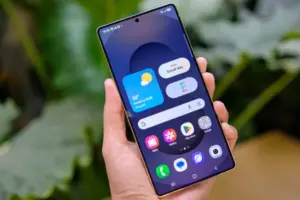
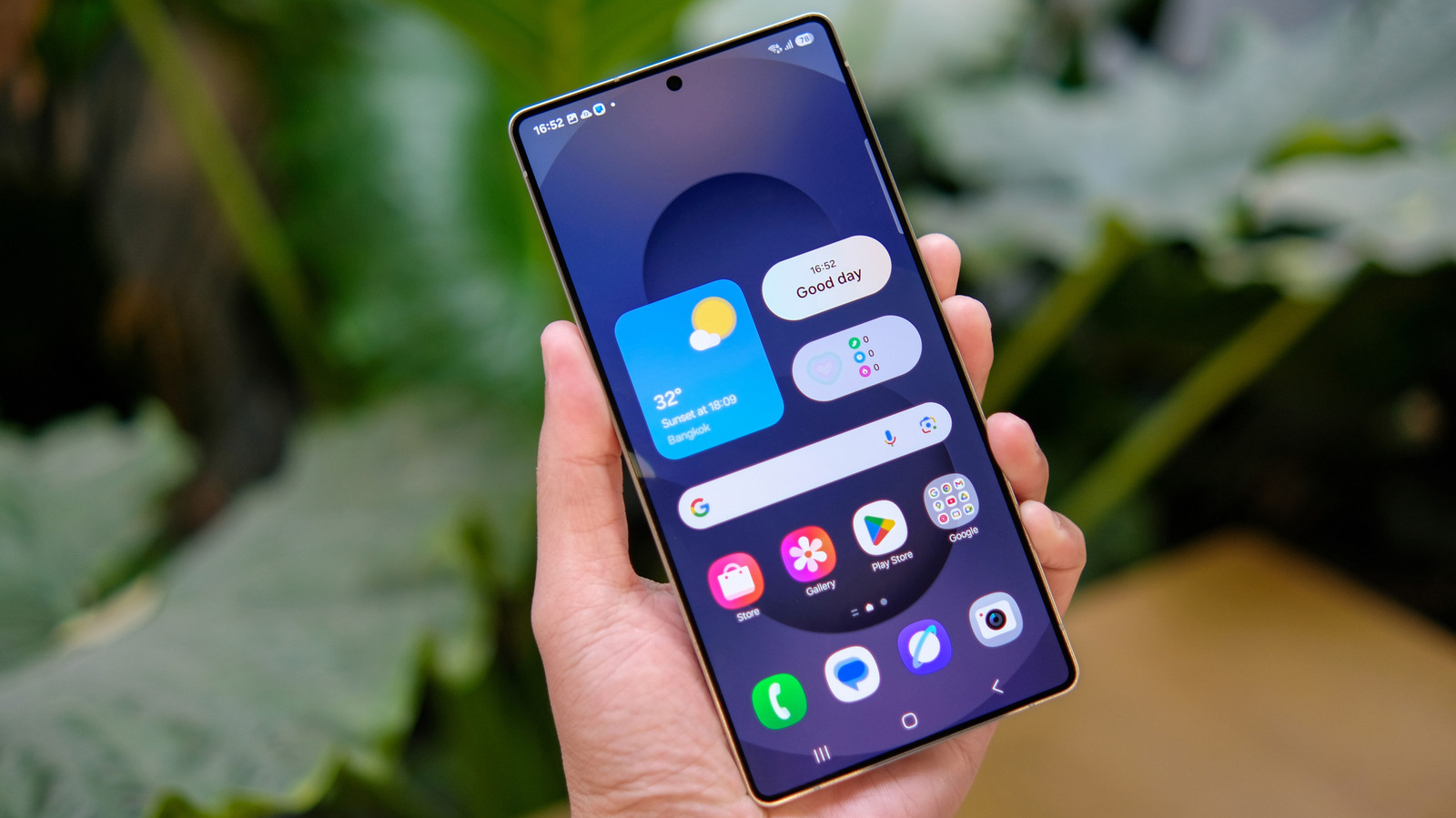
Modern smartphones are marvels of pocket-sized engineering, packed with microchips, sensors, and software indicators designed to keep users constantly informed about device health, battery status, and network connectivity. For owners of Samsung Galaxy smartphones, glancing up at the status bar at the top of the display reveals a complex language of miniature icons. Beyond the familiar Wi-Fi indicators, battery percentages, and signal bars, users frequently encounter specialized symbols. Icons like the green or blue privacy shield point toward hardware-level security protections and battery degradation tracking, while small triangular data indicators alert users that the device’s "Data Saver" mode is actively throttling background processes.
However, one of the most frequently misunderstood and puzzling indicators to appear on a Samsung screen is the "H+" symbol.
For the average smartphone user accustomed to the omnipresence of 4G, LTE, and 5G indicators, seeing an unfamiliar letter can trigger immediate concern regarding connection speeds, data costs, or phone malfunctions. Far from being an error code or a sign of a broken device, the H+ symbol is a legacy network indicator. It signifies that your Samsung Galaxy phone is actively communicating via HSPA+ (High-Speed Packet Access Plus), an evolutionary stepping stone bridging the gap between older 3G networks and modern 4G/LTE infrastructure.
While major global telecommunications providers are actively dismantling legacy infrastructure in favor of high-speed 5G deployments, understanding the H+ symbol provides critical context into how mobile networks manage coverage gaps, rural connectivity, and the long-term evolution of cellular technology.
Detailed Chronology: The Evolution from 3G to HSPA+ and Modern LTE
To understand why your modern Samsung Galaxy smartphone occasionally drops back to displaying an H+ symbol, it is necessary to examine the historical trajectory of mobile network generations (G). Each generation represented a massive leap in data throughput, latency reduction, and capacity.
The 3G Revolution and the Limits of CDMA/GSM
At the turn of the millennium, the telecommunications industry introduced Third-Generation (3G) mobile networks, moving the world away from voice-centric analog and early digital (2G) systems toward packet-switched data services. Technologies like CDMA2000 and UMTS (Universal Mobile Telecommunications System) allowed mobile users to browse the rudimentary mobile web, send emails, and download small files directly to their handsets.
However, original 3G speeds quickly proved insufficient as consumers demanded richer multimedia experiences, streaming video, and rapid file transfers. Theorized peak speeds for early UMTS networks hovered around 384 Kbps—a crawl by modern standards.
The Birth of HSPA and HSPA+
To bridge the gap before the massive capital investments required to build out true 4G Long-Term Evolution (LTE) networks could be realized, carriers turned to interim enhancements for their existing UMTS infrastructure. This gave birth to HSPA (High-Speed Packet Access), a combination of High-Speed Downlink Packet Access (HSDPA) and High-Speed Uplink Packet Access (HSUPA).
- HSPA (Standard): Enabled theoretical download speeds up to 14 Mbps or 21 Mbps by optimizing how data packets were scheduled and transmitted over existing 3G radio frequencies. Represented on many older phones simply as an "H" symbol.
- HSPA+ (Evolved HSPA): A further evolution utilizing advanced modulation techniques (such as 64QAM) and Multiple-Input Multiple-Output (MIMO) antenna technology. HSPA+ effectively doubled the theoretical throughput of standard HSPA, pushing theoretical download limits up to 42 Mbps and significantly improving latency and spectral efficiency. This enhanced standard earned the "H+" designation seen on modern screens.
The Shift to LTE and 5G
By the early 2010s, true 4G LTE networks began rolling out globally, offering native IP-based architectures, vastly superior bandwidth, and real-world speeds that easily eclipsed HSPA+. As LTE coverage expanded from dense urban cores outward, HSPA+ was relegated to a secondary, fallback technology—a robust safety net designed to catch users when they drifted outside the footprint of modern 4G and 5G towers.
Supporting Context & Metrics: Speed, Performance, and Coverage Realities
When the H+ symbol illuminates your Samsung Galaxy’s status bar, what does it mean for your day-to-day digital experience? The answer depends heavily on geographical location, carrier infrastructure, and network congestion.
Real-World Performance Metrics
While telecommunication marketing departments often cite theoretical peak capabilities, the actual user experience on an HSPA+ network varies significantly:
| Network Technology | Theoretical Max Speed | Real-World Average Speed | Typical Latency |
|---|---|---|---|
| 3G (Original UMTS) | 384 Kbps | 150 Kbps – 384 Kbps | 200ms – 300ms |
| H (HSPA) | 14 Mbps – 21 Mbps | 1.5 Mbps – 7 Mbps | 100ms – 150ms |
| H+ (HSPA+) | 42 Mbps | 3.5 Mbps – 14 Mbps (Drops to 1.5 Mbps in rural zones) | 70ms – 120ms |
| LTE (4G) | 100 Mbps – 150 Mbps | 12 Mbps – 40 Mbps | 30ms – 50ms |
| LTE Advanced | Up to 300+ Mbps | 25 Mbps – 220 Mbps | 20ms – 40ms |
As outlined in the metrics above, real-world HSPA+ speeds generally range between 3.5 Mbps and 14 Mbps under optimal conditions. In remote or rural pockets where signal attenuation and tower distance degrade the connection, speeds can plummet down to 1.5 Mbps or lower.
Why You Still See H+ Today
If your Samsung Galaxy is capable of lightning-fast 5G connectivity, why would it ever drop down to H+? There are two primary catalysts:
- Geographic Infrastructure Gaps: Building out fiber-backed 4G and 5G cellular towers requires immense financial expenditure and regulatory approval. In vast rural, mountainous, or sparsely populated regions, mobile carriers often find it economically unviable to deploy expensive new hardware. Instead, they maintain legacy 3G/HSPA+ towers, which cover wide areas efficiently using lower-frequency radio waves that penetrate trees and terrain effectively. When you travel through these zones, your phone seamlessly downshifts to H+ to maintain a stable connection rather than dropping to "No Service."
- Legacy Hardware Limitations (VoLTE and Device Age): Voice over LTE (VoLTE) allows voice calls to be transmitted as data packets over 4G and 5G networks. Nearly all Samsung Galaxy devices manufactured after the Galaxy S4 natively support VoLTE. However, if a user operates an exceptionally vintage device, or if a carrier temporarily routes specific legacy traffic streams, the device may rely on older network layers for voice or auxiliary data tasks.
Official Industry Perspectives and Carrier Roadmaps
Major telecommunications regulatory bodies and mobile network operators (MNOs) view legacy networks like HSPA+ and 3G through the lens of resource reallocation. Spectrum—the invisible radio waves that carry all mobile data—is a finite, heavily regulated commodity. Operating legacy 3G and HSPA+ infrastructure consumes valuable spectrum that carriers desperately need to repurpose for high-capacity 4G LTE and ultra-fast 5G rollouts.
The Global Sunset of Legacy Networks
Across North America, Europe, and Asia, telecommunications providers have instituted strict timelines for the complete decommissioning of 3G and HSPA+ towers—a process colloquially known as the "3G Sunset."

- North America: Major U.S. carriers (AT&T, Verizon, and T-Mobile) largely finalized their 3G and HSPA+ shutdowns between 2022 and 2023, repurposing those low-band frequencies for extended 4G and 5G coverage. In Canada, providers such as Bell Mobility and Telus have established firm corporate deadlines, announcing complete phase-outs of legacy 3G and HSPA infrastructure.
- International Markets: European and Asian carriers are following suit, driven by governmental pushes to optimize energy efficiency. Modern 5G radios are significantly more power-efficient per gigabyte transferred than legacy 3G/HSPA hardware, making the decommissioning of older towers an environmental and financial imperative.
Carrier Statements on the Transition
Industry analysts note that while the sunset of 3G/HSPA+ may temporarily inconvenience users in hyper-rural pockets who rely on older coverage footprints, the long-term benefits are undeniable.
"Maintaining multiple generations of cellular technology simultaneously creates an inefficient allocation of our frequency spectrum," noted a prominent telecommunications infrastructure report. "Transitioning remaining legacy users to modern LTE and 5G networks ensures maximum spectral efficiency, higher data throughput, and dramatically improved network reliability for all subscribers."
Future Outlook: The Eventual Disappearance of Status Bar Symbols
For Samsung Galaxy users, the appearance of the H+ symbol serves as a historical artifact—a visible reminder of the complex web of cellular infrastructure operating invisibly around us.
As mobile carriers continue their aggressive push toward standalone 5G networks and advanced LTE coverage expansions, the physical infrastructure supporting HSPA+ will be entirely dismantled. Within the next few years, legacy indicators like the "H," "H+", and even traditional "3G" symbols will vanish permanently from the Android status bar.
When that day arrives, Samsung Galaxy displays will reflect a streamlined connectivity landscape dominated exclusively by 4G, LTE, and 5G indicators. Until then, seeing the H+ symbol simply means your smartphone is working intelligently behind the scenes, leveraging every available radio wave to keep you connected, informed, and online—even when you are miles away from the nearest modern cell tower.