
Executive Overview
The ecommerce landscape is undergoing a profound structural evolution. As we move through the fourth quarter of 2026, the industry is witnessing a pivot from passive software tools to "agentic commerce"—autonomous systems capable of reasoning, decision-making, and executing complex business workflows without constant human oversight.
This week’s industry updates reveal a clear trend: merchants are no longer just looking for dashboards to monitor their data; they are demanding AI-first ecosystems that can manage cross-border payments, optimize global supply chains, and navigate the increasingly complex regulatory environment of digital retail. From the introduction of agentic point-of-sale systems to sophisticated AI-driven tax compliance platforms, the new wave of service releases is designed to collapse the distance between business intelligence and operational action. This report examines the most significant shifts in the ecommerce ecosystem, detailing the tools that are currently shaping the future of retail.
Detailed Chronology: Key Industry Releases
The Rise of Agentic Commerce
The most striking development this week is the maturation of "agentic" AI. No longer confined to customer service chatbots, these agents are now embedded into the core operations of retail.

- Lightspeed Commerce has pioneered this shift by moving beyond mere data surfacing. Its new agentic capabilities allow the platform to analyze catalog inventory, sales velocity, and purchasing data to autonomously recommend, prepare, and present actionable steps for retailer approval.
- Square has integrated an agentic voice layer into its new Kiosk hardware. Designed for the restaurant industry, the kiosk uses conversational AI to manage complex menus and real-time order processing, significantly reducing the friction of self-service.
- Marklo has secured $5 million in funding to build an agentic marketing platform specifically for Shopify brands. By analyzing weekly sales and inventory trends, the system proactively generates and proposes marketing campaigns for human review, effectively acting as an automated growth strategist.
- Loops has raised $3.5 million to develop an "AI operating system for commerce." By focusing on the customer’s intent, the platform guides shopping decisions and product discovery, aiming to consolidate fragmented AI tools into a single, cohesive engine.
Cross-Border and Global Expansion
As digital marketplaces continue to transcend borders, infrastructure providers are simplifying the complexities of international trade.
- Fiserv has launched Commerce Hub, a unified orchestration platform for global merchants. By centralizing onboarding, fraud protection, and payment optimization into a single API, Fiserv is lowering the barrier for brands attempting to scale internationally.
- EasyShop, backed by OnCommerce, has expanded its multi-category marketplace to 21 European countries. Its model is unique in that it holds no stock and competes with no one; it acts strictly as a gateway for retailers to access a pan-European consumer base with automated VAT calculation.
- Mastercard and BVNK have partnered to bridge the gap between legacy banking and digital assets. Their new Global Money Platform enables businesses to manage stablecoins and traditional currencies via a single API, marking a major milestone in the modernization of international settlement systems.
Search, Discovery, and Marketing
The way consumers find products is being fundamentally rewritten by AI and platform-specific targeting.
- Algolia has launched a native integration for Shopify B2B, allowing wholesalers to provide account-specific product discovery. When a business buyer logs in, they see only the products they are authorized to purchase at their specific negotiated pricing.
- Google’s Universal Cart is now live in the U.S. across Search and the Gemini app. By leveraging the massive Shopping Graph (60 billion listings), the cart provides real-time price alerts and payment method guidance, allowing users to move seamlessly between Google’s interface and merchant-owned sites.
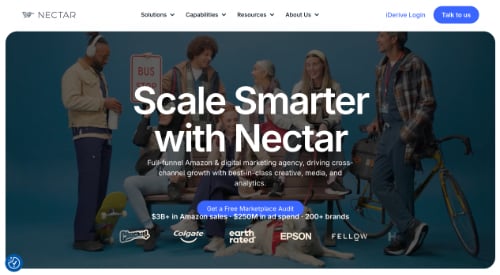
- Nectar has introduced Customer Atlas, a tool that shifts Amazon search advertising from a keyword-focused model to a shopper-centric model. By indexing a brand’s purchase history against Amazon’s audience segments, it allows for highly precise targeting and suppression lists.
Supporting Context & Metrics: The "Compliance and Efficiency" Imperative
The growth of these tools is not happening in a vacuum. It is a direct response to the increasing regulatory burden and the need for operational efficiency.

Sales Tax Complexity: The 2018 Supreme Court Wayfair decision continues to ripple through the industry. FinStackk’s launch of SalesTaxx is a response to the "nexus" problem, where growing brands often struggle to track tax obligations across multiple U.S. states. By connecting directly to accounting platforms like QuickBooks, Xero, and Shopify, SalesTaxx provides real-time monitoring of tax thresholds—a critical requirement for avoiding audits.
Returns Management: The cost of returns remains a top-three drain on retail profitability. Appriss Retail’s new Engage Insights tool addresses the fragmentation of returns data. By unifying claims and return data across channels (online, in-store, and third-party), merchants can identify fraudulent behavior and systemic product issues in real-time, effectively moving from reactive reporting to proactive loss prevention.
Startups and Financial Foundation: Oracle NetSuite’s introduction of QuickStart for startups highlights the democratization of enterprise-grade finance. Providing a free, AI-first platform for early-stage companies allows founders to automate the "boring" but vital tasks of accounting and subscription management, enabling them to focus on product-market fit rather than back-office logistics.
Official Statements and Strategic Vision
The leadership teams behind these releases consistently emphasize the transition from "software as a tool" to "software as a partner."
In announcing the new agentic capabilities, Lightspeed Commerce representatives noted, "Retailers are overwhelmed by the sheer volume of data produced by their POS and online storefronts. The goal isn’t more data; the goal is the intelligence to know what to do with that data at 3:00 AM on a Tuesday."
Similarly, the launch of QwenWork E-Commerce by Alibaba signals a significant investment in the Chinese merchant ecosystem. By providing a single-click "Operations Mode," the platform aims to automate everything from marketing content creation to cross-platform ad buying, reflecting a broader trend where the "merchant as a manager" is replaced by the "merchant as a supervisor of AI agents."

Future Outlook: The Autonomous Retail Era
Looking toward 2027 and beyond, we can expect the "agentic" trend to accelerate. We are rapidly approaching a phase where:
- Autonomous Supply Chains: AI agents will handle not just marketing and search, but also dynamic inventory replenishment and vendor negotiation based on predictive demand models.
- Hyper-Personalized Discovery: As Google’s Universal Cart and similar initiatives gain traction, the traditional, static product page will likely become secondary to personalized, AI-curated shopping feeds that understand a user’s long-term financial goals and product preferences.
- Regulatory Automation: Tools like SalesTaxx will become the industry standard, and we will likely see "compliance as a service" become a baseline expectation for any ecommerce platform, reducing the liability risk for small-to-medium businesses.
The message to merchants is clear: the era of manual configuration is ending. Success in the next cycle of ecommerce will not be defined by who has the most features, but by who can most effectively delegate the "grunt work" of business operations to autonomous, AI-driven systems. As these agents become more sophisticated, the role of the merchant will evolve into that of an architect—designing the workflows, setting the guardrails, and defining the strategy while the agents handle the execution.