EXECUTIVE OVERVIEW
In the modern digital economy, capital flows to those who can capture attention, build instantaneous trust, and convert passive readers into active buyers through the written word. For entrepreneurs, digital agencies, and independent creators, copywriting is not merely a creative outlet—it is the foundational engine of customer acquisition.

Having generated over seven figures online primarily through written channels—ranging from organic blog posts and social media distribution to high-converting email newsletters—industry veterans understand that traditional notions of "eloquent writing" are often a liability. Great copywriting is rarely about artistic flair; it is about absolute clarity, radical conciseness, and measurable return on investment (ROI).
This comprehensive guide breaks down ten foundational strategies that separate struggling writers from elite, high-earning copywriters. By shifting the focus from stylistic perfection to revenue generation, practitioners can transform content into a sustainable growth asset.
1. Deep Customer Research: The Foundation of Conversion
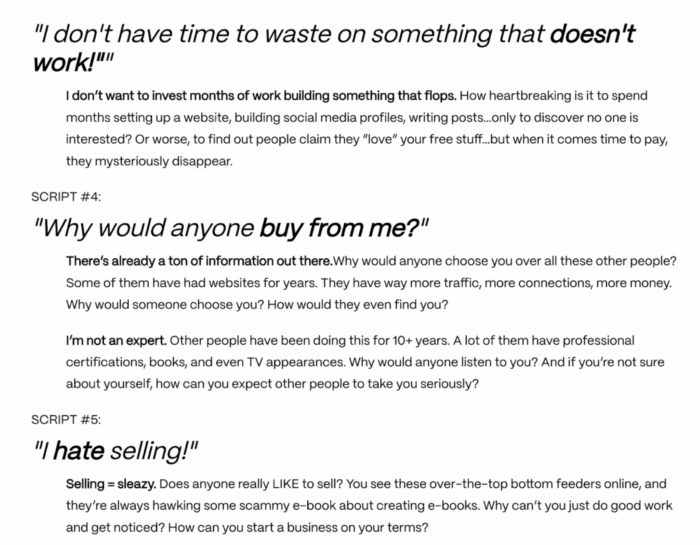
The primary mandate of any copywriter is to intercept a prospect’s attention, diagnose their pain points, present a viable solution, dismantle objections, and guide them seamlessly to a transaction. Achieving this requires moving beyond abstract demographics and deeply understanding the psychological architecture of the target audience: their daily frustrations, silent fears, and ultimate aspirations.
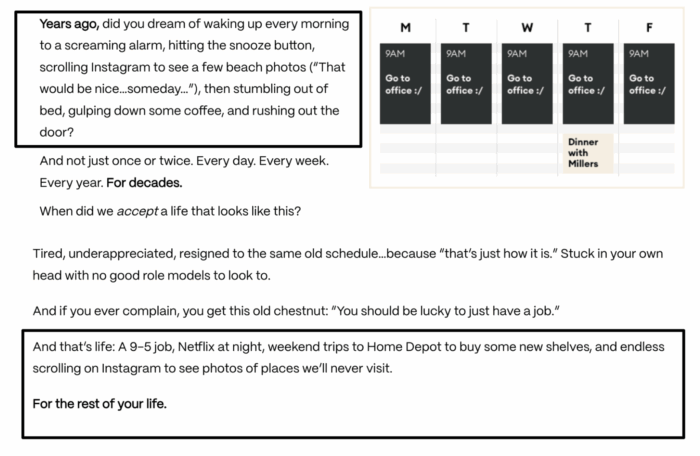
Industry leaders excel by mirroring the exact reality of their ideal buyer. For instance, high-profile marketers do not simply state, "Here is how to make more money." Instead, they recreate the vivid, grinding reality of a corporate employee stuck in a 9-to-5 loop: the evening hours spent scrolling Netflix, the weekend chores at hardware superstores, and the endless, unfulfilling consumption of social media.
[Target Audience's Current Reality]
       │
       ▼ (Mirroring Pain Points)
[Deep Psychological Resonance]
       │
       ▼ (Overcoming Objections)
[Conversion & Customer Acquisition]
When a copywriter accurately reflects a prospect’s current state, the reader immediately recognizes that the product was engineered specifically for them.
Tactical Research Frameworks
When direct customer interviews are impractical due to tight deadlines, professional copywriters utilize alternative research vectors:

- Sales Team Interviews: Consult the organization’s frontline sales representatives to uncover the most frequent customer objections and recurring complaints.
- AI Transcript Analysis: Ingest recorded sales calls or webinar transcripts into large language models like ChatGPT to automatically cluster and synthesize primary pain points.
- Digital Ethnography: Mine niche communities on Reddit and specialized Facebook groups. By analyzing the organic language, slang, and emotional triggers used by consumers discussing competitor products, writers can infuse their copy with authentic, high-converting vernacular.
2. Competitive Intelligence: Reverse-Engineering Winning Ads
Rather than starting every project with a blank page, elite copywriters leverage the multi-million-dollar testing budgets of industry competitors. Competitors have already spent capital determining which hooks, pain points, and offers resonate within the market.
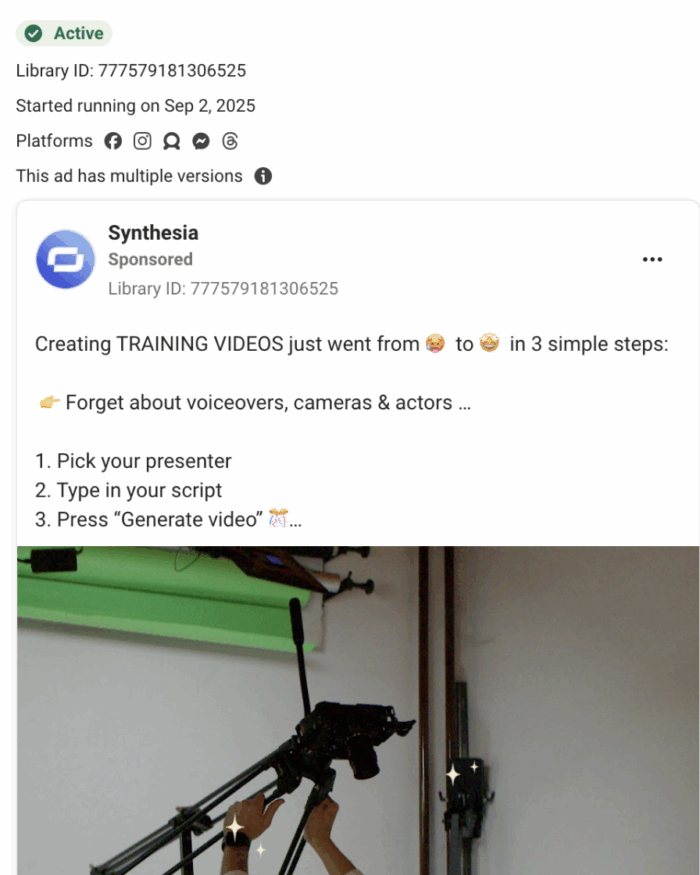
Platforms like the Meta Ad Library and LinkedIn Ad Transparency Center provide unprecedented visibility into competitor strategies. By analyzing which paid campaigns have run continuously over extended periods—such as 30 days or more—marketers can identify proven, high-performing messaging angles. Even when writing long-form email sequences or website landing pages, examining these long-running ads uncovers critical insights into the exact friction points that move markets.

3. Building and Utilizing a Swipe File
The practice of collecting exceptional marketing collateral—known as maintaining a "swipe file"—is a rite of passage for elite direct-response copywriters. A well-curated swipe file captures high-performing headlines, persuasive landing page layouts, and compelling advertisement angles.
Beyond creating a personal archive, professionals frequently reference curated public repositories like SwipeFile.com, maintained by seasoned copywriter Neville Medhora. Studying work validated by industry veterans accelerates a beginner’s pattern-recognition capabilities, training the eye to spot structural excellence long before attempting to draft original campaigns.

4. Establishing a Repeatable Writing Process
Writing exceptional copy on demand requires eliminating friction and writer’s block. Professional copywriters view their craft not as an unpredictable wave of inspiration, but as a systematic assembly of targeted pain points, structural logic, compelling objections, and irresistible Calls to Action (CTAs).
A reliable writing workflow for organic content or sales collateral generally adheres to this sequence:

- Audience & Angle Identification: Defining the core transformation and the primary obstacle standing in the reader’s way.
- Research Synthesis: Pulling relevant data points, customer quotes, and competitor insights into a single scratchpad.
- Drafting the Hook: Capturing initial attention within the first three seconds or sentences.
- Iterative Refinement: Polishing clarity, tightening sentence structures, and ensuring every paragraph drives toward the final conversion goal.
5. Practical Application: Writing for Your Own Ventures
The fastest route to mastering copywriting is applying it directly to proprietary products, services, or side projects. Whether launching an affiliate marketing blog, building a micro-SaaS tool, establishing a dropshipping storefront, or ghostwriting on professional networks like LinkedIn, the stakes change dramatically when personal capital is on the line.
Historically, many six-figure copywriters trace their origins back to running independent ecommerce stores or personal content sites. These ventures teach a vital commercial lesson: writing must be optimized for purchase intent rather than vanity metrics like passive traffic or casual page views. Furthermore, successfully growing one’s own platform provides undeniable case studies and proof of competence when pitching high-ticket clients.
6. Strategic Integration of Artificial Intelligence
While early adopters often misused generative AI to produce generic, uninspired walls of text, modern practitioners use AI as a high-leverage intellectual partner. AI should never generate the core strategic vision of a campaign, but it excels in three distinct operational areas:
- Pain Point Expansion: Prompting language models to list peripheral frustrations associated with a specific niche can jog a writer’s memory and uncover overlooked emotional angles.
- Sentence Clarification and Rewording: When a drafted paragraph feels clunky or convoluted, asking an AI tool to "rewrite this passage with absolute clarity" provides alternative phrasing options that can be further refined.
- Expert Sourcing: When writing about unfamiliar industries, AI can locate real-world case studies, professional quotes, and authoritative discussions from thought leaders on platforms like LinkedIn, lending immediate credibility to the copy.
7. Platform Specialization and Algorithmic Mastery
Different digital distribution channels require fundamentally distinct writing styles. While thought-leadership narratives and punchy insights dominate professional feeds like LinkedIn, structured, highly actionable frameworks perform better in search-optimized blog posts and long-form editorial content.

Mastering the algorithmic nuances and behavioral dynamics of a single platform allows a copywriter to generate superior business outcomes for clients. When a writer can directly correlate their specialized copy to tangible algorithmic reach or organic search rankings, they can justifiably command premium retainers.
8. Measuring the Financial ROI of Copywriting
Subjective feedback from peers is often noisy and contradictory. Elite copywriters anchor their evaluations in hard data, measuring performance through distinct channel-specific metrics:

| Marketing Channel | Primary Metric to Track | Indicator of Success |
|---|---|---|
| Social Ghostwriting | Commenter Demographics | Engagement from high-intent decision-makers (e.g., Directors, C-suite) rather than junior staff. |
| SEO Blog Content | Conversion Tracking (GA4) | Lead form completions and product demos generated from organic search traffic, not raw page views. |
| Sales Pages / Funnels | Direct Attribution Revenue | Cost-per-acquisition (CPA) and checkout completion rates tied directly to specific copy variations. |
9. Leveraging Communities and Peer Feedback
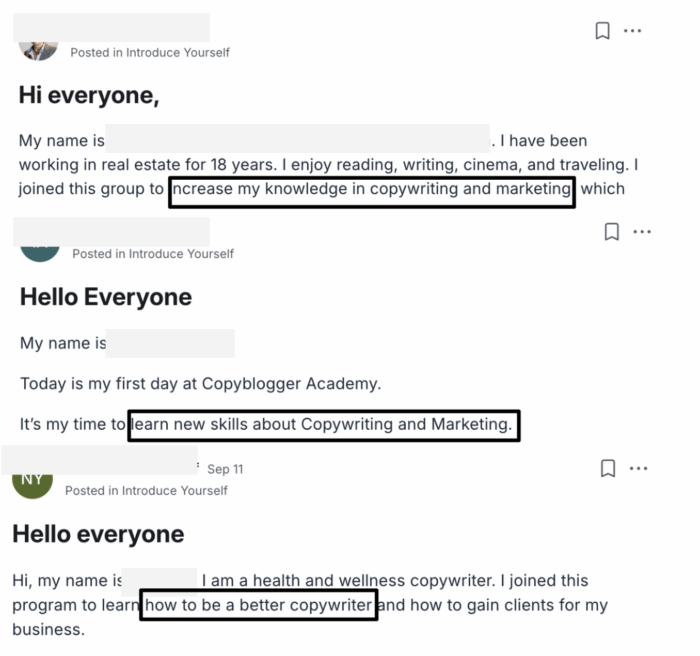
The journey of an independent copywriter can be professionally isolated. Accelerating growth requires plugging into a vetted community of practitioners where work can be critiqued, strategies shared, and high-value referrals exchanged.
However, peer feedback must be filtered intelligently. Input from fellow beginners should be weighed carefully against critiques from proven, six- and seven-figure marketers who have successfully navigated the complexities of large-scale customer acquisition. Access to direct mentorship and continuous accountability remains one of the most reliable predictors of long-term commercial success in the writing industry.
10. The Operating Philosophy: Impatient Action, Patient Results
Adopted from legendary investor Naval Ravikant, the maxim "Be impatient with action and patient with results" serves as the ultimate psychological framework for modern marketers.
┌──────────────────────────────────────────────┐
│  IMPATIENT WITH ACTION                       │
│  • Write daily                               │
│  • Test hooks continuously                   │
│  • Optimize landing pages relentlessly       │
└──────────────────────┬───────────────────────┘
                       │
                       ▼
┌──────────────────────────────────────────────┐
│  PATIENT WITH RESULTS                        │
│  • Trust the compounding effect of copy      │
│  • Ignore short-term metric fluctuations     │
│  • Commit to a multi-year execution horizon  │
└──────────────────────────────────────────────┘
Consistency is the rarest skill in the digital economy. Copywriters who push themselves to execute, test, and refine daily—while maintaining the long-term perspective required for compounding growth—inevitably capture market share and achieve lasting financial independence.

FUTURE OUTLOOK
As artificial intelligence continues to commoditize low-level content creation, the market value of strategic, high-converting copywriting is skyrocketing. Businesses no longer struggle to generate words; they struggle to generate revenue from their digital footprints.
Looking forward, the most successful copywriters will operate less like traditional wordsmiths and more like conversion architects—combining deep consumer psychology, data-driven analytics, and platform expertise. Those who master the fundamentals of direct response, embrace systematic research processes, and align their writing directly with commercial ROI will continue to dictate the terms of customer acquisition in the digital age.