
Executive Overview
In the modern digital economy, the difference between a thriving enterprise and an obscure website often boils down to a single, critical asset: copywriting. Far from being a mere creative exercise in eloquent phrasing, elite copywriting is a sophisticated science of customer acquisition, behavioral psychology, and revenue generation. Industry veterans who have scaled digital marketing agencies and generated seven-figure revenues online consistently point to the written word—deployed across blogs, social media channels, and email newsletters—as the primary engine of their commercial success.
Yet, a persistent misconception plagues the industry: the belief that superior copy requires literary genius. In practice, the inverse is frequently true. The most effective copywriters are relentlessly clear, concise, and focused entirely on a single objective: converting readers into paying customers.

This comprehensive analysis examines the foundational principles, tactical methodologies, and strategic frameworks necessary to transform raw words into scalable revenue. Drawing from deep industry insights and proven direct-response strategies, this guide outlines ten essential rules for mastering the craft of high-ROI copywriting.
Detailed Chronology & Evolution of Digital Copywriting
To understand where copywriting stands today, one must trace its evolution from traditional print advertising to modern, data-driven digital ecosystems.
The Shift from Print to Programmatic
Decades ago, direct-response copywriters relied on long-form sales letters delivered via postal mail or published in print magazines. Feedback loops were slow, requiring weeks or months to measure the success of a campaign through coupon redemptions or direct mail orders.
The advent of the internet compressed these feedback loops into hours and minutes. Blogs and email newsletters emerged as the foundational channels for inbound customer acquisition. Copywriters no longer had to rely solely on intuition; they could track click-through rates, bounce rates, and conversion metrics in real-time.
The Rise of Multi-Channel Ecosystems
As digital real estate expanded from static web pages to social media feeds, search engine result pages (SERPs), and automated email sequences, the role of the copywriter evolved. Today’s top-tier copywriters must understand platform-specific algorithms, user intent, and cross-channel attribution. The modern writing process is no longer just about stringing words together; it is about building a cohesive ecosystem that seamlessly funnels casual readers into loyal, paying customers.
The 10 Commandments of Elite Copywriting
[ Audience Research ] ──> [ Competitive Analysis ] ──> [ Swipe File Integration ]
          │
          ▼
[ Structured Workflow ] ──> [ Strategic AI Deployment ] ──> [ ROI Measurement ]
1. Talk to Your Customers (And Mine Their Reality)
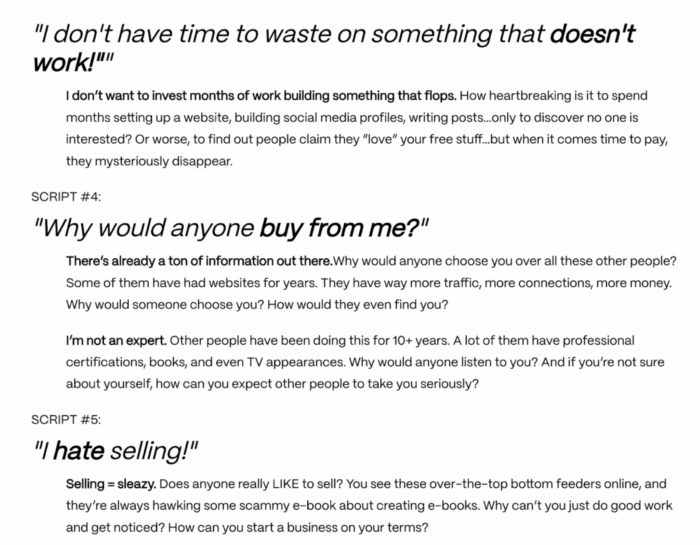
The foundational mandate of any copywriter is to capture attention, build trust, introduce a viable solution, dismantle objections, and execute a conversion. This cannot be achieved in a vacuum.

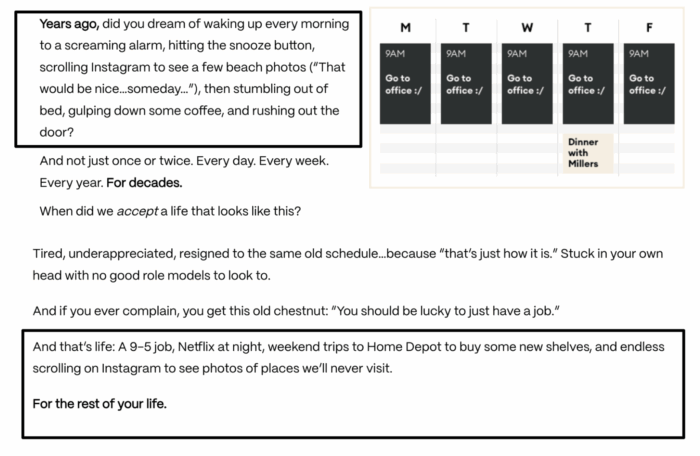
Great copywriters deeply understand their prospects’ internal monologues—their fears, desires, daily routines, and frustrations. Consider how master marketers like Ramit Sethi construct landing pages for courses like Earnable. Instead of leading with generic claims about making money, they mirror the exact pain of the target demographic’s current reality: the monotonous 9-to-5 grind, evening television routines, weekend errands, and endless social media scrolling.
When you articulate a prospect’s reality more accurately than they can themselves, an immediate psychological bridge is built. The reader concludes: "This product was designed specifically for me."

Tactical Research Framework:
- Sales Team Interviews: If direct access to customers is limited, interview the sales representatives who speak to prospects daily to uncover recurring pain points and objections.
- Call Transcript Analysis: Download sales call recordings, convert them to transcripts, and utilize artificial intelligence to synthesize common friction points.
- Community Mining: Dive into Reddit threads and niche Facebook groups where target demographics congregate. Input these forum discussions into language models to extract authentic phrasing, tone, and emotional triggers.
2. Reverse-Engineer Your Competitors
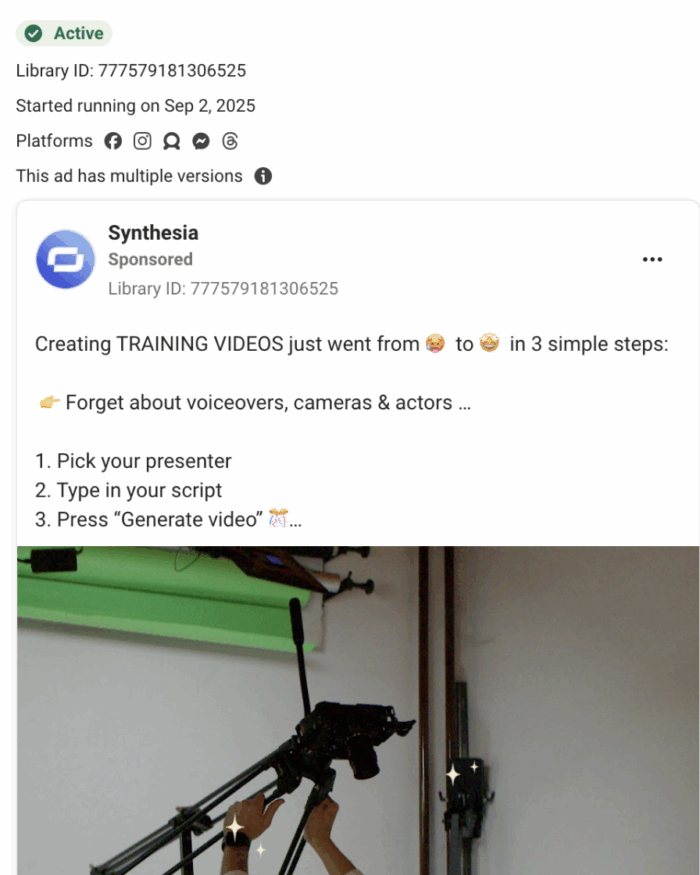
Leading competitors have already invested substantial time, capital, and testing into discovering what copy resonates with the market. Rather than reinventing the wheel, smart copywriters analyze competitor assets to identify winning hooks and angles.

The Meta and LinkedIn Ad Libraries serve as invaluable research tools. By examining which competitor ads have run continuously for weeks or months, copywriters can identify proven pain points. Longevity in paid advertising is a reliable indicator of commercial efficacy. Whether drafting an email sequence or a long-form sales page, competitor ad research provides a masterclass in narrowing down the exact problems that drive conversions.
3. Build and Maintain a Swipe File
Even seasoned professionals rely on external inspiration. Maintaining a curated "swipe file"—a collection of high-performing headlines, persuasive sales pages, and compelling ad copy—prevents writer’s block and exposes the writer to elite structural frameworks.

Platforms like SwipeFile.com, curated by veteran copywriter Neville Medhora, offer pre-vetted examples of exceptional advertising. Studying work endorsed by industry experts accelerates a copywriter’s pattern recognition far faster than attempting to analyze every advertisement independently.
4. Establish a Repeatable Writing Process
Professional copywriting is rarely an act of spontaneous inspiration; it is the systematic assembly of well-placed pain points, persuasive arguments, logical transitions, and irresistible calls to action (CTAs).
Establishing a rigid writing process eliminates writer’s block and ensures no critical conversion element is omitted. For example, a structured blog-writing workflow might look like this:
- Outline & Research: Gather relevant data points, competitor insights, and customer pain points before writing a single sentence.
- Drafting the Core Narrative: Focus on speed and flow during the initial draft, ensuring the narrative arc moves logically from problem to solution.
- Refinement & Polish: Edit for clarity, conciseness, and punchy sentence phrasing.
A formalized process guarantees that every piece of content successfully attracts the right audience, builds authority, and drives measurable commercial outcomes.

5. Practice Relentlessly (With Commercial Intent)
Mastery demands deliberate practice. However, the most productive way to practice copywriting is to deploy it on your own commercial projects rather than writing spec work in a notebook.
- For Aspiring LinkedIn Ghostwriters: Build your own personal brand and audience on LinkedIn. Analyzing which posts drive inbound client inquiries provides invaluable data.
- For SEO Blog Writers: Launch an affiliate marketing website or niche blog to test keyword ranking strategies.
- For Direct-Response Writers: Build a dropshipping store or launch a micro-SaaS tool, then write the landing page copy yourself.
Learning the difference between writing for visitors versus writing for purchase intent is a revelation that separates amateur writers from six-figure commercial copywriters.

6. Embrace AI as a Strategic Co-Pilot
Artificial intelligence should not be used to generate lazy, generic copy from scratch. However, when deployed for specific tactical use cases, AI acts as an extraordinary productivity multiplier:
- Pain Point Research: Prompt AI to analyze target demographics and surface hidden frustrations or objections.
- Sentence Phrasing & Clarity: Paste dense passages into language models and request rewrites optimized for absolute clarity and punchy rhythm.
- Expert Sourcing: Use AI to locate real-world quotes, case studies, and thought-leadership posts from industry practitioners to bolster authority.
7. Master One Platform Deeply
While versatile writers can adapt to various formats, achieving elite status often requires mastering the nuances of a single platform’s algorithm and user behavior.
- LinkedIn: Rewards thought leadership, personal vulnerability, and professional network engagement.
- Blogs: Reward search intent, comprehensive topic coverage, and structured SEO frameworks.
- Email: Rewards intimacy, consistent cadence, and direct response mechanics.
Mastering platform-specific mechanics allows a copywriter to generate superior ROI for clients, thereby justifying premium pricing.
8. Rigorously Measure the ROI of Your Work
Subjective feedback from peers is often contradictory. To truly evaluate copywriting efficacy, practitioners must anchor their evaluations in hard data.

- Ghostwriting Metrics: Do not measure success by vanity metrics like likes and shares. Instead, analyze the profile titles of commenters to ensure the content is attracting ideal enterprise decision-makers.
- Content Analytics: Implement conversion tracking via analytics platforms to tie specific blog posts or organic articles to inbound demo requests and product sign-ups.
- Attribution: Ensure clients utilize post-purchase surveys ("How did you hear about us?") to accurately credit written channels for closed revenue.
9. Join Communities for Collaborative Accountability
Copywriting can be an isolating profession. Navigating the nuances of client acquisition, pricing, and campaign strategy alone slows professional development.
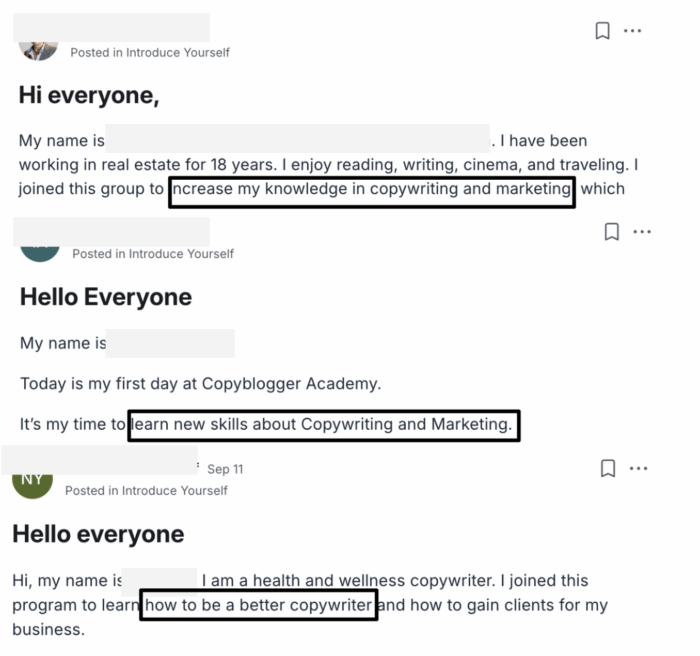
Joining curated communities—such as the Copyblogger Academy—provides direct access to mentorship, peer accountability, and constructive feedback from seasoned marketers who have generated millions in online revenue. Engaging within these ecosystems accelerates career growth by allowing practitioners to learn from the collective successes and failures of their peers.

10. Be Impatient With Action, Patient With Results
Echoing the philosophy of investor Naval Ravikant, elite copywriters understand that consistency is the ultimate compounding asset. Practitioners must push themselves to write, test, and refine daily with extreme urgency, while simultaneously maintaining psychological endurance regarding long-term outcomes. Significant financial and professional breakthroughs in copywriting rarely happen overnight; they are the cumulative result of sustained, disciplined execution over months and years.
Supporting Context & Metrics
To contextualize the commercial impact of mastering these ten principles, consider the following performance metrics observed across modern digital marketing channels:

| Marketing Channel | Primary Metric Focus | Average Conversion Impact |
|---|---|---|
| Email Newsletters | Open Rates & Click-Through Rates (CTR) | Highest direct-to-sale attribution for established lists. |
| Organic Blog Content | Qualified Organic Traffic & Demo Conversions | Generates compounding, long-term customer acquisition assets. |
| Paid Social Ads | Hook Retention & Return on Ad Spend (ROAS) | Provides rapid feedback loops for pain-point validation. |
Data consistently demonstrates that copy infused with authentic customer research outperforms generic, feature-dumping copy by conversion margins exceeding 200%.
Future Outlook
As artificial intelligence continues to saturate the digital landscape with automated content, the value of authentic, highly targeted copywriting is skyrocketing. When information is infinitely abundant, clarity, empathy, and strategic persuasion become scarce commodities.

The future belongs to copywriters who refuse to rely on generic templates, opting instead to deeply understand human psychology, master platform-specific algorithms, and tie their written words directly to commercial revenue. By adopting a rigorous writing process, leveraging AI as a tactical co-pilot, and relentlessly measuring ROI, aspiring copywriters can position themselves at the apex of the digital economy—transforming simple words into undeniable market leverage.