For decades, the mechanics of digital publishing operated on a predictable, albeit fragile, social contract: create authoritative content, optimize it for search engines, and harvest the resulting floods of referral traffic. Search engine optimization (SEO) served as the undisputed lifeblood of publisher discoverability. Google was the primary gatekeeper, and clicks were the universal currency.
Today, that model is collapsing under the weight of shifting consumer habits, platform-level protectionism, and the generative AI revolution.
As younger audiences migrate away from traditional publisher websites toward algorithmic feeds, chat-based AI interfaces, and creator-led channels, the definition of reach is undergoing a fundamental rewrite. Traditional direct traffic and branded search queries are trending downward across the board. More than half of all search queries executed by Gen Z end without a single click, swallowed whole by zero-click search results and conversational AI overviews.
To survive and thrive in this new landscape, modern publishers must abandon their reliance on legacy SEO playbooks. They are no longer competing merely for search engine rankings; they are competing for moments. Success now requires mastering a three-phase discoverability framework—moving from passive algorithmic exposure to active engagement and, ultimately, owned relationships. Publishers must evolve from monolithic information-mongers into agile, creator-friendly ecosystems built on intent-led journalism and economic diversification.
Detailed Chronology: The Erosion of the Traditional Publisher Model
The systematic unbundling of the traditional publishing model has been unfolding over the better part of the last decade, accelerated recently by technological leaps and sweeping behavioral shifts.
Phase One: The Shift to Passive Algorithmic Feeds (Mid-2010s)
Historically, search engines governed the research and comparison stages of the user journey. Users actively sought out information by typing queries into search bars. However, the rise of social media platforms fundamentally altered consumption patterns, shifting users from active seekers to passive scrollers. Algorithmic feeds on platforms like Instagram, TikTok, and later, Google Discover, began dictating what content users saw based on behavioral profiling rather than explicit intent. Publishers failing to adapt to these feeds found themselves invisible, particularly among younger demographics.
Phase Two: The Rise of Walled Gardens (Late 2010s to Early 2020s)
Big tech platforms systematically transitioned into "walled gardens." Recognizing that keeping users within their ecosystems maximized monetization potential, platforms optimized their algorithms to suppress external outbound links. Social networks, professional platforms like LinkedIn, and messaging apps actively penalized posts designed to siphon traffic away from their respective apps. The internet became less website-friendly, and publisher indispensability was called into serious question.
Phase Three: The Generative AI Disruption (Present Day)
The arrival of Large Language Models (LLMs) and conversational search interfaces expedited the structural dismantling of the web. AI-driven answer engines now synthesize information directly on search engine results pages (SERPs), satisfying user intent instantly without requiring a click-through to a source website. Commodity informational content—long the bread and butter of ad-driven publishing—is now generated more quickly and efficiently by AI than by human journalists. Consequently, the top of the funnel has lost its click-value, forcing publishers to confront an existential crisis regarding their value proposition.
Supporting Context & Metrics: The Changing Anatomy of Audience Consumption
Hard data underscores the urgency of this transformation. According to data from the Reuters Institute Digital News Report and Ofcom’s Online Nation reports, audience loyalty and trust in traditional news media are plummeting, while appetite for individual creators surges.
The Generation Gap in Consumption: Teenagers spend an average of just four minutes a day on publisher websites, compared to 19 minutes a day for demographics aged 55 and older. Younger audiences overwhelmingly favor audiovisual and audio formats over text-based journalism.
The Zero-Click Reality: A comprehensive Q3 study by iPullRank reveals that 52.3% of all searches conducted by 18-to-24-year-olds end without a click. For the 55-64 age bracket, this figure stands at a lower 42.7%. Interestingly, while older audiences are significantly more likely to click on advertisements, younger demographics display far less trust and a much higher degree of discernment.
Content Vulnerability: Live sports, weather forecasts, and utility lookups exhibit the highest zero-click rates across the web. For instance, approximately 70% of live sport searches conclude directly on the SERP, thanks to rich widgets and interactive data modules, rendering traditional live-blog reporting models increasingly obsolete in terms of referral traffic.
Official Statements and Industry Insights
As digital ecosystems evolve, platform architects and industry analysts are openly acknowledging the structural shift away from traditional web links.
Google’s John Mueller shed light on the mechanics driving modern aggregation feeds, noting the intentional integration of social media content:
"Recently, we’ve started showing more social media posts in Discover in general, and that’s not just from X, but also from Instagram, TikTok, and several other sources. We’re doing this because we found that users enjoy content written by humans, or essentially shorter versions of content…"
This pivot reflects a broader industry recognition that human-centric, personality-driven content cuts through digital noise far more effectively than corporate, over-optimized text blocks.
Brian Balfour, in his seminal analysis of distribution shifts, emphasizes that value is inextricably tied to platform ecosystems:
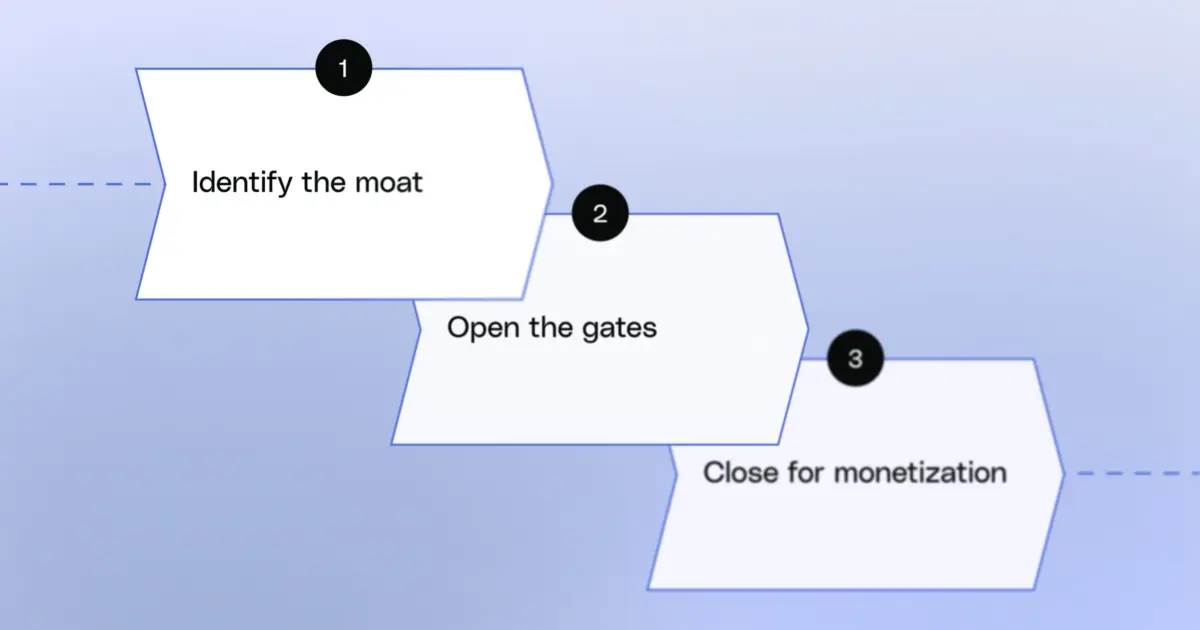
"The moment you leave their system, your value declines. Big tech’s goal is to identify their moat, open the gates, and then close them for monetization."
Publishers are recognizing that fighting this gravity is futile. Instead, they must align their distribution strategies with the platforms where users actually spend their time.
Redefining Discoverability: The Three-Phase Framework
To navigate this new era, publishers must adopt a sophisticated definition of discoverability: the probability that the right person encounters your content at the right moment, regardless of platform, source, or whether they were even looking for it in the first place.
Achieving this requires mastering a three-tiered discoverability framework:
Discovery is predominantly passive. Users are not actively searching for publisher brands; they are looking to be inspired, often unaware of what they are seeking until it crosses their feeds. To capture attention amidst record-low attention spans, content must feature personality, speed, and authentic human perspective. It must literally "break the scroll."
2. Active Discovery (Engaging the User)
Once attention is secured, the journey shifts to active discovery. Because users have been trained not to click blindly, the resulting interaction must offer profound value beyond a simple, surface-level answer. Publishers must solve user problems comprehensively, providing unique insights that automated tools cannot replicate.
3. Owned Discovery (Building the Fanbase)
The ultimate destination is owned discovery. Through daily habits formed via email newsletters, push notifications, "follow-author" features, and robust community teams, publishers can convert casual readers into dedicated brand advocates.
Intent-Led Journalism and Economic Diversification
Topic-led journalism is no longer enough if it merely chases raw search demand. Publishers must transition toward intent-led journalism, constructing stories designed to solve complex human problems.
Furthermore, the traditional economic model—relying primarily on display advertising driven by evergreen SEO articles—is broken. High-quality reporting is more expensive to produce than ever, yet yields diminishing returns in ad impressions. Successful modern publishers, much like The New York Times, have proved that economic diversification is mandatory. Articles can no longer be treated as the sole product.
Key Pillars of the Publisher of the Future:
Embracing the Creator Economy: Rather than competing with individual creators, forward-thinking publishers are putting their egos aside, training their journalists to build personal creator ecosystems, and establishing multi-channel presences on YouTube, TikTok, Reddit, and beyond.
Agile Engineering and Product Teams: Newsrooms must be supported by lightweight, roving AI-powered product and engineering teams capable of launching innovative digital products, interactive tools, and community platforms with speed and scale.
Optimizing for "Search Everywhere": SEO is evolving into "Search Everywhere Optimization." Visibility must be maintained across every digital surface possessing a search function or algorithmic feed, reinforcing brand authority and entity disambiguation.
Future Outlook
The next decade will not belong to the publishers who generate the highest volume of keyword-stuffed articles, but to those who achieve true indispensability.
While traditional search will likely persist as an essential final-touch channel, discovery will increasingly be mediated by creator-led networks, conversational AI assistants, and hyper-personalized feeds. Attribution models will remain messy and imperfect, forcing executives to accept that a portion of modern brand influence cannot be reliably tracked by legacy analytics tools.
Ultimately, the future belongs to publishers imaginative enough to create content worth discovering, and disciplined enough to build the technical systems that ensure it is found. By embracing authentic human expertise, cultivating direct audience relationships, and diversifying revenue streams beyond standard web advertising, publishers can transform the current disruption into an era of unprecedented growth and influence.