By Jon Small
Edited by Dan Bova
October 07, 2026
Executive Overview
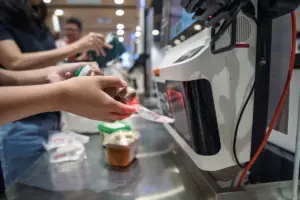
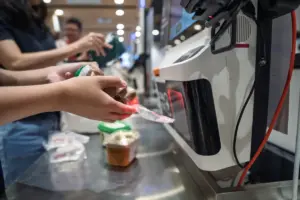
If you have ever stood in a dimly lit grocery store aisle, anxiously waiting for a machine to bark, "Unexpected item in the bagging area," while frantically looking around for an overburdened store associate, you are not alone. For decades, consumers have grumbled through the process of scanning their own goods, wondering why they are paying retail prices to perform unpaid labor. Now, it appears retailers are finally coming to the same realization: self-checkout was a failed experiment.
What was once promised as the ultimate technological leap forward—a seamless, frictionless shopping experience designed to save companies money and slash consumer wait times—has instead devolved into an operational nightmare. According to recent data from the Voice of the Retail Industry Survey, enthusiasm for self-service technology has hit a historic low. Only 36% of the 340 major retailers surveyed plan to invest in self-checkout tech, marking a stark seven-point drop from the previous year. Among all emerging retail technologies, self-checkout stands alone as the least popular and the only one actively losing steam.
Across the retail landscape, a massive retreat is underway. Giants like Walmart, Costco, Target, and Dollar General are pulling back, capping transaction limits, reintroducing traditional cashier lanes, and hiring back human staff. Even Amazon’s much-hyped cashierless "Just Walk Out" technology has hit a massive wall of reality. The self-checkout honeymoon is officially over, and the retail industry is scrambling to clean up the mess.
Detailed Chronology: The Rise and Fall of Self-Service
To understand how the retail sector invested billions of dollars into a technology that both shoppers and executives now despise, we must look back at how the trend evolved over the decades.
The Late 1980s: The First Crack in the Promise
The myth of the lightning-fast self-service checkout was born alongside the technology itself. As early as the late 1980s, industry insiders knew the core premise was flawed. A Kroger executive famously admitted back then that scanning your own groceries actually takes longer than letting a trained cashier do it. The illusion of speed was entirely psychological; because the shopper was physically active—hoisting items, pressing buttons, and hunting for barcodes—the process felt quicker, even if the total elapsed time was significantly longer.
The 1990s and 2000s: The Automation Gold Rush
Despite early warnings, the siren song of labor reduction proved too powerful for corporate boardrooms to resist. Throughout the late 1990s and 2000s, grocery stores, pharmacies, and big-box retailers rushed to install self-checkout kiosks. The pitch to shareholders was simple: replace expensive human labor with automated machines, reduce payroll overhead, and boost profit margins. Consumers were nudged into compliance under the guise of convenience and speed, promised a world where they would never have to wait behind someone writing a paper check again.
The 2010s: The Peak of Frictionless Ambition
By the 2010s, tech optimism reached a fever pitch. Retailers were no longer satisfied with standard self-checkout lanes; they wanted total automation. Amazon introduced its "Just Walk Out" stores, promising a futuristic utopia where ceiling-mounted cameras and weight sensors would track purchases automatically, eliminating cashiers entirely. Concurrently, traditional stores expanded self-checkout footprints to cover entire front-end zones, often reducing staffed registers to just one or two lanes.
The 2020s: The Great Backlash and Reality Check
The cracks in the automated facade widened into chasms during the 2020s. A confluence of factors—including skyrocketing shrinkage (theft), severe operational inefficiencies, and mounting consumer frustration—forced a brutal reckoning.
- 2021: A comprehensive consumer survey revealed that over two-thirds of shoppers regularly encountered frustrating snags, system lockouts, and technical errors at self-checkout machines.
- 2024: Dollar General took a sledgehammer to its automation strategy, pulling self-checkout kiosks entirely out of roughly 12,000 stores to refocus on customer service and loss prevention. Target followed closely behind, capping self-checkout lanes at 10 items and aggressively opening traditional staffed registers.
- 2025–2026: Industry surveys showed a steep decline in executive confidence, culminating in this year’s Voice of the Retail Industry Survey, where self-checkout recorded the lowest investment intent of any retail technology. Even Amazon’s cashierless stores faced heavy scrutiny after embarrassing reports surfaced revealing that the high-tech AI systems relied heavily on more than 1,000 remote workers in India manually reviewing video feeds to process receipts.
Supporting Context & Metrics: Why Self-Checkout Failed
The retreat from self-checkout is not merely a matter of bad customer feedback; it is driven by hard economic realities, operational failures, and security vulnerabilities.
1. The Productivity Myth
Retailers assumed that passing the labor onto the consumer would create a force multiplier for efficiency. In practice, the opposite occurred. Untrained shoppers scan items significantly slower than professional cashiers, who develop muscle memory and specialized techniques for handling produce, bulky goods, and barcodes. Furthermore, shoppers frequently fail to scan items properly—either accidentally or intentionally—leading to bottlenecks when machines flag discrepancies and require human manager overrides.
According to retail productivity analysts, a bank of four self-checkout lanes often requires more direct labor supervision than two traditional cashier lanes, wiping out the intended payroll savings. When a machine locks up because an item was placed incorrectly in the bagging area, an associate must drop what they are doing to scan a override card, leaving the entire system idling.
2. The Shrinkage Crisis (Theft)
Perhaps the most damaging blow to the self-checkout revolution has been the explosion of retail theft, commonly referred to in the industry as "shrink." Self-checkout kiosks created an unprecedented playground for both opportunistic and organized theft.
Common tactics included "banana tricking" (scanning a cheap piece of loose produce while bagging expensive steak or electronics), skipping scans entirely, or placing barcode stickers over high-end items. A study by the Loss Prevention Research Council indicated that stores utilizing heavy self-checkout configurations experienced significantly higher inventory loss rates compared to those with traditional checkout models. The cost of stolen merchandise quickly began to outweigh the savings of reduced payroll, forcing corporate risk managers to pull the plug.
3. Alienating the Consumer Base
For years, retailers ignored customer complaints because self-service adoption numbers ticked upward due to sheer necessity and lack of alternatives. However, consumer resentment quietly fermented. Shoppers grew exhausted by being forced to act as unpaid employees while simultaneously facing increased surveillance, intrusive weight-sensor alarms, and a complete lack of human hospitality. In an era where customer experience is paramount, self-checkout became a primary point of friction, driving loyal customers into the arms of competitors who still offered friendly, face-to-face cashier service.
Official Statements and Industry Responses
The corporate pivot away from self-service has been swift, with major retail executives publicly acknowledging the strategic miscalculation.
- Walmart: As the world’s first trillion-dollar retailer, Walmart has quietly shifted its frontend strategy. While the company still utilizes self-checkout, it has aggressively reallocated staff to manage lanes, assist customers, and maintain physical security oversight, ensuring that automated areas are heavily monitored rather than left entirely to autonomous operation.
- Costco: Known for its fiercely loyal membership base and streamlined warehouse efficiency, Costco has taken a hardline stance on front-end staffing. The wholesale giant has steadily increased human oversight at its self-checkout exits, ensuring strict receipt-checking protocols and adding dedicated personnel to speed up traffic flow and curb membership-sharing or scanning errors.
- Target: Recognizing that the "express" promise of self-checkout was breaking down under the weight of oversized carts, Target placed a strict 10-item limit on its automated kiosks. Concurrently, the company invested heavily in reopening traditional checkout lanes, explicitly advertising the return of cashiers to improve the checkout experience.
- Dollar General: In one of the most dramatic reversals in retail history, Dollar General CEO Todd Vasos announced the removal of self-checkout kiosks from roughly 12,000 stores. The decision was made to combat soaring inventory loss and improve store cleanliness and customer engagement. "We believe our core customer wants and expects human interaction," store leadership noted during financial earnings calls.
Future Outlook: What Comes Next for Retail Front-Ends?
As the great self-checkout retreat solidifies through 2026 and beyond, what does the future hold for the retail checkout experience?
Industry analysts predict a hybrid model that abandons the utopian dream of completely unmanned stores in favor of a balanced, customer-centric approach.
- The Return of the Hybrid Lane: Stores are moving away from massive, isolated blocks of self-checkout terminals. Instead, future store designs will feature a balanced mix of traditional, fully staffed cashier lanes alongside assisted-checkout stations where store associates are immediately available to handle transactions.
- Smart Shopping Carts and Mobile Scanning: Rather than standing at a fixed terminal at the end of a trip, future innovation may focus on smart carts equipped with built-in scales and scanners—allowing shoppers to track their totals as they shop—or frictionless smartphone apps where users scan and pay instantly, bypassing physical queues entirely without the clunky baggage-scale software of traditional kiosks.
- Prioritizing Human Connection: Perhaps the most valuable lesson learned from the self-checkout era is that retail is, at its core, a human-to-human business. As companies realize that automation does not automatically equal profitability, the reintroduction of friendly cashiers is being welcomed not as an outdated expense, but as a crucial competitive differentiator that builds brand loyalty and trust.
The self-checkout experiment taught retailers a hard lesson: just because you can automate a process doesn’t mean you should. As stores across America roll back the kiosks and bring back the cashiers, shoppers can finally look forward to a little less machine friction and a lot more human touch on their next trip to the store.