Executive Overview
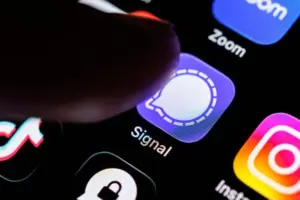
In a significant escalation of the ongoing battle between privacy-focused software and platform-level AI integration, the encrypted messaging app Signal announced a major policy shift on Friday, November 21, 2026. The organization is proactively limiting the ability of users to take screenshots within its mobile and desktop applications.
This decision, framed by Signal President Meredith Whittaker as a necessary defense against the "existential threat" posed by agentic AI, marks a fundamental change in how the app handles screen-level data. As major operating systems—specifically Windows, Android, macOS, and iOS—integrate increasingly autonomous AI agents capable of "reading" and processing user screens in real-time, the fundamental promise of end-to-end encryption is being challenged. Signal’s move is a preemptive strike, intended to prevent the automated harvesting of private conversations by OS-level systems that exist outside the protective, encrypted silo of the Signal architecture.
Detailed Chronology: From Secure Vaults to Open Windows
For over a decade, Signal has served as the gold standard for secure communication, relying on robust, open-source end-to-end encryption protocols that ensure only the sender and the recipient can access message content. However, the architectural landscape of computing has shifted dramatically in 2026.
The Rise of Agentic AI
The shift began in earnest with the deployment of "agentic" AI—intelligent software capable of performing complex tasks across applications without direct user intervention. These agents require context to function, and the most accessible source of that context is the user’s display. By capturing screen content, these agents can summarize chats, extract calendar events, or suggest replies.
The Vulnerability Gap
Signal identified a critical vulnerability in this paradigm: once the AI agent captures an image of a message, that data leaves the secure environment of the Signal app. It is then ingested by local databases or remote cloud servers managed by the OS provider (Microsoft, Google, or Apple). In these environments, the data is subject to the privacy policies of the OS provider, effectively bypassing the encryption that Signal spent years perfecting.
The Policy Shift
On November 21, 2026, Signal moved to extend its existing Windows screenshot-prevention feature to its mobile platforms. By blocking screen captures, the organization is attempting to "black out" its interface from the eyes of AI agents, ensuring that the content of private conversations remains within the encrypted vault of the application.
Supporting Context & Metrics: The Mechanics of the Threat
To understand why Signal is taking such a drastic step, one must examine how modern operating systems are being re-engineered to facilitate AI.
The "Screen-Scraping" Problem
Modern AI agents rely on a continuous stream of visual data to remain "contextually aware." If an AI agent is tasked with organizing a user’s life, it needs to know what is happening in the background of every open window. Under current OS architectures, an agent has the permission to "see" everything on the screen.
Data security experts have long warned that this creates a "leaky" ecosystem. If a user is discussing sensitive medical information or classified business intelligence, the AI agent may capture that text as a background process. If that data is then uploaded to a cloud server to "improve model performance," the user has inadvertently surrendered the privacy of their conversation to a third party.
The Limits of Encryption
Encryption protects data in transit and at rest, but it does not protect data when it is "in use" on the screen. This is the "End-to-End Encryption Gap." Signal’s encryption prevents a malicious actor from intercepting a packet of data as it travels across the internet, but it cannot prevent a user’s own operating system from taking a digital photograph of that data once it is decrypted for the user to read. By limiting screenshots, Signal is attempting to close this logical loophole.
Official Statements: Meredith Whittaker’s Stance
Meredith Whittaker, President of Signal, has been the most vocal critic of the industry’s pivot toward intrusive, agentic AI. Her statements in June and again this November reflect a deep-seated distrust of the current trajectory of Big Tech.

In her recent address, Whittaker emphasized the loss of control inherent in the new OS paradigm:
"Now, in service of AI agentic capabilities, your sensitive data is being captured, stored, and made accessible to whatever local database or remote server an OS-level AI agent is using at that moment. All of this is outside of Signal’s control once the data has been captured, and it imperils the privacy of all the participants in a conversation."
Whittaker further clarified that while the app allows users to toggle these settings off, doing so is effectively a surrender of the app’s core mission. She noted:
"If you choose to bypass these protections, you are effectively breaking the privacy guarantees we have worked to build. This is an incomplete solution, and we recognize that, but we are facing a landscape where the operating system itself has become a vector for surveillance."
Future Outlook: A Cat-and-Mouse Game
The move to block screenshots is not a silver bullet; rather, it is the opening salvo in a long-term conflict between privacy-centric development and the "convenience-first" design of modern AI.
The Inevitable "Sneaky" Workarounds
Signal acknowledges that this is an incomplete defense. AI agents can potentially access data through other, more invasive methods, such as accessibility APIs or screen-reading hooks that operate at the kernel level of an operating system. As OS providers continue to integrate AI more deeply into the foundation of their software, the line between "useful feature" and "spyware" will continue to blur.
Potential Industry Backlash
It is highly probable that developers at Apple, Google, and Microsoft will view this move as an attempt to "break" the functionality of their platforms. We may see a future where OS providers attempt to block apps that try to block system-level features, creating a scenario where users are caught in the middle of a struggle between the application they trust and the device they own.
The Necessity of Hardware-Level Privacy
As we look toward 2027 and beyond, the discussion will likely shift from software-based protections to hardware-level privacy. If the OS can no longer be trusted to keep a screen private, we may see the rise of privacy-hardened devices—phones and laptops that feature "privacy switches" for cameras, microphones, and screen-sharing, physically disconnecting these components from the system bus when not in use.
Conclusion: The Cost of Convenience
Signal’s decision serves as a stark reminder to the public: the convenience of having an AI assistant that "knows everything" comes at a steep price. By opting into these AI ecosystems, users are trading their private, encrypted spaces for the utility of automated agents. Signal is betting that there is still a significant segment of the population that values the integrity of their private conversations more than the convenience of an AI that is always watching.
As the digital landscape evolves, the definition of privacy is narrowing. Today, it is about controlling the screen; tomorrow, it may be about controlling the very environment in which our digital identities exist. For now, Signal remains the last line of defense, struggling to keep the lights off in a room that the rest of the world is rushing to illuminate.