Executive Overview: A Landscape in Flux
The media landscape is currently undergoing a profound period of recalibration, characterized by high-profile talent migrations, the consolidation of legacy news brands, and aggressive expansion strategies in digital distribution. As we navigate the fourth quarter of 2026, the industry is witnessing a shift away from the "double-duty" talent models of the past two decades toward a more focused, platform-specific approach to news delivery.
From the corridors of NBC News to the boardrooms of Skydance and the editorial desks of CNBC, media organizations are betting on specialization. Whether it is the strategic departure of Willie Geist from MS NOW or the rapid, multi-market expansion of Newsmax2, executives are clearly prioritizing brand identity and operational efficiency. This report synthesizes the major structural shifts, leadership appointments, and institutional anniversaries defining the current news cycle.
Detailed Chronology: Key Industry Developments
The Geist Transition: Closing an Era at MS NOW
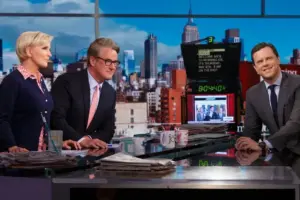
After an illustrious 20-year tenure, Willie Geist has officially announced his departure from MS NOW. Geist, who holds the distinction of being the final on-air personality to navigate the complexities of dual roles across the cable network and NBC News following the 2025 spin-off into the Versant media company, will now pivot to a singular focus.
Geist’s departure is more than a mere contract renewal; it signifies the end of a transitional era for NBCUniversal’s news assets. By focusing exclusively on Sunday Morning, Today, and broader NBC News platforms, Geist aims to consolidate his influence within the network’s flagship programming. His farewell on Morning Joe was marked by a palpable sense of nostalgia, as he acknowledged the foundational role the show played in his professional ascent. "This is a bittersweet goodbye to Joe, Mika, and the place that made possible everything else in my career," Geist remarked.
Skydance, CBS, and CNN: The Independence Doctrine
At the New York Times DealBook Summit, Skydance CEO David Ellison addressed lingering industry anxieties regarding the editorial autonomy of his media portfolio. With both CBS News and CNN now under the Skydance umbrella, concerns regarding "synergy" at the expense of journalistic independence have been prevalent.
Ellison was unequivocal in his defense of the status quo. He affirmed that both outlets will continue to operate as distinct entities, maintaining separate editorial boards and journalistic mandates. However, he left the door ajar for future operational efficiencies, noting that "some news sharing" might be feasible without compromising the integrity of either organization. This "separate-but-collaborative" model represents a delicate balancing act for Skydance as it seeks to monetize its assets without triggering a crisis of institutional credibility.
Distribution Expansion: The Rise of Newsmax2
The over-the-air (OTA) landscape is becoming increasingly competitive, a reality underscored by the new distribution agreement between Newsmax and HC2 Broadcasting. By securing carriage on 112 stations, Newsmax2 has effectively solidified its presence in the top 40 U.S. television markets, capturing 57 of the top 60. This strategic expansion is designed to bypass the traditional cable "walled garden," reaching cord-cutters and non-traditional viewers through an accessible, free-streaming format.
Supporting Context & Metrics: Talent Acquisition and Editorial Shifts
The CNBC Recruitment Wave
CNBC is currently executing an aggressive talent acquisition strategy aimed at strengthening its editorial and reporting capabilities. The network’s recent hiring spree reflects a broader trend of poaching experienced journalists from legacy competitors.
- Ali Bauman: Moving from CBS News, where she served as a Northeast correspondent, Bauman joins CNBC as a general assignment reporter.
- Kylie Cohu: Appointed as a senior equity analyst and correspondent, Cohu brings critical analytical depth to the network’s market-facing coverage.
- Editorial Expansion: The network has also bolstered its digital and podcasting ranks. Francesca Levy has been named director of podcasts and digital shows, while CNN alumni Gary Cotton and Penelope Patsuris have joined the editorial desk as homepage and weekend editors, respectively. These appointments, coupled with the recent hiring of senior data visualization editor Marshall Ritzel, suggest that CNBC is prioritizing data-driven storytelling to differentiate its digital output.
CNN’s Global Pivot
CNN continues to invest in its international and business-focused reporting. The announcement that Shery Ahn will join CNN en Español as an anchor and correspondent is a clear indicator of the network’s focus on the growing Hispanic business demographic. Ahn’s pedigree—coming from a prominent role at Bloomberg Television in Tokyo—positions her to bridge the gap between global economic trends and regional Spanish-language markets, effectively broadening the scope of the network’s financial analysis.
Specialized Programming: The "Dr. Gupta" Phenomenon
In a move that highlights the competitive nature of medical reporting, MS NOW has launched On Call with Dr. Vin Gupta, an exclusive series for its membership platform. By offering members direct access to medical expertise, the network is testing a subscription-based, community-driven content model. Interestingly, this move invites direct comparisons with CNN’s veteran chief medical correspondent, Dr. Sanjay Gupta. The naming convention—while coincidental—serves to heighten the brand recognition of the medical segment within the news cycle, suggesting that medical expertise has become a premium asset in the current news climate.
Official Statements and Institutional Milestones
45 Years of ‘This Week’
The institutional longevity of ABC News’ This Week was celebrated on November 15, marking 45 years of public affairs programming. The festivities at the Jefferson Hotel served as a reminder of the enduring power of legacy political talk shows in an era of fragmented media consumption.
ABC News president Almin Karamehmedovic, alongside anchors George Stephanopoulos, Martha Raddatz, and Jonathan Karl, emphasized the program’s role as a "town square" for American political discourse. The event underscored a key industry truth: while digital platforms are growing, the authority of long-running, prestige television brands remains a cornerstone of the network news business model.
Recognizing Excellence: The Fourth Estate Award
The Washington, D.C. gala honoring Martha Raddatz with the National Press Club’s Fourth Estate Award served as a poignant counterpoint to the rapid churn of the modern news cycle. The recognition of Raddatz’s decades of reporting, witnessed by a cohort of her ABC News peers, highlighted the importance of cultivating institutional memory. In an industry often fixated on the "next big thing," the celebration of Raddatz served as an anchor, grounding the network’s current team in the standards of excellence defined by its senior correspondents.
Future Outlook: Trends to Watch
As we look toward 2027, the media sector faces three primary challenges:
- The End of the Generalist Model: The departure of figures like Willie Geist from multi-network roles signals that "generalist" news talent is becoming less viable than "specialist" talent. Networks are increasingly demanding that on-air personalities align themselves with specific brand identities to foster deeper audience loyalty.
- Editorial Integrity vs. Consolidation: As Skydance continues to integrate its assets, the industry will be watching closely to see if "editorial independence" can be maintained under the pressure of corporate cost-cutting. Any perceived erosion of independence at CBS or CNN will likely be met with intense scrutiny from regulators and the public alike.
- The Digital-First Mandate: The hiring patterns at CNBC and the expansion of Newsmax2 demonstrate that the battle for the future of news is being fought on two fronts: digital engagement (podcasts, data visualization, and membership platforms) and widespread, low-friction accessibility (OTA broadcasting).
The industry is entering a phase where content is no longer enough; the delivery mechanism—be it a subscription-based medical series or a high-reach OTA channel—is now as vital to survival as the quality of the journalism itself. As the "revolving door" of talent continues to spin, the organizations that successfully blend legacy authority with digital agility will define the next chapter of the American news media.