Executive Overview
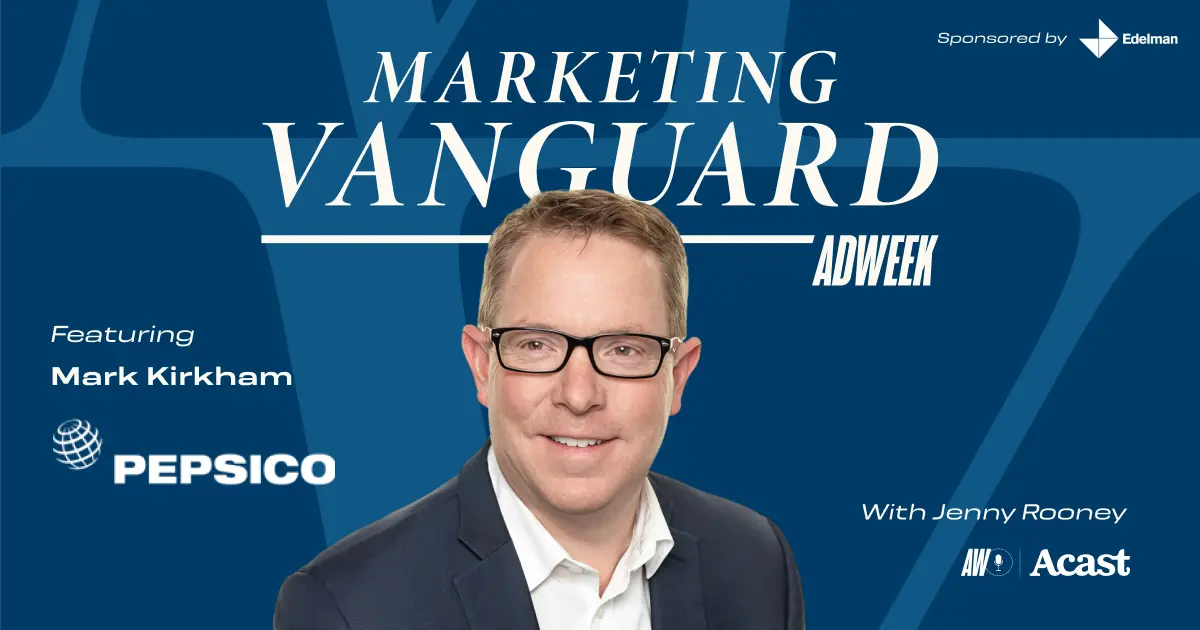
The modern marketing landscape is no longer governed by the steady, predictable rhythms of five-year strategic plans. According to Mark Kirkham, Chief Marketing Officer of PepsiCo Beverages U.S., the entire velocity of global commerce has compressed. Disruption cycles that once took half a decade to materialize now arrive, peak, and transform in as little as five to ten months.
In a high-stakes conversation hosted by Jenny Rooney as part of the Marketing Vanguard live vidcast series from Cannes Lions—presented in partnership with Edelman—Kirkham laid bare the operational realities facing today’s top brand architects. The dialogue cut straight to the core of contemporary brand stewardship: AI has graduated from theoretical tech hype to foundational operational infrastructure, consumer attention is hyper-fragmented, and the traditional playbook of showing up everywhere with everything is officially dead.
For multinational beverage giants like PepsiCo—managing iconic powerhouses such as Pepsi, Mountain Dew, Starry, Bubly, and Mug—this hyper-acceleration demands a profound shift in mindset. Kirkham argues that industry gatherings like Cannes Lions are only as valuable as the intention behind them. In an era where volume no longer equates to impact, modern marketing leadership requires radical curation, aggressive cross-pollination of outside business models, and an uncompromising commitment to peer-level, honest debate.
This report breaks down Kirkham’s core insights from Cannes Lions, examining how one of the world’s most recognizable beverage portfolios is navigating artificial intelligence, crushing disruption timelines, and redefining the purpose of executive collaboration.
Detailed Chronology: Insights from the Cannes Lions Front Lines
Recorded live against the backdrop of the advertising industry’s most prestigious annual gathering, the interview with Kirkham mapped out a shifting paradigm for brand management. Through four distinct pillars of discussion, the conversation charted a roadmap for modern CMOs tasked with steering legacy portfolios through digital-first, fast-paced consumer markets.
[01:58] Curated Intent: Why Quality and Curation Triumph Over Scale at Cannes
For years, the narrative surrounding festivals like Cannes Lions centered on sheer volume—more delegates, more agency parties, and record-breaking numbers of award submissions. Kirkham views the recent intentional downsizing and structural compression of the festival not as a contraction of the industry’s influence, but as a vital evolutionary correction.
"Showing up everywhere and submitting everything is no longer a viable strategy," Kirkham emphasized during the discussion.
In a marketplace saturated with noise, the modern CMO must master the art of deliberate presence. When brands attempt to cast an infinite net, message dilution is inevitable. Kirkham contends that a leaner, more intentional festival experience fosters sharper work, deeper conversations, and higher-value networking. By paring down extraneous activations and focusing solely on high-impact engagement, marketing leaders can filter out the superficial buzz and concentrate on ideas that fundamentally alter consumer behavior.
This philosophy directly mirrors how PepsiCo approaches its broader brand architecture: every dollar, every campaign, and every cultural touchpoint must earn its right to exist in the consumer’s field of vision.
[05:21] The Five-to-Ten-Month Disruption Cycle
Perhaps the most arresting revelation of the session was Kirkham’s assessment of how rapidly the industry’s operational tempo has shifted.
"Marketing used to move through five-to-ten-year disruption cycles," Kirkham noted. "Now, it feels more like five-to-ten months."
This dramatic compression shatters the viability of traditional annual strategic reviews and static brand plans. When consumer preferences, platform algorithms, and macroeconomic variables shift fundamentally twice a year, marketing leaders cannot afford to operate in isolated silos or rely on retrospective data.
To combat this volatility, Kirkham advocates for an ecosystem-wide approach. CMOs must maintain continuous, real-time dialogues with agency partners, retail ecosystems, technology platforms, and industry peers. Waiting for an annual conference to recalibrate strategy is an invitation to obsolescence. Agility is no longer a corporate buzzword; it is the fundamental baseline for brand survival.
[07:36] Collective Evolution: Beyond the Limits of Individual Learning
With 15 years of tenure across PepsiCo’s global and regional leadership ranks—spanning Western Europe, sports marketing, juice, energy, and flagship carbonated soft drinks—Kirkham is no stranger to the complexities of international brand management. Yet, he maintains that personal professional development is insufficient if it remains trapped within an individual’s workflow.
"The day I stop learning is the day I stop being a marketer," Kirkham stated. "But the day marketers stop sharing with each other is the day the industry stops learning."
Platforms like the Marketing Vanguard series exist precisely to bridge this gap. Kirkham stresses that executive growth requires friction—specifically, honest peer debate, healthy professional tension, and the willingness to unpack shared failures. In an insular corporate environment, executive echo chambers can easily form. Breaking those chambers requires platforms where leaders can engage in unfiltered discourse about the friction points of modern commerce, from navigating retail media networks to balancing performance marketing with long-term brand equity.
[08:47] Cross-Pollination: Importing New Instincts from Diverse Business Models
To keep legacy teams sharp, Kirkham believes large organizations must actively study and integrate operational methodologies from entirely different business models. During the session, he pointed to disruptive, digitally native brands like Poppi as case studies in how modern consumer products build affinity through organic social mechanics rather than traditional top-down media spends.
Rather than dismissing insurgent brands, legacy giants must invite those perspectives into the room. Bringing in talent and insights from brands forged in the crucible of organic social media forces established organizations to rethink their pacing, narrative structures, and engagement loops.
Different business models demand different instincts. By exposing traditional beverage teams to the lightning-fast reflexes and community-first architectures of modern disrupters, PepsiCo ensures its portfolio maintains the agility of a startup paired with the scale of a global enterprise.
Supporting Context & Metrics: The PepsiCo Ecosystem and Industry Realities
To fully appreciate the gravity of Kirkham’s insights, it is necessary to examine the operational scale of PepsiCo Beverages U.S. and the broader macroeconomic realities shaping the fast-moving consumer goods (FMCG) sector.
The Scale of PepsiCo Beverages U.S.
As Chief Marketing Officer of PepsiCo Beverages U.S., Kirkham oversees an extraordinarily diverse portfolio of billion-dollar brands. This includes:
- Core Carbonates: Pepsi, Mountain Dew, Mug.
- Modern Refreshment & Health-Conscious Offerings: Starry (the rapidly scaling citrus lemon-lime challenger brand), Bubly (sparkling water).
- Extended Portfolio Synergies: Working closely alongside PepsiCo’s broader beverage and convenient foods ecosystem, which historically coordinates with powerhouses like Gatorade, Tropicana, and Quaker.
Managing this portfolio requires balancing legacy equity with high-speed digital innovation. For instance, the successful rollout and market penetration of Starry required navigating a notoriously crowded lemon-lime category dominated by entrenched legacy players. Achieving breakthrough success in such a landscape demands precisely the kind of intentional, non-traditional marketing architecture Kirkham champions.
The AI Imperative: From Hype to Operational Reality
A recurring theme underlying Kirkham’s discussion on compressed disruption cycles is the maturation of artificial intelligence. While 2023 and 2024 were characterized by speculative generative AI experiments, 2026 marks the era of deep operational integration.
CMOs are no longer asking if AI can generate creative assets; they are deploying machine learning algorithms to optimize supply chain visibility, personalize hyper-local programmatic media buys, predict real-time consumer sentiment shifts, and compress content production timelines from weeks to hours. This operational shift directly drives the five-to-ten-month disruption cycles Kirkham outlines—when technology enables infinite variations of creative output at unprecedented speeds, consumer expectations evolve synchronously.
Official Statements & Key Quotes
To contextualize the mindset of one of the industry’s leading executives, several core philosophies articulated by Mark Kirkham serve as strategic guideposts for the modern marketing community:
-
On Industry Events:
"Showing up everywhere and submitting everything is not the strategy. The stronger move is knowing what deserves attention and making those moments count."
-
On the Velocity of Change:
"Marketing used to move through five-to-ten-year disruption cycles. Now it feels more like five-to-ten months. That changes what leaders need from the industry. Annual check-ins are not enough."
-
On Professional Community:
"The day I stop learning is the day I stop being a marketer, but the day marketers stop sharing with each other is the day the industry stops learning."
-
On Organizational Diversity of Thought:
"Bringing in talent from a brand built through organic social forces a large organization to see brand building differently. It is not about one model being better than another. It is about exposing teams to different instincts, different speeds and different ways of earning attention."
Future Outlook: What the 5-Month Cycle Means for the Next Era of Marketing
As the marketing industry looks toward the remainder of the decade, Kirkham’s analysis provides a clear diagnostic of what separates thriving global brands from those struggling to stay relevant.
1. The Death of the Static Five-Year Plan
Strategic planning must evolve from rigid, multi-year roadmaps into dynamic, modular frameworks. Brand teams must build organizational muscle that allows for quarterly strategic pivots without sacrificing the long-term emotional equity of core trademarks like Pepsi or Mountain Dew.
2. Radical Curation in Media and Events
The era of corporate bloat—manifested in massive festival delegations, sprawling agency rosters, and scattershot media plans—is economically and strategically unsustainable. Brand leaders will increasingly favor hyper-focused, high-impact engagements where ROI is measured not in impressions or attendance figures, but in deep consumer resonance and business velocity.
3. Institutionalizing Agility Through Cross-Pollination
Large multinational corporations must continue breaking down internal silos by actively importing talent and methodologies from direct-to-consumer (DTC) startups, digital-native creators, and organic social ecosystems. The synthesis of global supply chain muscle with startup-speed responsiveness will define the market leaders of tomorrow.
Ultimately, Kirkham’s message from the Cannes Lions stage is a call to arms for the marketing profession. In a world moving at breakneck speed, passive observation is a liability. Only through intentional curation, relentless peer-to-peer collaboration, and a fearless embrace of new operational models can CMOs stay ahead of the curve.