
Executive Overview
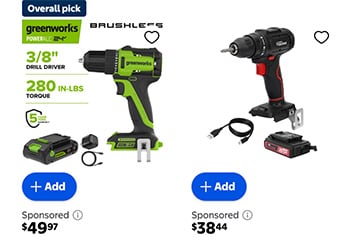
A recent search for “cordless drill” on Walmart’s e-commerce portal serves as a perfect microcosm for the tension defining modern digital retail. Upon hitting enter, the shopper is greeted not by a curated list of top-rated or highest-converting tools, but by a sprawling, Greenworks-sponsored brand module. The following three product listings are also sponsored slots. An organic result—the product of the retailer’s own proprietary search algorithm—does not appear until the seventh position.
This layout is not an anomaly; it is the frontline of a quiet but high-stakes struggle playing out across the enterprise e-commerce landscape. As retailers pivot toward "Retail Media Networks" (RMNs) to bolster margins, they are effectively turning their digital shelves into advertising real estate. The resulting dilemma is existential: where does the art of merchandising end, and the science of ad-driven media begin? This article explores the governance, organizational friction, and strategic necessity of balancing the customer experience with the lucrative demands of retail media.
Detailed Chronology: The Evolution of the Digital Shelf
To understand the current tension, one must look at the shift in the e-commerce business model. Historically, a retailer’s primary objective was simple: maximize conversion. If a shopper searched for a drill, the retailer utilized a relevance-based algorithm to serve the best possible matches—those most likely to satisfy the shopper’s intent and lead to a purchase.
However, the rise of the "Retail Media" era has fundamentally altered this hierarchy. Retailers have realized that their first-party data and high-intent traffic are assets as valuable as the products themselves.
- The Early Era (Organic Dominance): Retailers focused on user experience (UX) and conversion rate optimization (CRO). The digital shelf was a meritocracy; the best products rose to the top.
- The Sponsored Introduction: Retailers began introducing "sponsored" listings as a subtle way to subsidize platform costs. These were typically clearly marked and limited in scope.
- The Auction-Based Explosion: Following the success of Amazon Advertising, major retailers like Walmart, Target, and Kroger launched robust RMNs. These platforms moved away from flat-fee placements to dynamic, auction-based bidding systems.
- The Saturation Point: As seen in the recent Walmart drill search, we have entered an era where sponsored content can dominate the "above the fold" experience, potentially burying organic results in favor of those backed by the highest ad spend.
This evolution is not inherently malicious, but it has created a structural imbalance. When advertising budgets dictate visibility, the retailer is no longer just a merchant; they are a media publisher.
The Organizational Friction: Merchandising vs. Media
The central conflict in retail media is not just technical; it is organizational. In most large retail corporations, the merchandising team and the retail media team operate as distinct silos with divergent sets of Key Performance Indicators (KPIs).
The Merchandiser’s Mandate
The merchandising team is tasked with the traditional metrics of retail: conversion rate, unit sell-through, margin, and customer satisfaction. Their goal is to ensure the right product reaches the right customer at the right time. They view search results as a sacred space where the user’s intent must be met with the most relevant product possible.
The Media Team’s Mandate
Conversely, the media team is measured by ad revenue, share of voice, and advertiser retention. Their incentive is to maximize the yield of every available ad slot. They are under constant pressure to prove that the RMN is a high-margin growth engine for the business.
The Structural Disadvantage
This creates an internal power struggle. Ad revenue is immediate, highly visible, and easily attributed. When a brand pays for a top spot, the ROI is clear on a dashboard. Conversely, the cost of a "displaced" organic product is invisible. If a superior organic product is pushed to the second page, the loss in conversion is diffuse and difficult to tie directly to a specific ad unit.
Because the media team’s wins are loud and the merchandiser’s losses are quiet, the media side often holds a structural advantage in corporate governance. If left unchecked, this creates a "tragedy of the commons" where the overall site experience degrades in pursuit of short-term ad revenue.
Supporting Context: The Relevance Boundary
Retailers must grapple with the fact that more inventory does not necessarily equal more value. Sherry Smith, President of Retail Media at Criteo, emphasizes that the strategy must be rooted in utility. "Retailers need to be thoughtful about where and how they introduce advertising," Smith noted. "More inventory doesn’t necessarily mean more value. The focus should be on placements that perform for advertisers, remain useful to shoppers, and create incremental value for the retailer."
The "Relevance Boundary" is the critical concept here. If a retailer is smart about its auction mechanics, the advertising can actually enhance the shopping experience. For example, if a shopper searches for "cordless drill" and is shown a high-quality, relevant drill that happens to be sponsored, the shopper is satisfied, the advertiser is happy, and the retailer gains revenue.
The conflict arises when the auction mechanism prioritizes a less relevant, lower-quality product simply because that manufacturer has a higher marketing budget. This is the point where the retailer risks long-term brand equity for short-term gain. If the shopper stops trusting the search results—if they feel that the results are "pay-to-play" rather than "best-in-class"—the long-term impact on customer lifetime value (CLV) could far outweigh the ad revenue gained in the short term.
Official Statements and Industry Perspectives
Industry leaders are increasingly focusing on the "Retail Media 2.0" phase, which moves away from pure volume and toward signal-based advertising.
According to Smith, "The key is making sure media adds to the experience rather than getting in the way of it or simply replacing organic discovery. At the end of the day, relevance matters. If the advertising is useful to the shopper, it’s much more likely to create value for everyone involved."
This perspective is gaining traction across the C-suite. Retailers are realizing that they cannot treat their websites like billboards. They must treat them like curated marketplaces. When advertising becomes an intrusion, the consumer—who is now more ad-literate than ever—will simply navigate to a competitor or, in the case of general merchandise, return to Amazon.
Future Outlook: Governance and The Path Forward
To reconcile these competing interests, retailers are moving toward a framework of strict governance. The "Rules for Sharing" are becoming more formalized:
- Relevance-First Filtering: Before an ad enters the auction, it must pass a relevance threshold determined by the merchandising team. If the product doesn’t meet the search intent, it shouldn’t be eligible for the spot, regardless of the bid amount.
- The "Organic Floor": Retailers are increasingly setting a minimum number of organic results that must appear before or within a set block of sponsored listings to ensure the site remains a discovery tool.
- Cross-Functional Attribution: Progressive retailers are moving toward unified dashboards where the impact of ads on organic conversion is transparently tracked. This forces the media team to be accountable for the "displacement cost" of their ads.
- Customer-Centric UX Testing: Rather than relying solely on revenue metrics, retailers are employing A/B testing on site layout to measure how ad density affects long-term bounce rates and repeat purchase behavior.
Conclusion: The Strategic Integration
Retail media is undoubtedly one of the most profitable opportunities for modern retailers, providing a high-margin stream that can offset the razor-thin margins of traditional retail. However, the future of the industry depends on a delicate balancing act.
Retail media provides another way for retailers to create value from assets they already possess: digital traffic, shopper data, and high-intent purchase moments. The opportunity is at its peak when advertising functions as a value-add to the commerce business, rather than a replacement for it. As the industry matures, the retailers that win will not be those who squeeze the most ad dollars out of every pixel, but those who effectively bridge the gap between their media teams and their merchandisers to create a seamless, relevant, and profitable digital shopping experience. The "cordless drill" search result of today is merely a test case; the retailers that resolve this governance question will define the standard for the next decade of digital commerce.