
Executive Overview
For decades, the standard playbook of digital journalism dictated a race to the bottom: chase the algorithmic wave, maximize click-through rates, and flood open websites with programmatic advertising to offset the steady erosion of print revenues. However, as the digital media landscape enters a more mature, revenue-conscious phase, a fascinating evolution is taking place within the newsrooms of Britain’s largest mass-market publications.
At the recent IPSO Conference, top editorial leaders from the Daily Mail, The Mirror, and The Sun gathered to discuss an emerging reality: the implementation of reader revenue models. Surprisingly, the most striking takeaway from their conversation was not how subscriptions have revolutionized the types of stories being investigated or reported, but rather how little they have altered the fundamental news agenda.
Editors from these three publishing giants shared a consistent message: the foundational reporting of breaking news remains largely unchanged. Instead, what subscriptions have profoundly transformed is the packaging, measurement, monetization, and strategic distribution of content. Rather than gating
hard news behind impenetrable paywalls, these publishers are utilizing hybrid subscription models—charging modest monthly fees ranging from £3.99 upwards—to monetize the layers of analysis, opinion, and community engagement that sit atop the day’s breaking stories.
Simultaneously, the pivot toward reader revenue has unlocked unprecedented data-driven insights. Where publishers once relied on anonymous page views that offered little understanding of who was actually reading, logged-in subscription ecosystems provide granular visibility into audience behavior. This newfound clarity allows newsrooms to tailor perks, shape retention strategies, and experiment with platform-specific content delivery. Yet, this evolution is not without tension. Industry veterans and media critics continue to question whether optimizing for reader retention risks sidelining vital public-interest journalism. According to the editors on the panel, however, scale brands must balance commercial imperatives with civic duty, utilizing diverse revenue streams precisely to fund high-cost, public-interest investigations that might not otherwise pay for themselves.
Detailed Chronology: The Evolution of the Hybrid Paywall
To understand how Britain’s popular press arrived at its current subscription architecture, it is necessary to examine the gradual, calculated steps publishers took away from pure open-web monetization.
The Early Days of Digital Expansion
When legacy print newspapers first established their digital footprints, the overarching strategy was universal access. The prevailing wisdom assumed that scale was everything; more eyeballs meant more ad impressions, which would theoretically sustain newsroom operations. Over time, however, the rise of ad-blockers, the dominance of big-tech platform aggregators, and the steady decline of print advertising revenue exposed the fragility of this ad-reliant model.
Experimentation and the Rise of the Hybrid Model
Recognizing that pure advertising could no longer sustain massive newsgathering operations, publishers began experimenting with various paywall iterations. Elite titles like The Times and The Financial Times moved early to hard paywalls, banking on high-value, niche audiences willing to pay premium prices for specialized business and political intelligence.
For high-volume, popular titles like the Daily Mail, The Sun, and The Mirror, a hard paywall was never a viable option. Their business models depended on massive, international reach. Consequently, these outlets pioneered the hybrid subscription model.
By keeping the vast majority of breaking news entirely free—retaining around 90% of content accessible to the general public in the case of The Sun—these publishers avoided alienating their core, casual readership while carving out low-cost subscription tiers (such as The Mirror’s £3.99-a-month offering). This deliberate structural choice ensured that the foundational democratization of news remained intact, while supplemental value was created for those willing to invest financially in the brand.
Supporting Context & Metrics: Decoding the New Audience
The transition to subscription-based models has triggered a seismic shift in how publishers measure success. For years, digital editors were judged by the blunt instrument of page-view metrics. A viral celebrity story or a sensationalized crime report could drive millions of transient clicks, satisfying advertisers but offering virtually zero insight into audience loyalty or long-term engagement.
From Anonymous Traffic to Logged-in Relationships
During the IPSO Conference panel—ably chaired by Jeremy Clifford, founding director of Chrysalis Transformations—Rachel Shields, UK editorial director at The Sun, offered a candid appraisal of this transformation. Reflecting on her career, Shields noted that across eight years of working purely with traffic data, she knew precisely how many people clicked on an article, but remained almost entirely blind to who those individuals were.
The introduction of logged-in subscriber ecosystems fundamentally changed that dynamic. Shields illustrated this with a case study involving reality television coverage of Love Island. Historically, the show’s coverage drove massive traffic spikes, drawing in a distinct demographic: women aged 18 to 25. Under the old ad-driven regime, that surge was registered simply as a temporary blip in page views.
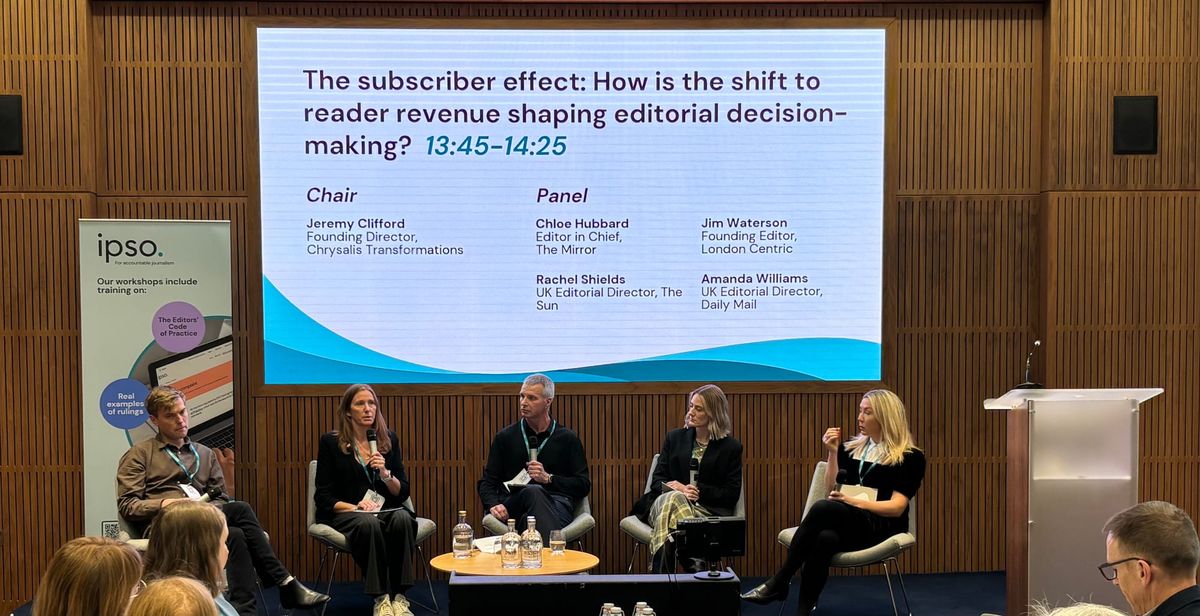
Under the subscription model, however, these young readers could be tracked within the Sun Club ecosystem. Editors quickly realized this cohort was vastly younger than the typical Sun Club subscriber base, which historically skewed toward women in their 40s living in Essex. Armed with this granular data, the publishing team could look beyond raw clicks to analyze reading patterns—observing what these younger cohorts engaged with and what they ignored. This enabled the commercial and editorial teams to tailor loyalty perks effectively, offering cinema tickets or curated beauty boxes rather than traditional family theme park days out that appealed to older subscribers.
Shifting Key Performance Indicators (KPIs)
The metrics governing newsroom success are evolving in tandem with these audience insights:
- Engagement Over Arrival: Amanda Williams, UK editorial director at the Daily Mail, emphasized that while page views are still monitored, greater emphasis is now placed on tracking how long readers stay and what keeps them engaged, rather than simply what initially draws them to the site. The Mail‘s ambitious "deep dive" series—combining long-form journalism, immersive video, data visualization, and graphics—has thrived under this engagement-first metric.
- The Primacy of Retention: Shields pointed out that retention has emerged as the definitive metric of success. For instance, an investigative piece on personal finance or household economics that generates relatively few immediate subscriptions can still be deemed a resounding success if the readers it attracts prove to be deeply loyal and maintain their subscriptions over the long term.
- Platform-Specific Behavior: Chloe Hubbard, editor-in-chief at The Mirror, highlighted that user behavior varies dramatically depending on the medium of consumption. On The Mirror‘s dedicated mobile app, royal news and showbiz reporting act as powerful acquisition funnels, drawing users into the ecosystem. Conversely, on the primary desktop and mobile website, political opinion and deeply analytical commentary drive engagement. Notably, The Mirror’s app features no article metering for its Mirror Plus content, recognizing that app users represent the brand’s most dedicated, highly engaged readership.
Official Statements and Perspectives from the Panel
The insights shared at the IPSO conference underline a profound maturation within British journalism. Rather than allowing commercial anxieties to dictate the core news agenda, editors are leveraging subscriptions to refine their editorial voice and deepen relationships with their most dedicated readers.
┌────────────────────────────────────────────────────────────────────────┐
│                   KEY EDITORIAL INSIGHTS AT A GLANCE                   │
├───────────────────┬─────────────────────────┬──────────────────────────┤
│ Publication       │ Editorial Director      │ Core Subscription Focus  │
├───────────────────┼─────────────────────────┼──────────────────────────┤
│ Daily Mail        │ Amanda Williams         │ Presentation shift;      │
│                   │                         │ packaging deep dives &   │
│                   │                         │ commentary behind paywall│
├───────────────────┼─────────────────────────┼──────────────────────────┤
│ The Mirror        │ Chloe Hubbard           │ Breaking news open;      │
│                   │                         │ analysis/political       │
│                   │                         │ opinion paid on top      │
├───────────────────┼─────────────────────────┼──────────────────────────┤
│ The Sun           │ Rachel Shields          │ Data-driven retention;   │
│                   │                         │ targeted perks & public  │
│                   │                         │ interest free coverage   │
└───────────────────┴─────────────────────────┴──────────────────────────┘
Amanda Williams (Daily Mail) on Packaging Over Substance
Amanda Williams clarified that for the Daily Mail, the advent of reader revenue represents a shift in presentation rather than an ideological rewrite of what stories get commissioned. The core components of quality journalism—the breaking news scoop, the investigative deep dive behind the story, and the reflective comment follow-up—were always part of the production pipeline. The strategic difference today is that the later, value-added pieces are designated as payable assets.
Chloe Hubbard (The Mirror) on Serving Politically Engaged Readers
Echoing this sentiment, Chloe Hubbard described the structured logic governing The Mirror’s digital offering. Essential reporting on breaking news remains freely accessible to all readers, ensuring the publication maintains its historic democratic mission of informing the public. The paid layer rests securely on top of that foundation, consisting of expert analysis, specialized columns, and sharp political opinion.
Hubbard pointed to a specific example from the morning of the panel: a piece commissioned from the paper’s former US editor dissecting the domestic and international implications of a major political development. This commission was executed with the clear foreknowledge that Mirror readers are politically literate, intellectually curious, and willing to pay for authoritative commentary that helps them make sense of complex global events.
Rachel Shields (The Sun) on Trust and Public Interest
Addressing the financial sustainability of high-cost investigative journalism, Rachel Shields addressed head-on the tension between commercial optimization and civic responsibility. When asked whether a focus on subscriptions might encourage publishers to drop expensive, worthy journalism, Shields firmly rejected the notion.
She noted that The Sun deliberately kept its major public-interest investigations entirely free behind no paywall, viewing them as essential "reach plays" and a fundamental fulfillment of the newspaper’s social contract. Shields argued that modern scale brands require diversified revenue streams precisely so they can cross-subsidize investigative reporting that "doesn’t wash its face" commercially. Furthermore, she emphasized that high-profile public campaigns—such as The Sun‘s successful Jobs Army initiative—build invaluable public trust. That institutional trust, in turn, fosters a positive feedback loop where readers feel a stronger connection to the brand, making them far more willing to pay for exclusives, newsletters, and community perks.
Future Outlook: The Next Frontier for Digital Subscriptions
As the British news media looks toward the remainder of the decade, the lessons learned from the hybrid subscription model point toward several crucial trajectories for the industry.
1. The Death of the Blunt Paywall
The monolithic paywall—once seen as the ultimate savior of digital journalism—is increasingly giving way to nuanced, tiered architectures. Publications are realizing that audiences will not pay for commodity news that is freely available elsewhere on the internet. Instead, future growth will hinge on hyper-personalization, where subscribers receive curated packages of journalism, newsletters, discounts, and community access tailored directly to their proven behavioral data.
2. Balancing Commercial Viability with Democratic Duty
As algorithmic distribution channels become more volatile and search engine traffic patterns shift due to artificial intelligence overviews, establishing direct, unmediated relationships with readers is no longer just a commercial preference; it is an existential necessity. However, as industry leaders like Shields, Williams, and Hubbard demonstrated, maintaining public trust is the ultimate prerequisite for reader revenue success. Publications that retreat entirely behind restrictive paywalls risk losing their cultural resonance and democratic relevance. The enduring strength of Britain’s popular press will rely on maintaining a delicate equilibrium: keeping essential news universally accessible while offering sophisticated, data-informed value to those who support the craft financially.
3. The Human Element in Newsroom Leadership
Ultimately, the transition to subscription-led publishing underscores the evolving role of modern editors. Navigating this landscape requires balancing the cold, objective realities of data analytics with the timeless journalistic intuition of what stories matter to society. As industry figures like Chloe Hubbard continue to share these strategic insights at forums such as Newsrewired, newsrooms across the globe are learning that sustainable digital journalism is built not on gimmicks or clickbait, but on transparent value exchanges, deep audience understanding, and an unwavering commitment to public-interest reporting.