Executive Overview
In the shadowy ecosystem of international cybercrime, few operations have scaled as aggressively or aggressively disrupted global supply chains quite like Qilin. Emerging in September 2022, this Russia-based ransomware-as-a-service (RaaS) affiliate program has rapidly evolved into one of the most prolific industrial syndicates in the threat landscape. According to an extensive threat intelligence report published by cybersecurity firm NCC Group, Qilin claimed at least 365 victim organizations in a mere three-month window, cementing its status as the world’s most active ransomware affiliate network.
Operating under a "double extortion" model—where sensitive corporate data is exfiltrated before systems are encrypted and threatened with public leaks—Qilin has structured its criminal enterprise to maximize payout potentials. Affiliates are incentivized with a lucrative split, pocketing at least 80 percent of any extortion payment extracted from victims. Unlike many Eastern European syndicates that maintain strict geographic or linguistic filters, Qilin has historically welcomed English-speaking partners, openly collaborating with high-profile threat actors such as Scattered Spider and the RansomHub ecosystem.
At the helm of this multi-million-dollar cybercrime machine is an administrator who goes by the digital moniker "Haise." While ransomware operators go to extraordinary lengths to mask their digital footprints, absolute anonymity remains an elusive ideal. Through a combination of historical forum applications, chat metadata, breach data leaks, and advanced stylometric analysis, cybersecurity researchers and threat intelligence platforms have effectively pierced the veil of Haise’s operational security (opsec).
Investigative findings trace the digital breadcrumbs of the Qilin administrator directly to Aleksey Mikhailovich Yakovtsev, a 36-year-old computing specialist residing in St. Petersburg, Russia. This comprehensive unmasking highlights the vulnerabilities inherent even in top-tier cybercrime leadership, proving that past digital identities, if poorly severed, can eventually unravel years of careful obfuscation.

Detailed Chronology: From Forum Novice to Syndicate Mastermind
The journey from low-level arbitrage and digital fraud to leading a global ransomware empire is rarely instantaneous. In Yakovtsev’s case, his digital evolution spans over a decade, leaving a trail of interconnected usernames, email addresses, and messaging handles across successive generations of Russian-language cybercrime forums.
The Evolution of Aliases: Rjun, Alexbigboss44, and Haise
Cybercriminals routinely cycle through monikers as an opsec protocol, severing ties with older identities that may have compromised their real-world separation. However, closed-membership forums often require applicants to verify their backgrounds, forcing operators to reference past monikers or historical accounts. When these forums are inevitably compromised or seized by law enforcement, these historical bridges become fatal vulnerabilities.
- 2018–2019 (The Arbitrageur Phase): According to historical tracking by the AI-powered de-anonymization platform IntelHawk, Yakovtsev’s early cybercriminal endeavors centered around traffic brokering, Facebook logs, and Google Ads account acquisition to fuel fraudulent advertising and gambling schemes. During this era, he operated under handles that eventually tied into networks trading compromised corporate access.
- 2020 (The "Rjun" Era): Operating under the handle Rjun, Yakovtsev established a lasting presence across prominent Russian-language cybercrime forums, including Exploit, XSS, Darkmarket, Verified, and Zloy. During registrations on these platforms, Rjun consistently utilized the email address
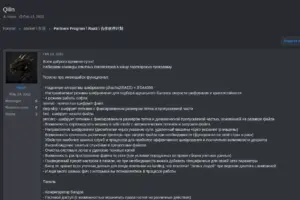
[email protected]. Concurrently, he utilized the Telegram handle Alexbigboss44, engaging in high-volume acquisition of traffic and logs. - June 2022 (The Transition to "Haise"): As the cybercrime landscape shifted toward dedicated ransomware incubators, Haise applied for membership in RAMP—a heavily guarded Russian forum explicitly established as a haven for ransomware affiliate programs. Direct messages indexed by the cyber intelligence platform Intel471 reveal that the RAMP administrator approved Haise’s application while explicitly linking the user to the Telegram account
Alexbigboss44. (The RAMP forum was later seized by the FBI in January 2026). - September 2022–Present (The Qilin Era): Having secured his footing under the Haise identity, Yakovtsev launched Qilin. Over the next four years, the group scaled rapidly, leveraging Telegram channels and dark web portals to recruit affiliates and broadcast victim data leaks.
The Breach That Broke the Alias
The definitive bridge connecting the historical persona of Rjun/Alexbigboss44 to the real-world identity of Aleksey Yakovtsev relied on a chain of cascading data exposures:
- The Email and Password Link: Identity threat protection firm SpyCloud identified that the historical forum email
[email protected]had previously utilized the passwordRjun132. - The Gosuslugi Leak: A search for that specific email address within the breach-tracking repository Constella Intelligence cross-referenced records exposed in the late 2025 breach of gosuslugi.ru—the official digital portal for state and municipal services in the Russian Federation. That breach exposed more than 20 million citizen profiles, including full names, dates of birth, and mobile numbers.
- The Identification: The leaked Gosuslugi data revealed that
[email protected]belonged definitively to Aleksey Mikhailovich Yakovtsev, born August 18, 1990.
Supporting Context & Metrics: The Anatomy of Qilin Operations
To understand the scale of Yakovtsev’s enterprise, one must examine the operational framework that made Qilin an industry leader. Threat intelligence metrics compiled by NCC Group, Flashpoint, and Intel 471 underscore the sophisticated mechanics driving the syndicate’s profitability.

Operational Metrics and Scale
- Victim Volume: In Q3 alone, Qilin claimed at least 365 victim organizations, outpacing virtually every other RaaS competitor.
- Affiliate Incentives: By offering a generous 80+ percent payout split to affiliates, Qilin ensures a steady pipeline of skilled initial-access brokers eager to deploy its encryption payloads.
- Infrastructure Sophistication: Flashpoint data highlights that Yakovtsev’s early background in managing traffic networks and purchasing compromised corporate credentials directly informed Qilin’s operational maturity. Rather than building infrastructure from scratch, the core team leveraged existing underground logistics to source high-value targets.
The Family Connection and Digital Footprints
Further validation of Yakovtsev’s identity emerged through telecommunication and travel records correlated by IntelHawk and Constella Intelligence:
- Telegram Metadata: Flashpoint identified that Haise’s primary Telegram account (ID 118329521) logged over 5,000 messages dating back to 2018.
- Phone Number Correlation: This Telegram ID linked directly to the Russian mobile number
+79602347275. - Proxy Registration: IntelHawk established that this phone number belongs to Yakovtsev’s biological sister. Aleksey frequently used his sister’s associated email addresses (
[email protected]and[email protected]) to register across various web services. - Travel Verification: Russian airline flight records—themselves compromised in domestic travel agency breaches—confirm that Aleksey Yakovtsev traveled multiple times between St. Petersburg and Murmansk (where he attended grade school and earned a master’s degree in computing and information systems from Rosobrnadzor-monitored institutions). More recent flight data indicates frequent travel between St. Petersburg and Sochi, Russia’s primary Black Sea resort hub.
Official Statements and Industry Verification
The unmasking of Haise was not accomplished by a single entity but represents a collaborative triumph of modern threat intelligence, combining automated de-anonymization platforms with human investigative rigor.
- IntelHawk’s Perspective: Leo Bogod, founder and chief technology officer of IntelHawk, noted that advanced stylometric analysis and historical username pivoting demonstrate a clear behavioral arc. The trajectory shows an escalation from credit card fraud and novice arbitrage (2018–2019) to complex malware, botnet coordination, and enterprise-level ransomware orchestration (2020–2023).
- Independent Validation: An anonymous investigative Twitter/X account known as Gangexposed—which has a proven track record of de-anonymizing high-profile ransomware actors—independently reached identical conclusions regarding Haise’s real-world identity, explicitly crediting IntelHawk’s platform algorithms for connecting the fragmented data points.
- Industry Response: Attempts by investigative journalists to reach Mr. Yakovtsev via his known email addresses and phone numbers were met with silence. The exposure of his real identity, physical location in St. Petersburg, and educational history places him firmly in the crosshairs of international intelligence agencies, even if direct extradition remains unlikely under current geopolitical conditions.
Future Outlook: The Fragility of Cybercriminal Anonymity
The public exposure of Aleksey Yakovtsev serves as a stark cautionary tale for the cybercrime underground. It demonstrates that while ransomware administrators can hide behind layers of pseudonyms, encrypted messaging apps, and state-sanctioned safe havens, the accumulation of digital exhaust over a decade leaves an indelible footprint.
As automated de-anonymization tools, advanced stylometry, and massive government database breaches continue to converge, the sanctuary traditionally enjoyed by Russian-based threat actors is slowly eroding. For Qilin, the identification of its administrator may not immediately halt its operations, but it fundamentally shifts the operational calculus. Syndicate leaders can no longer operate with total impunity, knowing that a single compromised forum registration, a reused password, or a linked family phone number can transform them from anonymous digital phantoms into internationally exposed fugitives.