Executive Overview
In a landmark coordinated tak
edown, Google and an international coalition of cybersecurity firms, intelligence groups, and industry partners have successfully dismantled a massive global botnet comprising more than 1.3 million pre-infected Android TV set-top boxes. Dubbed “XCPE”—after one of its core components—the botnet was engineered to stealthily monetize unsuspecting users’ internet connections by routing commercial and criminal web traffic through residential proxies, alongside engaging in widespread advertising fraud.
Security experts involved in the collaborative operation estimate that the enforcement actions and domain seizures are likely to sever the botnet’s access to upwards of 10 million additional compromised systems. Beyond standard media streaming hardware, the XCPE malware’s reach extended deeply into the Internet of Things (IoT) ecosystem, infecting telehealth monitoring devices, karaoke systems, and digital signage terminals.
At the center of the conspiracy is Videostrong Technology Co., a China-based hardware manufacturer. Investigations by the Google Threat Intelligence Group (GTIG) revealed that Videostrong deliberately embedded malicious firmware directly into its manufacturing pipeline. This ensured that the moment an end-user plugged in and booted their newly acquired media device, a deeply buried backdoor was triggered. This backdoor silently enrolled the hardware into a commercialized cybercrime syndicate, offering unwitting residential bandwidth for rent to nefarious actors, data scrapers, and account takeover operations.
Detailed Chronology of the Investigation and Takedown
The unraveling of the XCPE botnet is the culmination of years of tracking by independent researchers, threat-intelligence units, and law enforcement agencies. The timeline of discovery illustrates how hardware-level compromises transform consumer electronics into foot soldiers for global cybercrime.
Early Warnings and the Rise of Residential Proxies
Over the past several years, residential proxy services have emerged as a cornerstone of modern cybercrime infrastructure. These services allow customers to lease legitimate home internet IP addresses, effectively laundering web traffic to bypass geographic restrictions, mask malicious activities, scrape copyrighted data for artificial intelligence (AI) models, and execute credential-stuffing attacks.
In late 2025 and early 2026, security researchers began raising alarms regarding how these proxy networks were scaling up. In November 2025, investigations by firms like Censys uncovered that popular Android streaming boxes—such as the Superbox—were coming pre-loaded with proxy software like Grass, turning living rooms worldwide into anonymous routing nodes.
The Kimwolf Connection and Industry Awakening
The plot thickened in January 2026, when threat-intelligence startup Synthient published groundbreaking research detailing the explosive growth of the Kimwolf botnet. Kimwolf was hammering global networks with record-shattering distributed denial-of-service (DDoS) attacks. Synthient documented how Kimwolf leveraged vulnerabilities in residential proxy platforms to rapidly pivot inside the local networks of unsuspecting consumers, infecting other connected Android devices virtually overnight.
Synthient’s disclosures forced numerous residential proxy providers to patch their networks, fracturing Kimwolf into manageable fragments. More importantly, the research caught the attention of the Motion Picture Association (MPA), which partnered with Synthient to purchase, tear down, and forensic-analyze dozens of popular Android TV set-top boxes tainted by Kimwolf and related IoT malware.

The Google Threat Intelligence Group (GTIG) Intervention
As forensic hardware analysis accelerated, Google’s Threat Intelligence Group traced the root source of the infections back to the manufacturing level. GTIG concluded that Videostrong Technology Co. was actively monetizing device backdoors by selling access to criminal affiliates and loading third-party malware modules onto millions of set-top boxes.
Consequently, Google severed all corporate ties with Videostrong and launched legal and operational actions to seize the control domains and infrastructure servers utilized by the manufacturer to operate the XCPE botnet. Simultaneously, hardware analyses by Synthient revealed that another major Chinese brand, Skyworth Technology, was bundling the exact same Videostrong-derived malware into its popular MECOOL-branded streaming boxes.
Supporting Context, Ecosystem Metrics, and Supply Chain Vulnerabilities
The XCPE takedown illuminates structural vulnerabilities in global hardware supply chains, demonstrating how affordable consumer electronics can be weaponized at scale.
The Anatomy of a Hardware Backdoor
Google requires all Android device manufacturers to pass rigorous compatibility and security evaluations to ensure their products do not pose risks to consumers. However, Videostrong bypassed these safeguards by engineering its firmware to execute malicious payloads immediately upon a device’s initial boot sequence—a weakness Google has since patched at the OS level.
Once activated, the XCPE software made the user’s IP address available to multiple commercial and illicit residential proxy networks. According to GTIG, Videostrong acted as a wholesale supplier of criminal infrastructure, enabling third-party modules to deploy advertising fraud frameworks and auxiliary malware.
The Role of Residential Proxy Providers
The GTIG report and concurrent security whitepapers highlighted a web of Software Development Kits (SDKs) and residential proxy services that routinely integrated with—or were leveraged by—devices infected with the XCPE botnet. Among those named in the research are:
- AppSalt (Honeygain): Developed by Vilnius-based Oxylabs. In late 2026, Oxylabs and Honeygain were reorganized under a parent entity named Source, following a $130 million funding round from Warburg Pincus valued at $3.6 billion.
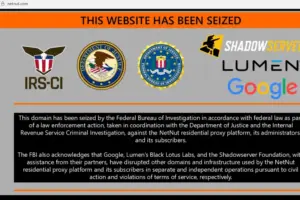
- NetNut: Operated by the publicly traded Israeli firm Alarum Technologies. NetNut was previously targeted in a July 2026 FBI domain-seizure operation over its alleged involvement in the separate Popa TV box botnet.
- Other Named Providers: EarnFM, Traffmonetizer, Jaguar, LINKFOG, BMW/IPWeb, and GaGaNode.
Influencer Marketing and the Consumer Trap
Many of these pre-infected devices gained mainstream traction through aggressive social media marketing. Devices like Superbox and MECOOL were heavily promoted by influencers on platforms like TikTok, touting their ability to stream hundreds of pay-TV channels and premium sports for a single, low up-front fee—effectively masking pirated content delivery systems.
For instance, MECOOL set-top boxes experienced an explosion in popularity after being featured in a 2023 video by the prominent YouTube channel Linus Tech Tips (which boasts nearly 17 million subscribers). Following disclosures by Synthient, Linus Tech Tips updated the video to frame the product as a security risk and removed all associated affiliate links.
Official Statements and Industry Responses
The scale of the XCPE botnet has prompted intense scrutiny and defensive adjustments across both tech giants and proxy providers.

Google’s Official Stance
In its public disclosures, GTIG condemned the actions of the hardware manufacturer:
"A device manufacturer intentionally infecting their users with malware is an unacceptable breach of trust, and represents a serious risk to those users. Without users’ knowledge or consent, infected devices were offered as a distribution mechanism for a wide array of criminal actors."
Synthient founder Ben Brundage noted that the 1.3 million active infections documented by Google represent a highly conservative estimate. "The scale of affected devices is likely way higher," Brundage told investigators. "This is probably the largest operation against backdoored TV boxes that we’ve seen."
Oxylabs and Source Response
Following the publication of the GTIG report, Oxylabs issued a formal statement addressing the integration of its SDKs within compromised environments:
"We have been conducting regular audits of the applications provided by our partners. However, following this incident, we will improve the application and application’s build fingerprinting logic to better detect cases where the SDK is running on an unapproved build of an originally authorized application."
Oxylabs clarified that while its system is architected to require explicit user consent before routing traffic through an exit node, malicious developers found ways to fake those verification signals. The company confirmed it had no corporate record of a company named Videostrong Technology Co., but identified an external malware loader domain (com.abc[.]nexus) cited in the GTIG report within its supplier network.
"As soon as we saw that, we suspended the relationship and sent them a formal legal inquiry," Oxylabs stated, noting that the rogue supplier accounted for less than 1% of its total IP pool and had passed initial QA and contractual vetting.
Future Outlook and Recommendations
While dismantling the XCPE botnet infrastructure and cutting off Videostrong’s command-and-control servers marks a major victory for cybersecurity coalitions, the underlying ecosystem issues remain complex.
Because the auxiliary proxy and ad-fraud affiliates operating within these networks maintain diversified distribution channels independent of XCPE, security researchers warn that threat actors will likely attempt to rebuild their infrastructure using alternative backdoors. Furthermore, millions of physical devices currently sitting in consumer living rooms remain tainted with deeply embedded firmware modifications that cannot be easily cleansed by standard over-the-air security patches.
Key Takeaways for Consumers and Network Operators:
- Hardware Provenance Matters: Consumers should exercise extreme caution when purchasing unbranded or lesser-known Android TV and streaming boxes marketed on social media via affiliate links promising free access to premium paid content.
- Network Monitoring: Enterprise and residential network administrators should monitor local traffic for anomalous outbound connections, particularly those communicating with known residential proxy SDK endpoints or suspicious external loader domains.
- Ecosystem Accountability: The crackdown signals a growing intolerance by tech giants and law enforcement toward hardware manufacturers that weaponize supply chains, establishing a legal and operational precedent for holding upstream device makers accountable for embedded malware.