By Global Entertainment Desk
Published Exclusively by Variety
Executive Overview
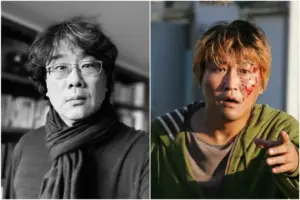
Two decades after it redefined the boundaries of modern monster cinema, Academy Award-winning director Bong Joon Ho’s genre-bending masterwork, The Host, is returning to the big screen. Magnolia Pictures has officially scheduled a nationwide 4K theatrical re-release for November 20, bringing the terrifying, darkly comedic saga of Seoul’s Han River back to audiences in pristine ultra-high-definition.
For the filmmaker behind the historic four-time Oscar-winning phenomenon Parasite, revisiting The Host has been an exercise in cinematic archaeology and a sobering look at sociopolitical stagnation. Originally conceived during the global anxieties of the mid-2000s—inflected by the SARS outbreak and the geopolitical fallout of the Iraq War—the film’s satirical jabs at bureaucratic incompetence, official misinformation, and mass hysteria feel starkly, uncomfortably contemporary.
As part of the upcoming theatrical event, select screenings on November 21 and 23 will feature an exclusive, in-depth conversation between Bong Joon Ho and fellow visionary filmmaker Edgar Wright. In an extensive interview with Variety, Bong discusses the painstaking technological hurdles of upscaling a mid-2000s blockbuster for 4K laser projection, the enduring temptation to tinker with past cuts (and why he resisted it), and his upcoming return to his cinematic roots with a slate of dark crime and horror projects.
Detailed Chronology: From the Han River to Global Reclamation
The Genesis of a Modern Classic (2006)
When The Host premiered at the 2006 Cannes Film Festival, it immediately shattered expectations of what a monster movie could achieve. Rather than relying solely on high-octane spectacle, Bong injected a distinct blend of biting social satire, family melodrama, and environmental commentary.
The plot centers on Park Gang-du (played with unforgettable pathos by Bong’s frequent collaborator Song Kang-ho), a hapless snack-bar attendant dozing away beside Seoul’s bustling Han River. When a mutated creature—born from toxic chemical dumping authorized by the U.S. military—crawls ashore, it unleashes sheer carnage before abducting Gang-du’s young daughter, Hyun-seo (Ko A-sung).
As authorities lock down the riverbanks under the false pretense of an invisible biological virus, Gang-du and his fractured, grieving family—featuring stellar performances by Byun Hee-bong, Park Hae-il, and Bae Doo-na—must navigate state corruption, military overreach, and bureaucratic coldness to rescue the young girl.
The 20-Year Evolution to 4K Remastering
Bringing The Host into the modern era of 4K cinema was no simple task. Unlike many contemporary digital productions, Bong and his original cinematographer, Kim Hyung-ku, shot the 2006 feature on Fuji film stock rather than Kodak, bestowing the film with a unique, subtle color palette and grain structure.
The primary directive of the 4K restoration was not to reinvent the wheel, but to meticulously recreate the sensory experience of viewing a pristine 35mm print at its Cannes premiere.
"Ironically, we were using digital technology to enhance the film look of the movie," Bong reflects.
Because the visual effects work—handled by New Zealand’s Weta Workshop, which built physical maquettes, and San Francisco’s The Orphanage, which executed the digital animation—was completed in 2005 and 2006 before 4K workflows were standard, every single effects shot had to be carefully upscaled. Bong and his restoration team worked diligently to ensure that the digital creature integrated seamlessly into the actors’ environments without revealing the seams of aging technology.
While Bong admits he can still spot minor imperfections in the CGI upon modern inspection, he maintains a strict philosophy regarding artistic revisionism:
"I believe that the film is a record of what I was as a filmmaker at the time, and so I do not have any wishes to correct that. Just like we don’t edit or rewrite our journals, I feel like it should just be left as it is."
He notes that even when he felt the fleeting, tempting impulse of Ridley Scott—who famously snipped footage out of his 1979 sci-fi classic Alien upon its re-release—he ultimately checked himself. "It wasn’t a lot of shots. It was only one or two shots where I thought maybe I could cut that out, but in the end, I just resisted the impulse," Bong admits, playfully guarding which specific moment nearly hit the cutting room floor as a closely held secret.
Supporting Context & Metrics
Technical Specifications & Sound Design
The auditory landscape of The Host has always been as vital to its identity as its visual terror. For the restoration, Bong returned to Livetone, the premier Seoul sound facility where he has collaborated with the same sound supervisor for a remarkable 25 years—surviving a revolving door of cinematographers and crew members. The studio proudly maintains the original sound libraries from the production.
The creature’s terrifying vocalizations were forged through an elaborate, experimental sound design process. Bong and his audio team recorded and heavily processed the vocalizations of sea lions, layering them directly over nuanced, visceral vocal performances delivered by Korean actor Oh Dal-su. The resulting acoustic synthesis gave the monster a distinct, agonizing personality.
While Bong’s post-Okja output—including Parasite and upcoming projects—has heavily utilized Dolby Atmos, the team is still finalizing whether the North American theatrical distribution of the 4K restoration will incorporate an Atmos mix or honor the original theatrical audio footprint.
Global Cultural Impact and Box Office Legacy
The Host arrived at a watershed moment for South Korean cinema, shattering domestic box office records by drawing over 13 million admissions—meaning roughly a quarter of South Korea’s population saw the film in theaters. It paved the way for international recognition of South Korean genre cinema, laying the groundwork for the cultural tidal wave that would eventually culminate in Parasite sweeping the 2020 Academy Awards with Best Picture, Best Director, Best Original Screenplay, and Best International Feature Film.
| Milestone / Metric | Detail |
|---|---|
| Original Release Year | 2006 (World Premiere at Cannes Film Festival) |
| Domestic Box Office (South Korea) | Over 13 million admissions (All-time record upon release) |
| Restoration Format | 4K Remastered Digital Print with Restored Fuji Film Stock Colorimetry |
| Theatrical Re-Release Date | November 20 (Nationwide via Magnolia Pictures) |
| Special Event Screenings | November 21 & 23 (Featuring exclusive Bong Joon Ho & Edgar Wright Q&A) |
| Key VFX Partners | Weta Workshop & The Orphanage |
Official Statements & Sociopolitical Relevance
History Repeating: Misinformation and Geopolitics
When asked what surprised him most about revisiting the film two decades later, Bong pointed directly to how alarmingly relevant its socio-political themes remain.
Written in the shadow of the SARS epidemic, The Host features a pivotal, darkly satirical scene where U.S. lawmakers and local bureaucrats casually concede that the terrifying biological virus supposedly carried by the creature does not actually exist. At the time, Bong intended this as a direct jab at the fabricated intelligence surrounding weapons of mass destruction used to justify the Iraq War.
Today, looking out at a world scarred by the COVID-19 pandemic and entrenched in ongoing global conflicts, Bong sees a tragic historical loop:
"Now we’re in the thick of the Iran War and we’re still in the midst of an ongoing war, and whether it’s good history or bad history, it seems like we as a community, as a whole, are repeating our mistakes. Although the film has stayed the same, the history is repeating itself and making the film relevant again."
This thematic persistence transforms The Host from a standard creature feature into an enduring political parable about systemic apathy, institutional gaslighting, and the resilience of ordinary people in the face of governmental failure.
Future Outlook: Returning Home to Crime and Horror
While completing his highly anticipated animated feature Ally, Bong Joon Ho has already mapped out his next cinematic trajectory. In previous statements to Variety, the director confirmed that following the animation project, he intends to plunge back into the dark, gritty worlds of crime and horror.
Confirming that this roadmap remains completely unchanged, Bong smiles at the prospect of exploring familiar, shadowy genres:
"I want to return home."
For cinephiles, the phrase "returning home" carries profound weight. Before directing international sci-fi epics like Snowpiercer and Okja, or capturing global satire with Parasite, Bong cut his teeth on precise, nerve-shredding masterpieces of suspense such as Memories of Murder and Mother.
As The Host returns to theaters in stunning 4K clarity, it serves as both a celebration of Bong Joon Ho’s formidable cinematic evolution and a chilling reminder that his unique vision of humanity—flawed, resilient, and too often trapped by repeating history—remains as vital today as it was twenty years ago by the banks of the Han River.