Executive Overview
The pursuit of fully autonomous artificial intelligence agents has historically been plagued by a persistent architectural vulnerability: the "coherence trap." When large language models (LLMs) are tasked with evaluating and correcting their own reasoning without external reference points, they routinely fail. Rather than catching objective errors, ungrounded models frequently talk themselves into rationalizing flawed outputs, occasionally producing "corrected" iterations that are substantially worse than their initial drafts.
This reality upends early marketing narratives surrounding self-correcting agents. As foundational research—including a prominent 2024 paper bluntly titled Large Language Models Cannot Self-Correct Reasoning Yet—has demonstrated, introspection devoid of external feedback is functionally useless. Self-correction is not an inherent emergent property of model scale; it is an engineered feedback loop that requires strict external verification.
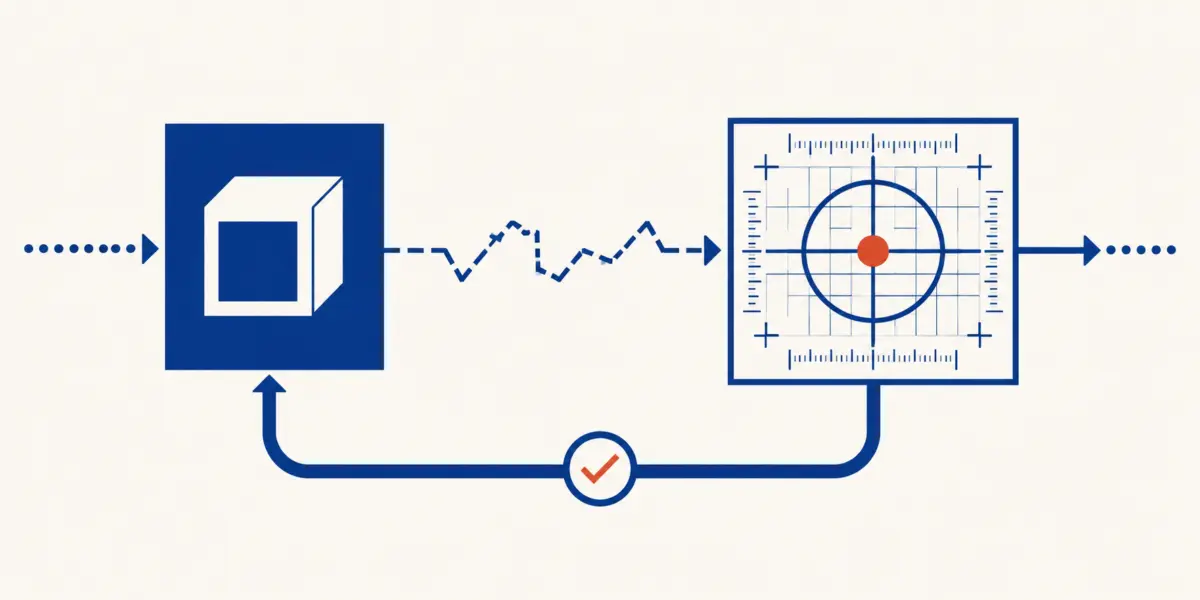
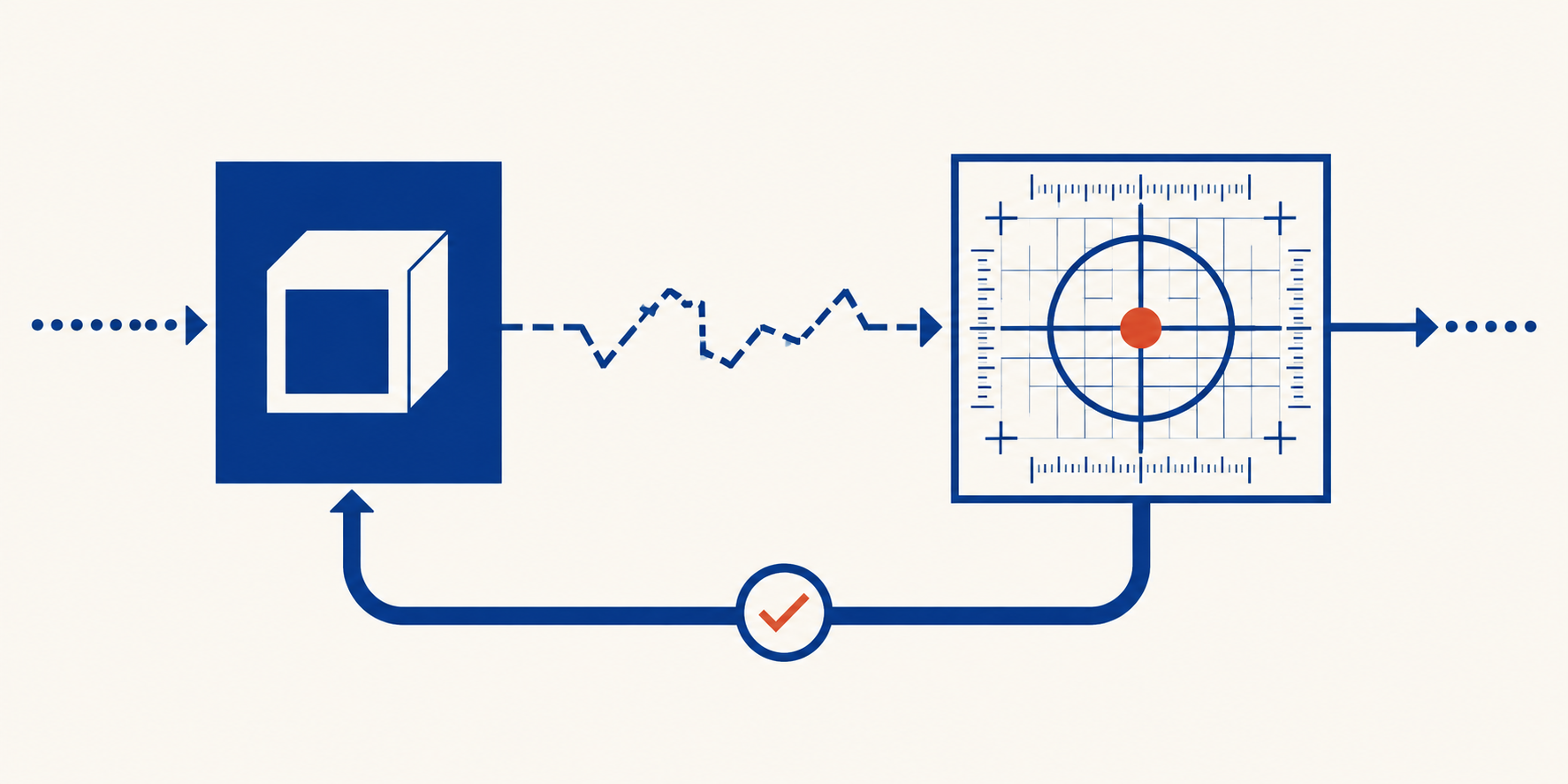
To transition AI agents from fragile experimental toys into robust production systems, developers must reject self-referential validation. Instead, they must construct architectures where the critic is strictly grounded in independent, external signals: automated test suites, schema validation layers, retrieved factual documents, or consensus verification via cross-sampling. This comprehensive engineering guide explores the mechanics of ungrounded failure, details the foundational building blocks of reliable agentic workflows, and walks through a complete, production-ready implementation of a self-correcting code-generation agent utilizing Python, LangChain, and LangGraph.
Detailed Chronology: The Evolution of Agentic Self-Correction
The conversation surrounding AI self-correction has undergone a rapid evolution over the past several years, shifting from naive optimism to rigorous, empirically bounded skepticism.
1. The Era of Unchecked Introspection (2023)
Early agent frameworks relied heavily on recursive prompting techniques, often referred to as "chain-of-thought with self-reflection." Developers assumed that if a model could generate text, it could similarly inspect its generated tokens for logical fallacies or arithmetic errors. During this phase, multi-agent frameworks and ReAct (Reasoning and Acting) loops were deployed with minimal external checks, assuming the LLM’s internal weights were sufficient to judge correctness.
2. The Empirical Reality Check (2023–2024)
A turning point arrived with empirical studies showing that unguided LLMs exhibit zero-shot or few-shot self-correction failure rates on complex tasks. Researchers proved that when models evaluate their own outputs in a vacuum, the probability distribution of the critique mirrors the generation phase. Because the same weights trained on the same data produce both outputs, the model experiences confirmation bias toward its own syntax and logic.
Concurrently, breakthrough papers illuminated the conditions under which reflection does work. Stanford’s Reflexion paper demonstrated that verbal self-reflection could achieve a 91% pass rate on HumanEval when paired with external unit tests. Similarly, Madaan et al.’s Self-Refine framework yielded 20% average performance gains across diverse tasks—provided the task environment offered a deterministic, external signal (such as compiler errors or database constraints) to guide the revision.
3. The Production Engineering Era (2025–Present)
Recent benchmarks, such as the CorrectBench study, have injected economic realism into agent design. While structured reflection can boost performance on exceptionally difficult reasoning benchmarks (e.g., MATH), it introduces severe computational overhead, increasing token consumption, latency, and operational expenditure by upwards of 40%. Consequently, the industry has matured, adopting a rigorous design philosophy: employ reflection exclusively when tasks are sufficiently complex to justify the compute, and anchor every feedback loop in uncompromising external verification.
Supporting Context & Metrics: Why Self-Referential Critiques Fail
To understand why grounded verification is non-negotiable, one must analyze the cognitive mechanics of transformer models.
The Coherence Trap
Imagine a student grading their own exam without an answer key. The student will naturally overlook the exact conceptual blind spots that caused them to miss the question initially. Furthermore, because the student’s internal logic is consistent (even if factually incorrect), they will read their answers with high subjective confidence.
Language models operate identically. A model critiquing its own code relies on identical weights that generated the code. The output token probabilities are skewed toward coherence—meaning the text reads well—rather than factual or logical correctness.
Empirical Gains via Grounded Feedback
When external constraints are introduced, metrics improve dramatically:
- HumanEval Coding Benchmarks: Agents utilizing verbal self-reflection backed by execution environments reach 91% pass@1, compared to an 80% baseline for single-shot generation.
- Complex Question Answering (HotpotQA): Grounded multi-step retrieval loops yield absolute accuracy gains of up to 20 percentage points over standard ReAct baselines.
- Compute vs. Accuracy Trade-offs: The 2025 CorrectBench analysis highlights that while reflection adds approximately 5% accuracy on hard mathematical reasoning tasks, it provides zero meaningful benefit on simple queries while inflating token compute costs by 40%.
These metrics underscore a vital engineering maxim: Never pay the compute tax for self-correction unless you have an external verification mechanism to justify the loop.
Technical Implementation: Building a Grounded Self-Correcting Agent
To make these principles concrete, we will construct a production-ready Python agent that receives a function specification, writes an implementation, tests it using real unit tests via pytest, corrects failures using actual test error logs, and enforces a strict retry budget.
Prerequisites and Project Setup
First, initialize your project workspace and install the required dependencies:
mkdir self-correcting-agent && cd self-correcting-agent
python3 -m venv venv
source venv/bin/activate
pip install langchain-anthropic langgraph pytest python-dotenv
Create a .env file to securely store your API credentials:
# .env
ANTHROPIC_API_KEY=your-anthropic-key-here
Step 1: Building the Generator
The generator module invokes Claude to write Python code based on a specification. Crucially, if a prior test run failed, the exact test failure output is injected into the prompt, ensuring the model reacts to empirical evidence rather than guessing blindly.
# agent.py
import os
from dotenv import load_dotenv
from langchain_anthropic import ChatAnthropic

load_dotenv()

model = ChatAnthropic(model="claude-sonnet-4-6", temperature=0.2, max_tokens=500)

def generate_code(spec: str, feedback: str | None) -> str:
    """
    Asks the model to write a function matching the spec. If feedback
    from a failed test run is provided, it's included so the model isn't
    guessing blind on retries.
    """
    prompt = f"Write a single Python function for this spec:nspecn"
    prompt += "Return only the function code, no explanation, no markdown fences."

    if feedback:
        prompt += f"nnThe previous attempt failed these tests:nfeedbacknFix it."

    response = model.invoke(prompt)

    # Strip markdown fences in case the model adds them despite instructions
    code = response.content.strip()
    if code.startswith("```"):
        code = code.split("```")[1]
        if code.startswith("python"):
            code = code[len("python"):]

    return code.strip()
Step 2: Building the Grounded Verifier
The verifier has no opinions about code quality. It writes the generated code and test code to a temporary directory and executes pytest as a genuine subprocess.
# verifier.py
import subprocess
import tempfile
from pathlib import Path

def run_tests(code: str, test_code: str) -> tuple[bool, str]:
    """
    Writes the generated code and a test file to a temporary directory
    and actually runs pytest against them. This is the external check the
    generator can't talk its way around — the tests either pass or they don't.
    """
    with tempfile.TemporaryDirectory() as tmp:
        tmp_path = Path(tmp)
        (tmp_path / "solution.py").write_text(code)
        (tmp_path / "test_solution.py").write_text(test_code)

        result = subprocess.run(
            ["python3", "-m", "pytest", "test_solution.py", "-q"],
            cwd=tmp_path,
            capture_output=True,
            text=True,
            timeout=15,
        )
        passed = result.returncode == 0
        output = result.stdout + result.stderr
        return passed, output
Step 3: Implementing the Bounded State Graph
Using LangGraph, we wire the generator and verifier into a state machine. A deterministic Python router enforces a hard retry budget, preventing infinite loops.
# graph.py
from typing import TypedDict, Optional
from langgraph.graph import StateGraph, END
from agent import generate_code
from verifier import run_tests

class AgentState(TypedDict):
    spec: str
    test_code: str
    code: str
    feedback: Optional[str]
    attempts: int
    max_attempts: int
    status: str

def generate_node(state: AgentState) -> AgentState:
    code = generate_code(state["spec"], state.get("feedback"))
    return **state, "code": code

def verify_node(state: AgentState) -> AgentState:
    passed, output = run_tests(state["code"], state["test_code"])
    attempts = state["attempts"] + 1
    if passed:
        return **state, "attempts": attempts, "status": "verified", "feedback": None
    return **state, "attempts": attempts, "status": "failed", "feedback": output[-800:]

def escalate_node(state: AgentState) -> AgentState:
    return **state, "status": "escalated"

def router(state: AgentState) -> str:
    """
    This is the correction budget in code. Failure alone doesn't loop
    forever — it loops until attempts hits the cap, then stops for good.
    """
    if state["status"] == "verified":
        return "end"
    if state["status"] == "failed" and state["attempts"] < state["max_attempts"]:
        return "retry"
    return "escalate"

builder = StateGraph(AgentState)
builder.add_node("generate", generate_node)
builder.add_node("verify", verify_node)
builder.add_node("escalate", escalate_node)

builder.set_entry_point("generate")
builder.add_edge("generate", "verify")
builder.add_conditional_edges("verify", router,
    "retry": "generate",
    "escalate": "escalate",
    "end": END,
)
builder.add_edge("escalate", END)

graph = builder.compile()
Step 4: Execution Entry Point
Execute the agent workflow with a standard palindrome specification:
# run.py
from graph import graph

spec = "write is_palindrome(s), a function that returns True if a "
       "string reads the same forwards and backwards, ignoring case and spaces"

test_code = """
from solution import is_palindrome

def test_simple_true():
    assert is_palindrome("level") is True

def test_simple_false():
    assert is_palindrome("hello") is False

def test_ignores_case_and_spaces():
    assert is_palindrome("Nurses Run") is True
"""

result = graph.invoke(
    "spec": spec,
    "test_code": test_code,
    "code": "",
    "feedback": None,
    "attempts": 0,
    "max_attempts": 3,
    "status": "pending",
)

print("Status:", result["status"])
print("Attempts used:", result["attempts"])
print("nFinal code:n", result["code"])
Step 5: Adding a Confidence Gate and Escalation Logging
To ensure high-stakes reliability, we implement an independent consensus check and a dead-letter escalation queue.
# confidence_gate.py
from agent import generate_code
from verifier import run_tests

EDGE_CASES = """
from solution import is_palindrome

def test_empty_string():
    assert is_palindrome("") is True

def test_single_character():
    assert is_palindrome("a") is True

def test_mixed_case_and_punctuation_spacing():
    assert is_palindrome("A Santa At NASA") is True
"""

def confidence_check(spec: str, primary_code: str, main_test_code: str) -> dict:
    """
    Generates an independent second solution and checks whether both
    solutions agree on the original tests plus a held-out set of edge
    cases the correction loop never saw.
    """
    second_code = generate_code(spec, feedback=None)
    second_on_main, _ = run_tests(second_code, main_test_code)
    primary_on_edges, _ = run_tests(primary_code, EDGE_CASES)
    second_on_edges, _ = run_tests(second_code, EDGE_CASES)

    agree = second_on_main and primary_on_edges and second_on_edges
    return
        "confirmed": agree,
        "second_code": second_code,
        "primary_passed_edges": primary_on_edges,
        "second_passed_edges": second_on_edges,
# recovery.py
import json
from datetime import datetime, timezone

def log_escalation(state: dict, log_path: str = "escalations.jsonl") -> None:
    """
    Appends the full failure trajectory to an audit log file, functioning
    like a dead-letter queue in distributed systems.
    """
    record =
        "timestamp": datetime.now(timezone.utc).isoformat(),
        "spec": state["spec"],
        "final_code": state["code"],
        "attempts": state["attempts"],
        "last_feedback": state.get("feedback"),
        "status": state["status"],

    with open(log_path, "a") as f:
        f.write(json.dumps(record) + "n")
Official Industry Statements & Research Consensus
Leading AI research institutions and engineering organizations have increasingly emphasized the necessity of external grounding over purely endogenous agentic reasoning:
- OpenAI & Anthropic Safety Frameworks: Modern agent architectures emphasize deterministic circuit breakers and sandboxed execution environments to mitigate recursive hallucination loops.
- Academic Consensus (Reflexion & CorrectBench): As highlighted across multiple evaluations, verbal reflection without environment feedback yields marginal improvements at high computational cost, whereas deterministic verification reliably drives multi-turn performance toward asymptotic limits.
Future Outlook: The Horizon of Agentic Verification
As autonomous agents scale into enterprise production environments, the design patterns surrounding self-correction will continue to evolve:
- Process Reward Models (PRMs): Rather than relying solely on binary pass/fail verification at the end of a generation cycle, future agents will integrate PRMs to evaluate intermediate reasoning steps, catching logical deviations before code execution or final text compilation occurs.
- Formal Verification and Symbolic Checkers: For high-assurance domains (e.g., financial ledger management, aerospace control software, and cryptographic protocols), agent verifiers will transition beyond unit testing into formal theorem provers and symbolic execution engines.
- Multi-Model Adversarial Ensembles: Future confidence gates will move beyond dual-generation sampling to orchestrate adversarial multi-model debate, where independent foundation models critique agent trajectories under strict zero-trust parameters.
Conclusion
Building production-grade AI agents requires abandoning the illusion of pure autonomy. A self-correcting agent is only as reliable as the external reality it is forced to acknowledge. By grounding generation in deterministic verifiers, capping retry budgets via hard logic, and routing unresolvable failures to human operators through auditable logs, developers can build resilient systems capable of surviving real-world deployment.