Executive Overview
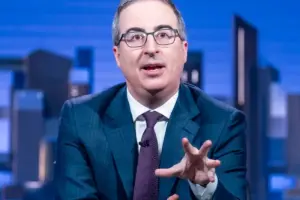
On a recent broadcast of HBO’s Last Week Tonight, host John Oliver trained his sharp satirical crosshairs on U.S. Secretary of Transportation Sean Duffy. The subject of Oliver’s ire was The Great American Road Trip, an independently produced, six-part digital series spearheaded by Duffy that quietly debuted on YouTube. Billed officially as a patriotic celebration leading up to America’s upcoming 250th semiquincentennial anniversary, the project has instead ignited a firestorm of ethical concerns, public ridicule, and regulatory scrutiny.
Rather than serving as an edifying travelogue highlighting the diverse landscapes and cultures of the United States, Oliver and other critics noted that the program functions essentially as a glorified, high-production-value vanity reel for the Duffy family. The series heavily features domestic vignettes, including agonizing deliberations over college choices and vow renewals, while offering minimal substantive content regarding American infrastructure or travel.
Worse still, the project’s funding structure has raised severe ethical red flags. Despite avoiding direct taxpayer financing, the series was bankrolled by a private entity backed by 17 corporate sponsors—several of which are major aviation, automotive, and logistics corporations directly overseen and regulated by the Department of Transportation (DOT). This investigative exposé explores the anatomy of the controversy, the glaring conflict-of-interest allegations, Duffy’s controversial reality television past, and the broader implications for federal accountability.
Detailed Chronology of a PR and Ethical Disaster
The rollout of The Great American Road Trip has been plagued by delays, revisions, and intense public pushback from its inception. Understanding the sequence of events underscores the questionable judgment surrounding the project’s production and distribution.
The Delayed Debut and Quiet Drop
Originally slated for a summer release in June, the series was abruptly pushed back. According to statements made by Duffy, the hiatus was necessary to re-edit the footage to ensure compliance with federal ethics guidelines. However, rather than securing a broadcast partnership or a mainstream streaming home, all six episodes were quietly dumped onto YouTube on a Wednesday afternoon, signaling a lack of confidence in the project’s commercial viability.
The Content: Kitchen Tables Over Highways
When viewers finally gained access to the digital series, they found a product vastly different from its patriotic marketing. Instead of showcasing the majestic byways of the nation, the camera lingered heavily inside the Duffy household. Among the focal points of the narrative was a drawn-out family debate over whether Duffy’s daughter should attend Harvard University.
In a widely circulated clip that drew sharp rebukes across social media, Duffy expressed profound skepticism about elite higher education, warning his daughter:
"If I send you there, I think what happens is they have professionalized figuring out how they can take good, young girls like you and, I think, corrupt their minds."
John Oliver mercilessly lampooned the scene on Last Week Tonight, exclaiming:
"What the fuck are you talking about? First, this was supposed to be a road trip—why are we still in your kitchen? Second, is there anything less relatable than a family whose conflict is, how do I tell my daughter she can’t go to Harvard because we did too good of a job raising her?"
The Funding Quagmire
The core controversy surrounding the show, however, transcends its questionable entertainment value and touches directly upon federal ethics laws. When pressed on how a sitting cabinet member managed to star in and produce a multi-episode reality program, Duffy defended the project by asserting that no taxpayer dollars were utilized. Instead, the production was funded by "Great American Road Trip Inc.," an independent corporate entity.
However, a closer inspection of the entity’s financial backers revealed a labyrinth of regulatory conflicts. The production list included 17 high-profile corporate sponsors, prominently featuring aerospace giant Boeing, automotive heavyweights Toyota, shipping corporations, and major commercial carriers like United Airlines—all entities that fall under the direct regulatory oversight of Sean Duffy’s Department of Transportation.
When confronted by congressional critics regarding the blatant conflict of interest, Duffy offered a defiant defense: "Don’t you want to celebrate America? It’s our birthday!"
Oliver skewered the justification, remarking:
"It’s our birthday? You sound like a fucking child! You do get that just because it’s America’s birthday doesn’t mean you get to do an ethics violation, right? Grow up, Sean!"
Supporting Context & Metrics: A Digital Ghost Town
The metrics surrounding The Great American Road Trip paint a picture of an unmitigated commercial and cultural failure, compounding the political embarrassment for the administration.
Engagement and Viewership Metrics
Despite the high-profile nature of its creator and the corporate muscle behind its sponsorship pool, the series has cratered in the digital marketplace:
- Subscriber Count: At the time of reporting, the official YouTube channel hosting the series languishes with fewer than 3,000 subscribers.
- Viewership: Individual episodes have struggled to break past meager numbers in the low thousands, indicating an almost total lack of organic public interest.
- Promotion and Silence: In a striking display of institutional distancing, neither the Department of Transportation’s official channels nor the Duffy family have actively promoted the series since its low-key release.
Regulatory Overlap and Active Investigations
Beyond the aesthetic and promotional failures, the presence of specific corporate partners in the series has introduced tangible legal and ethical peril. Most notably, the series prominently features Waymo, the autonomous vehicle technology company.
At the very time Waymo’s technology was being spotlighted in Duffy’s promotional vanity project, the National Highway Traffic Safety Administration (NHTSA)—an agency nested squarely within the Department of Transportation—was actively conducting two separate open investigations into the company. These investigations included probes into Waymo vehicles striking a child in the vicinity of a school.
Legal and ethics experts have pointed out that a sitting cabinet secretary featuring a regulated corporate entity in a self-produced media project while that same entity faces active federal safety inquiries creates an untenable appearance of impropriety, if not a direct violation of federal conflict-of-interest statutes.
Sean Duffy’s Reality TV Roots: From MTV to Washington
To fully understand Sean Duffy’s affinity for the camera, commentators and journalists have revisited his extensive background in the reality television landscape long before he entered the halls of Congress or the executive branch.
The Real World: Boston (1997)
Duffy first entered the public consciousness as a cast member on MTV’s seminal reality series The Real World: Boston during the late 1990s. Reflecting on archival footage from the program, Oliver highlighted Duffy’s hyper-fixated persona during his early television days.
In unearthed audition tapes, Duffy explicitly stated his primary motivation for joining the show was his interest in "cute girls." When probed by a producer about his recent romantic history, Duffy proudly boasted:
"Three times. Three different individuals, yeah. And three different times… I’m sort of starving right now, guys."
Oliver quipped in response: "And I’ve got to say: I had sex with three different women, none of whom were interested in an encore, says a lot more about you than I think you wanted to reveal there."
Ideological Confrontations on MTV
Duffy’s time on The Real World was also marked by intense ideological clashes. Archival clips featured Duffy frequently locking horns with his Black castmate, Kameelah Williams. During heated arguments over affirmative action, Duffy complained that he would have secured admission to a superior academic institution "if I were a Black male," and at one point controversially compared Williams to Adolf Hitler while accusing her of "reverse racism."
This early penchant for manufactured cultural grievances and uninhibited on-screen posturing appears to have seamlessly translated into his modern political career and, ultimately, into the conceptualization of The Great American Road Trip.
Official Statements and Institutional Silence
The fallout from Last Week Tonight’s deep dive has elicited a wall of silence from the key players involved in the production.
- The Department of Transportation: Inquiries sent to the DOT regarding the clearance process for the corporate sponsorships featured in the series have gone unanswered. Agency insiders note that institutional social media accounts have maintained a strict blackout concerning the project, effectively treating the series as a non-entity.
- Corporate Sponsors: Representatives for major sponsors such as Boeing, Toyota, and United Airlines have largely declined to comment on whether their marketing budgets were directly tied to securing favor or visibility within an agency-regulated ecosystem.
- Duffy’s Office: Allies of the Transportation Secretary have attempted to frame the criticisms as partisan attacks designed to undermine a harmless, patriotic celebration of the nation’s upcoming milestone. However, they have largely failed to address the substantive ethics complaints regarding regulatory overlap with show sponsors.
Future Outlook: Accountability and the Shadow of Impropriety
As the dust settles on John Oliver’s searing broadcast, the long-term ramifications for Sean Duffy and the Department of Transportation remain uncertain, but the ethical cloud is unlikely to dissipate quietly.
- Congressional Oversight: Government watchdog groups and opposition lawmakers are facing mounting pressure to launch formal inquiries into the financing mechanisms of Great American Road Trip Inc. Specifically, investigators are demanding transparency regarding whether corporate donations were solicited using the implicit leverage of the DOT’s regulatory authority.
- Ethics Reform and Precedent: The incident has reignited debates surrounding the blurred lines between public service and digital-age personal branding. As government officials increasingly leverage new media, podcasts, and independent video platforms to build personal cults of personality, existing ethics frameworks face unprecedented stress tests.
- The Legacy of the Project: Far from uniting the country in a patriotic celebration of America’s 250th anniversary, The Great American Road Trip will likely be remembered as a cautionary tale of hubris, tone-deaf vanity, and regulatory blindness.
John Oliver encapsulated the sentiment of critics nationwide in his closing remarks:
"Having watched all three hours of this godawful show, from gender reveals to the Duffy’s renewing their vows for no clear reason, it feels less like the country’s been taken on a road trip by Sean Duffy and a lot more like we’ve all been taken for a fucking ride."