Executive Overview
Nearly forty years after he first immortalized the cinematic art of the blade, legendary actor Mandy Patinkin is picking up a figurative foil once more. In a major cultural and promotional coup for American athletics, USA Fencing has officially named Patinkin its first-ever honorary team captain for the upcoming 2028 Olympic and Paralympic Games in Los Angeles.
The announcement, which serves as the cornerstone for the newly launched USA Fencing Ambassador Program, bridges the gap between Hollywood nostalgia and elite athletic competition. Patinkin, whose indelible portrayal of the vengeance-driven Spanish master swordsman Inigo Montoya in Rob Reiner’s 1987 classic The Princess Bride remains a touchstone of popular culture, will leverage his lifelong reverence for the sport to expand its footprint in the United States.
This appointment arrives as part of a broader, highly calculated outreach initiative by USA Fencing to forge deep alliances within the entertainment industry. With the Olympic Games returning to American soil for the first time in over thirty years—the last Summer Games having taken place in Atlanta in 1996—sports organizations are increasingly looking beyond traditional marketing playbooks. By integrating cultural icons who command cross-generational appeal, USA Fencing aims to elevate the profile of the sport, attract new demographics of participants, and build substantial momentum ahead of the Los Angeles Games.
Far from being a mere celebrity endorsement, Patinkin’s involvement stems from a genuine, decades-long appreciation for the psychological and physical disciplines that define fencing. As the head of the newly formed Ambassador Council—created in close collaboration with the International Fencing Federation (FIE) and World Para Fencing—Patinkin is poised to champion a sport that he views not merely as a physical contest, but as a profound intellectual chess match.
Detailed Chronology: From Cinematic Legend to Honorary Captain
The journey connecting a beloved 1980s cinematic masterpiece to the modern landscape of Olympic sports is rooted in rigorous preparation, historical respect, and a sustained cultural legacy.
The Genesis of a Swordsman (1986–1987)
Long before he was tapped to lead the American delegation into Los Angeles, Mandy Patinkin underwent a grueling transformation to prepare for his defining role in The Princess Bride. To authentically portray Inigo Montoya—a character on a lifelong quest to avenge his father’s murder at the hands of the six-fingered Count Rugen—Patinkin did not rely solely on Hollywood stunt doubles.
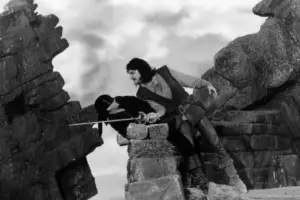
Under the tutelage of legendary Olympic fencing coach Henry Harutunian and master swordmaster Bob Anderson (who notably choreographed the lightsaber duels in the original Star Wars trilogy and served as the stunt double for Darth Vader), Patinkin spent months learning the intricate mechanics of foils, epees, and sabers. The famous cinematic duel between Patinkin’s Montoya and the Man in Black (Cary Elwes) atop the Cliffs of Insanity remains celebrated by critics and fencing enthusiasts alike for its dramatic weight and technical precision.
The Intervening Decades: Fencing in the Cultural Conscience
In the decades following the release of The Princess Bride, the film transformed from a modest box-office success into a timeless cultural phenomenon. Lines such as "Hello. My name is Inigo Montoya. You killed my father. Prepare to die," became part of the global lexicon. Throughout this period, Patinkin’s portrayal continuously introduced new generations of fans to the aesthetics of swordplay, inadvertently serving as an unofficial grassroots recruitment tool for fencing clubs across the globe.
The L.A. 2028 Strategic Alignment (Present Day)
As the sports world shifted its focus toward the 2028 Los Angeles Summer Games, leadership at USA Fencing recognized an unprecedented opportunity to capitalize on American pop culture history. Discussions between USA Fencing CEO Phil Andrews and Patinkin culminated in a shared vision: utilizing the actor’s profound affinity for the sport to build a bridge between casual observers and elite competitive fencers.
The establishment of the USA Fencing Ambassador Program formalizes this connection. By bringing Patinkin on board as both honorary team captain and a leading voice on the Ambassador Council, the organization has established a high-profile vehicle for outreach. Patinkin’s role will see him making select public appearances at national and international events, anchoring media campaigns, and rallying public support as the nation prepares to host the world’s premier athletic showcase.
Supporting Context & Metrics: The State of Fencing in America
To understand the significance of Patinkin’s appointment, one must examine the current trajectory of fencing within the United States and its strategic positioning ahead of the 2028 Games.
The Entertainment Industry Outreach Initiative
USA Fencing’s leadership has made no secret of its ambition to weave the sport into the fabric of American entertainment culture. In the lead-up to the L.A. Games, the governing body has systematically targeted creative industries, recognizing the unique intersection between dramatic storytelling and athletic combat. Fencing inherently possesses the theatrical qualities that appeal to Hollywood: high stakes, intense psychological warfare, physical grace, and immediate, visible results.
By aligning with prominent cultural figures, USA Fencing is executing a playbook designed to boost viewership, drive grassroots club memberships, and secure vital commercial sponsorships. The Ambassador Program is structured to demystify the sport, removing perceived barriers of elitism and presenting fencing as an accessible, dynamic discipline for athletes of all backgrounds.
Demographics and Growth Trajectory
Over the past decade, American fencing has experienced a notable surge in competitiveness on the international stage. U.S. fencers—including Olympic champions like Lee Kiefer, Gerek Meinhardt, and Race Imboden—have consistently dominated World Championships and Olympic podiums, turning the United States into a global powerhouse in a sport historically dominated by European nations.
Despite this athletic success, fencing remains a niche sport in terms of mainstream American television ratings and mass participation. The strategic imperative for USA Fencing is to convert casual sports fans into dedicated followers during the quadrennial window leading up to Los Angeles 2028. Historical data from previous home Games (such as Atlanta 1996 or Los Angeles 1984) demonstrates that domestic Olympic hosting duties trigger a massive spike in youth sports participation. Partnering with a universally recognized cultural figure like Patinkin provides an immediate shortcut to mainstream visibility, bypassing traditional marketing bottlenecks.
The International Collaborative Framework
The Ambassador Council does not exist in a vacuum. Operating in collaboration with the International Fencing Federation (FIE) and World Para Fencing, the initiative ensures that the promotional push encompasses both able-bodied and Paralympic disciplines. As the global governing bodies push for greater inclusivity and visibility for adaptive sports, having a unifying figurehead who champions the philosophical depth of fencing helps elevate both categories equally on the world stage.
Official Statements and Perspectives
The partnership has elicited enthusiastic responses from both the administrative leadership of USA Fencing and Patinkin himself, emphasizing a mutual respect for the discipline that transcends mere promotional utility.
Mandy Patinkin on the Art of the Blade
Reflecting on his new role and his lifelong relationship with the sport, Patinkin offered a profound assessment of what makes fencing unique among athletic endeavors:
"Fencing is a true craft, a genuine art form, a thrilling discipline. It requires every cell of your mind and body, but particularly your mind," Patinkin observed. "It’s a form of meditation. It’s not just your physical abilities that count, and they certainly do, but I think the real fun is to get inside the other person’s mind and being, and know when and where they’re going to move before your opponent even knows it."
Despite his iconic cinematic status as a master swordsman, Patinkin maintained a humble perspective regarding his own abilities compared to those of elite contemporary athletes:
"I can guarantee you that every competitive fencer who has ever fenced is a much better fencer than I ever was or will be," Patinkin admitted. "I’m a pretend fencer, the rest of you ladies and gentlemen are the real thing and I bow down to each and every one of you. It is all of you who keep this wonderful tradition alive, and I am honored to be a small part of it."
Phil Andrews on the Vision for L.A. 2028
USA Fencing CEO Phil Andrews highlighted that it was Patinkin’s intellectual grasp of the sport—rather than simply his cinematic resume—that cemented the partnership:
"When Mandy and I first spoke, what struck me wasn’t the movie, though we got there eventually," Andrews noted. "It was how deeply he understood what this sport gives people: discipline, confidence, a community and a lifetime of joy. We could not ask for a better honorary Team Captain to lead our fencers, and our sport, into a home Games in Los Angeles."
Future Outlook: The Road to the Los Angeles Games
As the calendar ticks down toward the opening ceremony of the 2028 Olympic and Paralympic Games, the implications of Patinkin’s appointment will ripple across the American athletic landscape.
Expanding the Footprint
The Ambassador Council is expected to announce additional members from the worlds of art, entertainment, and business in the coming months, creating a multi-disciplinary coalition dedicated to supporting American fencers. However, Patinkin will remain the spiritual anchor of this outreach. His planned appearances at major domestic tournaments and international send-off events will serve as rallying points for fans and athletes alike.
Inspiring the Next Generation
For youth fencers currently training in local clubs across the country, the presence of an honorary captain who bridges the gap between cinematic fantasy and grueling athletic reality provides a unique source of inspiration. By framing fencing as a mental chess match disguised as a physical duel, Patinkin’s advocacy helps reframe public perceptions of the sport, attracting intellectually curious athletes who might otherwise gravitate toward traditional team sports.
A Legacy Beyond 2028
Ultimately, the success of USA Fencing’s gambit will be measured not only by medal counts in Los Angeles, but by the long-term health and growth of the sport in the United States long after the Olympic flame has been extinguished. By leaning into its unique cultural cachet and pairing elite athletic performance with enduring artistic heritage, USA Fencing has set a new standard for how sports organizations can leverage cultural icons to secure their future.
For Mandy Patinkin, the journey that began on the fictional Cliffs of Insanity has come full circle—proving that true mastery of the blade, whether on stage, screen, or Olympic strip, is an art form that never truly lays down its sword.