Executive Overview
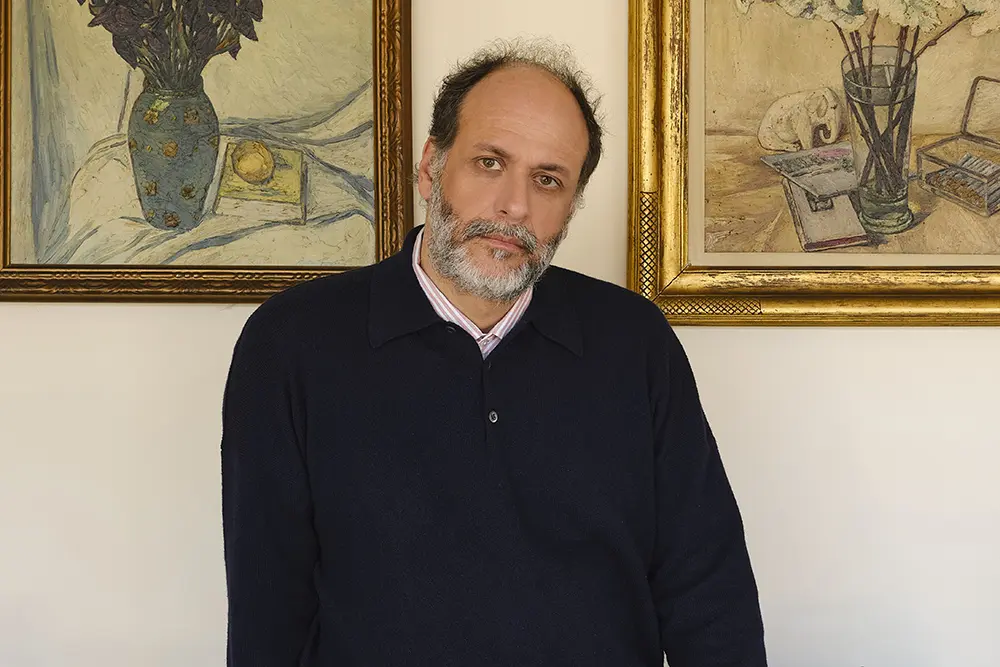
In a landmark announcement poised to captivate cinephiles and cultural historians alike, acclaimed National Award-winning Indian filmmaker Srijit Mukherji is set to helm a sweeping cinematic exploration into the volatile genesis of one of Indian cinema’s most enduring pillars: Satyajit Ray’s 1969 fantasy classic, Goopy Gyne Bagha Byne. Titled Maharaja Tomare Selam—a direct nod to a memorable song from the original film—the project will pull back the curtain on the extraordinary personal, political, and financial hurdles Ray surmounted to bring his visionary fairy tale to the silver screen.
Set against the turbulent backdrop of a politically charged, boiling Kolkata of the late 1960s, Maharaja Tomare Selam is not merely a biopic; it is an intimate deep-dive into the pressures, choices, and artistic defiance that defined a critical junction in Ray’s illustrious career. Produced by Hoichoi Studios and Friends Communication in association with Piyali Films Pvt. Ltd.—the original production house behind Goopy Gyne Bagha Byne—the film boasts a stellar ensemble cast featuring Jeetu Kamal, Ritwik Bhowmik, Rudranil Ghosh, Satakshi Nandy, Sairity Banerjee, and Arijit Dutta. With principal photography officially slated to commence in January 2027, the project promises to be a monumental examination of creative perseverance against insurmountable odds.
This ambitious feature arrives as part of an ongoing cultural reckoning within Bengali cinema, wherein contemporary filmmakers are increasingly turning their lenses inward to examine the towering legacy of Satyajit Ray himself. By tracing the Herculean effort required to materialize a film initially deemed a commercial and logistical impossibility, Maharaja Tomare Selam promises to offer an authoritative, gripping account of artistic genius at work.
Detailed Chronology: The Making and Legacy of ‘Goopy Gyne Bagha Byne’
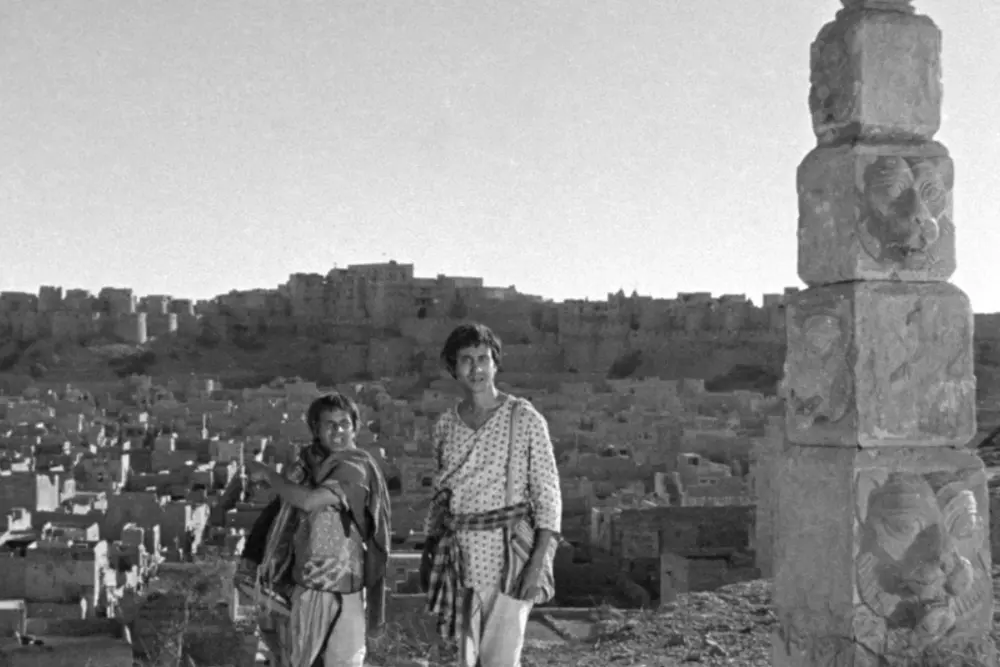
To truly understand the gravity of Srijit Mukherji’s upcoming feature, one must first retrace the arduous journey of the original masterwork that inspired it. Released on May 8, 1969, Goopy Gyne Bagha Byne emerged from a place of radical imagination. Adapted from a short story written by Ray’s grandfather, Upendrakishore Ray Chowdhury, the film followed two hopelessly untalented and ostracized village musicians—Goopy, played by Tapen Chatterjee, and Bagha, played by Rabi Ghosh. Banished from their respective villages for their grating musicianship, the duo crosses paths in a forest where they are granted three miraculous boons by the King of Ghosts. Armed with the power to materialize food, travel instantly, and mesmerize audiences with spellbinding music, they eventually journey to the neighboring kingdom of Shundi and Halla, ultimately utilizing their magical gifts to avert a catastrophic war.
While packaged as a whimsical children’s fantasy replete with iconic musical numbers, shadow dances, and ghost kings, Goopy Gyne Bagha Byne was heavily laced with sophisticated social and political allegories. Beneath the surface charm, the narrative offered sharp commentaries on class disparities, the manipulation of the masses, and the volatile nature of war and peace. These underlying thematic threads were so potent that Ray would sharpen them into a direct, razor-sharp satire of authoritarianism over a decade later in his 1980 sequel, Hirak Rajar Deshe (Kingdom of Diamonds). The iconic cinematic universe was later completed by Ray’s son, Sandip Ray, who directed the third installment, Goopy Bagha Phire Elo, in 1992.
However, getting the first film made was an uphill battle that spanned nearly a decade of rejections. Before conceptualizing Pather Panchali (1955), Ray had dreamed of bringing Goopy Gyne Bagha Byne to life. Producers routinely balked at the sheer logistical complexity, the fantasy elements, and the exorbitant budgets required for special effects in 1960s India. The journey to its eventual 1969 release was fraught with financial anxiety, studio skepticism, and the daunting task of convincing conservative investors that a children’s fantasy could possess high artistic and commercial value. It is precisely this crucible of production—the institutional resistance, the creative compromises, and the unwavering resolve of a master filmmaker working amid urban unrest—that Maharaja Tomare Selam seeks to immortalize.
Supporting Context & Metrics: Satyajit Ray’s Monumental Footprint
Satyajit Ray remains one of the towering figures in the history of world cinema, an auteur whose meticulous craftsmanship redefined international perceptions of Indian storytelling. Over a career spanning more than three decades, Ray constructed a cinematic corpus that permanently altered the cultural landscape. Landmarks such as his seminal directorial debut Pather Panchali (1955)—the first installment of the celebrated Apu Trilogy—and the psychological masterpiece Charulata (1964) established a new grammar for realism and emotional resonance in film.
Ray’s global impact cannot be overstated. He was the recipient of numerous international accolades, culminating in an honorary Academy Award for Lifetime Achievement bestowed upon him by the Academy of Motion Picture Arts and Sciences in March 1992. Presented to him weeks before his death, this historic honor made him the first Indian filmmaker to receive an Oscar, cementing his status as a global titan of the seventh art.
Despite his international acclaim, Ray’s relationship with his home base of Kolkata was intensely complex. Working during eras of profound political upheaval, food shortages, labor strikes, and the Naxalite movement, Ray maintained an intellectual detachment while deeply absorbing the socio-political anxieties of his environment. Maharaja Tomare Selam intends to position Ray not merely as an isolated genius working in an ivory tower, but as an artist deeply embedded in the friction of his times, navigating the volatile intersections of creativity, commerce, and societal expectation.
Furthermore, the film continues a rich tradition of Bengali cinema paying homage to its foundational architects. Recent years have witnessed a fascinating sub-genre of films exploring the lives and processes of Indian cinema’s pioneers:
- Anik Dutta’s Aparajito (2022): A critically lauded drama that dramatized the grueling, miraculous making of Pather Panchali, starring Jeetu Kamal in a critically acclaimed performance modeled closely on a young Satyajit Ray.
- Kaushik Ganguly’s Apur Panchali (2013): A poignant metacinematic narrative tracing the tragic later life of Subir Banerjee, the child actor who immortalized the young Apu in Ray’s debut feature.
- Srijit Mukherji’s Autograph (2010): Mukherji’s own directorial debut, which served as a contemporary, self-referential homage to Ray’s psychological masterpiece Nayak (1966).
By stepping directly into the shoes of chronicling Ray’s creative labor once more, Mukherji is cementing a dialogue between contemporary Bengali cinema and its golden age.
Official Statements and Vision
The announcement of Maharaja Tomare Selam has generated immense excitement across the South Asian film fraternity, anchored by Srijit Mukherji’s clear artistic vision for the project. Known for his rigorous approach to narrative and his deep fascination with Bengali cultural history—evinced by National Award-winning works such as Chotushkone (Best Director), Jaatishwar, and Baishe Srabon—Mukherji views this project as a labor of profound reverence and historical duty.
“I am just trying to tell the incredible true story of how one of the greatest classics of Indian cinema, Goopy Gyne Bagha Byne, was conceived and made,” Mukherji stated, emphasizing the raw, unvarnished reality behind the myth of the director’s effortless brilliance.
Industry analysts have praised the casting choices, which bring together a mix of powerhouse performers. Jeetu Kamal, who previously stunned audiences with his uncanny physical and emotional embodiment of Ray-esque traits in Aparajito, returns to terrain close to his breakthrough role, though this time exploring Ray directly at a different stage of his career. He is joined by Ritwik Bhowmik, Rudranil Ghosh, Satakshi Nandy, Sairity Banerjee, and Arijit Dutta, ensuring a robust ensemble capable of portraying the eclectic personalities that populated Ray’s creative and professional inner circle.
The involvement of Piyali Films Pvt. Ltd.—the original producer of Goopy Gyne Bagha Byne—adds an invaluable layer of archival authenticity and emotional continuity to the production. Partnering with Hoichoi Studios and Friends Communication, the team aims to reconstruct 1960s Kolkata with meticulous production design, historical fidelity, and narrative depth.
Future Outlook
As the industry looks ahead to the commencement of principal photography in January 2027, Maharaja Tomare Selam stands out as one of the most anticipated regional film projects of the decade. The extended pre-production timeline underscores the immense scale of research, script refinement, and period reconstruction required to faithfully recreate the late 1960s cinematic milieu.
The film arrives at a time when global audiences are increasingly fascinated by the behind-the-scenes realities of classic filmmaking, making a biographical drama about Satyajit Ray’s struggles highly relevant to international streaming platforms and festival circuits alike. By illuminating the blood, sweat, and political tightrope-walking that birthed the ghosts of Shundi and Halla, Maharaja Tomare Selam will not only honor a cinematic giant but also serve as a timeless testament to the resilience of the artistic spirit against the pressures of an uncompromising world.