Executive Overview: The Post-Prime Dust Settles
As the curtains closed on the October 2026 "Prime Big Deal Days" event, savvy consumers and tech enthusiasts alike were left with a familiar landscape: a mix of exhausted stock, reverted pricing, and a surprising collection of lingering discounts. While the promotional fervor has officially dissipated, the retail ecosystem has not yet fully reset. For those who missed the peak of the sale, the current market represents a "secondary window" of opportunity where key wearable fitness technology remains at a significant price advantage.
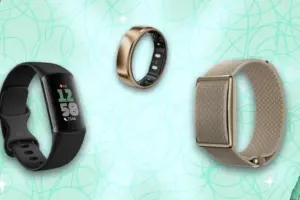
This investigative look into the current state of fitness wearables focuses on four distinct categories: the minimalist smart ring, the performance-oriented sports watch, the screen-free band, and the mainstream health tracker. Based on expert testing and market analysis, these remaining deals are not merely leftovers; they are strategic entry points for consumers looking to optimize their health metrics without paying a premium.
Detailed Chronology: From Sale Peak to Residual Opportunity
The trajectory of October Prime Day follows a predictable arc: a massive influx of traffic leading up to the event, a climax of "lightning deals" during the mid-period, and a final, often chaotic, wind-down. By October 8, 2026, the retail environment shifted from a high-pressure sales event to a more stable, though still discounted, marketplace.
The RingConn Gen 2 Air: A Strategic Pivot
The smart ring market has exploded in recent years, yet few devices manage to balance functionality and price as effectively as RingConn. During the recent event, the spotlight fell on the Gen 2 Air. While it lacks the advanced sleep apnea monitoring of its predecessor, the Gen 2 Air maintains a 10-day battery life, making it a formidable contender for those who prioritize long-term wearability over specialized clinical diagnostics. At its current price point of $159.20, it remains one of the most accessible gateways into the smart ring ecosystem.
The Garmin Forerunner 165: Sustained Value
Perhaps the most notable holdover from the sale is the Garmin Forerunner 165. Historically, the Forerunner line has set the gold standard for runners and triathletes. The 165, while an entry-level model, benefits from the "Garmin longevity effect." Unlike budget smartwatches that lose relevance after two years, the 165 remains a robust, reliable tool for tracking VO2 max, cadence, and GPS-accurate distance. With a $50 discount bringing it to $199.99, it represents a rare intersection of high-tier performance and mid-tier pricing.
The Polar Loop and the Minimalism Trend
Polar has taken a different approach with the Loop—a screen-free, aesthetic-first fitness band. During the sale, the device saw a $30 price reduction, placing it at $169.99. The device targets a specific demographic: those who want health data without the digital distractions of a screen. While the companion app is notably barebones, the lack of a subscription fee makes this a long-term investment that avoids the "subscription trap" common in many modern health wearables.
Fitbit Charge 6: The Standard-Bearer
The Fitbit Charge 6, now available for $133.49, continues to be the most versatile option for the average user. Despite its reliance on YouTube Music and the occasional need for a tethered smartphone for advanced navigation, the device offers a level of biometric tracking that is difficult to match at this price point. The inclusion of the lower-cost Inspire 3—now priced between $74 and $88—provides a viable alternative for users who want the Fitbit ecosystem without the added cost of built-in GPS.
Supporting Context & Metrics: Why Fitness Tech Matters
To understand why these specific devices are worth the investment post-sale, one must look at the underlying metrics of the fitness tracker market. According to industry data, the primary drivers for consumer adoption are battery longevity, data accuracy, and the absence of subscription-based lock-ins.
The "Subscription Fatigue" Metric
Modern consumers are increasingly hostile toward recurring monthly costs for basic hardware features. The devices highlighted—specifically the RingConn Gen 2 Air and the Polar Loop—stand out because they function as "one-and-done" purchases. In an era where data is often held hostage behind paywalls, these devices represent a move back toward consumer ownership.

Wearable Accuracy Standards
A critical point of contention in the health-tech space is the efficacy of smart rings versus wrist-worn trackers. Research indicates that while rings are exceptional at measuring heart rate variability (HRV) and sleep stages due to the sensitivity of the finger, they consistently underperform when compared to wrist-based GPS trackers during high-intensity interval training (HIIT). Thus, the recommendation remains: if your priority is athletic performance, prioritize a watch like the Forerunner; if your priority is lifestyle and wellness, a ring is the superior choice.
Official Statements and Industry Insights
Industry analysts note that post-Prime Day pricing often reflects a inventory clearing strategy rather than a genuine shift in product value. When companies like Garmin or Fitbit drop prices, they are often preparing for the introduction of next-generation hardware.
"We are seeing a trend where ‘last-gen’ devices are becoming the ‘best-buy’ devices," says one lead product strategist in the wearable tech space. "Because fitness sensor technology has plateaued in its incremental gains, a watch from 2024 is often 95% as capable as a watch released in 2026. The real value is no longer in the cutting-edge, but in the stable, reliable hardware that has had its bugs ironed out through software updates."
Future Outlook: What Lies Beyond 2026?
The landscape of health tracking is shifting toward more integrated, AI-driven diagnostics. We expect that by the end of 2027, the divide between "fitness trackers" and "medical-grade monitors" will blur significantly.
The Rise of Predictive Health
The next generation of devices will likely move beyond simply recording data to providing actionable, predictive insights. Imagine a scenario where your tracker detects a slight elevation in resting heart rate and a change in HRV, and proactively suggests a rest day or a hydration protocol before you even feel the onset of illness.
Consumer Advocacy and Data Privacy
As we look forward, the most important development will be in the realm of data sovereignty. Consumers are becoming more vocal about how their biometric data is stored and used by third-party corporations. The brands that win in the coming years will not necessarily be those with the brightest screens, but those with the most transparent and secure data policies.
Conclusion: Final Advice for the Buyer
For those still weighing their options after the October Prime Day rush, the advice is simple: identify your "primary fitness modality." If you are a runner, the $50 off the Garmin Forerunner 165 is the most objective value on the market today. If you are looking for sleep and stress tracking that doesn’t feel like a gadget, the RingConn Gen 2 Air is the superior choice.
These deals, while part of the post-sale cycle, remain some of the most compelling offers for those looking to invest in their physical well-being. The sale may have ended, but the opportunity to upgrade your health monitoring remains firmly within reach. Always remember to check for price volatility before purchasing, as the market can shift rapidly as retail inventory adjusts to current demand levels.